Tag: Climate action

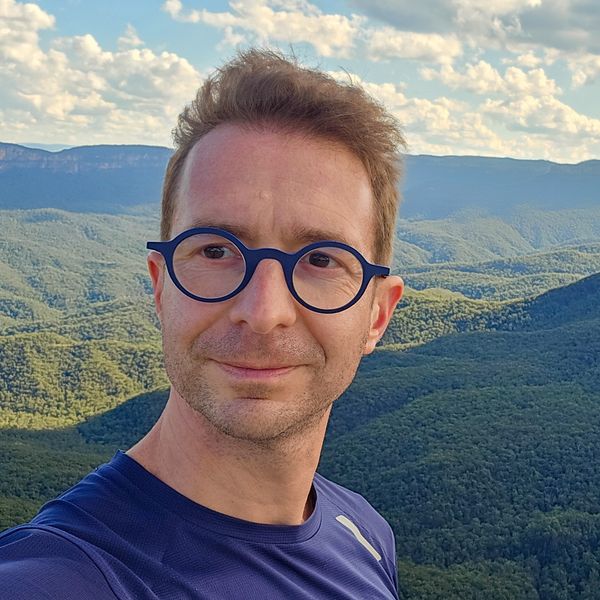
  • Meet our ambassadors: Stéphane Schneider

    Meet our ambassadors: Stéphane Schneider

    Climate Fresk Facilitator, NSW

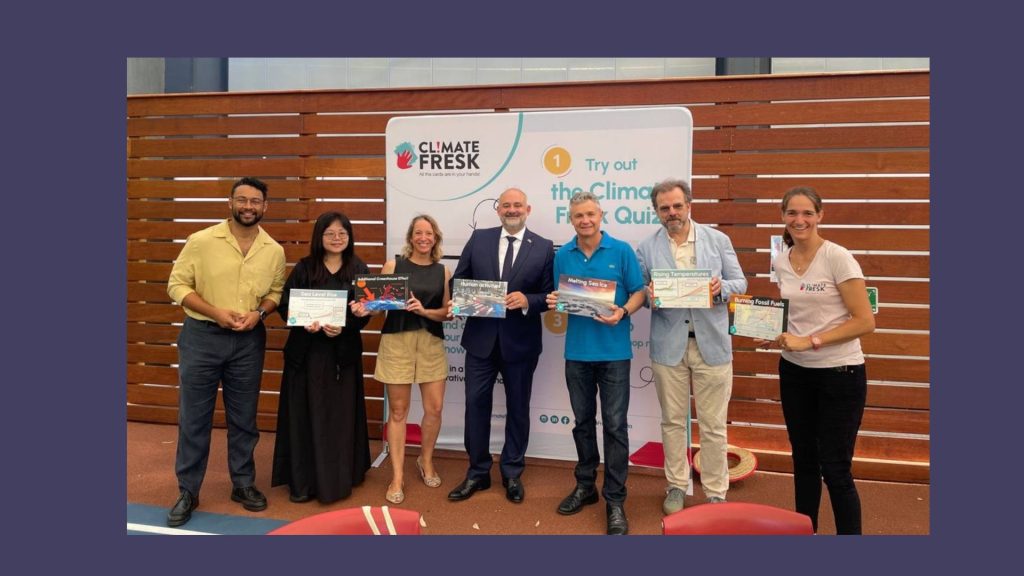
    Stéphane became a Fresker in March 2024, with his first workshop held at International Grammar School in April.

    Motivated by curiosity and a desire to put his professional skills to use, Stéphane transitioned to ClimateTech after a 10-year career in Customer Success, where he honed his ability to convince organizations and people to change.

    One of his proudest moments was launching the concept of Fresk at the pub. In search of a venue to host a workshop with friends and contacts, he remembered that public houses are community hubs, where the atmosphere of food and drinks fosters connection and conversation.

    What keeps Stéphane inspired is the “light bulb” moment he witnesses in every workshop – that powerful instant when someone fully grasps the scope and consequences of climate change. Being the catalyst for that realization is what keeps him going.

    “There is not a single workshop without a light bulb moment for one or several attendees. That special moment when someone “gets” the full picture of climate change and the consequences. Being the trigger of that moment keeps me going!”

    🤝 Connect with Stéphane on LinkedIn 💚

  • Meet our ambassadors: Ewa Slocinska Ragot

    Meet our ambassadors: Ewa Slocinska Ragot

    Climate Fresk & Biodiversity Collage facilitator, NSW

    Ewa became a Fresker in June 2022 through the WorkForClimate Academy, where the Climate Fresk workshop played a pivotal role in her training. She is also a Biodiversity Collage facilitator. She has co-facilitated many workshops, reaching hundreds of participants.

    Her motivation to get involved came after the birth of her son, when she realised the challenges future generations would face due to climate change. Unsure where to begin, she connected with Laure, the Climate Fresk Country Coordinator at the time, who recommended the Academy. This led her to become a Climate Fresk facilitator.

    Ewa is passionate about raising awareness in Australia and volunteers at local markets while also contributing to the creation of communication tools for Climate Fresk Australia’s social media. With a background in marketing communications, she enjoys using her skills to further the mission.

    “Being part of this community is a reminder that our collective voice is stronger. I also prefer to focus on what I can do rather than being discouraged by the inaction of others.”

    🤝 Connect with Ewa on LinkedIn 💚

  • Meet our ambassadors: Himanshu Kulkarni

    Meet our ambassadors: Himanshu Kulkarni

    Climate Fresk Facilitator, NSW

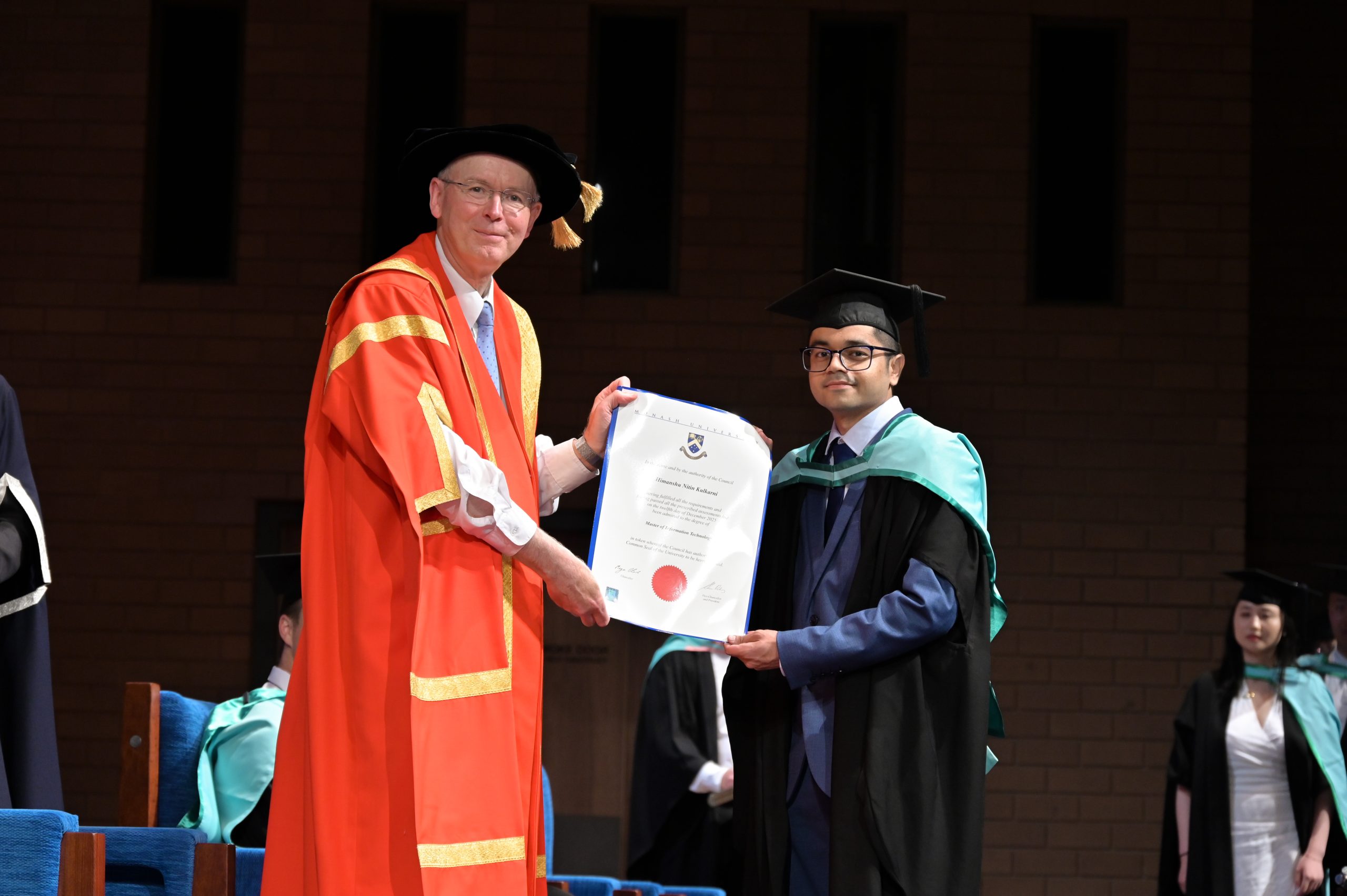
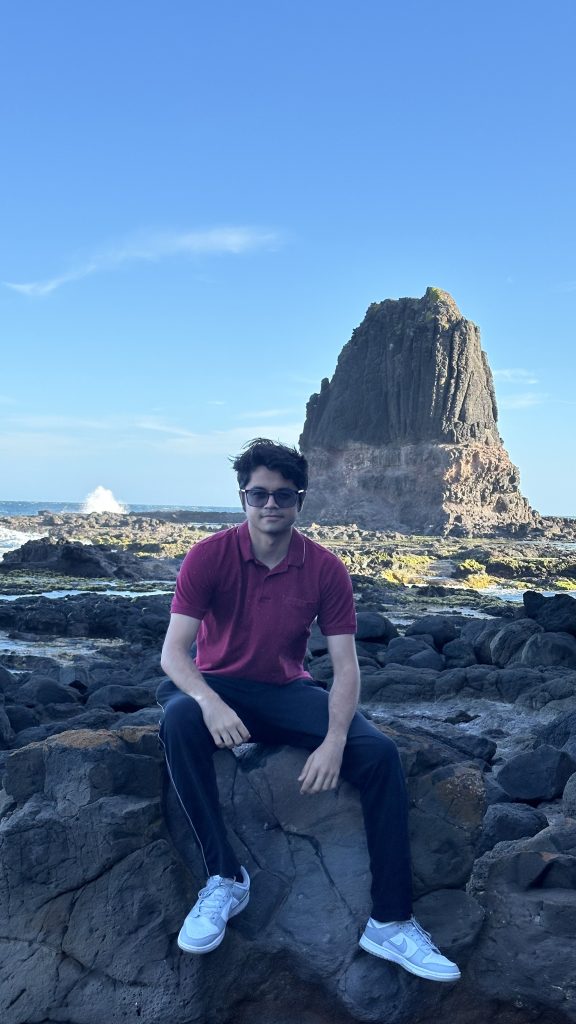
    Himanshu is a recent Master’s in IT graduate from Monash University and a software engineer based in Melbourne. Outside of coding, he loves getting outdoors and exploring nature with friends, drawn to Australia’s stunning landscapes. For Himanshu, spending time in nature isn’t just recreation — it’s what makes you truly want to protect it.

    He strongly believes that technology can be a powerful force for conservation. “With the right tools, we can monitor ecosystems, track wildlife, and turn data into meaningful action,” he says. By harnessing tech for good, Himanshu hopes to help build systems that not only understand the natural world but actively contribute to saving it.

    Joining People For Nature was a natural step for Himanshu.

    “I wanted to contribute my skills to a mission that is critical for our survival,” he explains. For him, technology and nature aren’t opposites — they can work together. With purpose-driven tech, he believes we can create a future where both thrive.

    Himanshu’s passion reminds us that innovation and conservation go hand in hand, and that the next generation of environmental action will be powered by people who can think in code and in ecosystems.

  • Meet our ambassadors: Mandy Chan

    Meet our ambassadors: Mandy Chan

    Climate Fresk Facilitator, NSW

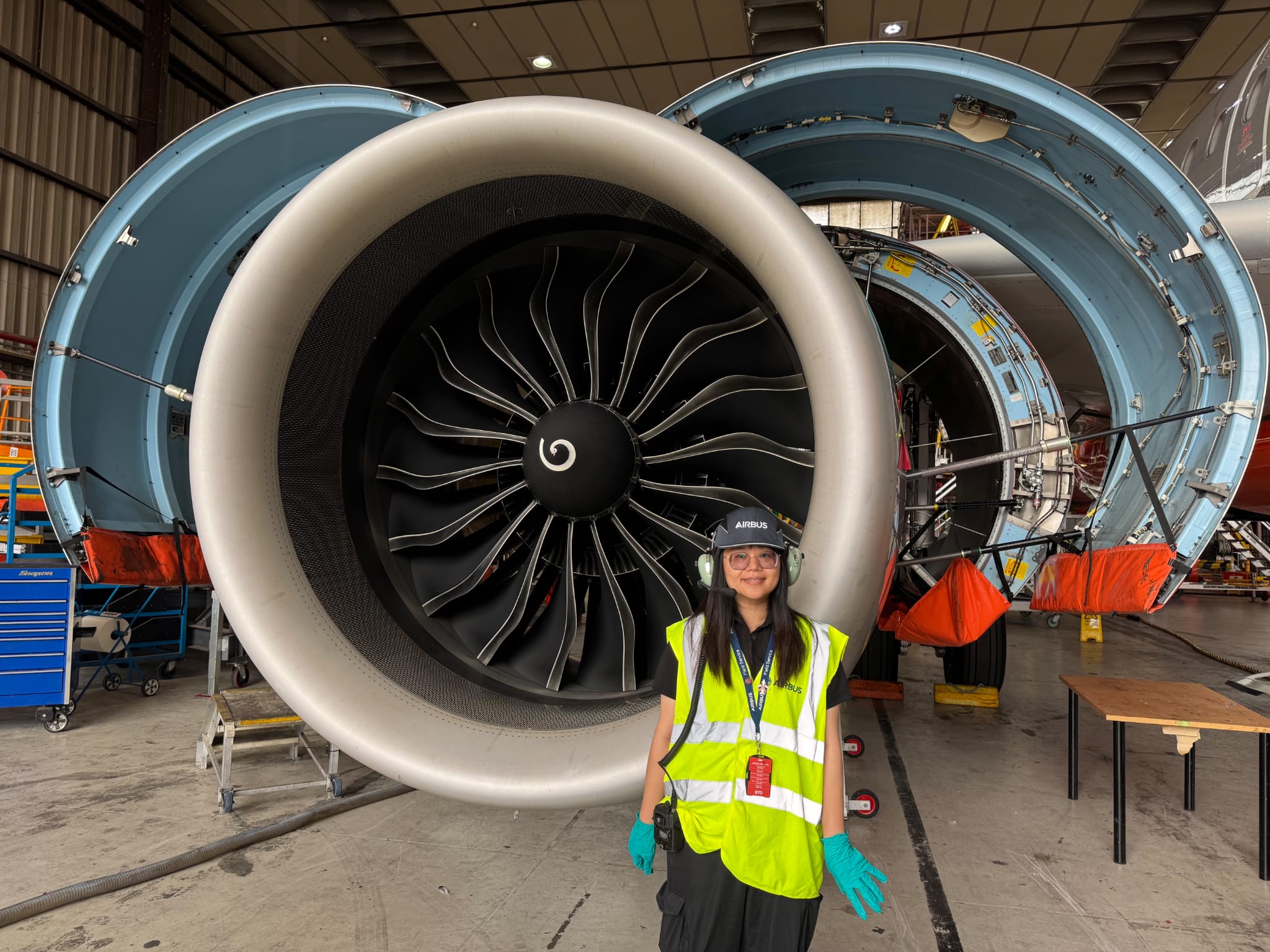
    Mandy started her Climate Fresk journey at her current workplace, Airbus, in May 2024. She decided to become a facilitator herself as she felt she could do more to expand climate literacy within her company and among the general public.

    As a facilitator within her company, Mandy admits it can be challenging to stay up to date with two sets of materials: one pack of Climate Fresk cards focusing on the aviation industry, and one for the general public. At the same time, she is excited about the number of people her workshops can reach.

    I believe that increasing climate literacy in Australia is incredibly important. By being a part of People For Nature, I’m able to reach more people from all walks of life.

    Mandy joined People For Nature as an ambassador and is excited to continue spreading climate education among everyday citizens, and within her workplace.

    I’m excited to be a part of People For Nature, as we not only work on climate education but also advocate biodiversity conservation and rescue activities for our precious native wildlife.

    🤝  Connect with Mandy on LinkedIn. 💚

  • Adapting to Climate Change workshop

    Adapting to Climate Change workshop

    From Awareness to Adaptation: Helping People and Organisations Prepare for a Changing Climate

    For many years, climate conversations have focused primarily on mitigation — reducing emissions, transitioning energy systems, and limiting future warming. These efforts remain essential.

    But as climate impacts intensify across Australia and around the world, another conversation is becoming unavoidable: how do we adapt to the changes already underway?

    At People For Nature, our work has always been about transforming knowledge into action. Through Climate Fresk, we help people understand the physical science behind climate change. The next natural step is helping individuals, organisations, and governments move from understanding climate change to preparing for it.

    This is why we offer the Adapting to Climate Change workshop, a science-based, collaborative experience designed to build climate confidence and practical adaptation thinking.


    Why Adaptation Matters Now

    Climate change is no longer a distant risk. Across Australia we are already experiencing its effects — more intense heatwaves, floods, droughts, bushfires, and pressure on ecosystems and infrastructure.

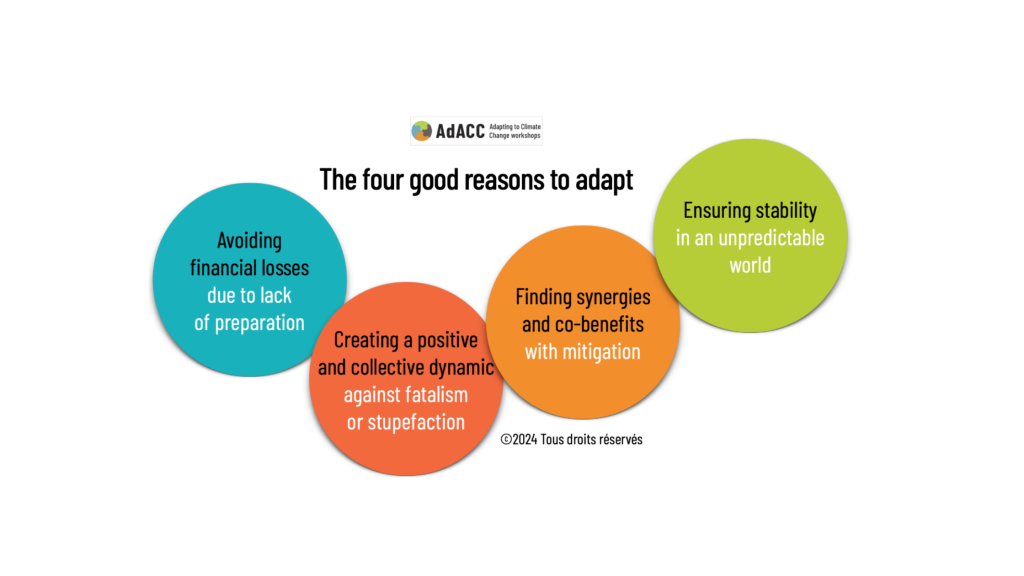
    Yet many organisations feel stuck between awareness and action. Climate risks can feel complex, uncertain, or overwhelming. Teams may understand the problem but struggle to translate it into meaningful decisions.

    Adaptation provides a pathway forward.

    Rather than asking only how to reduce impact, adaptation asks:

    • How will climate change affect our people, operations, and communities?
    • Where are we most vulnerable?
    • What actions strengthen resilience rather than create unintended consequences?
    • How do we adapt in ways that also support nature and society?

    Adaptation is not about fear. It is about preparedness, agency, and collective intelligence.


    A Workshop Designed for Clarity and Action

    Originally developed in France as Les Ateliers de l’Adaptation au Changement Climatique, this workshop complements existing climate education tools by focusing on decision-making in a changing world.

    The experience helps participants:

    • Understand the difference between mitigation and adaptation
    • Explore climate risks and vulnerabilities in real-world contexts
    • Evaluate adaptation options and avoid maladaptation
    • Develop a shared language across teams
    • Co-design practical and strategic responses relevant to their own context

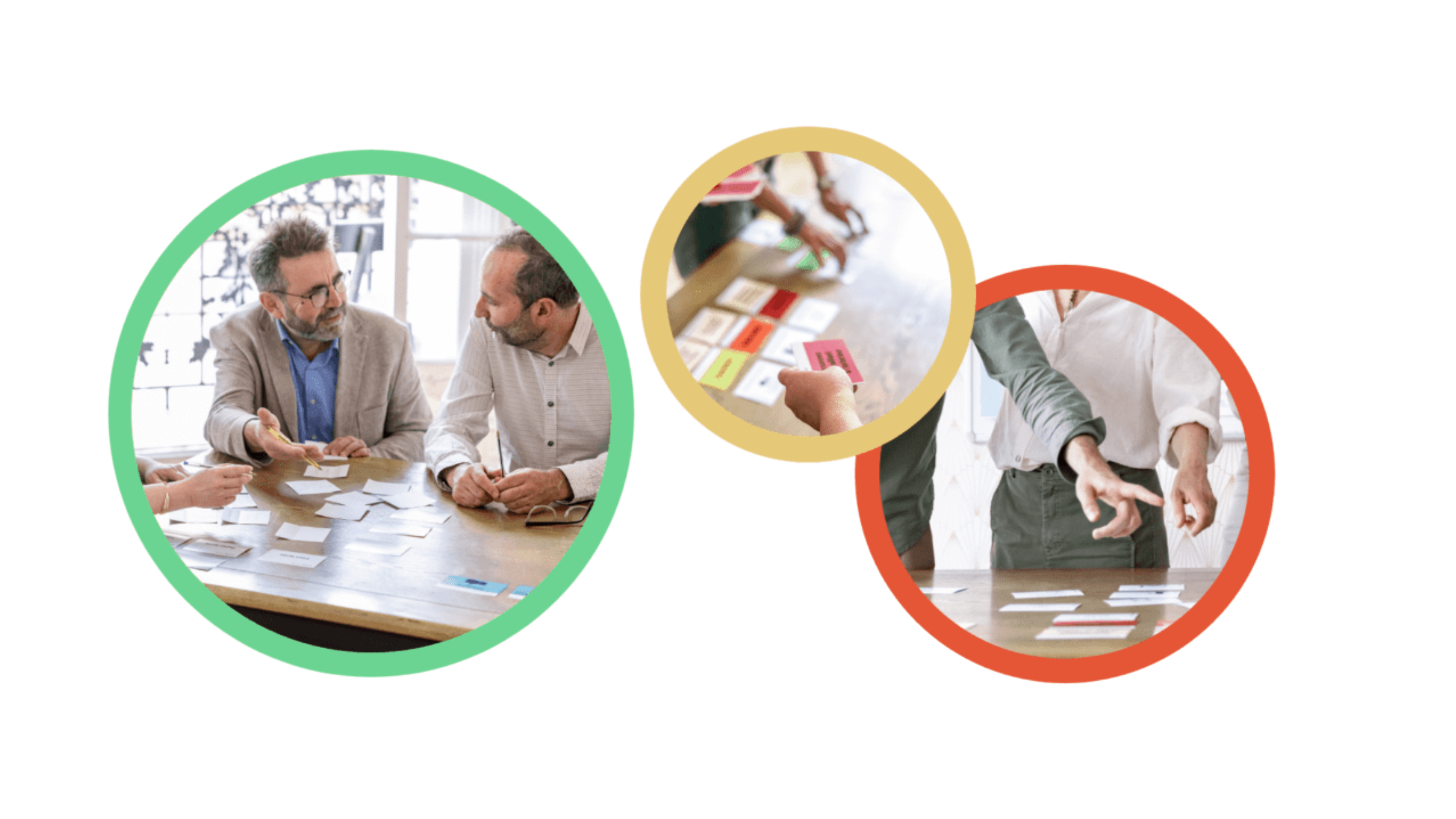
    The workshop is highly interactive and collaborative, creating a psychologically safe space where participants can explore uncertainty without blame or overwhelm.

    This approach strongly aligns with People For Nature’s philosophy: learning happens best when people think together.


    From Climate Literacy to Climate Capability

    Over the past years, we have seen thousands of participants leave workshops with a deeper understanding of climate and biodiversity challenges. Increasingly, the next question we hear is:

    “So what do we do now?”

    Adaptation answers that question.

    It moves organisations from awareness to capability. It helps teams integrate climate thinking into strategy, operations, and long-term planning. And importantly, it reconnects climate action with human experience — how we live, work, and care for places.

    Adaptation is also inseparable from nature. Healthy ecosystems reduce climate risks, support water systems, cool cities, and strengthen community resilience. Nature-based solutions therefore sit at the heart of meaningful adaptation pathways.


    Building Climate Confidence in Australia

    Australia faces some of the most acute climate risks globally, but also holds extraordinary expertise across science, business, local communities, and First Nations knowledge systems.

    What is often missing is not knowledge — but shared understanding and spaces for collective sense-making.

    By bringing this workshop to Australia, People For Nature aims to contribute to building that shared capacity. Whether working with businesses, local governments, community organisations, or leadership teams, the goal is the same:

    to move from climate anxiety to informed, collective action.

    Because adaptation is not a technical exercise alone. It is a social process — one that requires collaboration, creativity, and courage.


    Looking Ahead

    Climate change will continue to shape the coming decades. The question is not whether change will happen, but how prepared we choose to be.

    If you are interested in bringing the Adapting to Climate Change workshop to your organisation or community, we would love to start the conversation.

  • Get involved with People For Nature

    Get involved with People For Nature

    At People For Nature, we believe everyone has a role to play in shaping a future where people and nature thrive together.

    Whether you have time, energy, skills, or funds to give — there’s a meaningful way for you to get involved.

    Here’s are a few ways you can join our movement:

    1. Become an Ally 🌱

    Allies are people and organisations who participate in one of our workshops, events, or community initiatives. Whether you join a Climate Fresk, Biodiversity Collage, Circular Economy Collage, or one of our nature-based experiences, you are already part of the change.

    No ongoing commitment — just curiosity, open-mindedness, and a willingness to learn.

    🎟️ -> ATTEND A WORKSHOP:

    https://collections.humanitix.com/people-for-nature-literacy-workshops

    2. Become an Ambassador

    Ambassadors are trained and active volunteers who generously contribute their time and energy to support our purpose in their local community and within the organisation.

    From learning and facilitating workshops to supporting events, securing and delivering projects, fundraising, and growing our community, our ambassadors are at the heart of our grassroots power.

    This is a volunteer role and can be as flexible or involved as your time allows.

    As representatives of People For Nature, Ambassadors are expected to comply with our Code of Conduct. Ambassadors are also expected to accept personal accountability for their conduct and contribute to safe, collaborative spaces — whether online or in person.

    3. Join our Core Team 🌺

    Core Team members are committed leaders who help guide the strategic direction of People For Nature. This includes Board Members, Executive Leads, Comms Lead, Program Leads, Regional Leads.

    All team members are required to:

    • Sign and adhere to our Conflict of Interest Policy, declaring any actual, potential, or perceived conflicts of interest.
    • Avoid direct competition with People For Nature’s activities.
    • Uphold our values and purpose in all engagements.
    • Adhere to our Code of Conduct, acting with integrity, respect, and accountability.

    This role requires dedication, accountability, and shared ownership of our purpose. Core Team members may hold either volunteer or remunerated positions, depending on the nature of the role and available funding.

    4. Partner With Us 🌻

    Partners are organisations, businesses, educational institutions, and networks that support our Theory of Change through aligned collaboration. This can include financial contributions, pro bono expertise, shared resources, or joint initiatives.

    Partnerships take many forms — from co-hosted events and capacity-building support to strategic programmes and innovation projects — depending on shared goals and impact opportunities.

    All partnerships are established under agreed terms, aligned with project needs and available funding. To ensure clarity, transparency, and mutual commitment, we formalise our collaborations through a partnership agreement.

    We value partnerships grounded in purpose, trust, and a shared commitment to creating meaningful, long-term impact for people and nature.

    Get in touch >

    5. Donate🌾

    Donors are individuals, organisations, or businesses who contribute funds to sustain our work. As a registered charity with Deductible Gift Recipient (DGR) status, donations to People For Nature are tax-deductible, providing a valuable benefit to our supporters. This status also strengthens our eligibility for grants and funding opportunities.

    Your donation helps us reach more people with climate and biodiversity and other planetary boundaries education, deliver high-impact programs, and grow our team sustainably. Every dollar helps us plant the seeds of change. Regular or one-off donations are welcome.

    To donate, visit https://www.blog.peoplefornature.org.au/donate

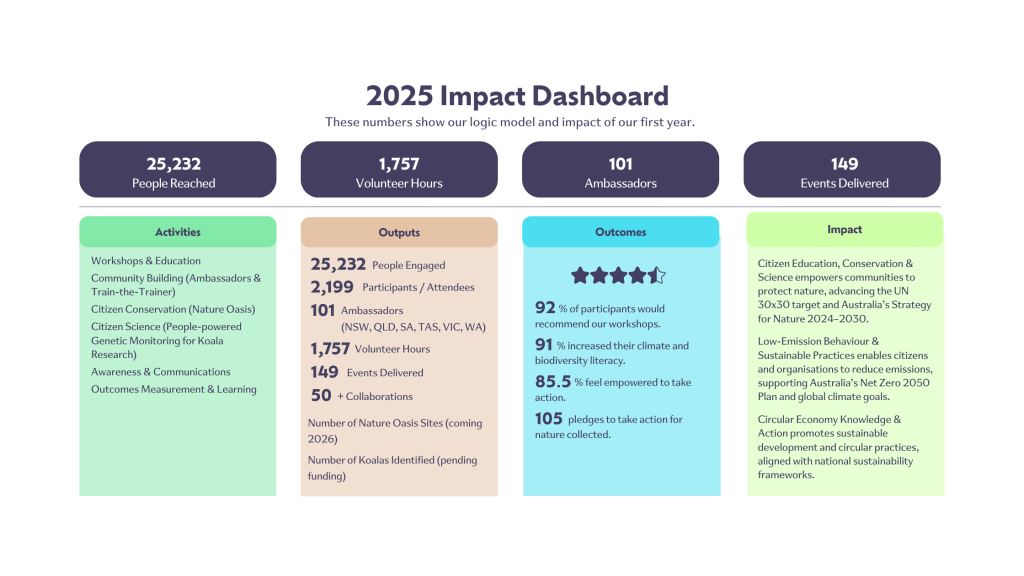
  • Our 2025 Impact Report is here!
    Our 2025 Impact Report is here!

    2025 was a big year for People For Nature. Together with our amazing community, we educated thousands of Australians on climate and biodiversity, ran hands-on workshops, and inspired action for nature.

    From citizen science projects to corporate partnerships, our collective efforts are making a real difference — and we want to share it with you.

    Dive into our 2025 Impact Report to see the stories, the numbers, and the people driving change. Let’s celebrate what’s possible when people power meets nature.

    -> Read the Full Report


    We turn knowledge into action by making science accessible, empowering citizens, and building lasting impact for nature.

    Our mission is to empower 30,000 Australians to take action for nature by 2030.

  • Your Nature Oasis is a citizen science hotspot

    Your Nature Oasis is a citizen science hotspot

    Why People For Nature encourages every Oasis to use iNaturalist

    At People For Nature, we believe that protecting nature starts with connection — and that everyday people play a vital role in restoring and understanding the living world around them.

    That’s why we encourage everyone creating a Nature Oasis to use iNaturalist: a simple, joyful way to turn your patch of nature into a living contribution to science.

    What is iNaturalist?

    iNaturalist is a free app that allows you to photograph plants, animals and fungi, upload your observations, and help build one of the world’s largest biodiversity databases.

    Your sightings don’t just stay on your phone — they become real data, used by scientists, conservation groups and decision-makers to better understand biodiversity and how it’s changing.

    Why iNaturalist belongs in every Nature Oasis

    Nature Oases are designed to restore habitat, invite biodiversity back, and reconnect people with the natural world. iNaturalist helps make those changes visible.

    By using the app, you can:

    • 🌿 see what species are already present in your Oasis
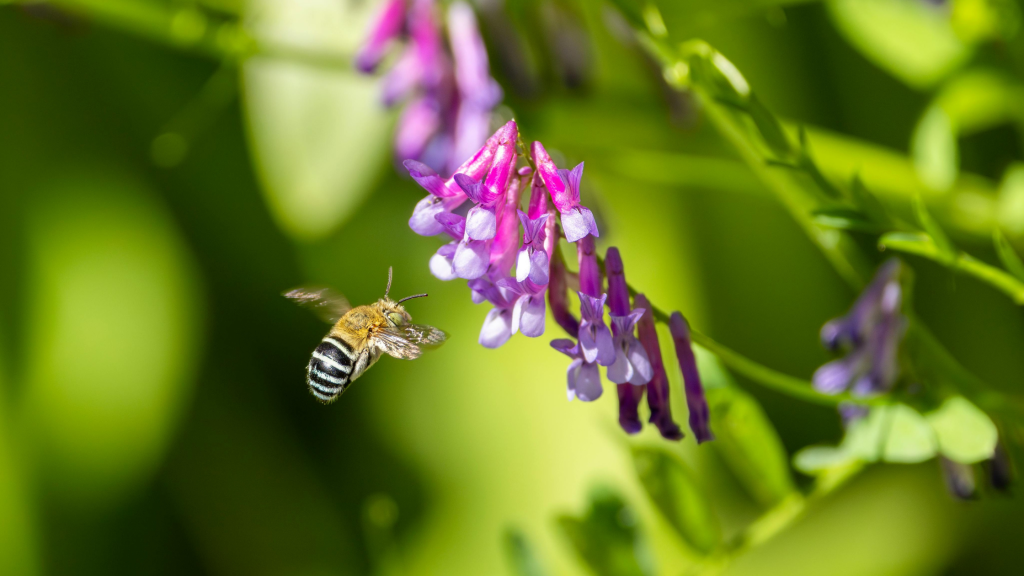
    • 🐝 track pollinators, birds and other wildlife as habitat improves
    • 📈 observe changes over time as your Oasis grows and matures
    • 🧩 contribute valuable local data to national and global research

    Every observation strengthens the case for nature-positive action — starting right where you live.

    Citizen science that’s genuinely fun

    You don’t need to be a scientist. You don’t need special equipment.
    All you need is curiosity.

    Using iNaturalist often feels like:

    • a nature scavenger hunt
    • a shared learning experience with kids, friends or neighbours
    • a moment of wonder when you realise how much life is around you

    And the iNaturalist community is there to help identify species, answer questions and celebrate discoveries with you.

    From individual Oases to collective impact

    One Nature Oasis matters.
    Thousands of Nature Oases? That’s a movement.

    When many People For Nature participants use iNaturalist, we begin to:

    • build a clearer picture of biodiversity across communities
    • support citizen-led conservation and monitoring
    • strengthen Australia’s contribution to global biodiversity knowledge
    • show that people power can make nature visible — and valued

    This is climate and biodiversity action grounded in place, care and participation.

    How to get started

    1. Download iNaturalist (free on iOS and Android)
    2. Step into your Nature Oasis
    3. Photograph what you see — plants, insects, birds, fungi
    4. Upload your observation and let the community help identify it

    That’s it. You’re now part of a global citizen science network — through People For Nature.

    Because every Nature Oasis tells a story.
    And with iNaturalist, we can make sure those stories count.

  • COP30: what did it really deliver for nature – and why it matters for Australia

    COP30: what did it really deliver for nature – and why it matters for Australia

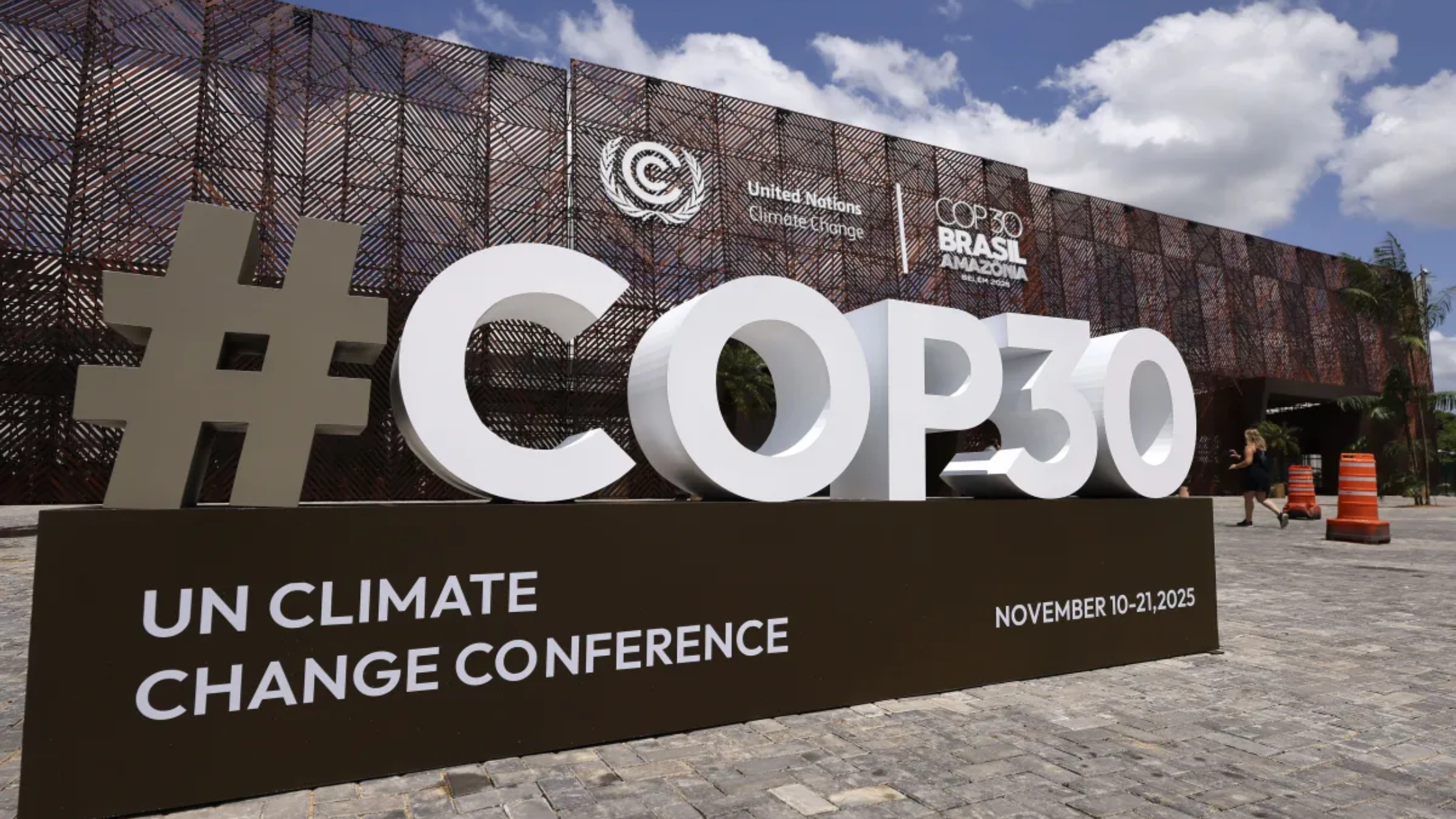
    Held in Belém, at the gateway to the Amazon, COP30 was widely framed as “the COP of nature”. Expectations were high: forests, biodiversity, food systems and Indigenous stewardship were meant to sit at the heart of climate action. The reality was more mixed.

    So what actually came out of COP30 for nature — and what does it mean for Australia?

    Nature recognised, but not prioritised

    The main outcome of COP30 was the Global mutirão (meaning “collective effort”), which highlights the need to better connect climate action with biodiversity, land and ocean protection. The language is strong: nature is clearly recognised as essential to achieving the Paris Agreement goals.

    But recognition didn’t translate into concrete commitments. Despite being hosted in the world’s most biodiverse country, no specific global action or dedicated funding for halting deforestation was agreed — a major missed opportunity given forests’ critical role in climate mitigation, adaptation and biodiversity protection.

    For Australia, a country facing accelerating land clearing, ecosystem collapse and species extinction, this gap is particularly concerning.

    Deforestation: words without a roadmap

    More than 90 countries supported the idea of a global roadmap to halt and reverse deforestation by 2030. However, consensus wasn’t reached, and the proposal was pushed outside the formal UN process.

    While Brazil signalled it would continue working on a deforestation roadmap ahead of COP31, there is still no binding global pathway. For Australia — one of the world’s deforestation hotspots — this reinforces the need for stronger domestic action, not just international rhetoric.

    Food systems and agriculture: progress delayed

    Agriculture and food systems were discussed under the Sharm el-Sheikh Joint Work on Agriculture, with growing recognition of:

    • the links between food systems and biodiversity
    • agroecology and regenerative approaches
    • the limited share of climate finance going to agriculture

    But disagreements over language meant no final decision was adopted, pushing outcomes to 2026. For Australia, where climate impacts on food security are already being felt, this delay matters.

    Growing momentum on climate–nature synergies

    One of the more positive signals from COP30 was the increasing focus on aligning climate, biodiversity and land agendas. New initiatives launched during the COP aim to better coordinate the three Rio Conventions (climate, biodiversity, desertification), improve policy coherence, and track nature-positive action and finance.

    This aligns strongly with Australia’s own commitments under the Global Biodiversity Framework and its national climate targets — but only if translated into joined-up policies and investment at home.

    Nature finance: promising ideas, familiar risks

    The launch of the Tropical Forest Forever Facility (TFFF) — a new fund designed to reward countries for protecting tropical forests — signalled growing interest in nature-positive finance. While innovative, it also raised concerns around greenwashing, equity, and whether funds will genuinely reach ecosystems and Indigenous communities.

    For Australia, this highlights a broader challenge: scaling nature finance without losing integrity, while ensuring public funding also plays a strong role.

    What COP30 means for Australia

    COP30 reinforced a clear message: nature is finally being talked about — but still not acted on at scale.

    For Australia, the implications are clear:

    • Climate and biodiversity can no longer be treated separately
    • Land clearing, ecosystem restoration and nature-based solutions must be central to climate policy
    • International leadership must be matched by credible domestic action

    With COP31 on the horizon and global attention increasingly on nature, the real test will be whether Australia turns alignment into action — for climate, for biodiversity, and for future generations.

    Conclusion

    In a year when nature was meant to finally take centre stage at the global climate talks, COP30 delivered important recognition — but fell short on concrete actions that match the scale of the interlinked climate and biodiversity crises. For Australia, the outcomes underscore the urgency of moving beyond dialogue to ambitious policy, funding and on-the-ground implementation that protects ecosystems, supports First Nations leadership, and integrates nature into our national climate response.

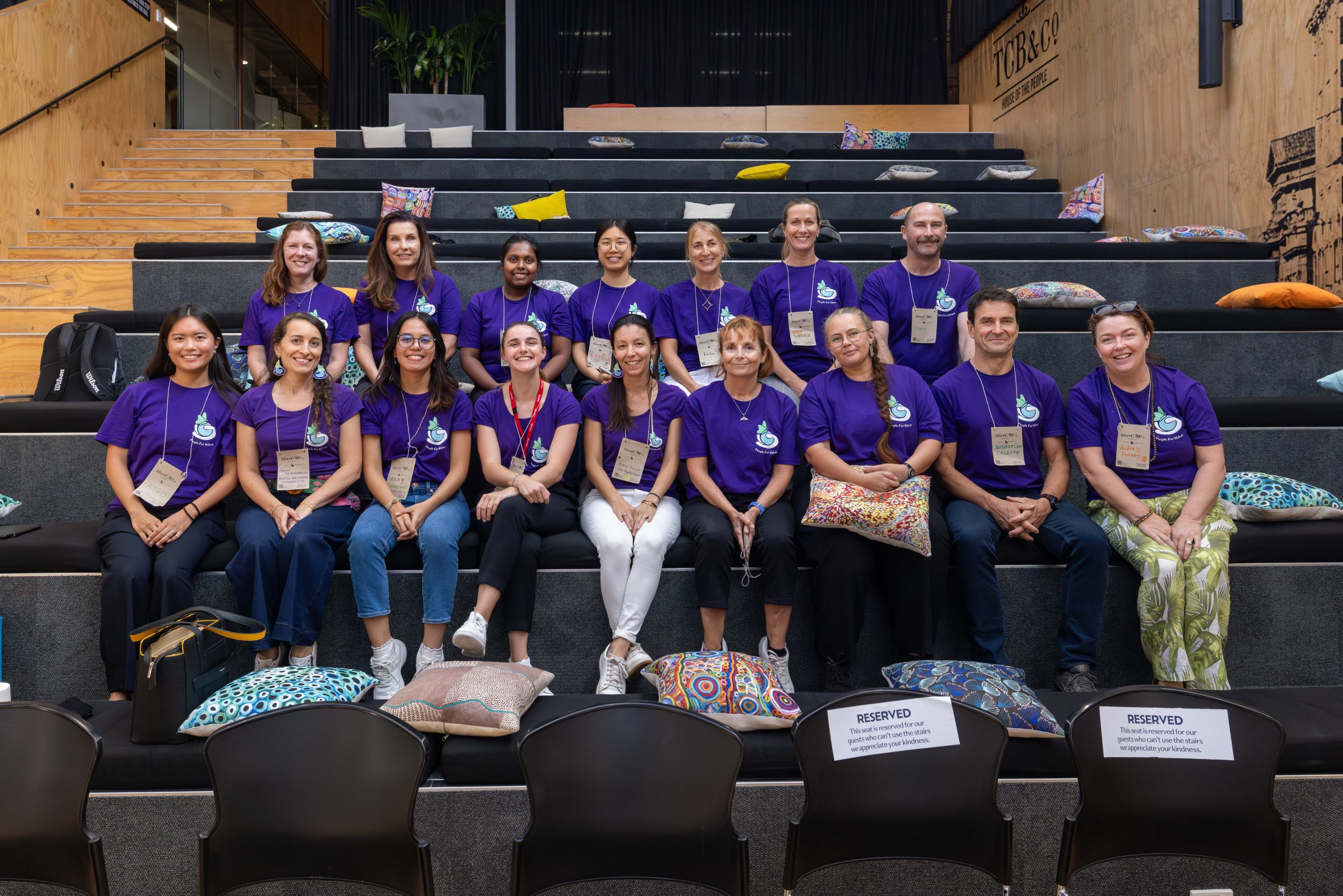
    That’s exactly why we organised AlterCOP30 — to ensure that all Australians, especially those whose voices are too often excluded from formal climate and biodiversity negotiations, were heard and included in these critical discussions. By bringing together citizens, community leaders, scientists and storytellers, AlterCOP30 created space for perspectives, values and solutions that reflect Australia’s unique landscapes and communities.

    We’re grateful to Ateliers Biodiversité for their detailed insights on the outcomes of COP30 — their analysis helped shape our thinking and reporting. You can read their original piece here: https://www.ateliersbiodiversite.org/post/cop30-climat-quelles-retomb%C3%A9es-pour-la-nature.

    As the global climate and biodiversity agenda continues to evolve, it’s up to all of us — at local, national and international levels — to demand that commitments translate into action. Australia’s nature depends on it.

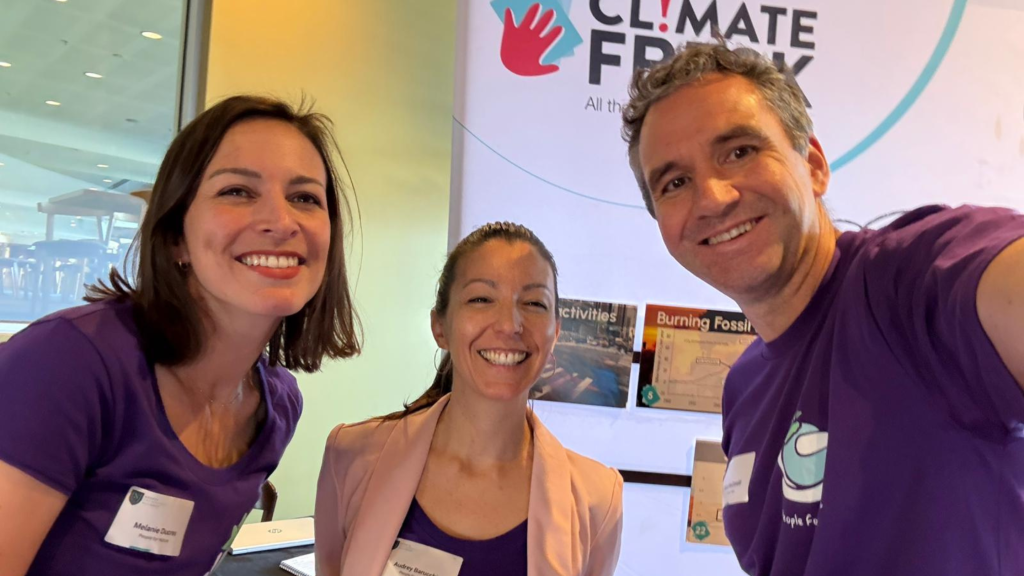
  • Meet our ambassadors: Mélanie Ducros

    Meet our ambassadors: Mélanie Ducros

    VIC Community Lead

    Some people work on climate solutions in boardrooms. Others bring them to life in circles of conversation — where citizens become part of the solution.

    Meet Mélanie Ducros.

    Originally from New Caledonia and now based in Victoria, Mélanie is deeply committed to climate action across the Pacific region. Her work is grounded in a simple but powerful belief: when people are informed and empowered, they become a driving force for change.

    Mélanie is a process, energy and environmental engineer, with nine years of experience working on international development projects across West and North Africa and the Indo-Pacific. Her work has focused on the intersection of renewable energy, sustainable water access and climate adaptation — where technical solutions meet real human needs.

    Today, she continues this journey through her work on energy transition with the French–Australian Indo-Pacific Centre for Energy Transition (FACET), helping shape conversations around a more sustainable future between France, Australia and the broader region.

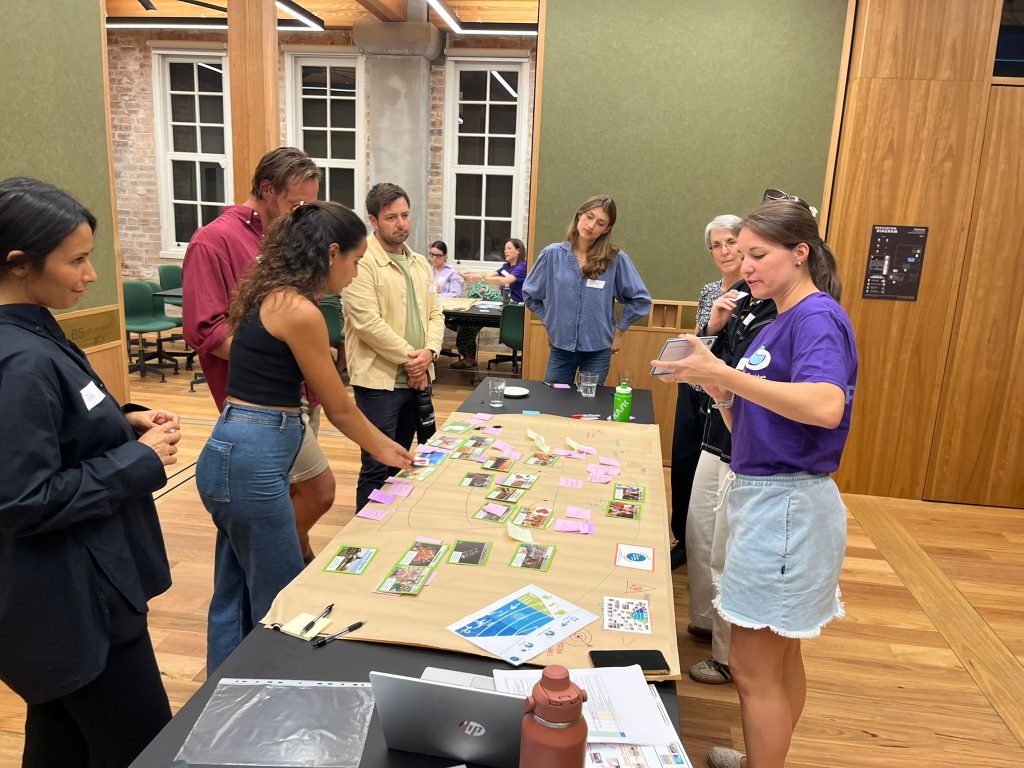
    But one of her most meaningful contributions happens in a very different setting: a room full of people, markers on tables, and a Climate Fresk unfolding through shared discovery.

    She shares:

    “Being an ambassador for People For Nature inspires me because I am convinced that citizen-led initiatives like P4N are essential to driving real change. Facilitating Climate Fresk workshops gives me the strong feeling that I am contributing to meaningful impact. It is also incredibly enriching — I always leave each workshop inspired and energised by the conversations and insights shared by participants. As ambassadors, we receive as much as we give.”

    This is what citizen-powered change looks like: not distant, not abstract — but shared, participatory, and deeply human.

    And it grows every time someone steps into the conversation.

    🤝 Connect with Mélanie on LinkedIn 💚

    .