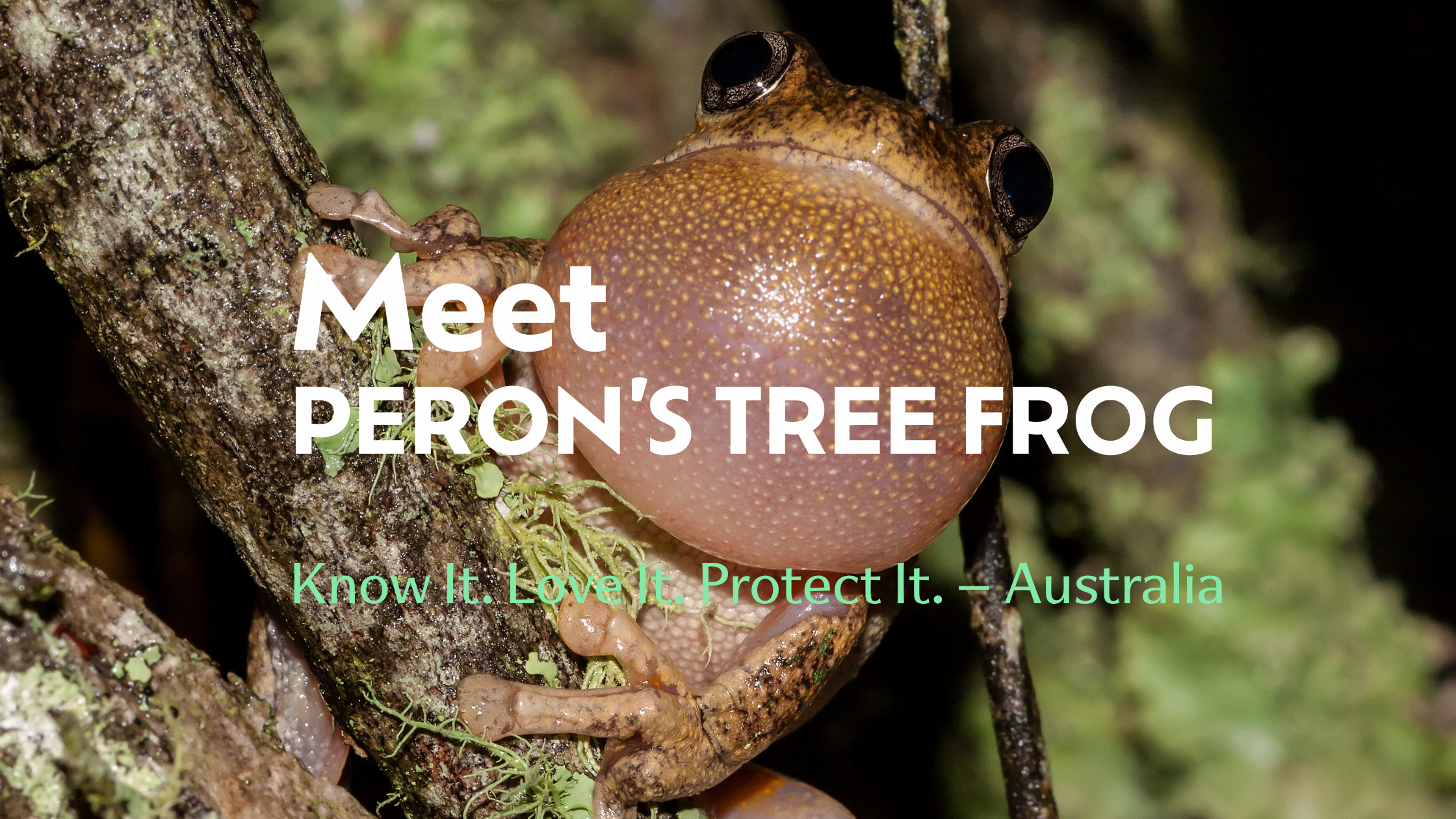
With its distinctive laughing call and remarkable climbing ability, Peron’s Tree Frog is one of Australia’s most charismatic amphibians and a familiar visitor to gardens, forests and wetlands across eastern Australia.
Its green-grey colouring and ability to cling to branches, rocks and even windows make it a fascinating species that often appears after rain or on warm evenings.
It is a reminder that some of Australia’s most important wildlife is active long after the sun goes down.
Why it matters
Peron’s Tree Frog plays an important role in maintaining healthy ecosystems.
🦟 It helps control insect populations by feeding on mosquitoes and other invertebrates
🌿 It forms an important part of the food web, providing prey for birds, reptiles and mammals
🌏 Its sensitivity to environmental change makes it an important indicator of ecosystem health
💧 Healthy frog populations often reflect healthy waterways and surrounding habitats
As environmental indicators, frogs provide valuable insights into the condition of the ecosystems we all depend upon.
Fun facts
🤓 Peron’s Tree Frog is well known for its distinctive call, often described as sounding like a laugh
🤓 It has specialised toe pads that allow it to climb smooth surfaces with ease
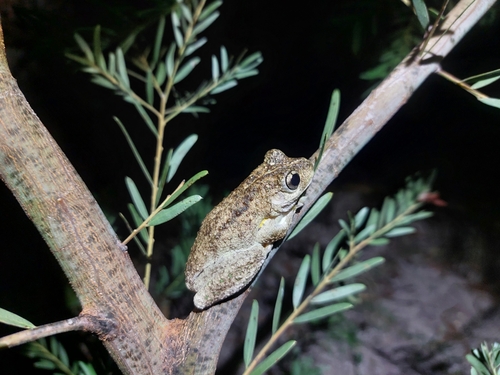
🤓 Its colouring can vary from green-grey to brown, helping it blend into its surroundings
🤓 It is commonly found around gardens, dams, forests and wetlands throughout eastern Australia
A deeper reflection
Peron’s Tree Frog reminds us that even common species can tell us a great deal about the health of our environment.
Amphibians are among the world’s most threatened vertebrates, with more than 40 per cent of species considered at risk of extinction due to habitat loss, pollution, disease and climate change.
Their permeable skin makes them particularly sensitive to changes in water quality and environmental conditions.
In a country with more than 600,000 native species, many found nowhere else on Earth, Peron’s Tree Frog highlights why protecting biodiversity also means protecting clean waterways, healthy habitats and the delicate ecological relationships that sustain life.
Creating frog-friendly spaces and reducing pollution can make a meaningful difference for these remarkable amphibians.
From Wonder to Action
Learn & understand
Explore how biodiversity, climate and land systems are deeply connected through our workshops with People For Nature.
Create your Nature Oasis
Plant native species to restore habitat and support the insects, birds and wildlife that depend on them.
Join citizen science
Record native species around you on iNaturalist and contribute to real conservation data.
(Special thanks to Simon Andrews, Ambassador for People For Nature, for helping shape this story)
Photo credit: boogman, iNaturalist.
References
Australian Museum. Peron’s Tree Frog (Litoria peronii).
Australian Museum – Peron’s Tree Frog
FrogID. Peron’s Tree Frog.
FrogID – Peron’s Tree Frog