Tag: Sustainability

  • Citizen COP Australia: Bringing global climate conversations to your neighbourhood

    Citizen COP Australia: Bringing global climate conversations to your neighbourhood

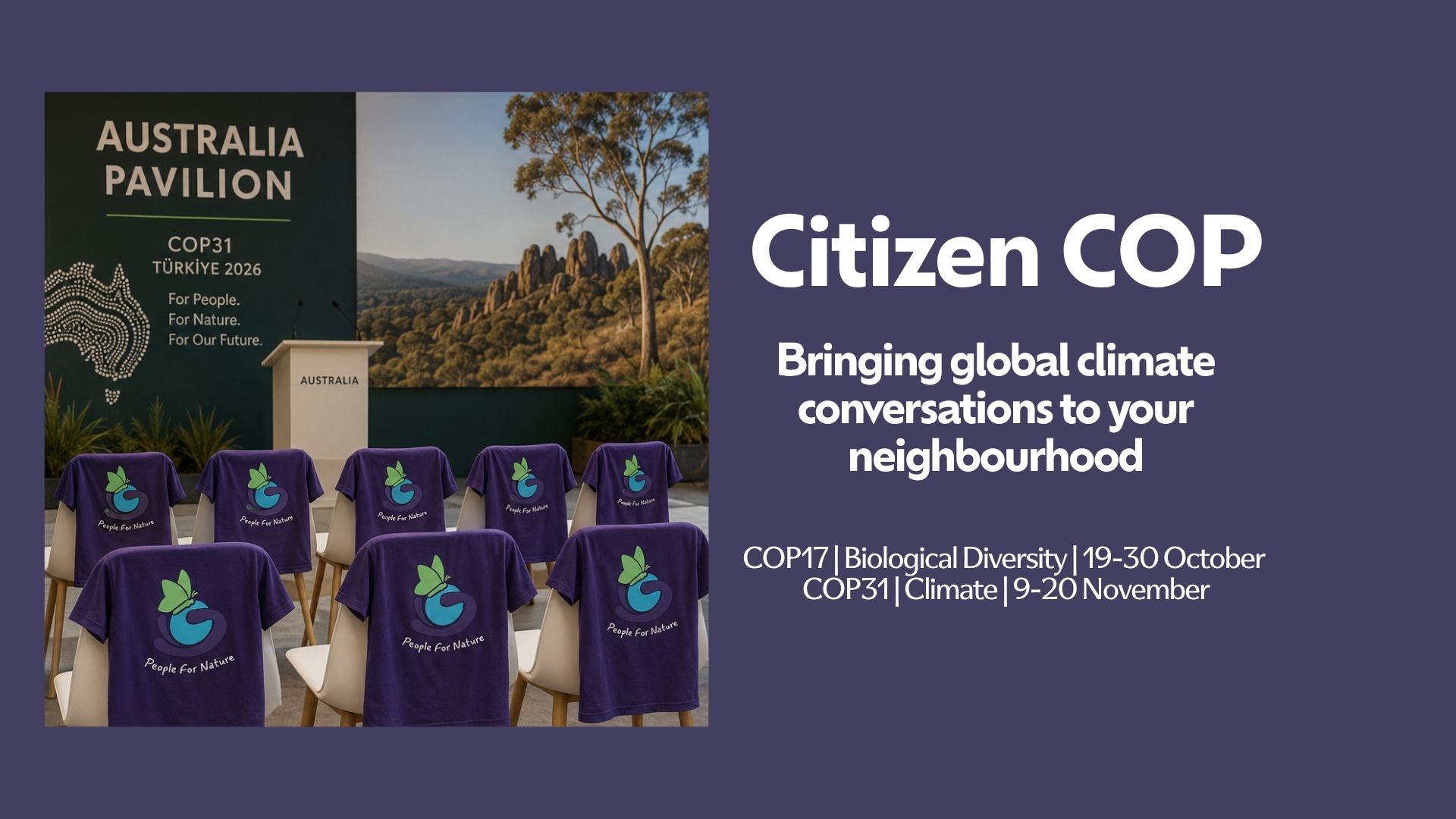
    Every year, world leaders, scientists, negotiators, businesses, NGOs, and civil society groups gather for global environmental summits known as COPs — Conferences of the Parties at the UN Climate Change Conference. Here is where major environmental agreements, including the Paris and Kyoto Agreements are negotiated and drafted. This year, there will be two major global COPs. 

    🌿 COP17 Biodiversity (19–30 Oct) held in Yerevan, Armenia.

    🌎 COP31 Climate (9–20 Nov) taking place in Antalya, Türkiye.

    These negotiations, which will be led by Australia this year, focus on reducing greenhouse gas emissions, accelerating the energy transition, adapting to climate impacts, and financing climate action globally. 

    And while these conferences are essential, they can also feel distant from everyday life… unless you’re part of the official agenda.

    That is where Citizen COP Australia comes in: a nationwide, people-powered movement bringing the spirit of the COP “Green Zone” (the public area at the UN Conference) into communities across Australia — creating spaces where everyone can learn, connect, share ideas and take action for climate and nature.

    Enabled by People For Nature but intentionally independent and distributed, Citizen COP invites communities, organisations, schools, businesses, artists, and local groups across Australia to host their own events during the COP periods.

    Rather than a single centralised conference, Citizen COP becomes a network of locally led conversations and actions — a “people’s COP” that makes global negotiations visible, accessible, and relevant at community level.
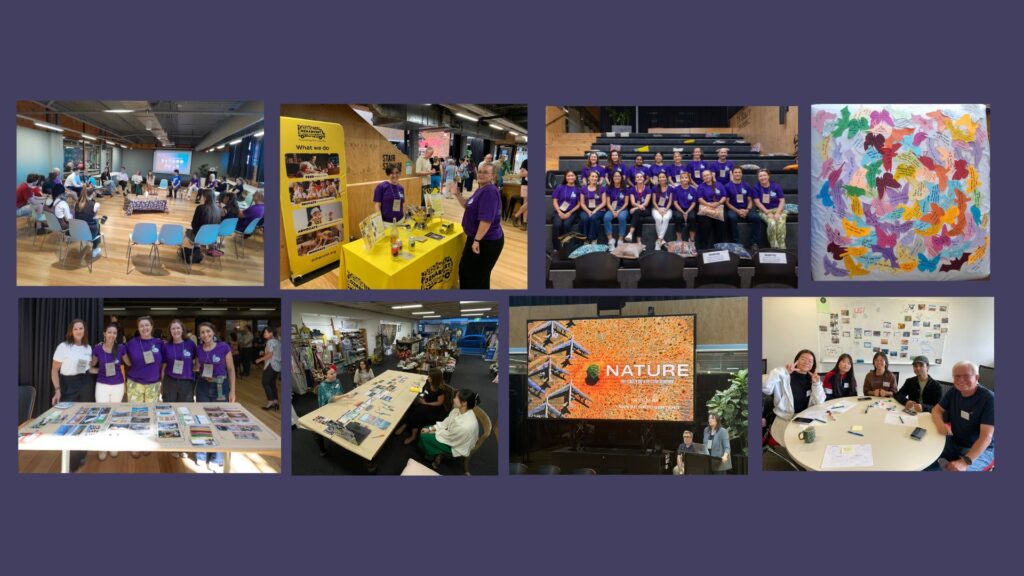
    Help build Australia’s biggest citizen-led Green Zone 

    The official COP Green Zone creates space for civil society, communities, innovators, youth and organisations to engage beyond formal negotiations. Citizen COP expands that idea.

    Our vision is a nationwide Green Zone — where every community, every state and every Australian has the opportunity to participate.

    We believe climate and biodiversity action should be participatory, community-driven, and aligned with the values of the future we are trying to create.

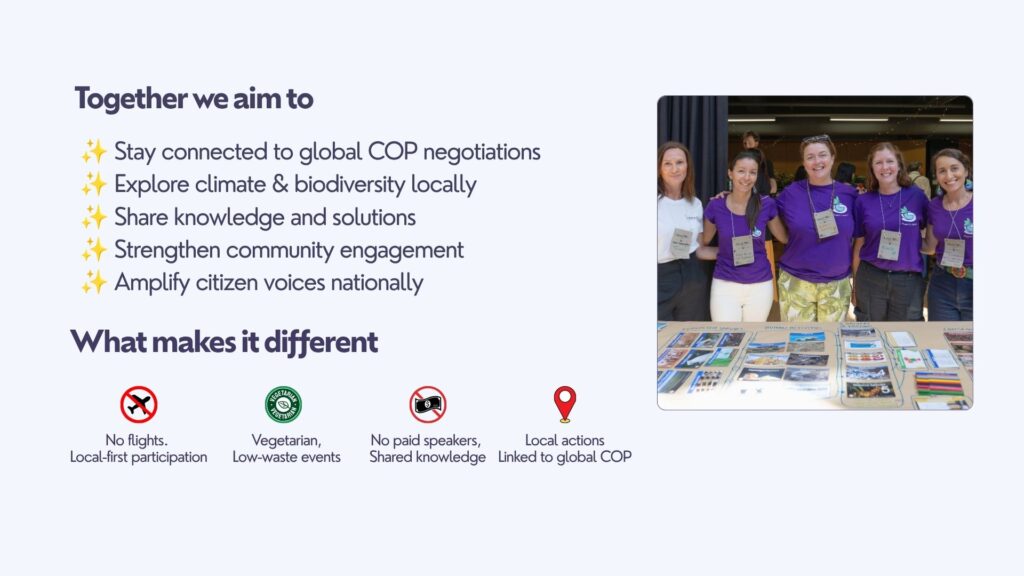
    Participating events are encouraged to follow a set of shared principles, including:

    • No flights associated with events or speaker participation
    • Low-waste and environmentally responsible event design
    • Vegetarian or plant-forward catering
    • A focus on local action and community solutions
    • No paid speakers, encouraging contribution through shared purpose rather than commercialisation
    • Inclusivity, accessibility, and constructive dialogue

    These principles are not about perfection. They are about modelling practical, values-aligned ways of gathering and collaborating.

    In a world where large conferences can sometimes carry significant environmental footprints themselves, Citizen COP aims to demonstrate that meaningful engagement can happen locally, affordably, and with minimal impact.

    Together, we can build a Green Zone where conversations happen in neighbourhoods, schools, workplaces, community halls, parks and online spaces. A Green Zone where knowledge becomes action.
    Many ways to participate 

    Citizen COP is intentionally designed as a distributed movement rather than a branded, centralised event. 

    There are many ways you could participate:

    • Schools may host student climate forums or biodiversity projects. 
    • Councils might facilitate community workshops. 
    • Businesses could organise sustainability discussions or host Climate Fresk, Biodiversity Collage or Circular Economy Collage workshops with staff and customers. 
    • Artists may create exhibitions or performances exploring ecological themes. 
    • Community groups might run repair cafés, nature walks, film screenings, climate cafés, and so much more.

    This decentralised approach allows communities to shape discussions around the issues most relevant to them – whether that is renewable energy, biodiversity restoration, circular economy solutions, sustainable food systems, greener cities, climate adaptation, conservation, or community wellbeing.

    Global issues call for local solutions 

    The impacts of climate change and biodiversity loss are deeply local.

    At a time when Australia has an unprecedented opportunity to help shape global environmental conversations through its leadership role connected to COP31, Citizen COP creates a way for communities across the country to feel part of that moment.

    Citizen COP bridges the gap between global negotiations and everyday life by translating complex environmental issues into practical, human-centred conversations in our neighbourhoods, schools, workplaces, organisations, and communities.

    📆 Interested in organising an event, submit your EOI before 31 August.

    🙌 Want to help out? Contact us today!
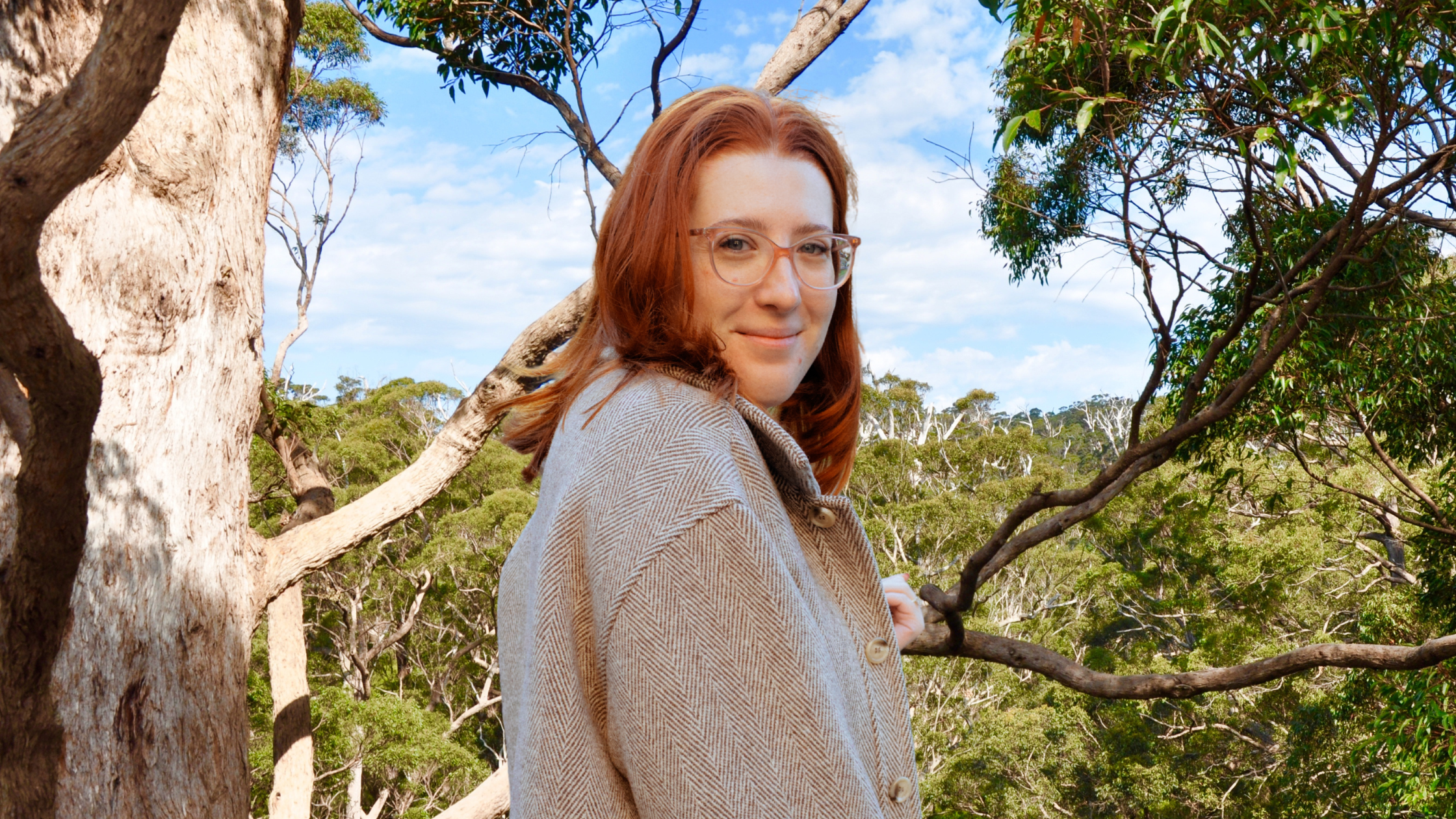
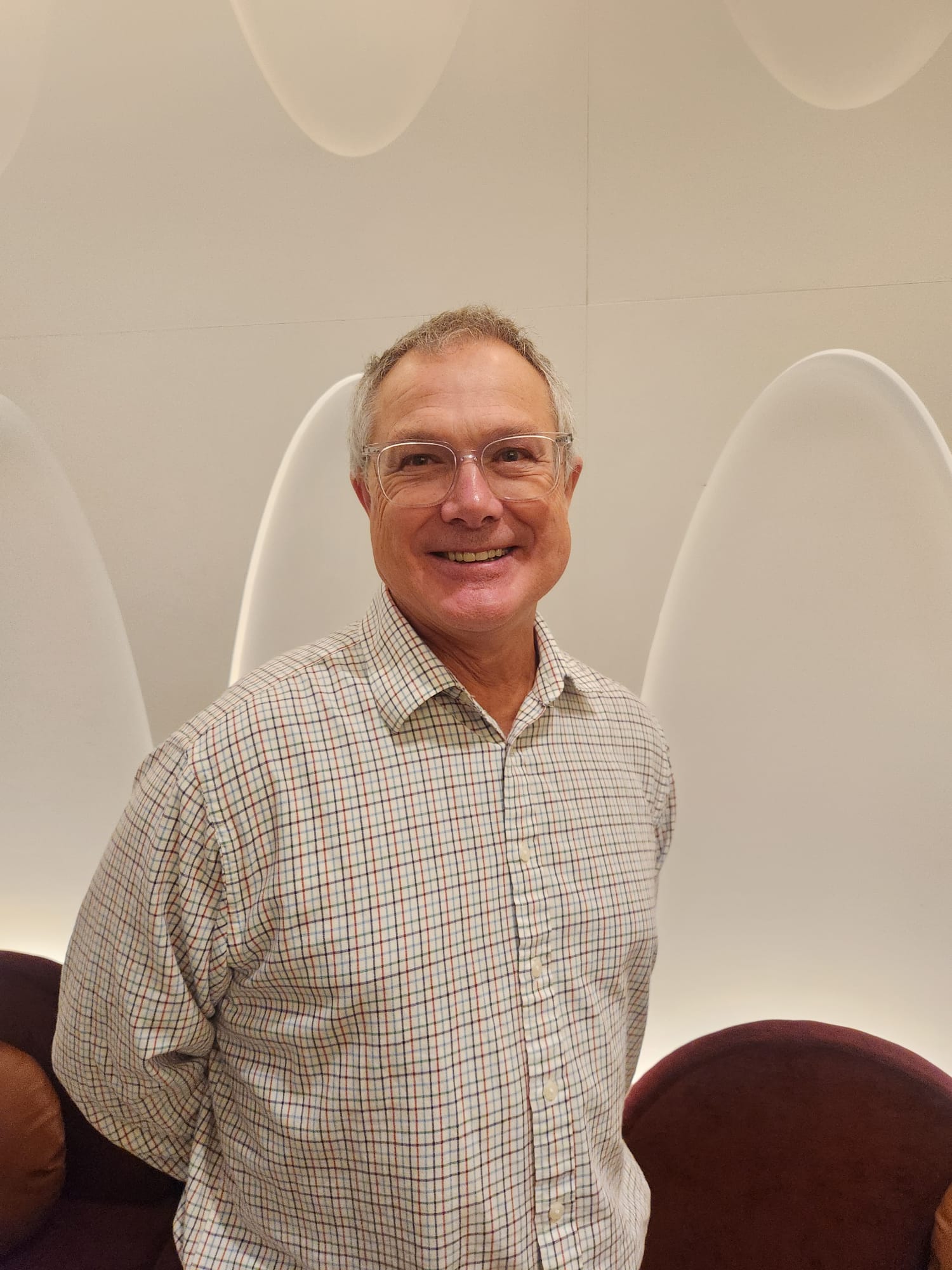
  • Meet our ambassador: Azra Hadzic

    Meet our ambassador: Azra Hadzic

    If you’ve ever looked at a sustainability report and thought, “Where do I even start?” — you’re not alone. And that’s exactly where our ambassador Azra shines.

    Based in Melbourne, Azra is a Senior Consultant in the Climate Impact team at Pangolin Associates. Her day-to-day work sits at the intersection of data, strategy, and real-world impact — helping organisations understand their greenhouse gas emissions, define reporting boundaries, and uncover meaningful ways to reduce their climate footprint.

    But what really sets Azra apart isn’t just her technical expertise — it’s her ability to make complex climate concepts feel clear, approachable, and even empowering.

    Making Climate Make Sense

    A big part of Azra’s work is translating the often overwhelming world of climate reporting into something people can actually engage with.

    “I spend a lot of time helping organisations feel confident navigating their reporting obligations,” she says. “But more importantly, helping them see that they can take meaningful action.”

    That focus on clarity and confidence is at the heart of everything she does — whether she’s working with corporate clients or volunteering in the community.

    Passion Meets Purpose

    Azra is deeply passionate about climate education and environmental literacy. Not just in a technical sense — but in a human one.

    She believes that when people truly understand sustainability, they stop feeling paralysed by it.

    Instead, they feel empowered.

    “I love helping people move from feeling overwhelmed to feeling capable,” she shares. “That shift is where real change begins.”

    Why People For Nature?

    For Azra, joining People For Nature was a natural fit.

    She was drawn to the organisation’s community-based approach — where learning isn’t just theoretical, but hands-on, social, and deeply connected to the natural world.

    “I really value how the program connects people to nature while building understanding,” she says. “It’s such a powerful way to support communities — especially young people — to feel informed, inspired, and part of something bigger.”

    Bridging Two Worlds

    At the core of Azra’s work — both professionally and as a volunteer — is a simple but powerful mission:

    Bridging the gap between technical climate knowledge and everyday understanding.

    Whether she’s consulting with organisations, facilitating conversations, or engaging with local communities, Azra is constantly working to make sustainability feel less like a distant concept… and more like something we can all be part of.

    And that’s exactly the kind of energy we love to see in our ambassador community 💚


    Want to get involved like Azra? Join us in turning knowledge into action — one conversation, one workshop, and one community at a time.

  • Help Kokonut Sort It Right: Why Waste Sorting Matters (and Why It’s Not the Whole Story)

    Help Kokonut Sort It Right: Why Waste Sorting Matters (and Why It’s Not the Whole Story)

    At events, festivals, and public spaces, waste bins are often the first place we are asked to “do the right thing”.

    Recycle this.
    Compost that.
    Landfill the rest.

    It seems simple enough.

    But in reality, waste sorting is just one small part of a much bigger system—and it’s often where confusion begins.

    This is the thinking behind our video “Help Kokonut sort it right!”, created to make waste systems more visible, more playful, and easier to understand.

    Because when people are confused, it’s rarely due to lack of care. It’s usually because systems themselves are complex.


    Why waste sorting is harder than it looks

    At first glance, bins appear straightforward:

    • ♻️ Recycling
    • 🌿 Compost
    • 🔴 Landfill
    • 💰 Containers for Change

    But the reality behind each stream is more complicated.

    Some items that look recyclable are not accepted in standard recycling systems.
    Some “compostable” packaging requires industrial facilities that aren’t widely available.
    Some materials technically can be recycled—but only if they are clean, separated, and processed correctly.

    Even well-intentioned decisions can end up in landfill.

    This is not a failure of individuals. It’s a reflection of how systems are designed.


    The role of confusion (and why it matters)

    When people are unsure where something goes, it often leads to one of two outcomes:

    • placing it in recycling “just in case”
    • or defaulting to landfill to avoid contamination

    Both are understandable. Both are common.

    But both highlight a deeper issue: we are asking individuals to navigate systems that are not always intuitive.

    This is why education and clarity matter—but also why design matters just as much as behaviour.


    What Kokonut helps us see

    Through simple examples—like bottles, food scraps, coffee cups, and takeaway packaging—the video shows:

    • Not everything that looks recyclable actually is
    • Food waste belongs in biological cycles (compost), not landfill
    • Container Deposit Schemes provide a clear recovery pathway for some materials
    • Many everyday items still end up in landfill, even when sorted correctly

    The goal is not perfection.

    It is understanding.


    The bigger question: why are we sorting so much waste at all?

    Waste sorting is important. It helps reduce contamination and improves recovery where systems exist.

    But it also raises a bigger question:

    Why are we generating so many materials that require sorting in the first place?

    Many single-use items are designed for convenience, not recovery.
    Some materials are complex combinations that cannot easily be separated.
    And even with good sorting, a significant proportion still ends up in landfill.

    This is where the conversation begins to shift—from behaviour at the bin, to design upstream.


    From sorting waste to reducing it

    A more effective system starts earlier in the cycle:

    • choosing reusable over single-use
    • designing packaging that is truly recoverable
    • supporting systems like refill and return
    • reducing unnecessary material use altogether

    This doesn’t replace recycling or composting. It strengthens it by reducing pressure on the system in the first place.


    The takeaway

    Waste sorting matters. It plays a role in keeping materials in circulation where possible.

    But it is not the end of the story.

    If we stop at sorting, we miss the bigger opportunity: designing systems that create less waste in the first place.

    ♻️ Reduce first.
    ♻️ Reuse always.
    ♻️ Then sort what’s left.

    Because the goal is not just to sort waste better—but to create less of it altogether.

  • Meet our ambassador: Tom Borthwick

    Meet our ambassador: Tom Borthwick

    Tom Borthwick is a Principal Chemical Engineer and passionate sustainability facilitator dedicated to bridging engineering expertise with environmental action. As an Ambassador for People For Nature, Tom brings a unique blend of technical insight and public engagement to support climate and biodiversity education, helping diverse audiences explore systems‑based thinking and collaborative solutions to environmental challenges.

    With a professional background in chemical engineering, Tom has led complex technical processes and safety‑critical projects, where analytical rigour, risk assessment and innovative problem‑solving are core to success. He applies these strengths to his facilitation work — guiding workshops such as Climate Fresk that translate climate science into accessible, interactive learning experiences that inspire curiosity and action among participants.

    Tom is also active in community‑driven climate initiatives, contributing to People For Nature that bring together citizens, professionals and change‑makers to deepen climate literacy and collective agency. Through his ambassadorial role, he champions inclusive learning environments where people can connect knowledge with purpose‑driven action for a healthier planet.

  • What Are We Leaving Behind?

    What Are We Leaving Behind?

    Small Choices, Citizen Action for Nature

    It starts with something small.

    A takeaway coffee on the way to work.
    A bottle of water picked up at an event.
    A quick, convenient choice in the middle of a busy day.

    Individually, these moments feel insignificant. But together?

    They tell a much bigger story.

    Every single day in Australia, we throw away 4.1 million coffee cups1 and 2.7 million plastic bottles2.

    Let that sink in for a second.

    Most coffee cups aren’t actually recyclable. Despite looking like paper, they’re lined with plastic, making them difficult to process. And while plastic bottles can be recycled, only about one in three actually are.

    The rest?

    They end up in landfill.

    Now imagine this.

    All that waste, from just one day, lined up in front of you. It would fill the equivalent of about 51 school buses3.

    Every. Single. Day.

    The things we throw “away” don’t disappear. They accumulate. They linger. They become part of the legacy we leave behind.

    And here’s where it becomes more than just numbers.

    Because those school buses don’t just represent waste. They represent the future we are shaping. A future that today’s children will inherit. A future defined, in part, by the everyday choices we make without thinking.

    But this isn’t a story about guilt.

    It’s a story about possibility.

    Because the same way small choices add up to a problem, they can also add up to a solution.

    • Choosing a reusable cup.
    • Bringing a water bottle.
    • Pausing for a second before reaching for something disposable.

    These actions might feel small. But multiplied across communities, events, and cities, they have the power to change the trajectory.

    This is what collective impact looks like.


    Want to go further?

    Awareness is just the first step. Real change happens when we understand the systems behind these challenges — and our role within them.

    At People For Nature, we exist to reconnect people with nature by making climate and biodiversity science understandable, relevant, and actionable. 

    • Join one of our workshops: https://collections.humanitix.com/people-for-nature-literacy-workshops
    • Join the Nature Oasis network: https://www.peoplefornature.org.au/blog/how-to-create-a-nature-oasis
    • Start by looking at your own impact — next time you head out for a coffee or attend an event, take your reusable coffee cup, a water bottle, and notice what you’re consuming and discarding along the way.  

    References

    1. Australian Plastic Flows and Fates Study 2021-22 National Report (1.5 billion hot cups used in 21-22 per year)
    2. ABC Education – War on waste misconceptions lead to unnecessary waste
    3. School buses calculation assumptions:
      1. Average cup volume ≈ 350 mL
      2. Average bottle volume ≈ 600 mL
      3. Australian school bus internal volume ≈ 60,000 litres 
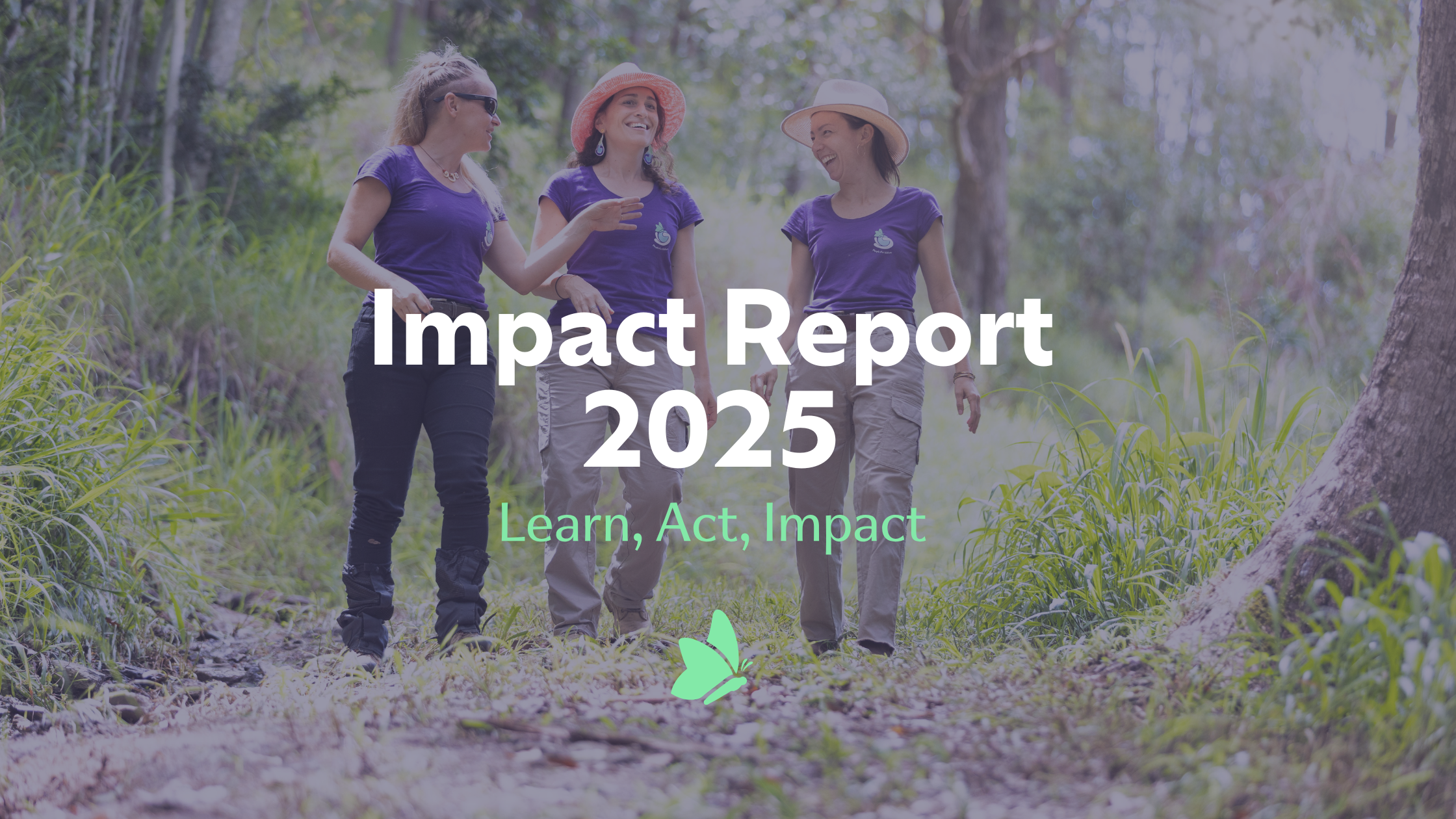
  • Our 2025 Impact Report is here!

    Our 2025 Impact Report is here!

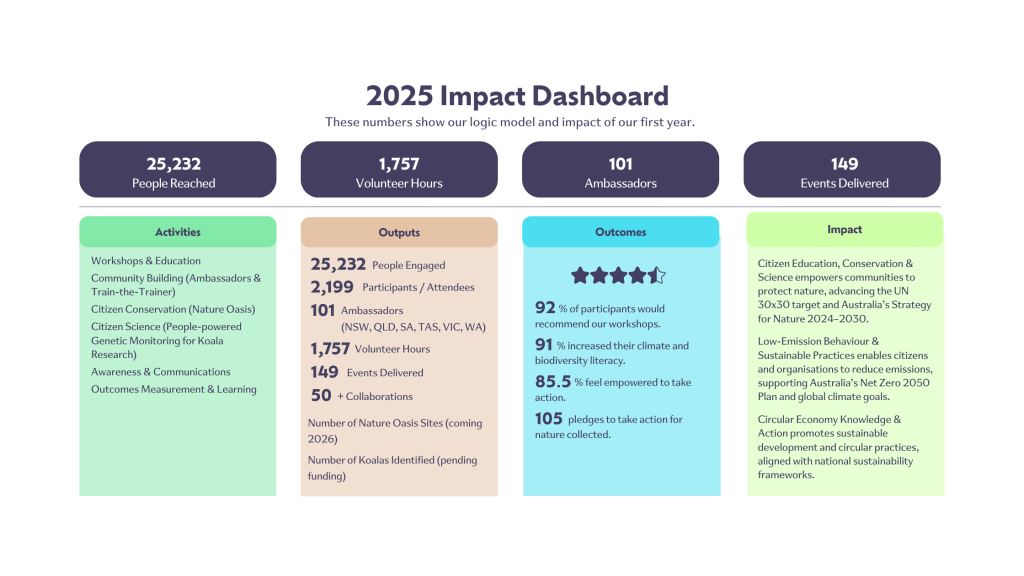
    2025 was a big year for People For Nature. Together with our amazing community, we educated thousands of Australians on climate and biodiversity, ran hands-on workshops, and inspired action for nature.

    From citizen science projects to corporate partnerships, our collective efforts are making a real difference — and we want to share it with you.

    Dive into our 2025 Impact Report to see the stories, the numbers, and the people driving change. Let’s celebrate what’s possible when people power meets nature.

    -> Read the Full Report


    We turn knowledge into action by making science accessible, empowering citizens, and building lasting impact for nature.

    Our mission is to empower 30,000 Australians to take action for nature by 2030.

  • Your Nature Oasis is a citizen science hotspot

    Your Nature Oasis is a citizen science hotspot

    Why People For Nature encourages every Oasis to use iNaturalist

    At People For Nature, we believe that protecting nature starts with connection — and that everyday people play a vital role in restoring and understanding the living world around them.

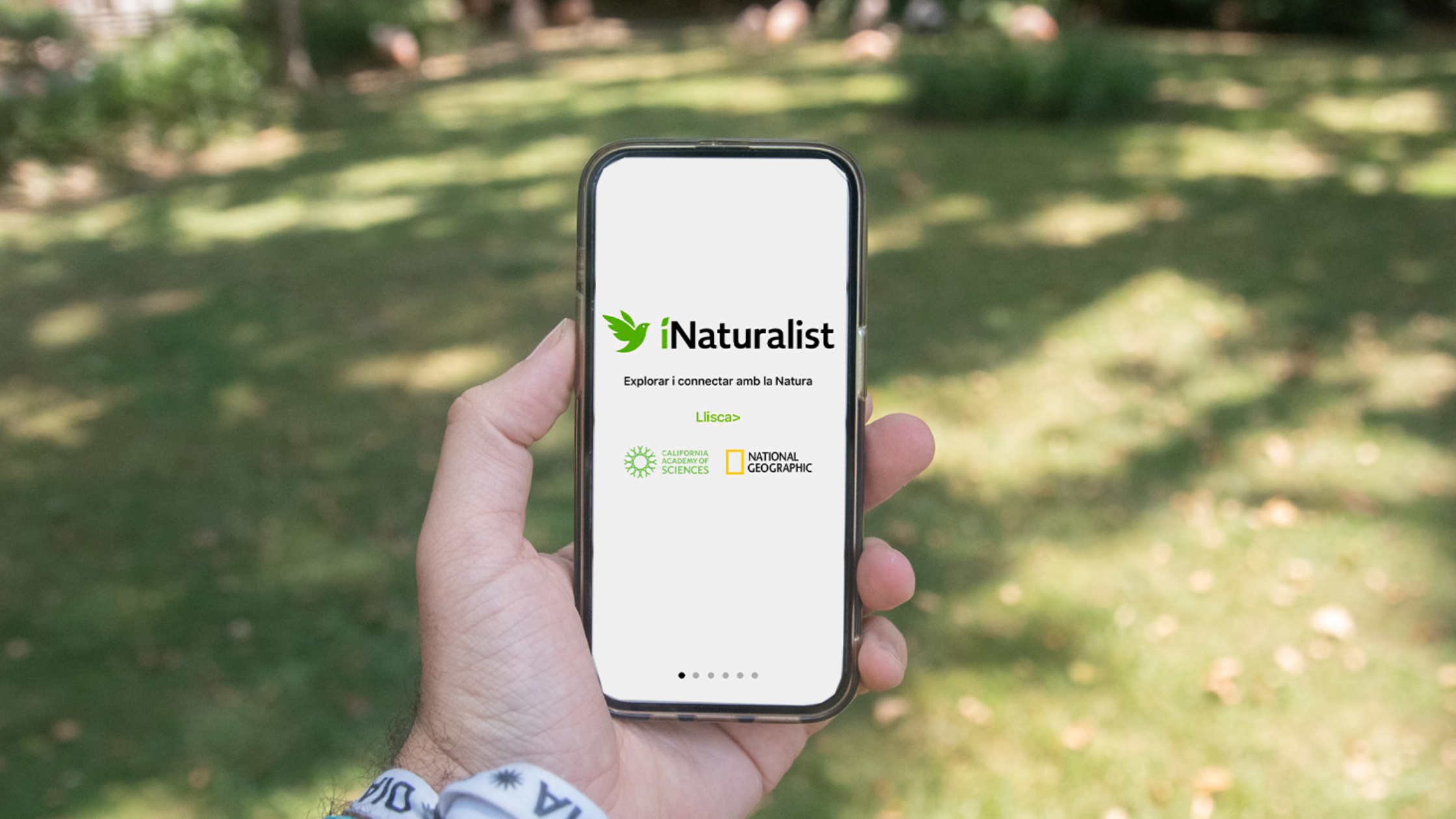
    That’s why we encourage everyone creating a Nature Oasis to use iNaturalist: a simple, joyful way to turn your patch of nature into a living contribution to science.

    What is iNaturalist?

    iNaturalist is a free app that allows you to photograph plants, animals and fungi, upload your observations, and help build one of the world’s largest biodiversity databases.

    Your sightings don’t just stay on your phone — they become real data, used by scientists, conservation groups and decision-makers to better understand biodiversity and how it’s changing.

    Why iNaturalist belongs in every Nature Oasis

    Nature Oases are designed to restore habitat, invite biodiversity back, and reconnect people with the natural world. iNaturalist helps make those changes visible.

    By using the app, you can:

    • 🌿 see what species are already present in your Oasis
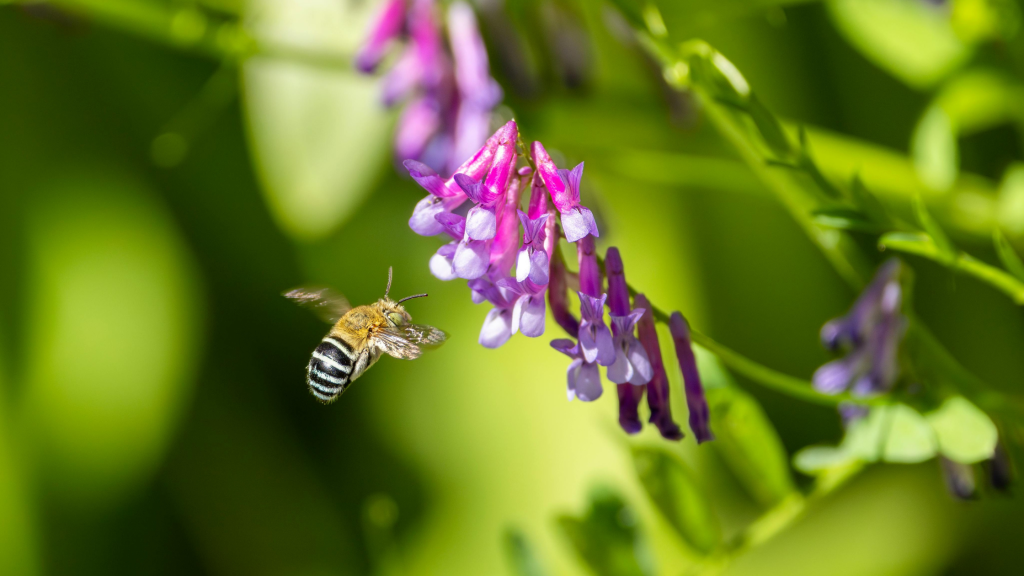
    • 🐝 track pollinators, birds and other wildlife as habitat improves
    • 📈 observe changes over time as your Oasis grows and matures
    • 🧩 contribute valuable local data to national and global research

    Every observation strengthens the case for nature-positive action — starting right where you live.

    Citizen science that’s genuinely fun

    You don’t need to be a scientist. You don’t need special equipment.
    All you need is curiosity.

    Using iNaturalist often feels like:

    • a nature scavenger hunt
    • a shared learning experience with kids, friends or neighbours
    • a moment of wonder when you realise how much life is around you

    And the iNaturalist community is there to help identify species, answer questions and celebrate discoveries with you.

    From individual Oases to collective impact

    One Nature Oasis matters.
    Thousands of Nature Oases? That’s a movement.

    When many People For Nature participants use iNaturalist, we begin to:

    • build a clearer picture of biodiversity across communities
    • support citizen-led conservation and monitoring
    • strengthen Australia’s contribution to global biodiversity knowledge
    • show that people power can make nature visible — and valued

    This is climate and biodiversity action grounded in place, care and participation.

    How to get started

    1. Download iNaturalist (free on iOS and Android)
    2. Step into your Nature Oasis
    3. Photograph what you see — plants, insects, birds, fungi
    4. Upload your observation and let the community help identify it

    That’s it. You’re now part of a global citizen science network — through People For Nature.

    Because every Nature Oasis tells a story.
    And with iNaturalist, we can make sure those stories count.

  • Meet our ambassador: Mélanie Ducros

    Meet our ambassador: Mélanie Ducros

    VIC Community Lead

    Some people work on climate solutions in boardrooms. Others bring them to life in circles of conversation — where citizens become part of the solution.

    Meet Mélanie Ducros.

    Originally from New Caledonia and now based in Victoria, Mélanie is deeply committed to climate action across the Pacific region. Her work is grounded in a simple but powerful belief: when people are informed and empowered, they become a driving force for change.

    Mélanie is a process, energy and environmental engineer, with nine years of experience working on international development projects across West and North Africa and the Indo-Pacific. Her work has focused on the intersection of renewable energy, sustainable water access and climate adaptation — where technical solutions meet real human needs.

    Today, she continues this journey through her work on energy transition with the French–Australian Indo-Pacific Centre for Energy Transition (FACET), helping shape conversations around a more sustainable future between France, Australia and the broader region.

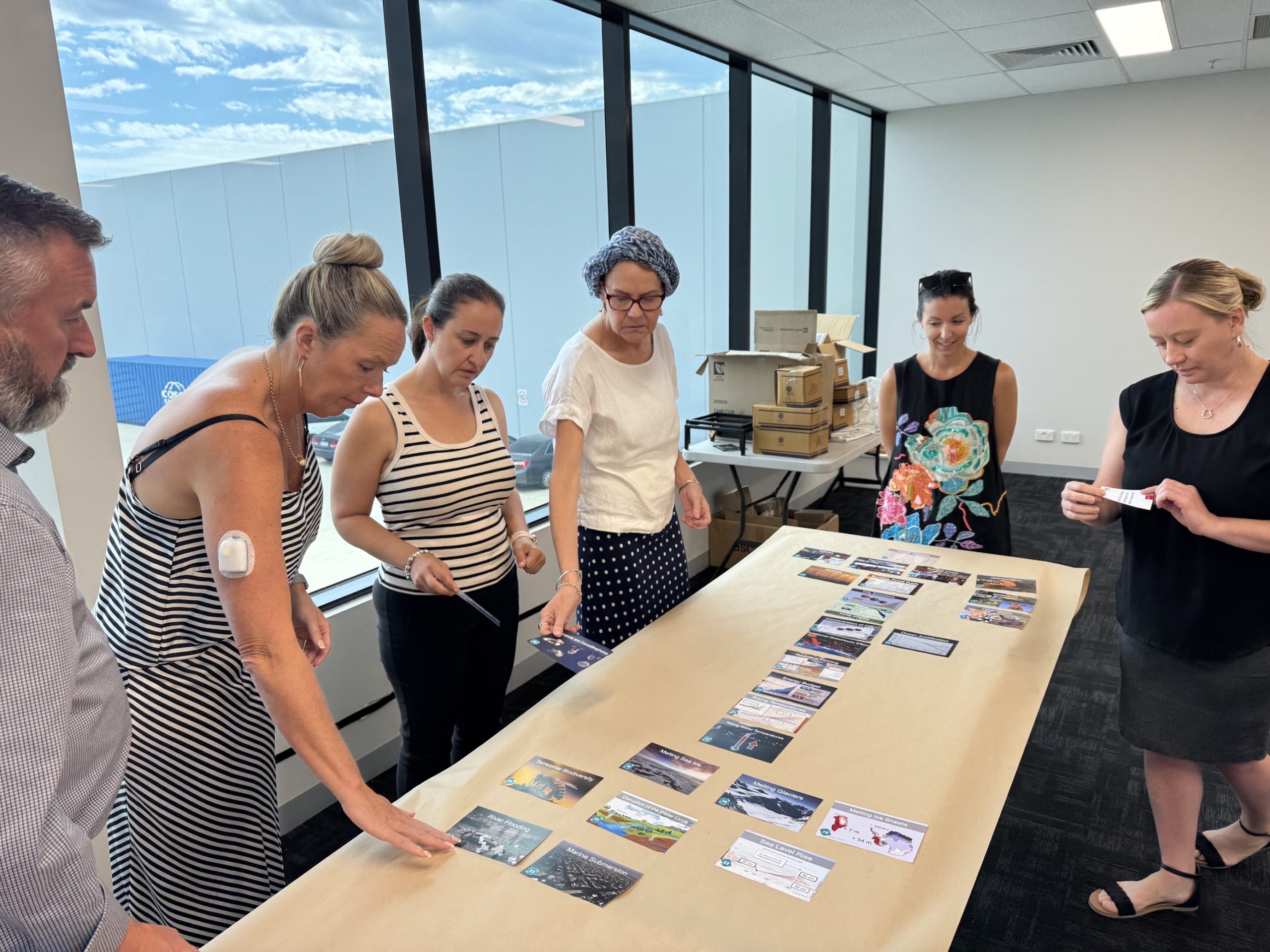
    But one of her most meaningful contributions happens in a very different setting: a room full of people, markers on tables, and a Climate Fresk unfolding through shared discovery.

    She shares:

    “Being an ambassador for People For Nature inspires me because I am convinced that citizen-led initiatives like P4N are essential to driving real change. Facilitating Climate Fresk workshops gives me the strong feeling that I am contributing to meaningful impact. It is also incredibly enriching — I always leave each workshop inspired and energised by the conversations and insights shared by participants. As ambassadors, we receive as much as we give.”

    This is what citizen-powered change looks like: not distant, not abstract — but shared, participatory, and deeply human.

    And it grows every time someone steps into the conversation.

    🤝 Connect with Mélanie on LinkedIn 💚

    .

  • Building a climate-first workforce  at VSL Australia

    Building a climate-first workforce  at VSL Australia

    Creating sustainability champions internally

    VSL Australia has put sustainability at the centre of its operations,  and has a big focus on educating and empowering its workforce.

    Internally driven by Jonathan Handschuh, one of our Ambassadors, VSL has run countless Climate Fresk workshops, helping its teams understand climate science and how they play a part in creating a better future.  

    The organisation has now moved into the next phase of climate education, running Biodiversity Collage workshops. This is deepening understanding, building further engagement and accelerating climate action.

    Program Objectives

    VSL Australia has set an ambitious climate action plan. To deliver on it, employees need to be engaged and understand the role they can play in achieving its goals. By building climate literacy and fostering awareness of the challenges, people can see how their actions contribute to a more sustainable future.

    Impact & Feedback

    “Rolling out Climate Fresk workshops across the organisation has helped mobilise our teams. When people connect emotionally with climate facts, their actions become more meaningful and impactful.  And the impact extends beyond the workplace: when people connect the dots they drive positive change in their personal lives as well.”

    Andrew Manser, Managing Director, VSL ANZ

    Interested in organising a workshop for your organisation?

    We’ll empower your people to power change for nature. Contact us today to find out more.

    Click below to download the VSL Australia case study.

  • Join the Nature Oasis initiative 

    Join the Nature Oasis initiative 

    Nature is disappearing around us – quietly, rapidly, and often unnoticed. But together, we can reverse this trend.

    To bend the curve before 2050 and reduce biodiversity loss, we must pair ambitious conservation efforts with sustainable practices and behaviour change.

    That’s where the Nature Oasis initiative comes in

    The Nature Oasis network empowers all Australians to create and celebrate all vibrant spaces for native wildlife.

    What is Nature Oasis?

    Nature Oasis is a citizen-led initiative by People For Nature that enables Australians to turn any space – balconies, gardens, schoolyards, private properties, parks – into habitats supporting native biodiversity.

    Whatever the size, a Nature Oasis is a space where biodiversity flourishes, where nature is respected and allowed to thrive.

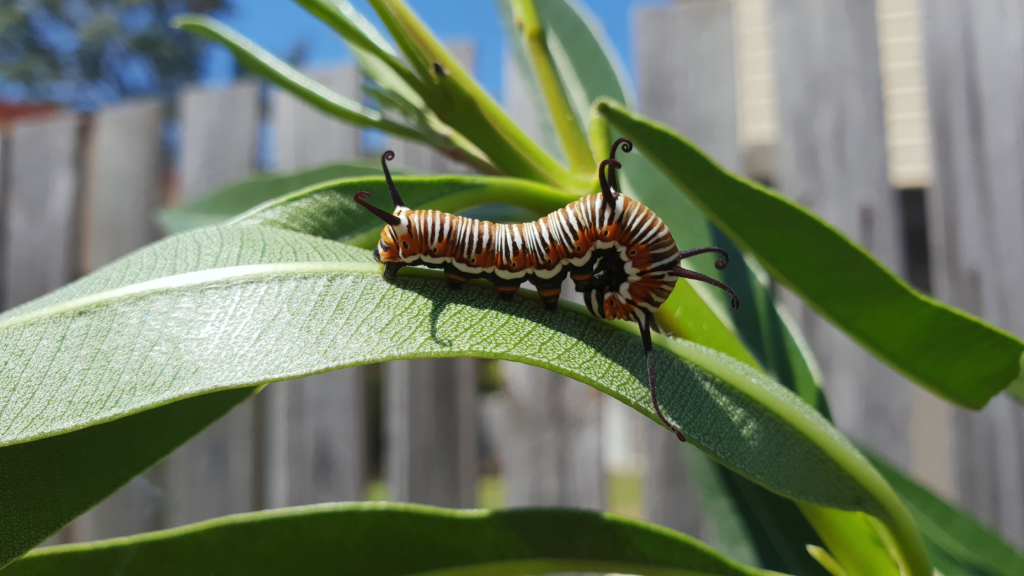
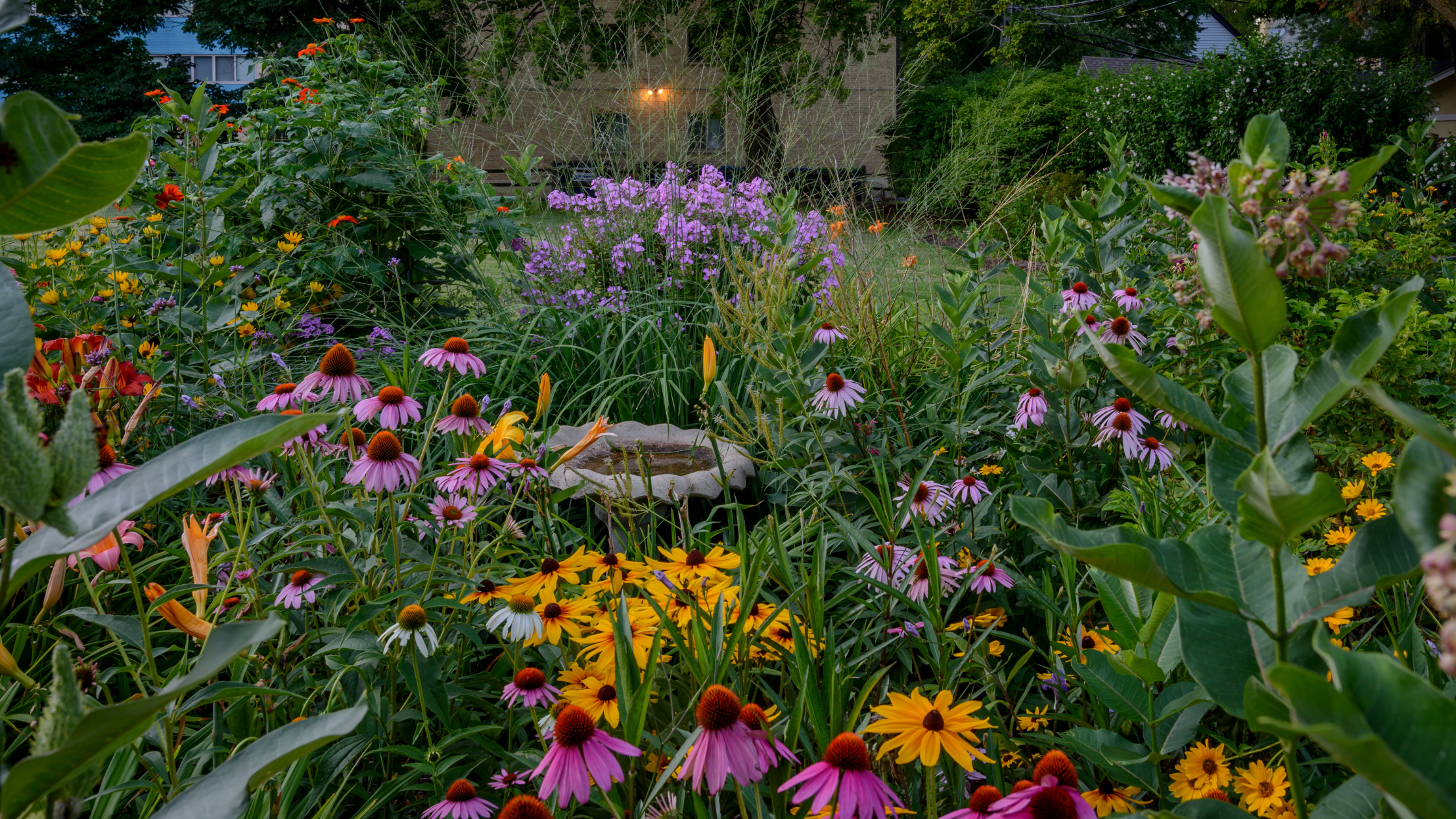
    A few flowers are enough to bring back Christmas beetles, native bees, and butterflies!

    So, say goodbye to uniform mowed lawns, long hedges of yew, and other ‘green deserts,’ as well as pesticides and other harmful practices… 

    Nature Oasis is not a gardening platform, it’s a network of people-powered actions to halt the decline of local biodiversity. 

    Join the Nature Oasis initiative

    2. Register your Nature Oasis (new or existing) and share its location on the map (coming soon!).

    3. As you expand your Nature Oasis, update the details (for example, if you currently have a pollinator garden, in future you may update to include you have also created a bee hotel).

    4. Inspire others to follow your lead – embrace your role as a nature ambassador!

    The Nature Oasis Charter

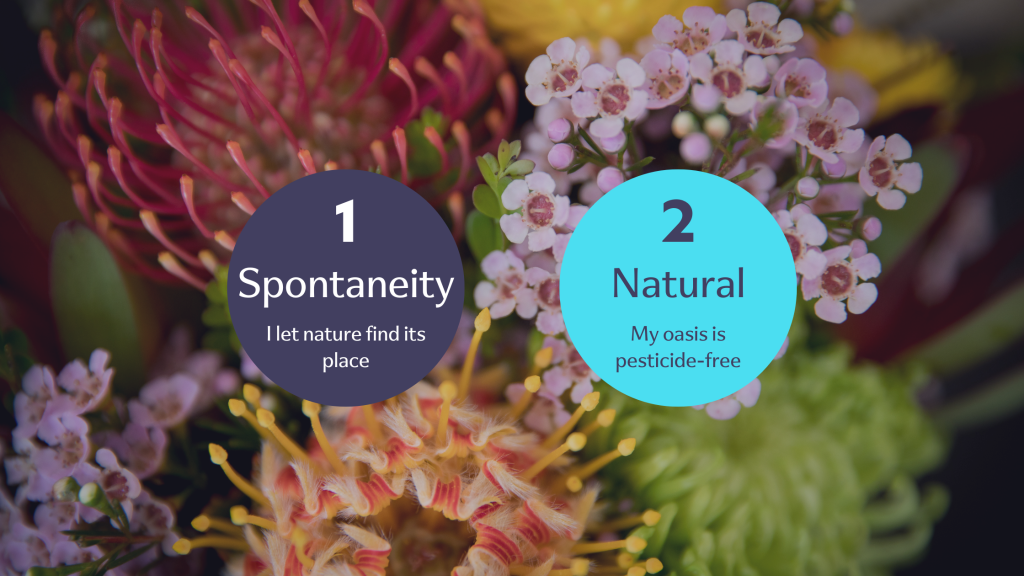
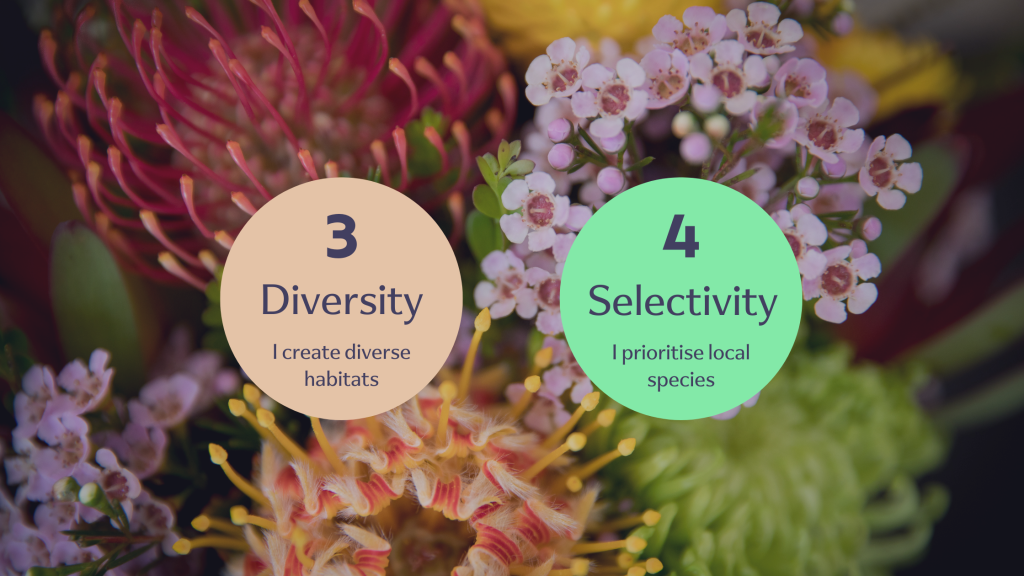
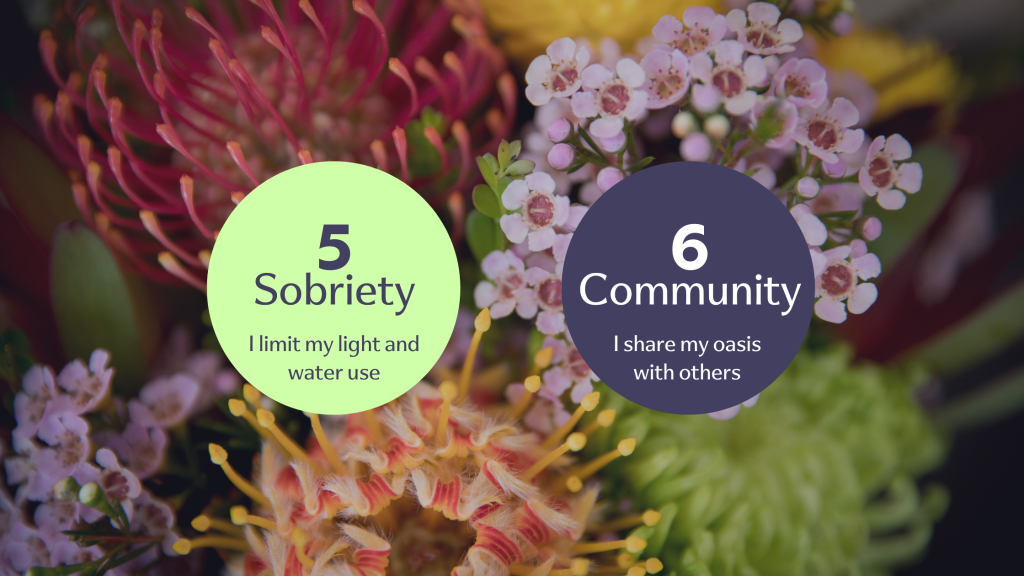
    Follow these 6 principles and help restore Australia’s rich ecosystems, one patch at a time 💚

    About the Nature Oasis network and app

    We’re building a national network of Nature Oasis spaces, creating the largest repository of citizen-powered conservation and regeneration spaces. 

    Inspired by French NGO, Humanité and Biodiversité, Nature Oasis aims to build a global network of these spaces. We’re creating a platform to connect citizens’ environmental actions to national conservation outcomes, powered by accessible, user-friendly tech.

    People For Nature is creating an app that will:

    💚 Build community through shared stories, actions, impact stats, and local nature challenges

    🗺️ Map and visualise each oasis across Australia

    📸 Foster and enable user participation. People will be able to register their oasis and share photos, data, or actions taken

    🌳 Gather ecological data to support research, species tracking, and restoration goals

    By leveraging technology and collaboration, we will connect individual actions to a national effort, gathering data to support scientific research, restore ecosystems, protect species, and foster a deeper connection to nature.

    Why it matters: Empowering Citizen Conservation

    Nature Oasis is more than a project—it’s a citizen-led movement, aligned with Australia’s Nature Strategy 2024–2030, that empowers everyday Australians to take meaningful action where they live.

    “97% of Australians want more environmental action, but fewer than 5% volunteer in conservation. Nature Oasis flips the script—bringing conservation home and inviting everyone to get involved.”

    Together, we’re reconnecting people to nature through accessible tools, inspiring workshops, and local action

    🌿 Join us and create your Nature Oasis today! 🌿

    Read some of our other blogs on this topic:

    🐨 How Citizen-Led Actions Support Australia’s Nature Strategy 2024–2030

    🧑‍🌾 Citizen Conservation in Australia

    🪴 How to teach sustainability at home