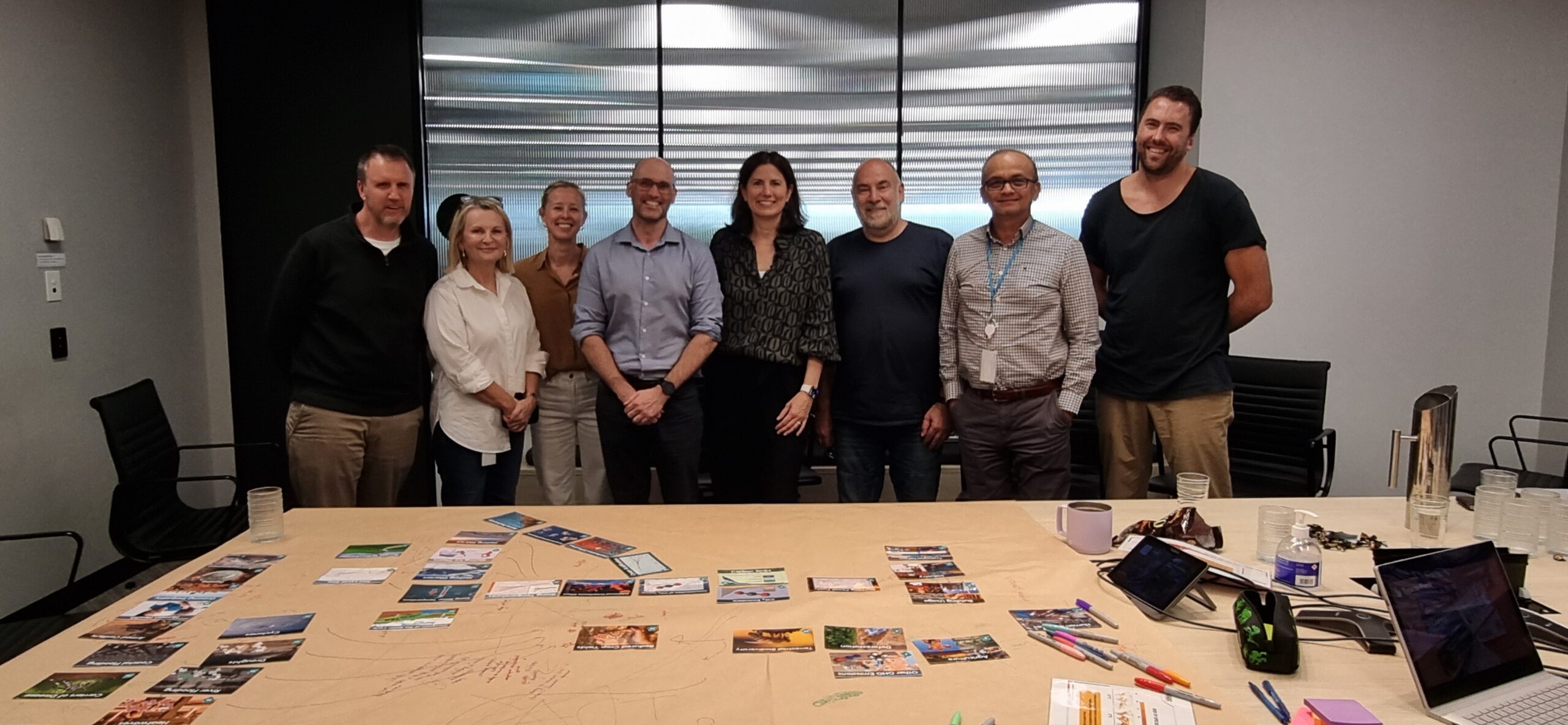
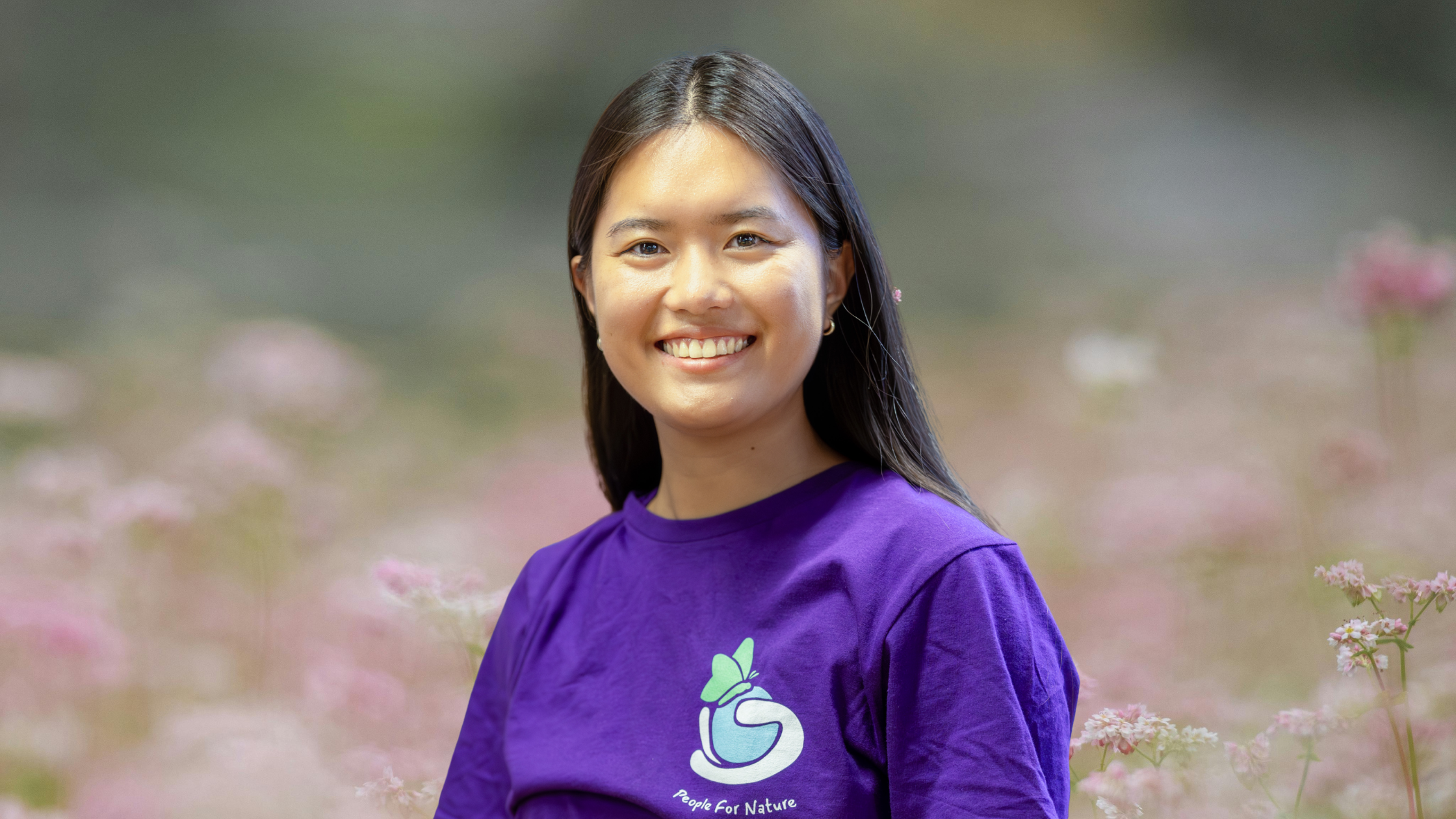
Servier’s journey with People For Nature began with a Climate Fresk for the leadership team and their response was so positive that they decided to organise workshops for all staff. This rollout happened in two phases: first, we organised a Climate Fresk as part of the company’s sales conference; then, we held a two-day Fresk marathon at head office, training 48 employees during seven sessions. Following the workshops, the team came up with a climate action plan, which they are now implementing. Next year, the company is considering expanding their knowledge by running the biodiversity and circular economy workshops.
Objectives
Servier extended Climate Fresk beyond leadership to build a shared, science-based understanding across its workforce—enabling practical action at every level. This reflects a broader shift: future-ready companies embed climate literacy into strategy and operations. For Servier, the strong link between climate and health makes this capability essential for managing risks and driving long-term impact.
Impact / Feedback
“This workshop, Climate Fresk, was a valuable
moment to step back as a Leadership Team as it
strengthened our understanding of climate change
and reinforced our responsibility to act, both
individually and as a company. Taking care of the
planet matters to us, and every step counts !”
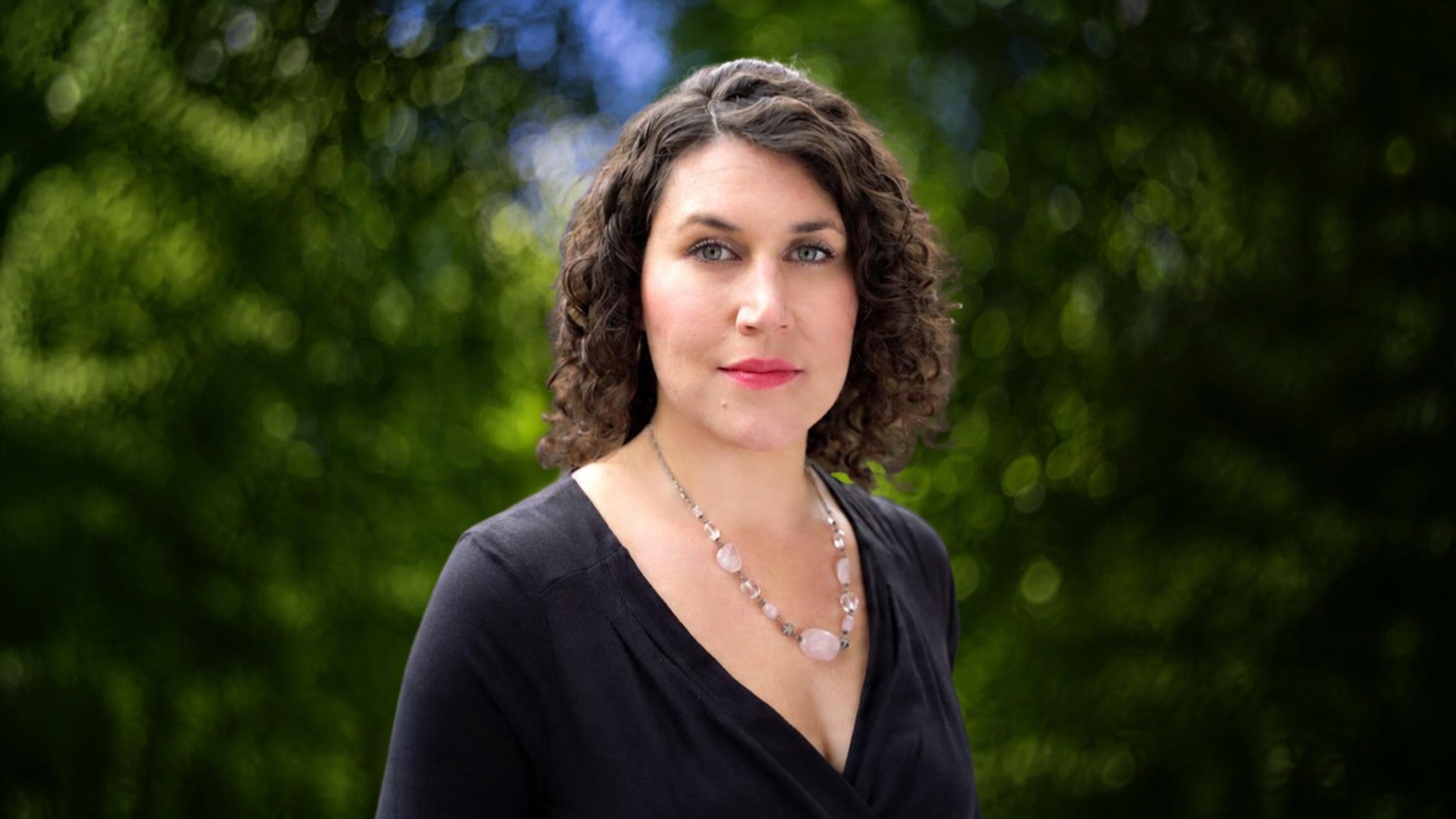
– Mélanie Chamaux, General Manager Servier Australia New Zealand
Interested in organising a workshop for your organisation?
We’ll empower your people to power change for nature. Contact us today to find out more.
Outdoor Office Day(s) Australia – 19-23 October (nationwide) — A nationwide movement inviting individuals and organisations to bring more nature, movement and fresh air into their working day.
Growing Place – interactive public art experience (Melbourne, VIC) — A city-wide augmented-reality art trail revealing Indigenous plants and ecosystems across Melbourne.
Spring Street Wisdom WALKshop (online) — A guided online Street Wisdom walk inviting participants to step outside, slow down and reconnect with their environment.
Giant Biodiversity Collage (Sydney,NSW) — A science-based, participatory workshop that helps people understand the causes and consequences of biodiversity loss — and how this connects our economies and our everyday choices.
Giant Biodiversity Collage (Brisbane, QLD) — A science-based, participatory workshop that helps people understand the causes and consequences of biodiversity loss — and how this connects our economies and our everyday choices.
Visioning Biophilic City Beyond NetZero (Sydney, NSW) — A hands-on workshop bringing together academics, local government, developers and industry consultants to co-design a real biophilic city concept, grounded in an actual Australian site.
The Living Neighbourhood – How We Return to the Village (Online) — A permaculture-inspired conversation on designing neighbourhoods that strengthen biodiversity, food resilience and community.
Living Waters: From Harbour Crisis to Climate Action (North Sydney, NSW) — Launch of the Sydney Living Waters Lab, connecting research, industry and community in nature-based responses to climate change.
Local biodiversity in the spotlight: connecting people, places and species (Brisbane, QLD) — A biodiversity talk and guided walk linking historical records with citizen science at Griffith’s Nathan campus.
Intergenerational by Nature: Embedding Youth in Nature Policy in Australia (Sydney, NSW) — Launch of Australia’s first youth nature network, exploring young people’s role in national and global nature policy.
Nature Studio: Connect and Create (Parkville, VIC) — A relaxed drop-in session exploring biodiversity through drawing, journalling and other simple creative activities.
Masterclass on Forest Therapy: Reconnecting with Nature for Health (Online) — An evidence-based online masterclass on Forest Therapy (Shinrin-Yoku) and its benefits for health and wellbeing.
Co-working & Networking Outdoors (Sydney, NSW) — A relaxed outdoor co-working day inviting people to bring their laptop and work alongside others in a greener setting.
Conservation Conflict and Consensus: Finding Common Ground on Introduced Species (Sydney (UTS), NSW) — A research-based session exploring how conservationists can navigate disagreement over introduced species management.
From Citizen Ideas to Visible Action with LOMA (Local Matters) (Online) — A webinar introducing LOMA, a civic participation platform that keeps Citizen COP ideas visible and actioned after events end.
People, Planet, Pastry – Sustainability Meetup (Gold Coast, QLD) — A casual meetup for people working in or curious about biodiversity and sustainability to share local stories and ideas.
Bite by Bite: Supporting Biodiversity Through Everyday Food Choices (Brisbane, QLD) — A hands-on plant-based cooking workshop linking everyday food choices to biodiversity and community resilience.
Biodiversity & Pollinator-Friendly Gardening Workshop (Findon, SA) — A practical workshop on gardening for native pollinators and biodiversity in backyards, courtyards and balconies.
Citizen COP Bird Walk (Canberra, ACT) — A gentle bird walk exploring local birdlife, biodiversity decline and cultural responsibilities to care for Country.
Places That Matter: A Redlands Conversation on Biodiversity (Redlands, QLD) — A community conversation on growth, development pressure and protecting biodiversity-rich places in the Redlands.
Solve The Biodiversity Puzzle & Help Restore Nature (Brisbane, QLD) — A fun, family-friendly morning celebrating biodiversity and taking action for nature.
Creating Systems Change to Support Nature (Sydney, NSW) — An interactive workshop applying eco-centrism and the Three Horizons framework to build actions that create systems change for nature.
Could Car Parks Become Hubs for Biodiversity? (Online) — An online lecture exploring research on turning car parks into joined-up, biodiverse green spaces in cities.
Repair and Swap @ UoN (Newcastle, NSW) — A clothes-swap and repair café for University of Newcastle students and staff, giving pre-loved items a second life.
Leadership on the Edge from Antarctica (Sydney, NSW) — A talk on courage, resilience and leadership drawn from 15+ years travelling to Antarctica, the Arctic and the Amazon.
Backyard Biodiversity Safara with Permaculture Australia (Online) — A relaxed online session on noticing and supporting the biodiversity already present in backyards and balconies.
Gardens for Wildlife Speaker Series (Online) — An online speaker session on habitat gardening and caring for wildlife in backyards, with a network of habitat gardeners.
Biodiversity: The Next Frontier for Finance (Melbourne, VIC) — A webinar with Australian and international experts on including biodiversity in sustainable finance and markets.
Tim Winton’s ‘Coral’s Last Stand’ Film Showing (Chapel Hill, QLD) — A film screening with refreshments and discussion on the threats facing Australia’s coral reefs.
Small Steps Biodiversity Panel and Workshop (Sydney, NSW) — A panel of community doers followed by a Biodiversity Collage workshop, showing how small actions can reverse biodiversity loss.
Turning the Tide on the Cooks River – Stories of Community, Regeneration and Wild Hope (Hurlstone Park, NSW) — A conversation on river and community regeneration along the Cooks River, featuring Finding Nature, Regen Sydney and Wild Hope.
Effective Climate Conversations Training (Online) — An online workshop teaching the skills to have productive, confident climate conversations and counter doomism or denial.
— Book your ticket: https://events.humanitix.com/effective-climate-conversations-training-online-citizen-cop-2026
SUPPORT CITIZEN COP
Citizen COP National raffle – October 19 – November 20 (nationwide) — Citizen COP is built on citizen power, independence, and imagination. This national raffle is one of the creative ways we are building financial independence for Citizen COP.
At People For Nature, our strength comes from the people who guide and shape our work.
Tess brings more than 20 years of professional experience, including over a decade in sustainability leadership. Across corporate, government and not-for-profit sectors, she has consistently worked at the intersection of strategy, governance and impact — helping organisations deliver meaningful environmental, social and governance outcomes.
Her commitment extends well beyond her professional roles. Tess has contributed her time and expertise to a number of influential voluntary positions. She was a founding director of the Social Enterprise Council of NSW/ACT (SECNA), where she led the development of the organisation’s governance approach. She also served as the inaugural Chair of the Net Zero Working Group at the Insurance Council of Australia, playing a key role in catalysing the industry’s Net Zero Roadmap. More recently, she participated as a Board Observer with Red Room Poetry through the Observership Program.
What resonates most strongly with Tess is People For Nature’s focus on bringing community and nature closer together. She believes this connection is fundamental to how people thrive — now and into the future.
As we continue to grow, we’re grateful to have Tess’s experience, integrity and perspective helping guide our journey.
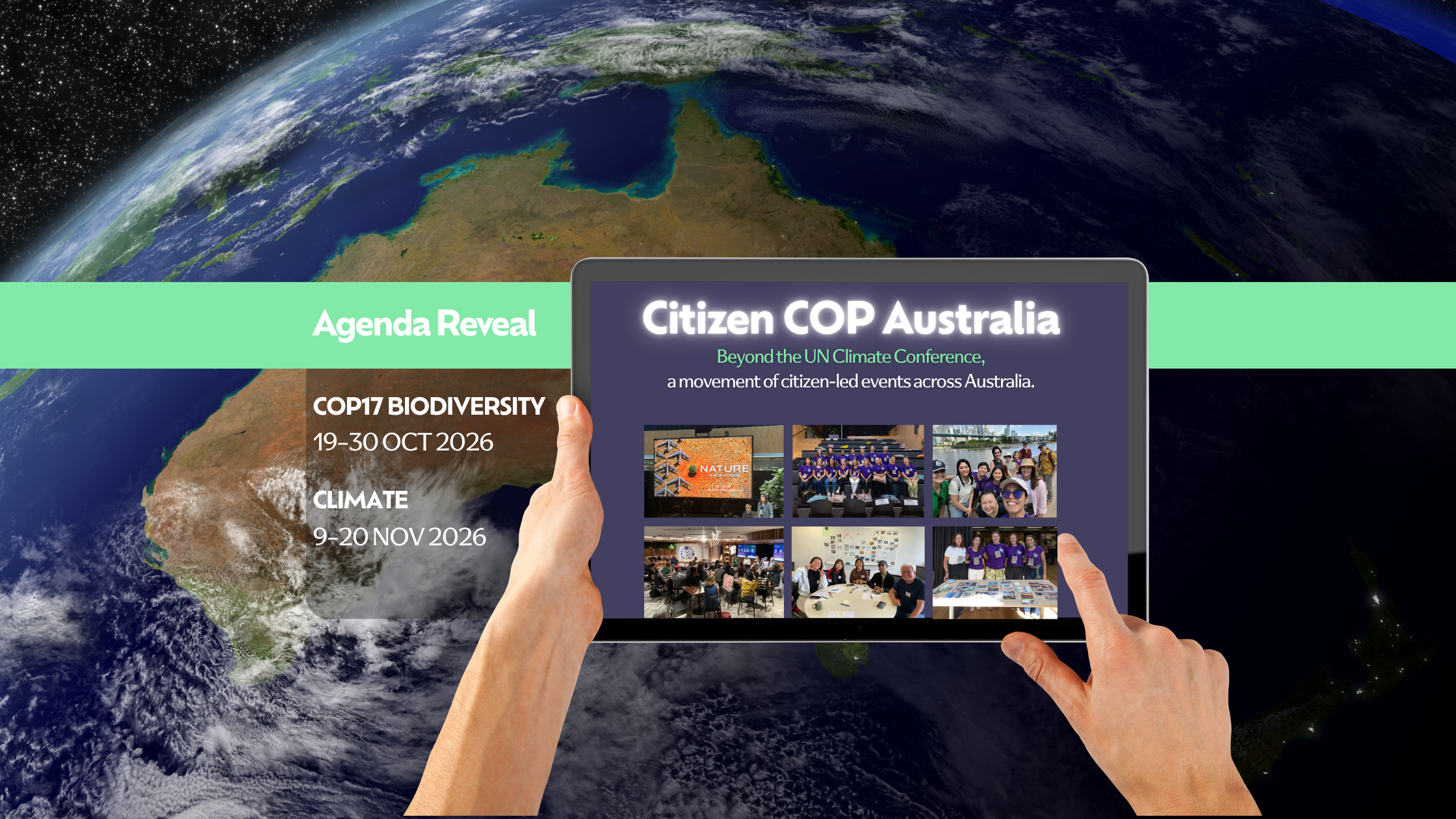
Australia’s Citizen COP movement has today released its 2026 national event program: 90+ events across every state and territory, supported by a growing ecosystem of 75 partner organisations — more than doubling in scale since last year, driven by one thing only: a shared commitment to citizen-powered change.
As preparations intensify ahead of the UN COP17 Biodiversity and COP31 Climate negotiations, Citizen COP continues to grow as a decentralised national platform for civic engagement on climate and nature.
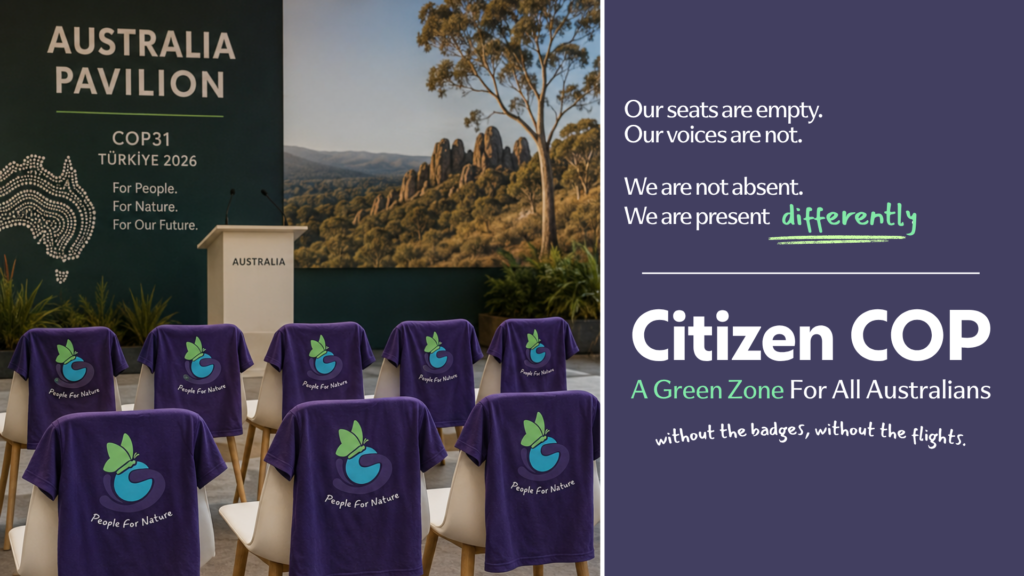
While the official COP runs on badges, delegations and international flights, Citizen COP runs on none of that. It is citizen-led, locally hosted, and open to anyone — demonstrating that participation doesn’t require a conference pass, only a willingness to be part of the conversation.
Building on a successful 2025 pilot that engaged more than 1,400 participants across 42 events, Citizen COP is now moving from pilot initiative to a structured, distributed civic platform for climate and biodiversity engagement across Australia.
A nationwide citizen climate democracy network
Rather than a single conference, Citizen COP operates as a nationwide network of locally hosted events — brought to life by councils, universities, community organisations, and individuals who believe in participatory democracy. Together, they bring global climate and nature discussions into local contexts, connecting citizen perspectives directly into broader policy conversations.
The 2026 program runs from October to November 2026, alongside COP17 (Biodiversity) and COP31 (Climate) — two landmark global negotiations taking place at a critical moment for both nature and climate action. With Australia set to play a leading role in hosting COP31 in partnership with the Pacific, , there is a renewed opportunity to ensure that voices from across the country are not only present, but actively listened to and meaningfully included in shaping the conversation.
Across many countries, there is growing recognition that stronger community engagement is essential to addressing the complexity of climate and biodiversity challenges. At People For Nature, we see democracy itself as one of our most powerful tools for tackling these “wicked” problems — not as a slogan, but as practice. Our contribution is to help make that engagement real in Australia: creating structured, accessible spaces where people can come together, learn from one another, and actively shape responses to the climate and nature crises
Citizen COP events include community forums, workshops, citizen science activities, and locally led action projects — connecting global negotiations with lived experience on the ground. Already, 75 organisations, councils, universities and community groups are participating in the rollout, forming one of the largest coordinated citizen-led climate and nature engagement initiatives in Australia.
Built on principle, not just program.
Citizen COP is deliberately non-partisan, inclusive, and designed for broad public participation. It is intentionally different from the typical sustainability conference model — often shaped by commercial sponsorships, formal venues, and high-emission formats that can drift away from the communities and purpose they claim to serve. Instead of that, Citizen COP is designed as something simpler and more grounded: people coming together, for people and for nature, in ways that stay connected to real places, real voices, and real action.
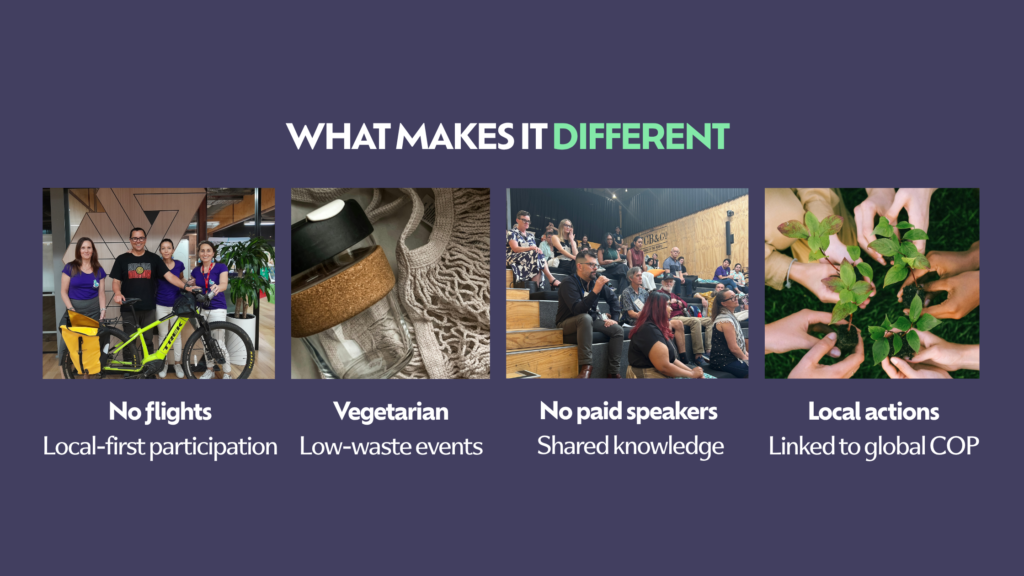
No flights
No paid speakers
Free and accessible participation
Vegetarian catering only
Minimal-waste approach
Participatory funding model
No involvement from fossil fuel companies
“These principles are not symbolic — they are structural. If we are asking society to respond to climate and biodiversity challenges, the way we organise participation must reflect those same values.”
Citizen COP brings together local events under a single national agenda, creating a coordinated framework for engagement across Australia. Each event is part of a shared program supported by an event guide, ongoing coordination with hosting organisations, and continued engagement with DCCEEW to remain connected to the evolving COP process.
Alongside this, Citizen COP is building something more collective: a way to capture the “pulse” of citizen perspectives as communities come together during the program — translating conversations on the ground into a shared, structured signal of public priorities, insights, and concerns on climate and biodiversity.
Expressions of interest to host 2026 events have now closed as the national program moves into delivery. Participation in the movement remains open through volunteering, donating, or sponsoring — as citizens, organisations, and partners continue to help build this distributed national initiative.
Get involved
💜 Make a monthly donation — monthly giving provides the financial stability to grow and sustain Citizen COP as a nationwide citizen-led movement. Every contribution, monthly or one-off, large or small, makes a difference. → www.peoplefornature.org.au/donate
💜 Become a supporter — help grow Citizen COP as a long-term, independent nationwide initiative. Support can take many forms, from helping host events or providing venue space, to contributing modest financial or in-kind support that helps cover practical needs such as event setup, communications, AV, IT, and coordination. We welcome organisations that want to contribute in ways that fit their capacity and values — whether that’s actively collaborating or offering light-touch support in the background.
💜 Book a conscious ticket ($10) — helps cover the work behind delivering Citizen COP events across Australia.
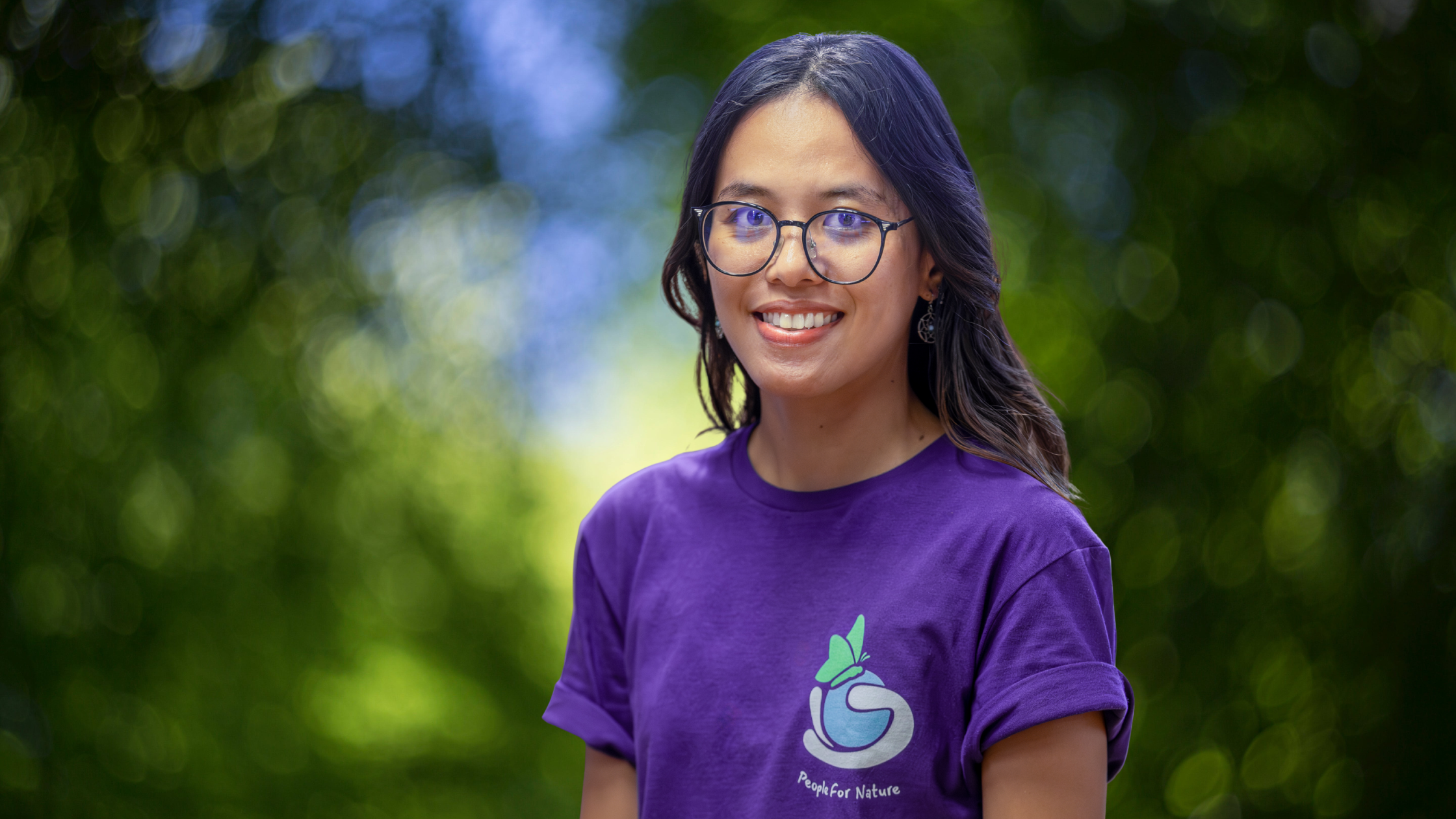
Reny Septiani is a People For Nature Ambassador supporting the Citizen COP national agenda and communications for 2026, building on her previous volunteering role in 2025.
Reny is part of a growing community of young leaders putting nature into action. A Master of Environment student at Griffith University and President of the Planetary Health Club, she is passionate about turning awareness into hands-on impact — from beach clean-ups to youth eco-workshops.
In her role with People For Nature, she is helping support the communications and coordination of Citizen COP Australia, contributing to a growing national movement that connects citizens, science, and policy into shared climate action.
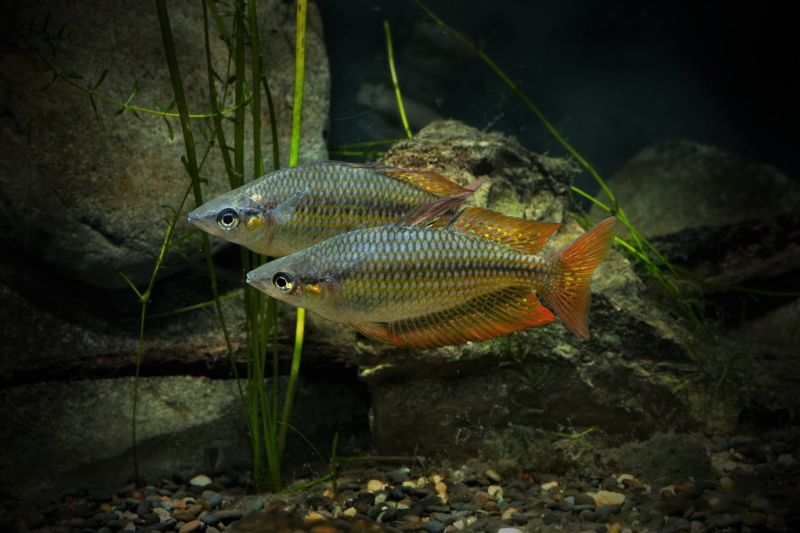
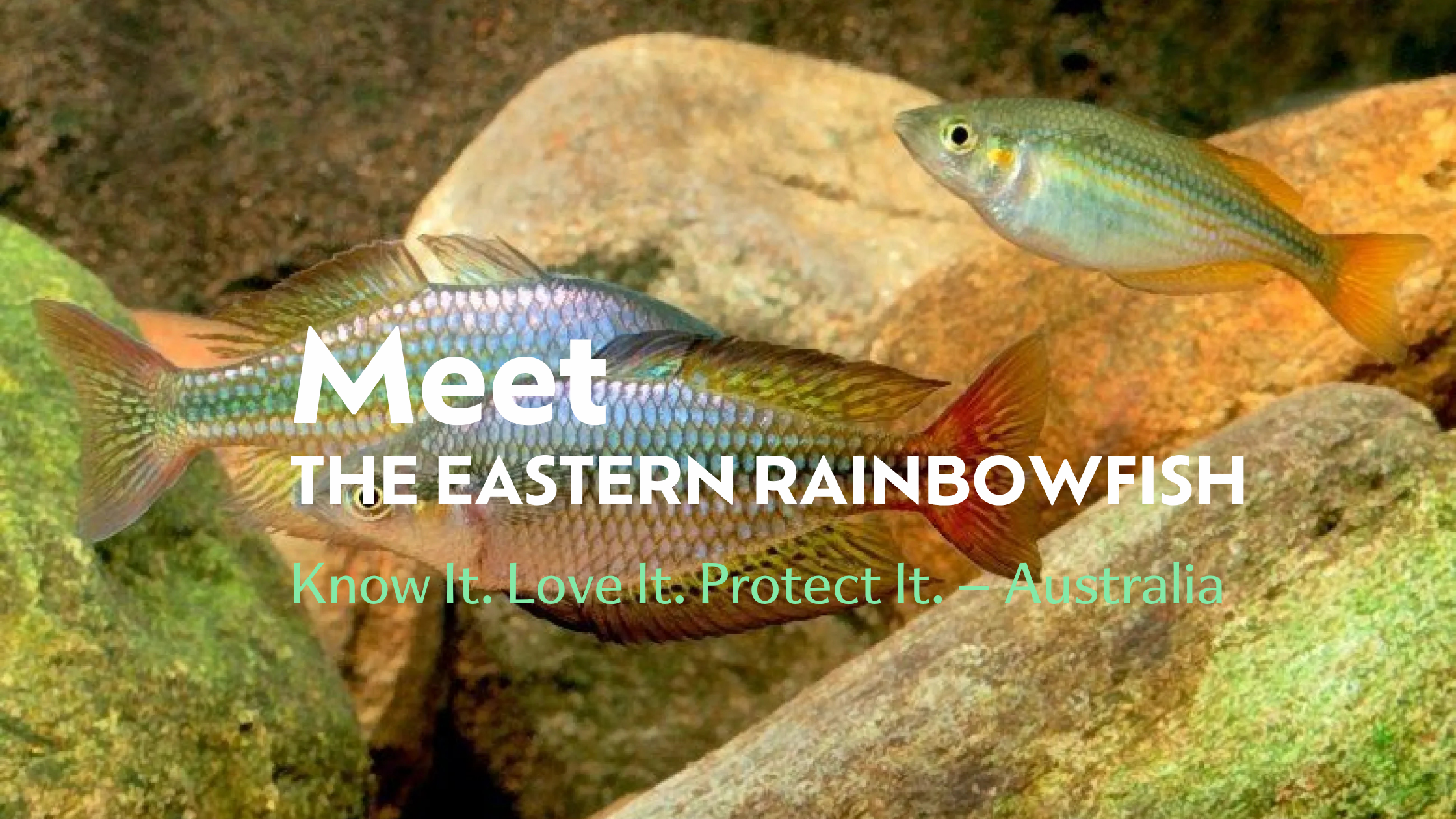
With shimmering shades of blue, gold, green and red, the Eastern Rainbowfish is one of Australia’s most colourful freshwater species and a striking example of the biodiversity found beneath the surface of our waterways.
Found in rivers, creeks, streams and wetlands across northern and eastern Australia, these vibrant fish thrive in clean, flowing water and are often considered indicators of healthy freshwater ecosystems.
They are a reminder that some of Australia’s most spectacular wildlife can be found in places we often overlook.
Why it matters
The Eastern Rainbowfish plays an important role in maintaining healthy freshwater ecosystems.
🐜 It helps control insect populations by feeding on aquatic invertebrates
🐟 It forms part of the food web that supports a wide range of freshwater species
💧 Its presence can indicate good water quality and healthy aquatic habitats
🌳 It contributes to the biodiversity that keeps waterways functioning and resilient
As a native freshwater fish, the Eastern Rainbowfish highlights the importance of protecting Australia’s rivers, creeks and wetlands.
Fun facts
🤓 Male Eastern Rainbowfish become even more colourful during the breeding season to attract females
🤓 Their scales can reflect brilliant shades of blue, gold, green and red
🤓 They are social fish that live in schools
🤓 The species is endemic to Australia and occurs naturally nowhere else in the world
A deeper reflection
The Eastern Rainbowfish reminds us that healthy ecosystems depend on clean and connected waterways.
Freshwater habitats support an extraordinary diversity of life, yet they are among the most vulnerable ecosystems to pollution, habitat degradation and invasive species.
Even small changes to water quality can have significant impacts on the species that rely on these environments.
In a country with more than 600,000 native species, many found nowhere else on Earth, the Eastern Rainbowfish highlights the importance of conserving the freshwater ecosystems that sustain countless plants and animals.
Protecting our rivers, creeks and wetlands helps ensure these colourful native fish continue to thrive for generations to come.
From Wonder to Action
Learn & understand
Explore how biodiversity, climate, and land systems are deeply connected through our workshops with People For Nature.
Create your Nature Oasis
Plant native species to restore habitat and support the insects, birds, and wildlife that depend on them.
Join citizen science
Record native species around you on iNaturalist and contribute to real conservation data.
(Special thanks to Simon Andrews, Ambassador for People For Nature, for helping shape this story)
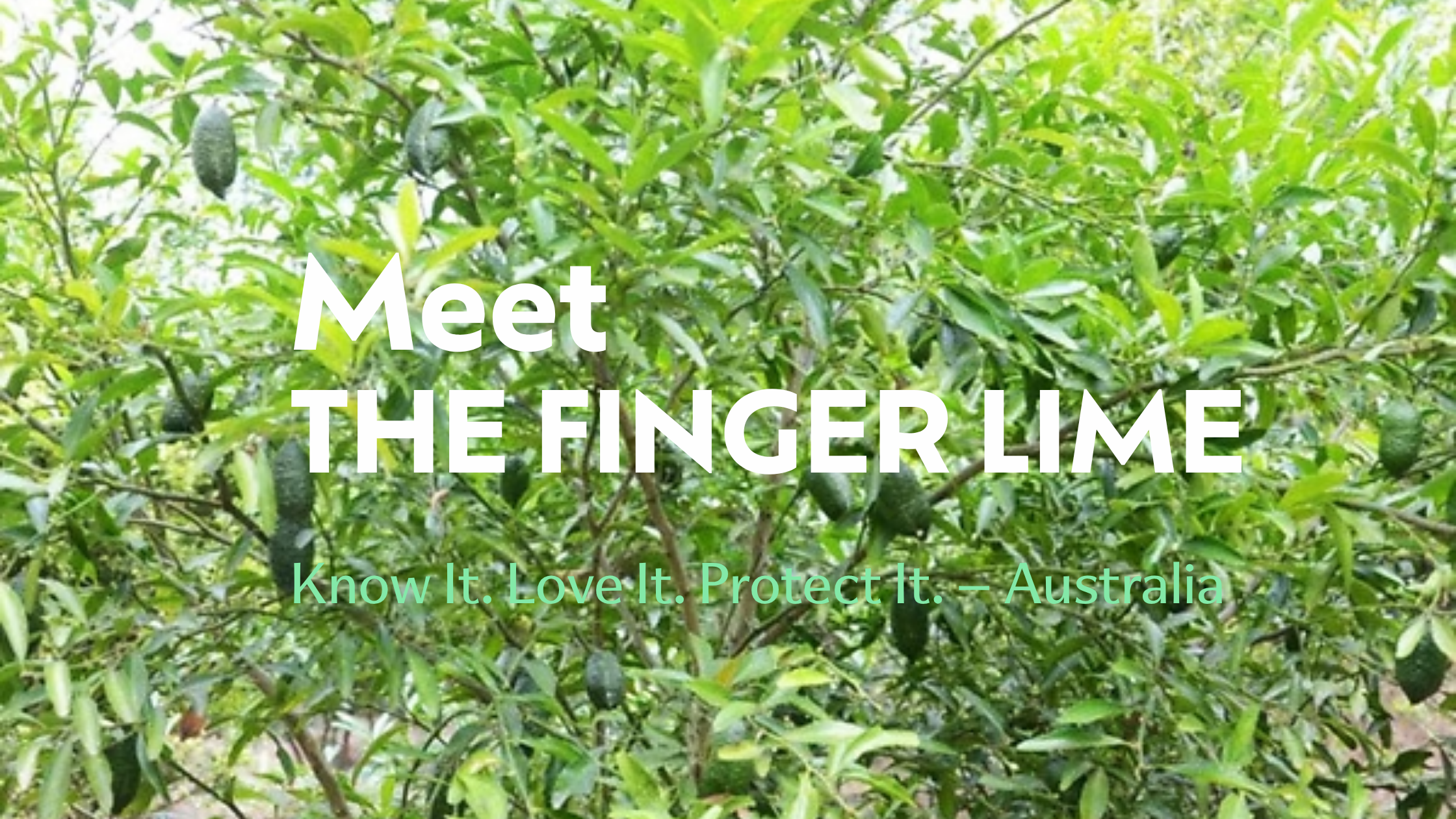
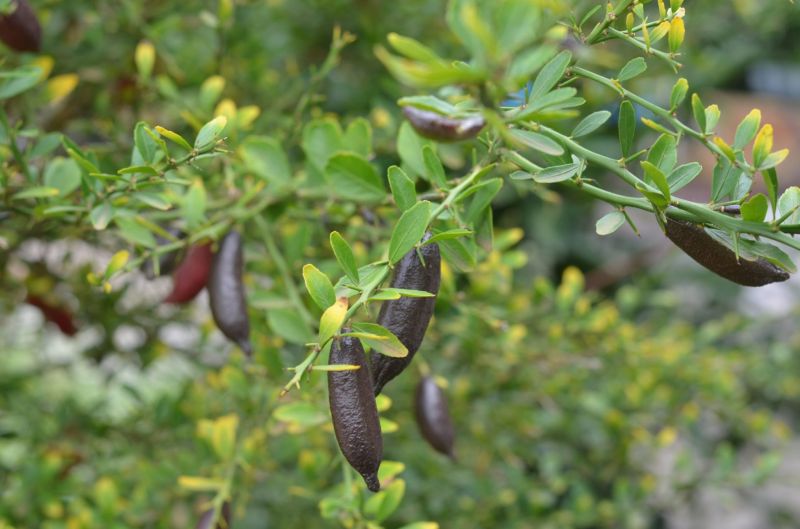
Often called the “caviar of the bush”, the Finger Lime is one of Australia’s most unique native foods, prized for its vibrant citrus flavour and distinctive pearl-like juice vesicles.
Native to the rainforests of Queensland and New South Wales, this remarkable plant has been used by Aboriginal Australians for food and medicine for generations and is now celebrated by chefs around the world.
It is a powerful example of the rich biodiversity and cultural knowledge found within Australia’s native landscapes.
Why it matters
The Finger Lime contributes to both ecological and cultural diversity.
🐜 It provides food and habitat for a range of native insects and animals
🌲 It forms part of Australia’s unique rainforest ecosystems
🍋🟩 It represents an important native bushfood with deep cultural significance
🌱 It highlights the value of conserving native plants and traditional ecological knowledge
As interest in sustainable and locally sourced foods grows, native species such as the Finger Lime demonstrate the potential of Australia’s unique flora.
Fun facts
🤓 Finger Limes are often called “caviar of the bush” because their tiny juice pearls resemble caviar
🤓 They have been used by Aboriginal Australians for food and medicine for thousands of years
🤓 The fruit is rich in vitamin C, folate and antioxidants
🤓 Finger Limes occur in a range of colours, from green and yellow through to pink and red
A deeper reflection
The Finger Lime reminds us that biodiversity is not only something to admire, but also something that can nourish and sustain communities.
Native bushfoods connect people to place, culture and ecosystems, offering valuable insights into sustainable food systems that have evolved over thousands of years.
Yet many native plant communities continue to face pressures from habitat loss, invasive species and environmental change.
In a country with more than 600,000 native species, many found nowhere else on Earth, the Finger Lime highlights the importance of protecting both biodiversity and the cultural knowledge associated with it.
Supporting native species and Indigenous-led conservation helps ensure these connections endure for future generations.
From Wonder to Action
Learn & understand
Explore how biodiversity, climate, and land systems are deeply connected through our workshops with People For Nature.
Create your Nature Oasis
Plant native species to restore habitat and support the insects, birds, and wildlife that depend on them.
Join citizen science
Record native species around you on iNaturalist and contribute to real conservation data.
(Special thanks to Simon Andrews, Ambassador for People For Nature, for helping shape this story)
Aiko Nagae is a People For Nature Ambassador supporting the Citizen COP national agenda and communications for 2026, building on her previous volunteering role in 2025.
Aiko is a public health researcher and practitioner whose work sits at the intersection of gender-based violence, climate change, and planetary health across the Asia-Pacific region. Her approach brings together evidence, lived experience, and systems thinking to support more integrated responses to complex global challenges.
She recently completed an internship with UNFPA, where she focused on addressing harmful practices in Asia. This experience deepened her commitment to advancing gender equality and strengthening community-led approaches to health and protection.
Aiko has also been actively involved in a student-led Planetary Health Club at Griffith University, where she explored ways to break down disciplinary silos and encourage collective action on shared environmental and health challenges.
Through her research and programme experience, Aiko’s work centres on translating evidence into practical, real-world action — with a strong focus on planetary health, gender equality, and climate resilience.
In her role with People For Nature, she is helping support the communications and coordination of Citizen COP Australia, contributing to a growing national movement that connects citizens, science, and policy into shared climate action.