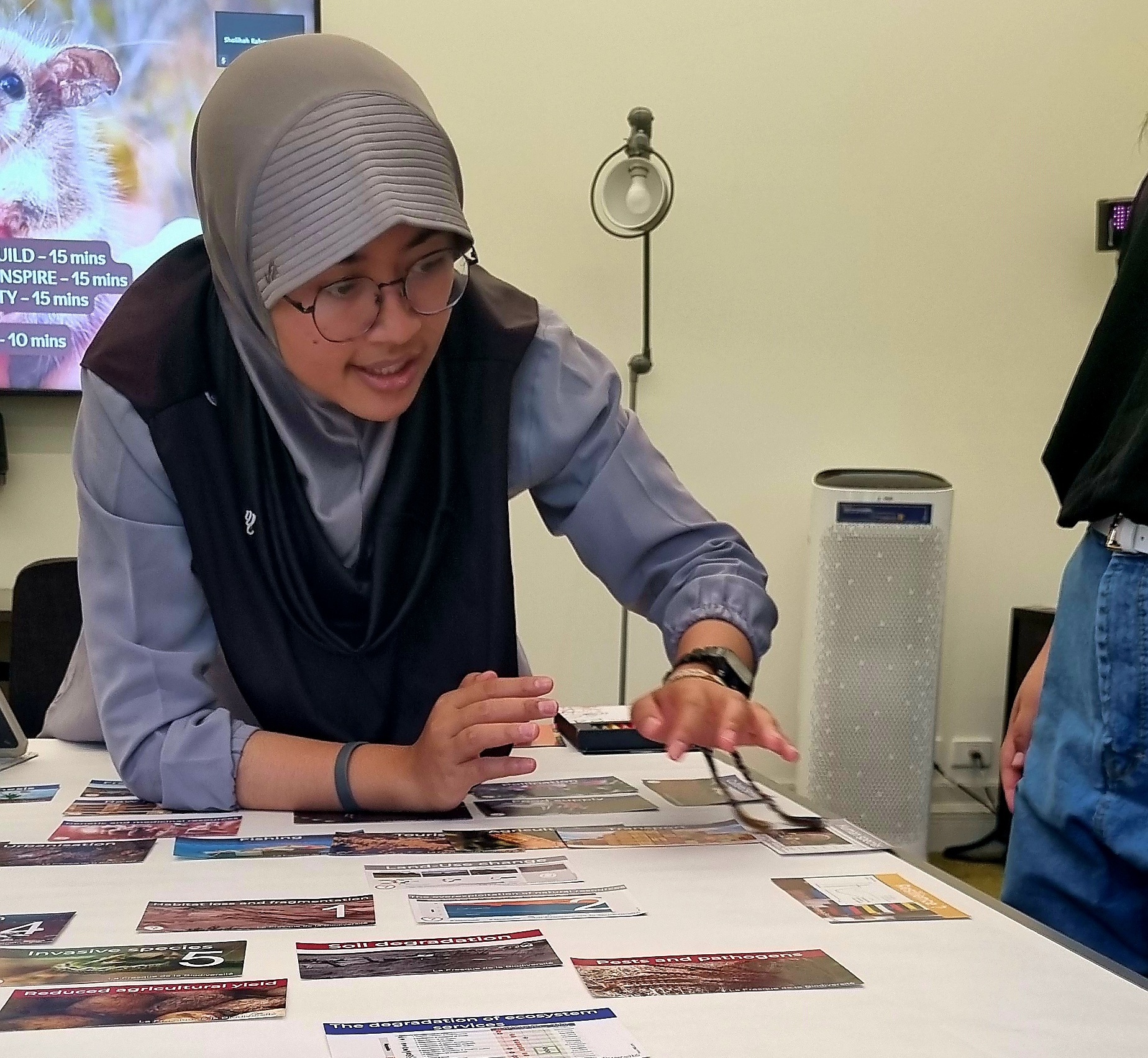
Sholihah began as a Climate Fresk facilitator in September 2024, became a Biodiversity Collage facilitator in November 2024, and recently took on the role of Circular Economy Collage facilitator in February 2025.
With a background in STEM and experience as a biology teacher, Sholihah recognised the vital role of science communication in addressing environmental challenges. She believes that people often don’t take action not because they don’t care, but because they don’t fully understand the issues at hand.
When it’s tough to inspire action, Sholihah draws strength from the enthusiasm and resilience of her fellow facilitators.
“Their dedication to educating others, despite the challenges we face, continues to motivate her. The drive they bring to the work serves as a powerful reminder of the importance of every effort in creating meaningful change.“
🤝 Connect with Sholihah on LinkedIn 💚
My Journey as a People for Nature Student Ambassador
How it started
My first Climate Fresk was back in June 2024, when I was still in Indonesia. With a background in environmental engineering, I knew some things about climate change, but I didn’t know what to expect in the workshop, so I still very much looked forward to it. Sitting in that room, piecing together the causes and effects of climate change with a bunch of strangers using a deck of cards, and exchanging all the knowledge we collectively had, I found it really exciting. It didn’t feel like a lecture. It felt like everyone in the room was figuring things out together, and somehow that made the whole thing land so much harder and memorable.
Then in November 2024, a few months after I moved to Melbourne for my Master of Environment at the University of Melbourne, I attended my first Biodiversity Collage at FACET, Swinburne University. Same energy and logic, but different topic. This time it was about biodiversity loss, ecosystems, and how deeply interconnected everything is. I left that session thinking about it for days.
Both times, what struck me was the content, but also the format and how everyone interacted. The way the workshops are structured means that no one person is the expert. Everyone brings something to the table, and together you build this shared picture of something huge and complicated. That collective intelligence model is something I hadn’t really experienced before, and it fundamentally changed how I think about environmental education.

Why I wanted to become a facilitator
After those first workshops, I knew I wanted to be on the other side of the table. Not because I had all the answers, but because I wanted to help create that experience for other people. I’ve always believed that one of the most important things in sustainability work is knowing how to communicate complex science to people who are coming from completely different places, whether that’s a student, a corporate professional, or someone who’s never thought much about climate change before. These workshops felt like one of the best tools I’d seen for doing exactly that.
So I got trained as a Climate Fresk facilitator, and then I reached out to People for Nature Australia about becoming a Biodiversity Collage facilitator too. I love the P4N people so much, the team there has been so warm and supportive throughout the whole process. Audrey especially, the one whom I knew from day zero, has been incredibly helpful in guiding my facilitation journey, and that kind of support really does make a difference when I was just starting out.
The journey so far
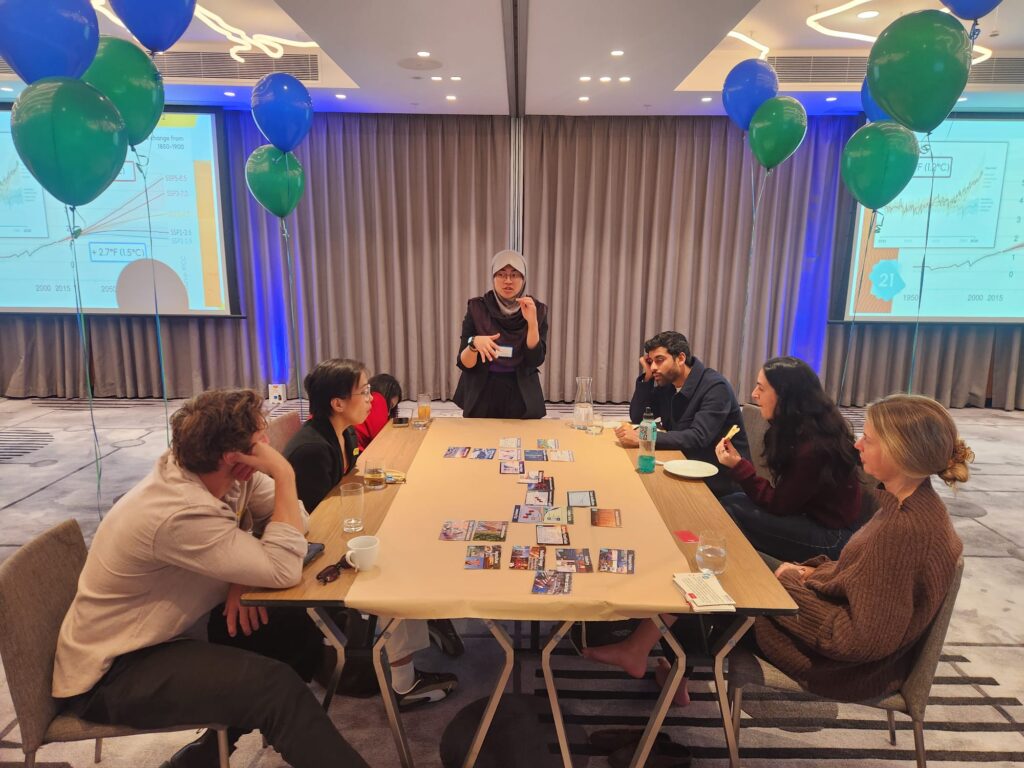
I started as a participant, then became a volunteer facilitator, and more recently I’ve had the chance to step into corporate facilitation too as a paid opportunity. After I’d delivered more than five workshops, I was invited to help co-facilitate a paid Climate Fresk for a company, one that was tailored specifically to their team and context. That was a really different experience. The audience was different, the stakes felt different, and I had to think much more carefully about how to make the content relevant to their world and their industry.
As of now, I’ve facilitated more than 15 workshops in total across Climate Fresk and Biodiversity Collage, with around 3 of those being corporate sessions. Every single one has taught me something new.
What I’ve gained from doing this
Definitely more than I expected. The obvious things are the facilitation skills and the networks. I’ve met so many interesting people through these workshops, people I would never have crossed paths with otherwise. But the less obvious thing is how much I’ve learned about active listening. When you’re facilitating, your job is to hold space for the group, not to steer it toward your own perspective. That’s harder than it sounds, and it’s something I’m still working on.
What I find most valuable is how the workshops are structured beyond just the cards. The creative sessions, the parts where people get to sit with the emotional weight of what they’ve just learned, and the reflection for action sessions at the end, these are the moments where things really shift for participants. It’s not just about understanding the science as well, since we also have to figure out what to do with that understanding. Being in the room when that happens and facilitating the whole process, watching creativity, emotions, and ideas roam and floating around the room is something that is always really special for me and I always feel very honoured to be a part of that. I also love that every workshop brings together such different people with different lived experiences. Hearing how someone from a completely different background connects to these issues, in ways I hadn’t thought of, is something I look forward to every time.
This work, along with a few other things I’ve been involved in around environmental engagement, contributed to receiving a Highly Commended award at the University of Melbourne Sustainability Awards 2025 in the Student Leadership category!
If you’re thinking about becoming a facilitator
Do it. Seriously. You don’t need to be an expert in climate change or biodiversity to facilitate these workshops. You just need to be curious and willing to listen. The model is built on collective intelligence, which means the group does the work together. Your role is just to guide that process.
The skills you build, knowing how to communicate complex ideas to all kinds of people, how to hold space for difficult conversations, how to connect with people you’d never normally meet, these are genuinely useful for anyone who wants to work in sustainability, conservation, or really any field that involves people caring about the world.
I started out flipping cards in a room in Indonesia with no idea where it would lead. Somehow it brought me here, facilitating workshops in Melbourne, building a network I didn’t expect, and learning things I couldn’t have planned for. If anything, I might say this journey is one of the best things that happened to my student’s journey here in Australia. If you’re on the fence, I’d really encourage you to give it a go!
Leave a Reply