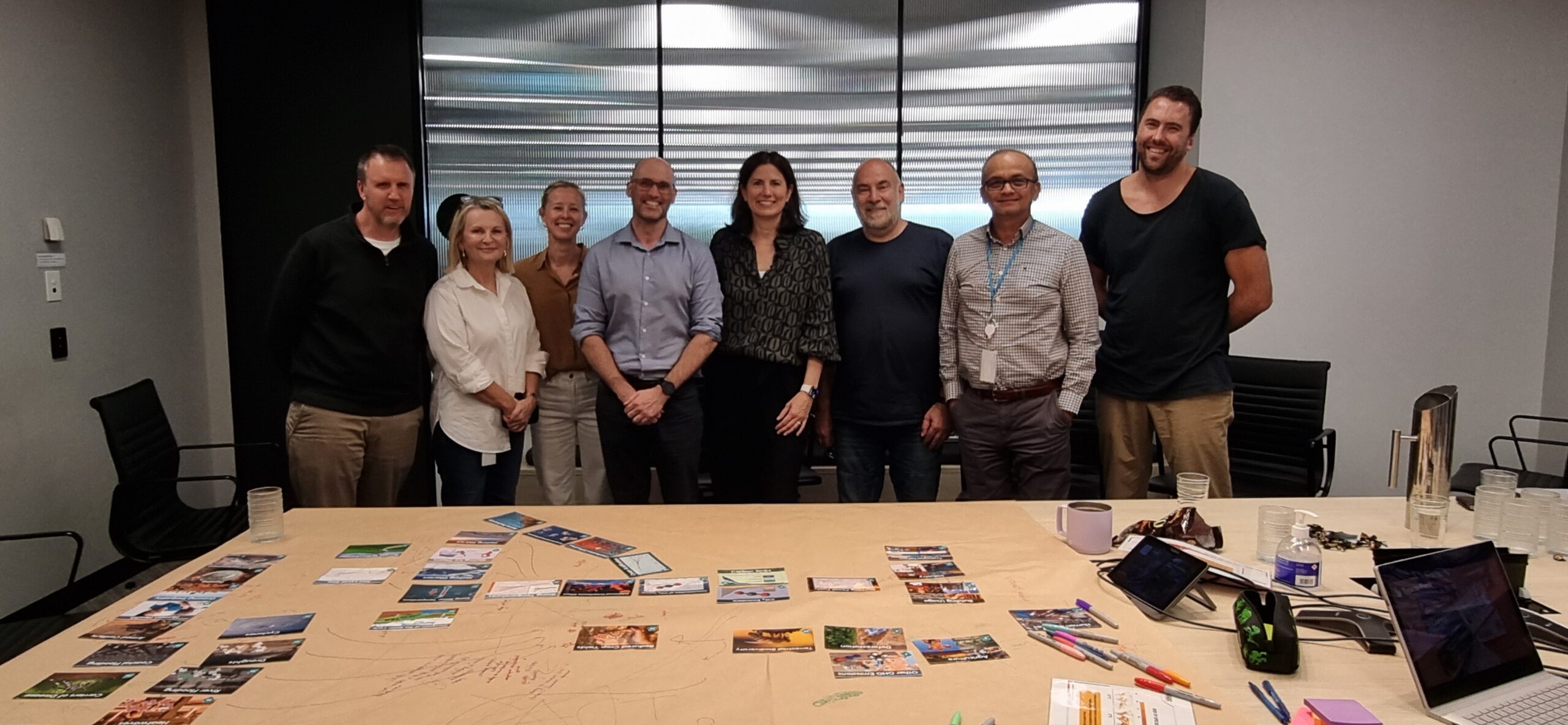
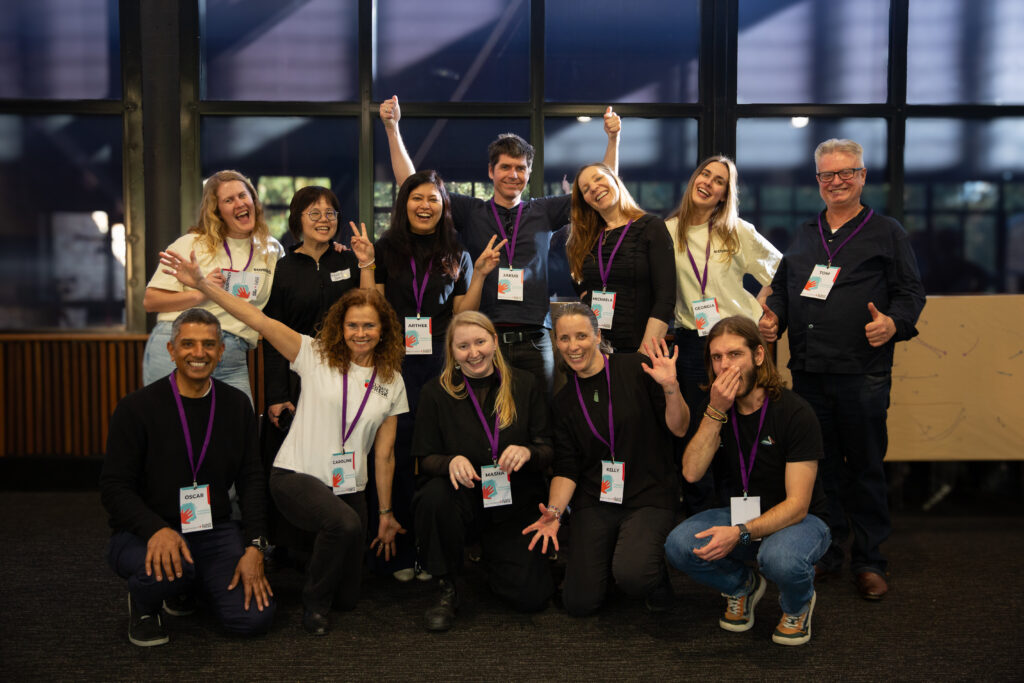
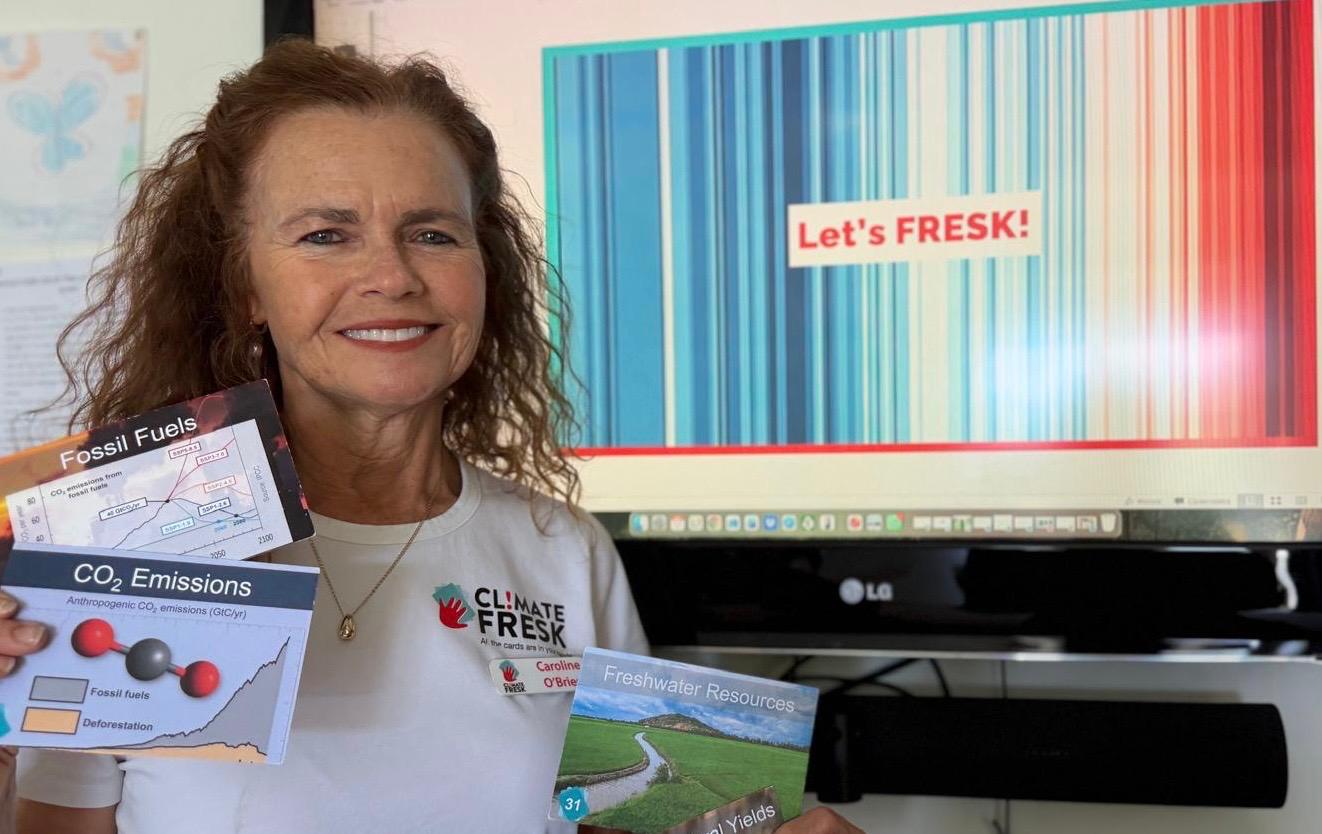
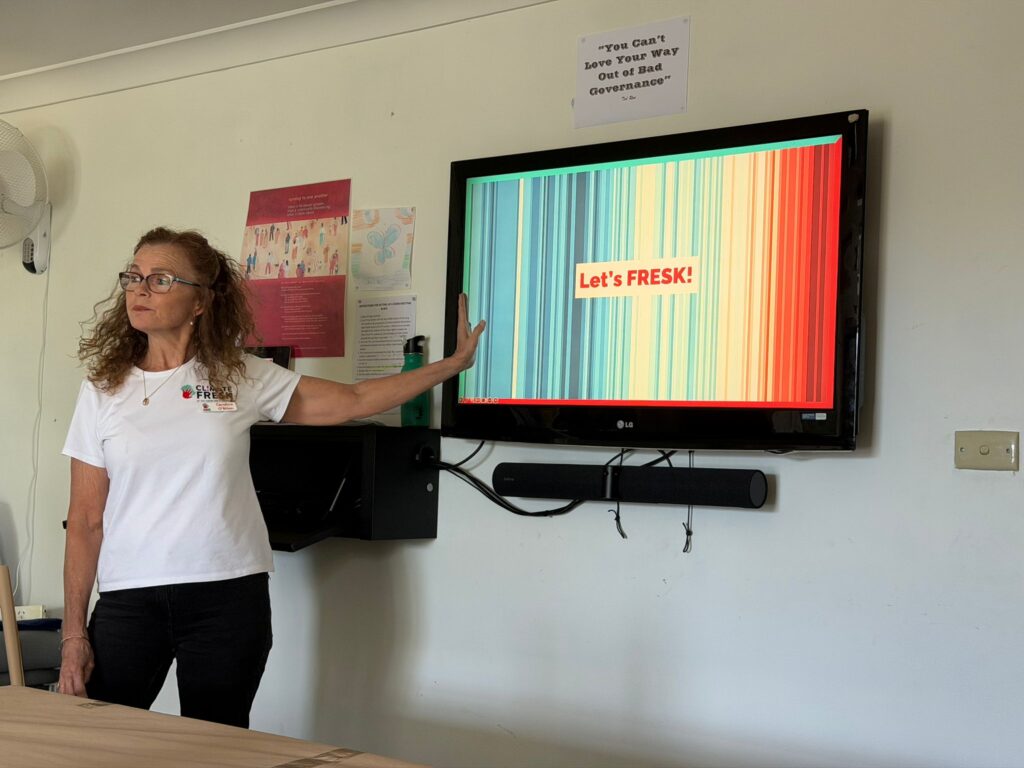
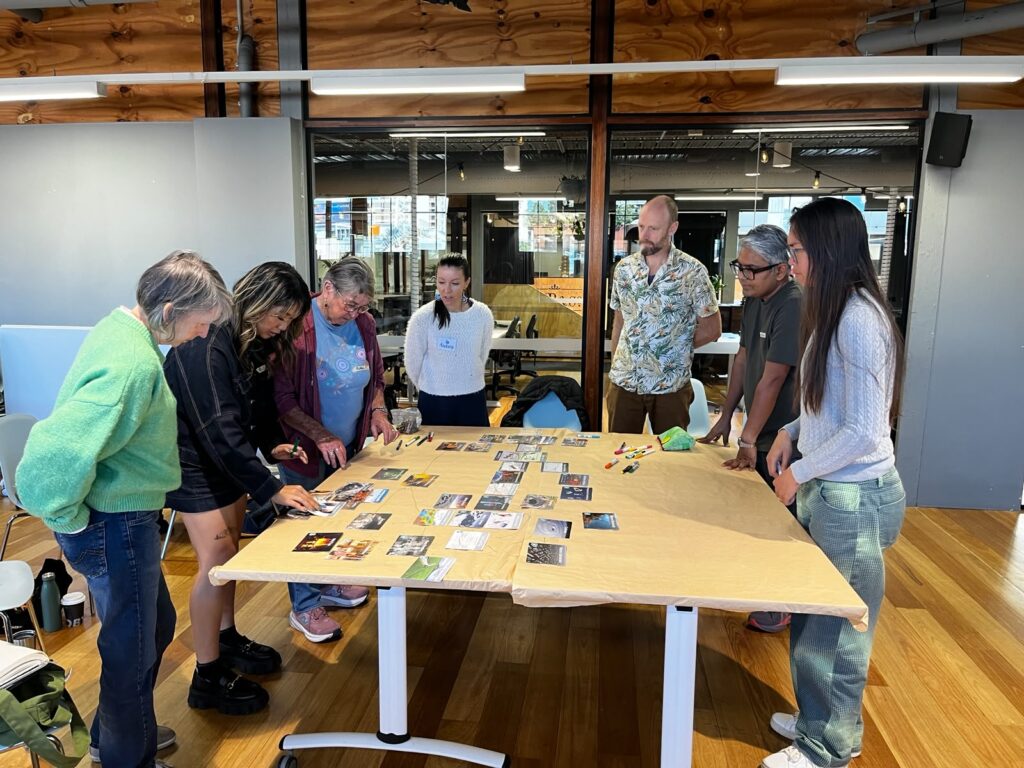
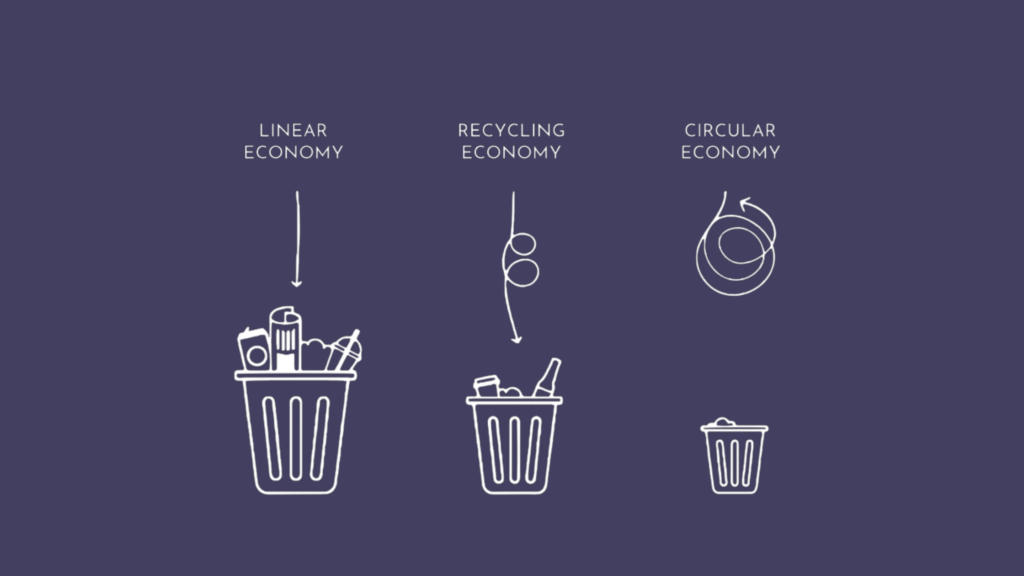
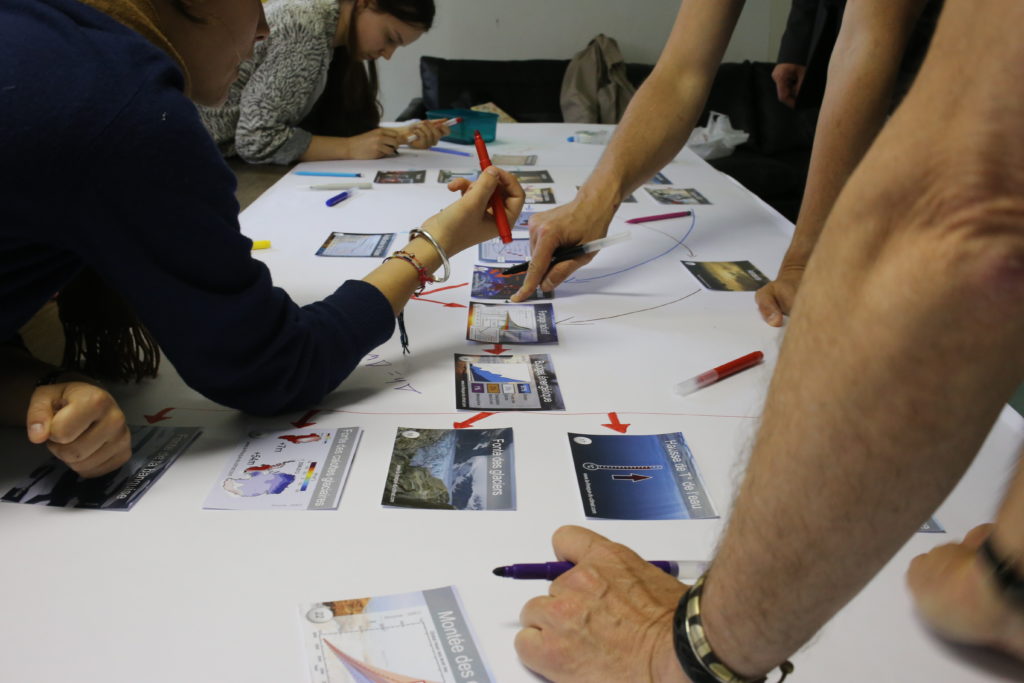
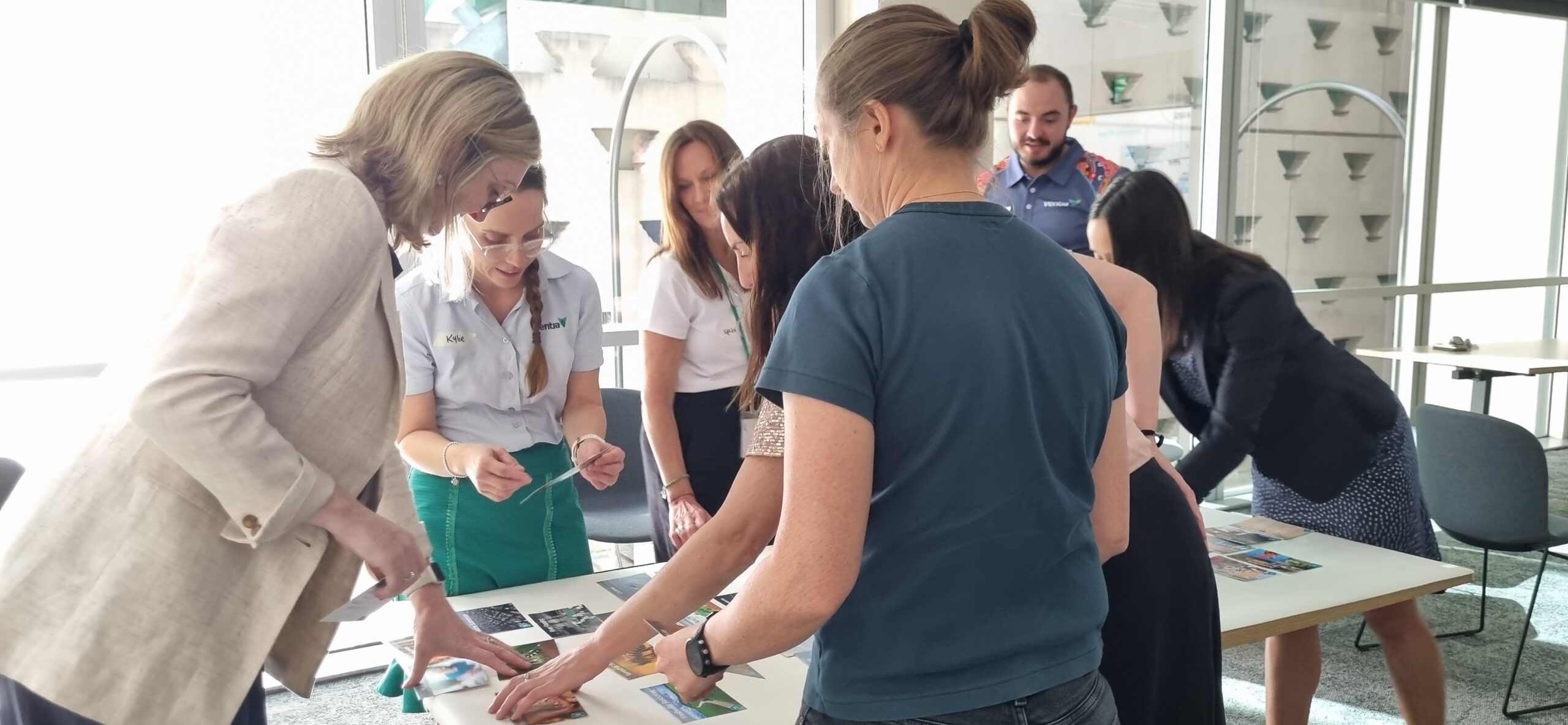
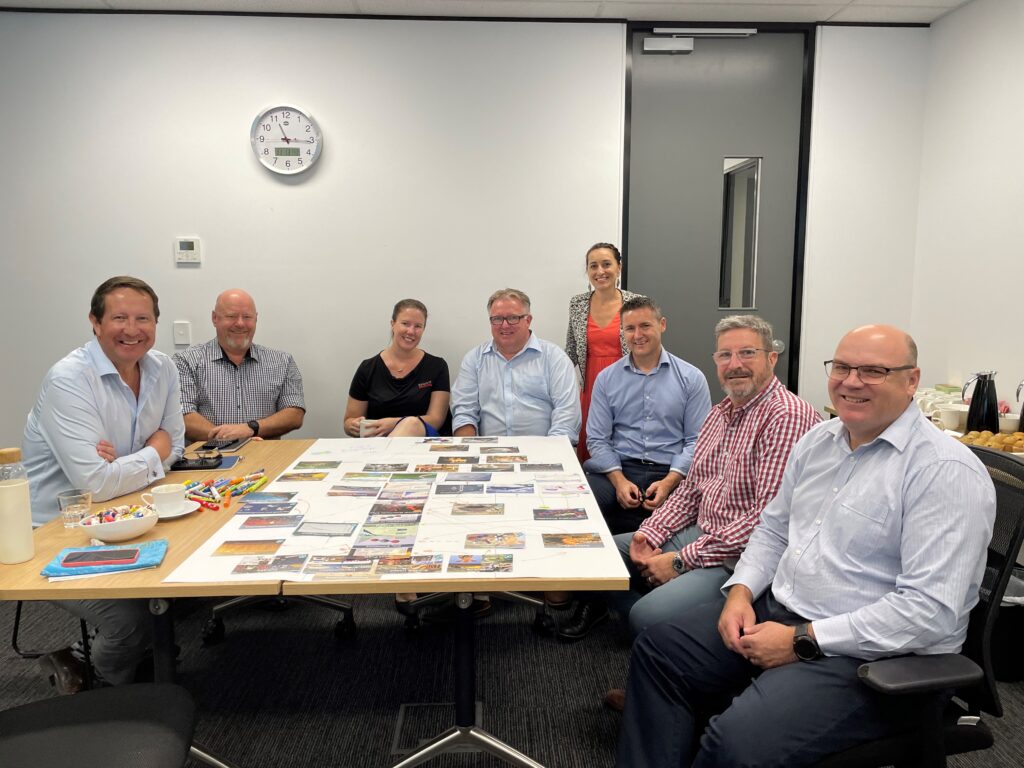
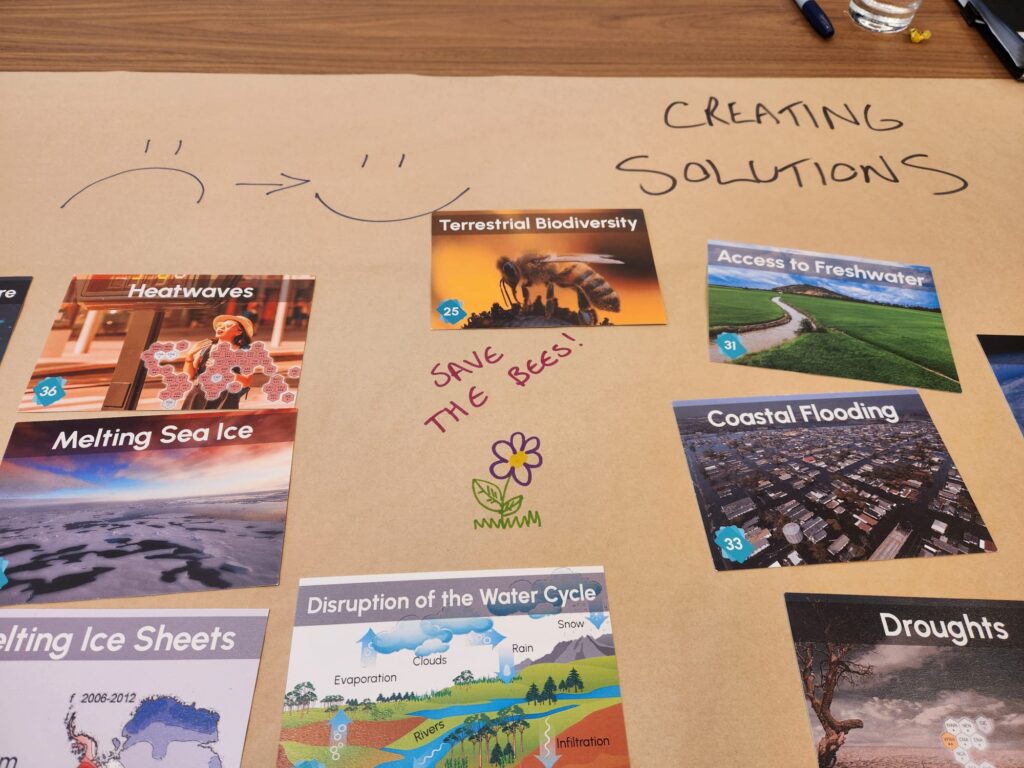
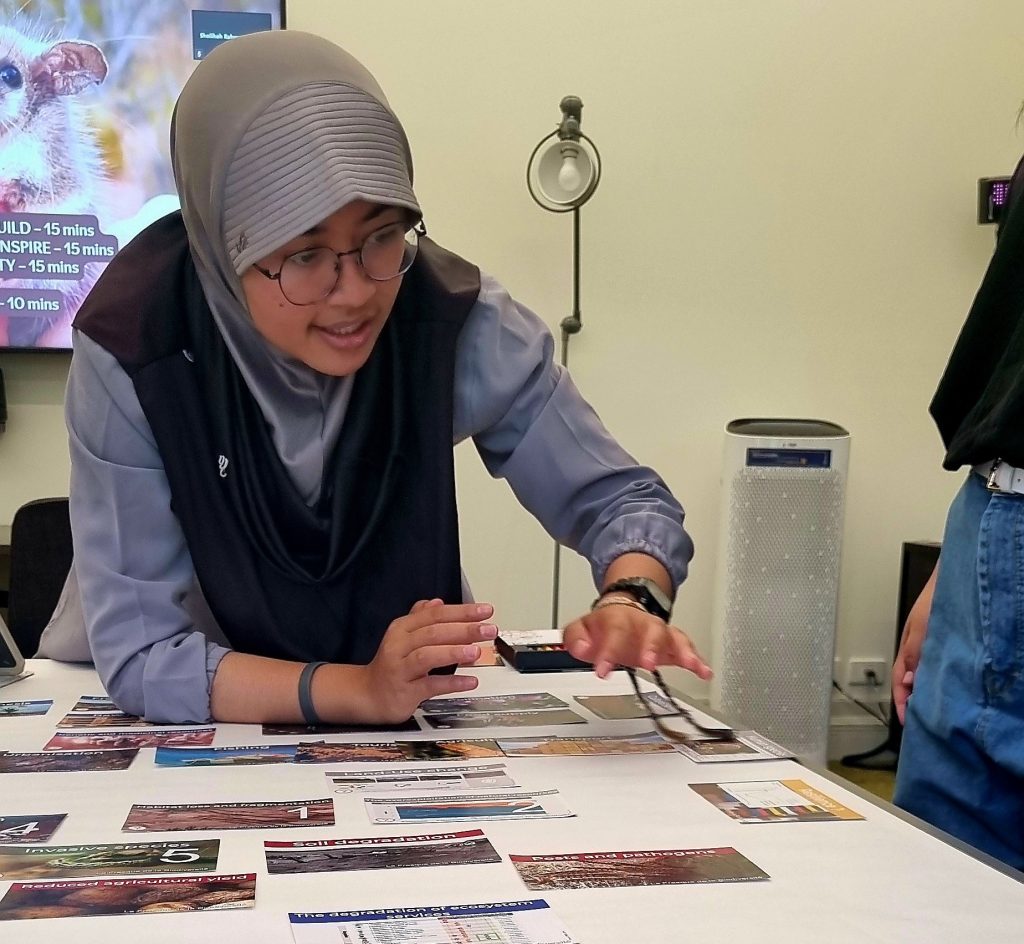
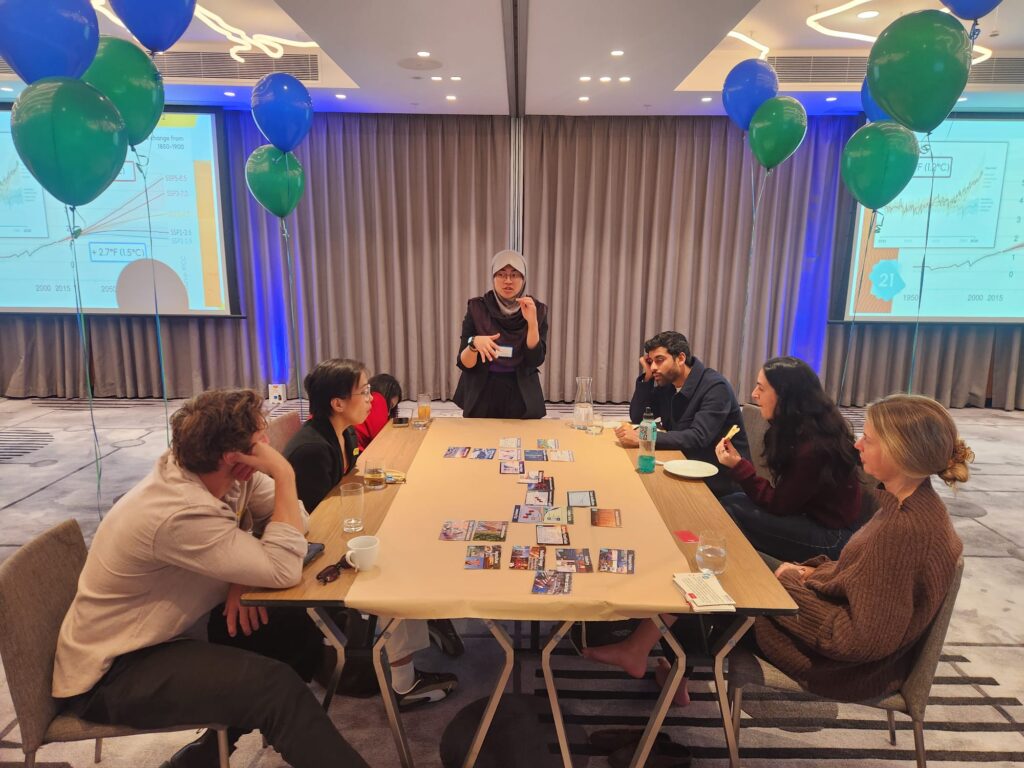
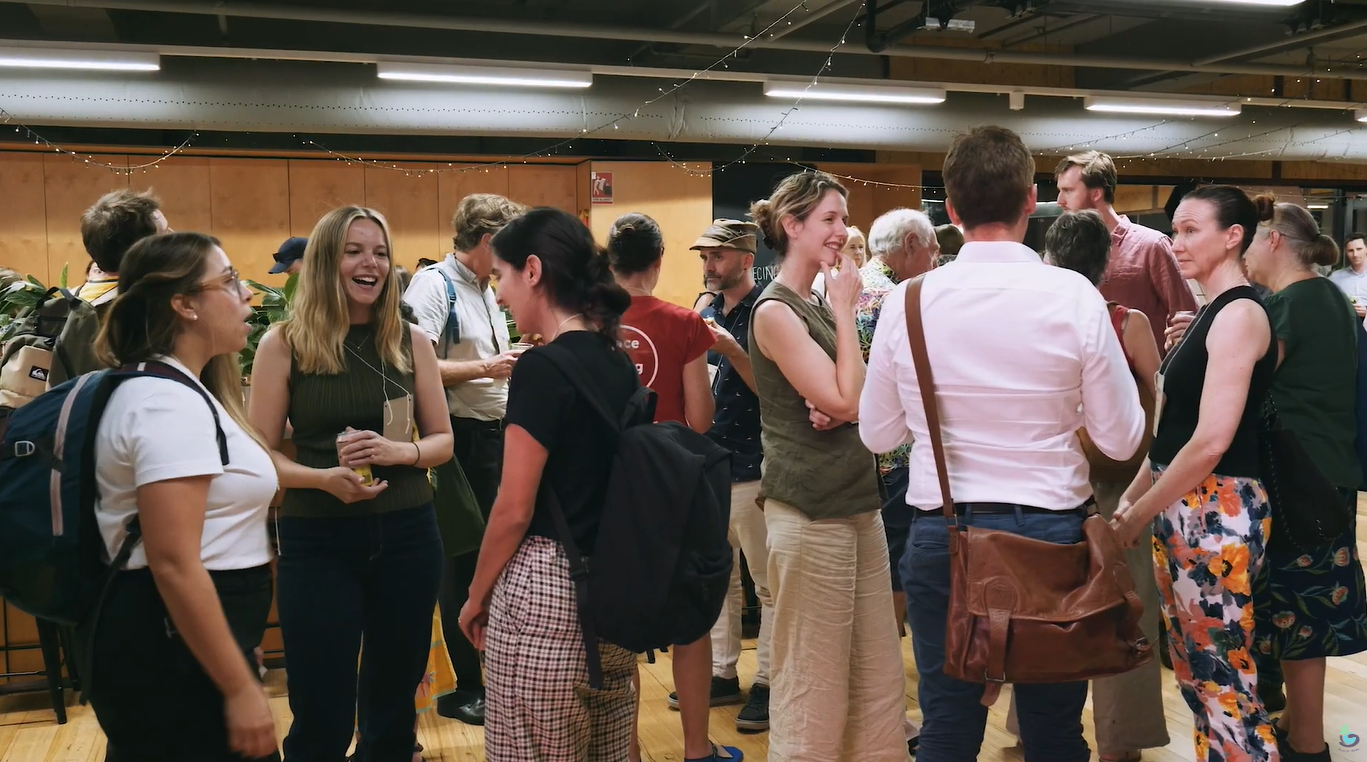
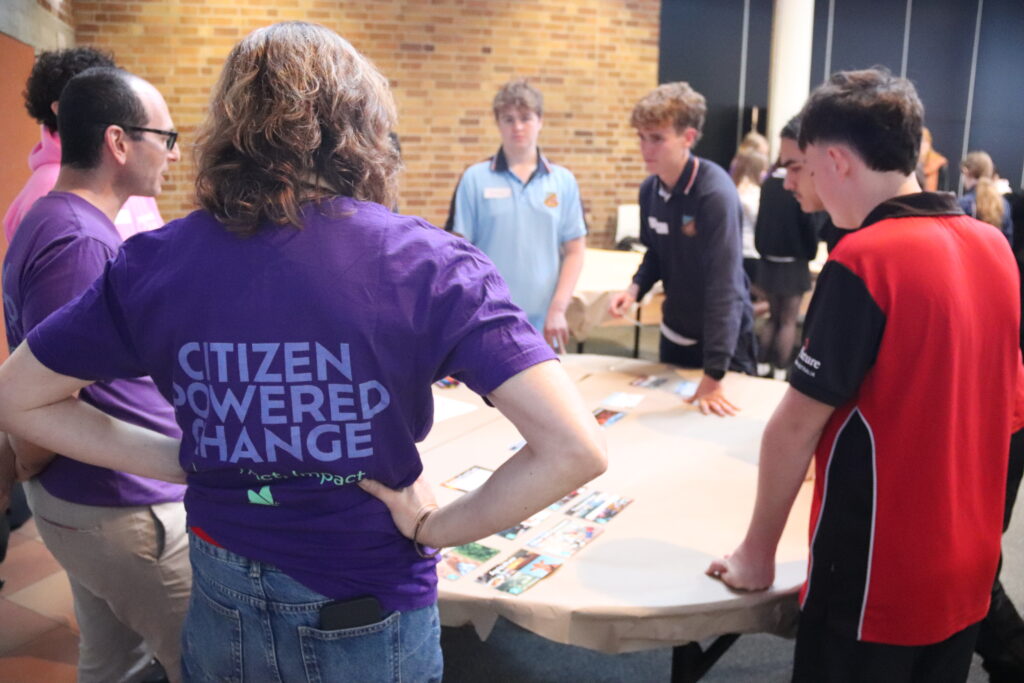
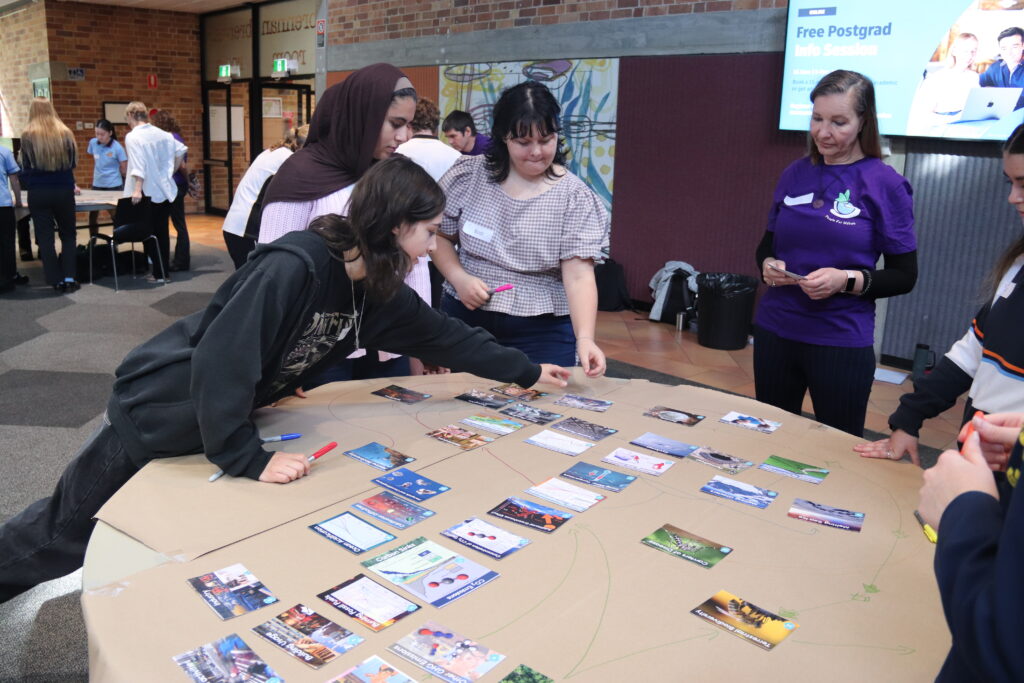
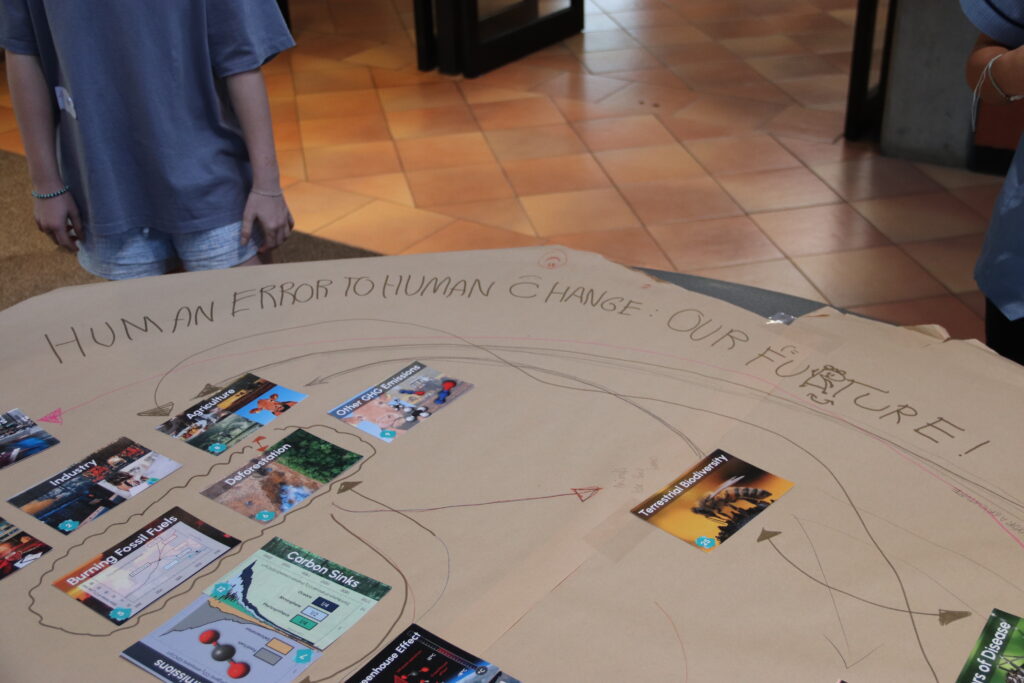
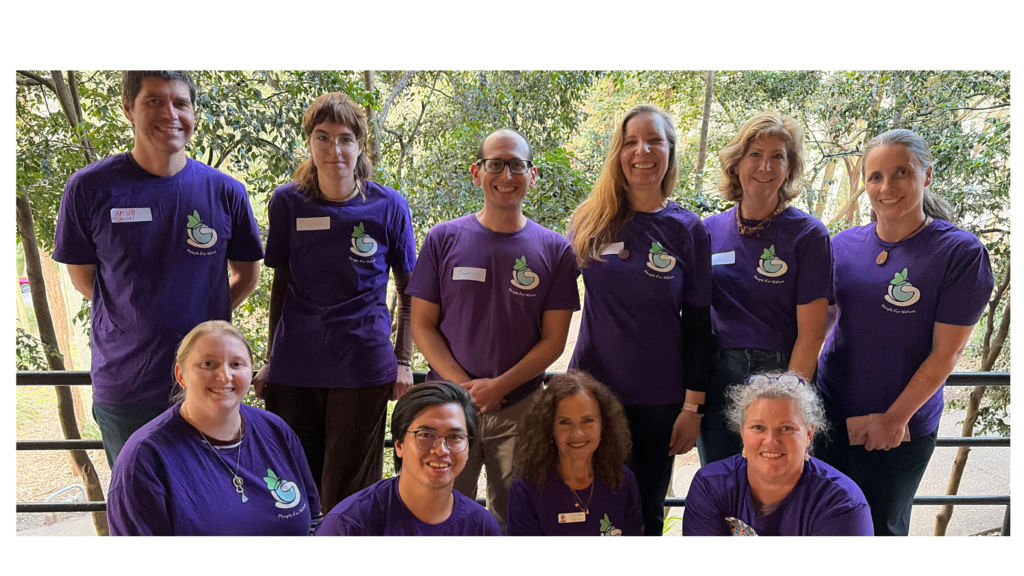
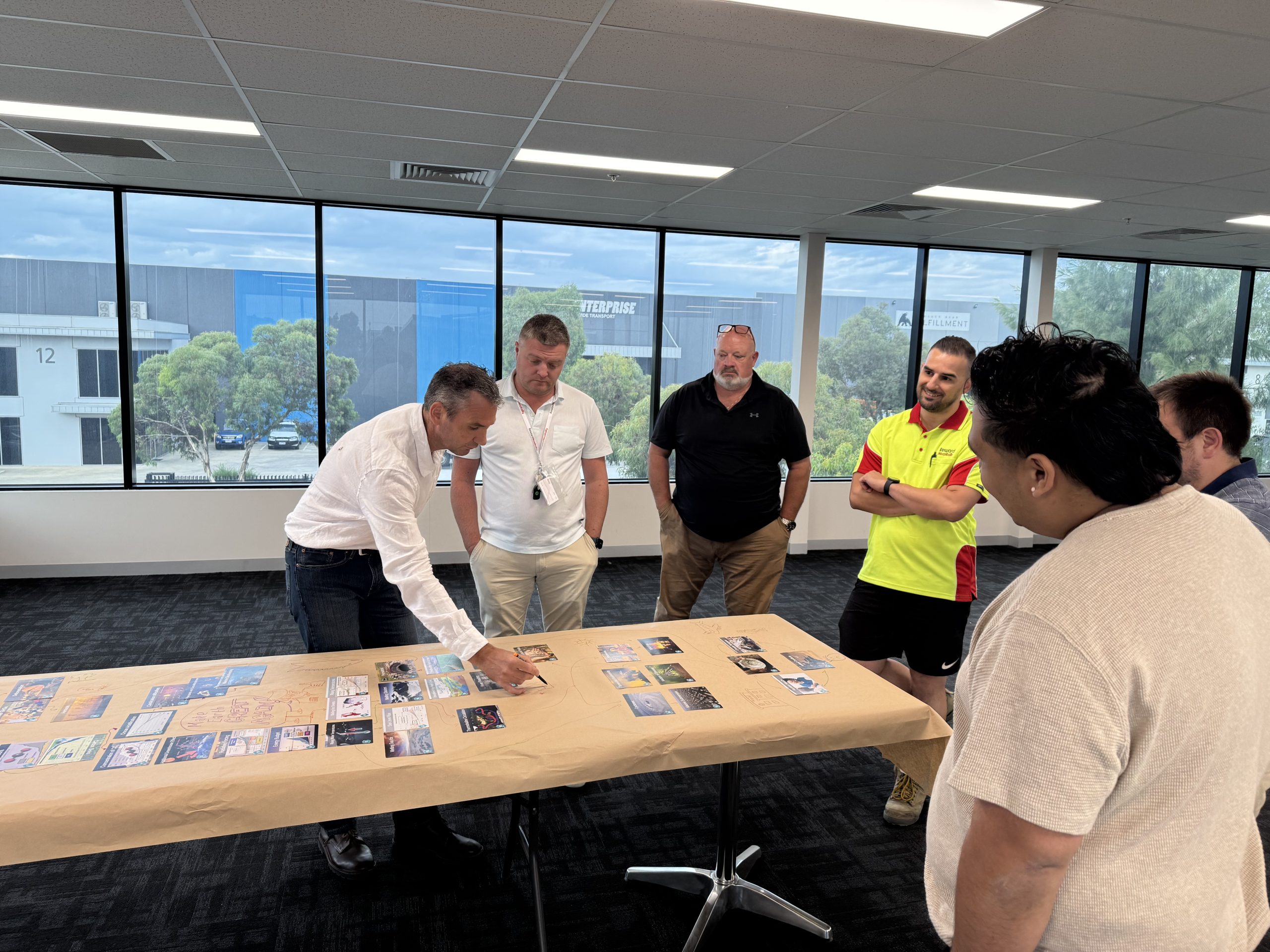
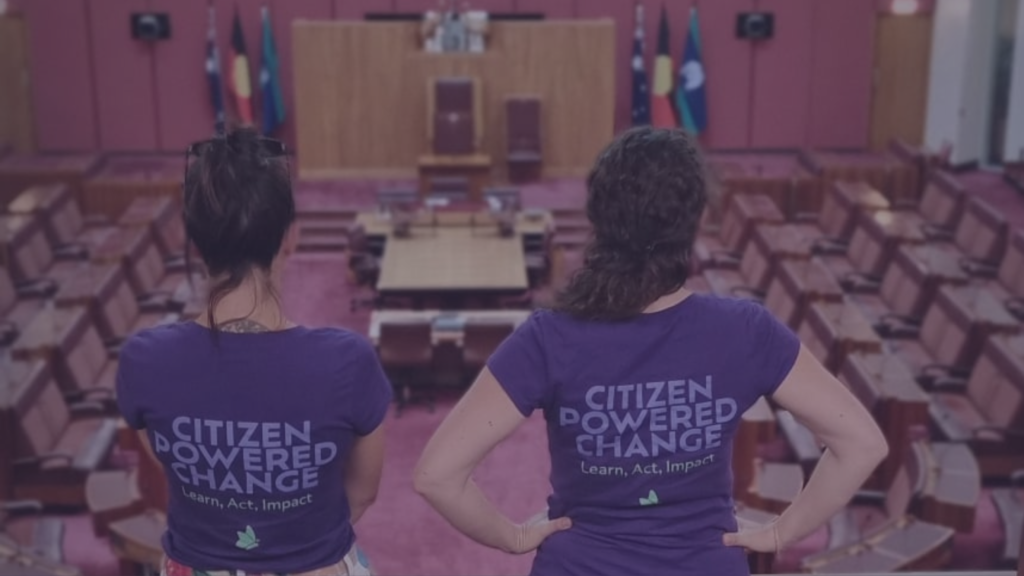
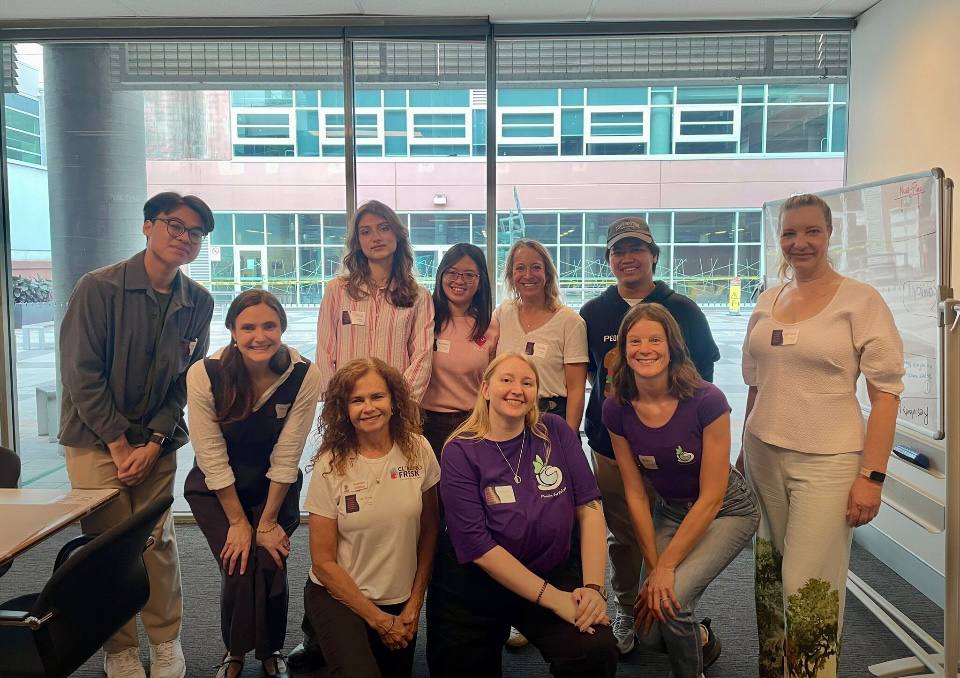
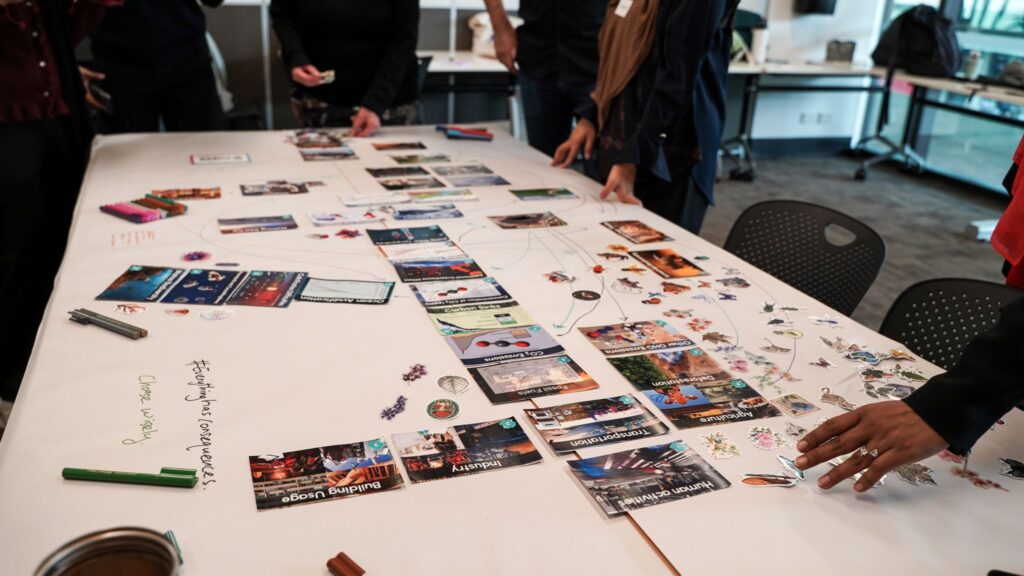
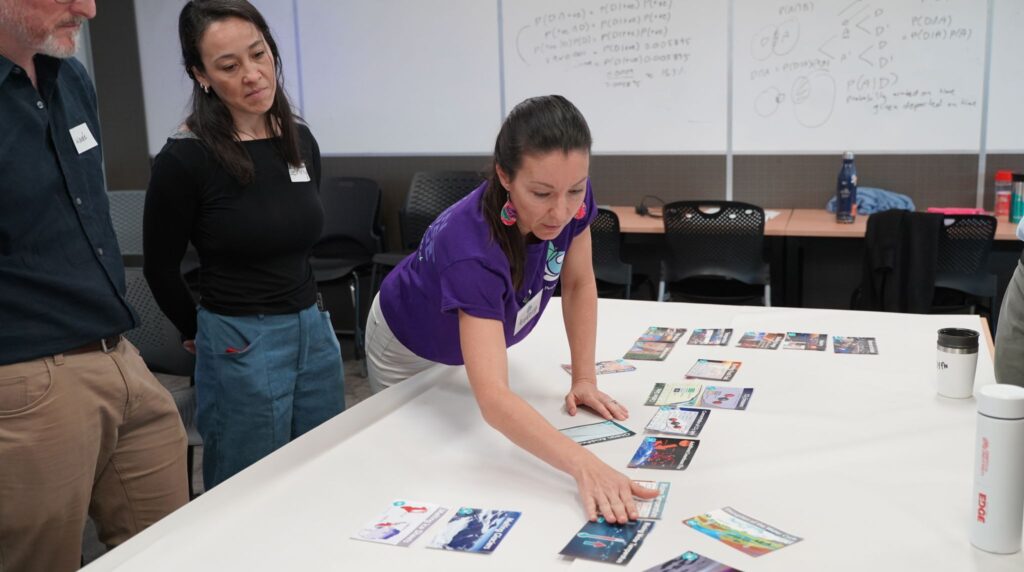
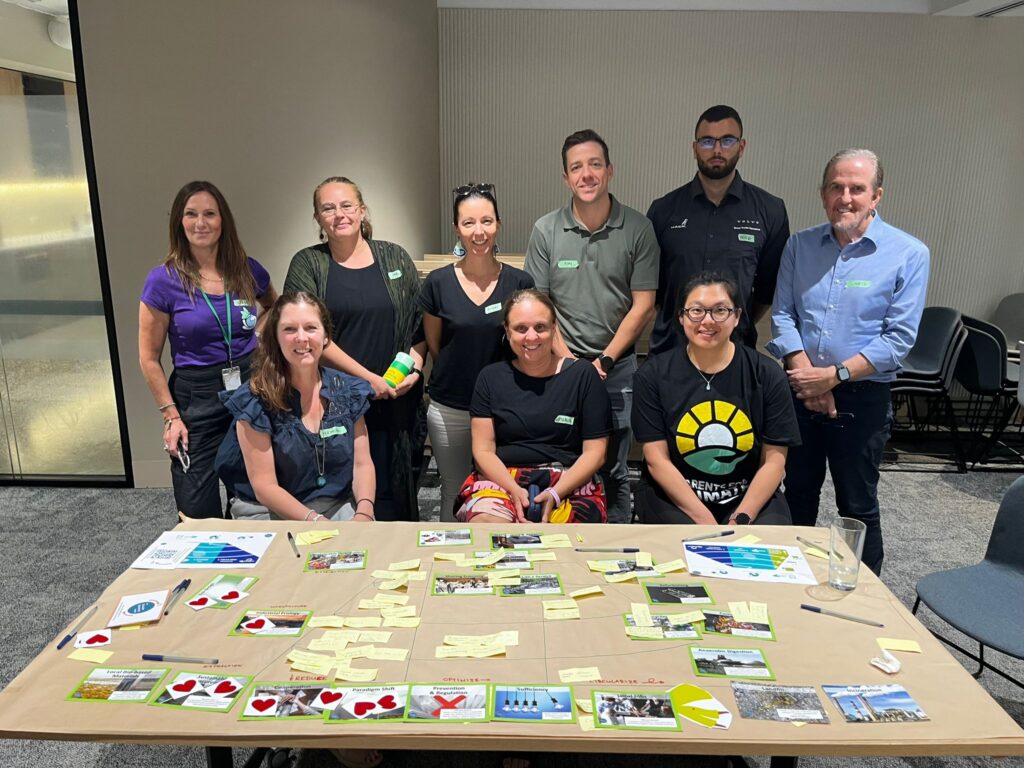
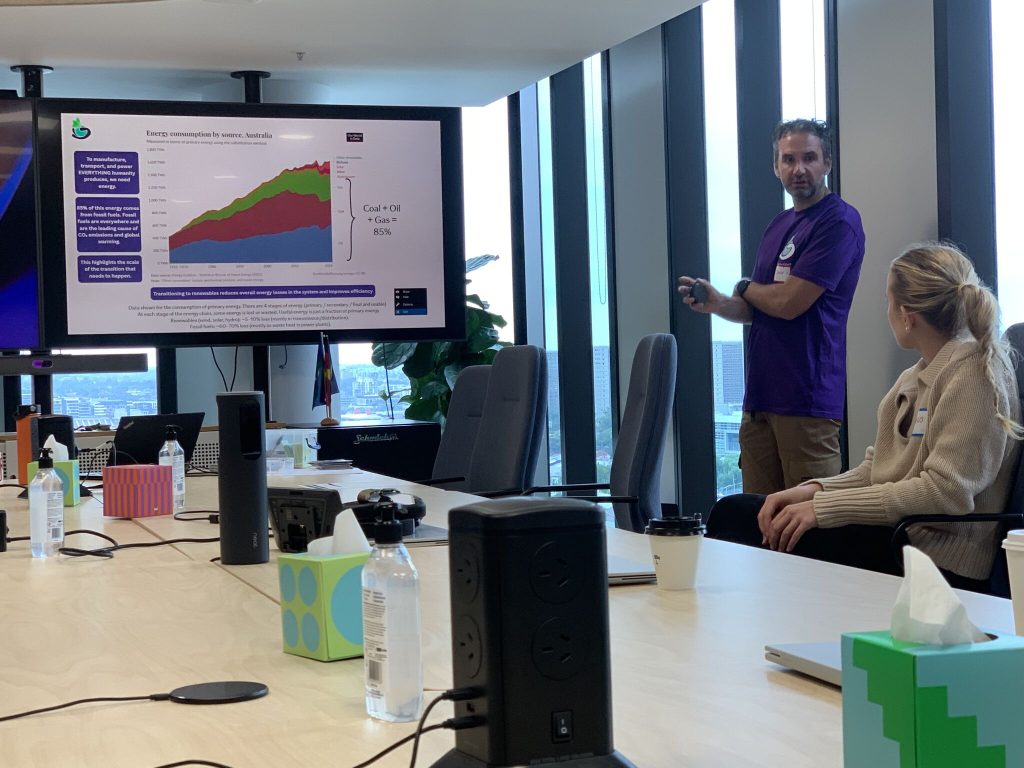
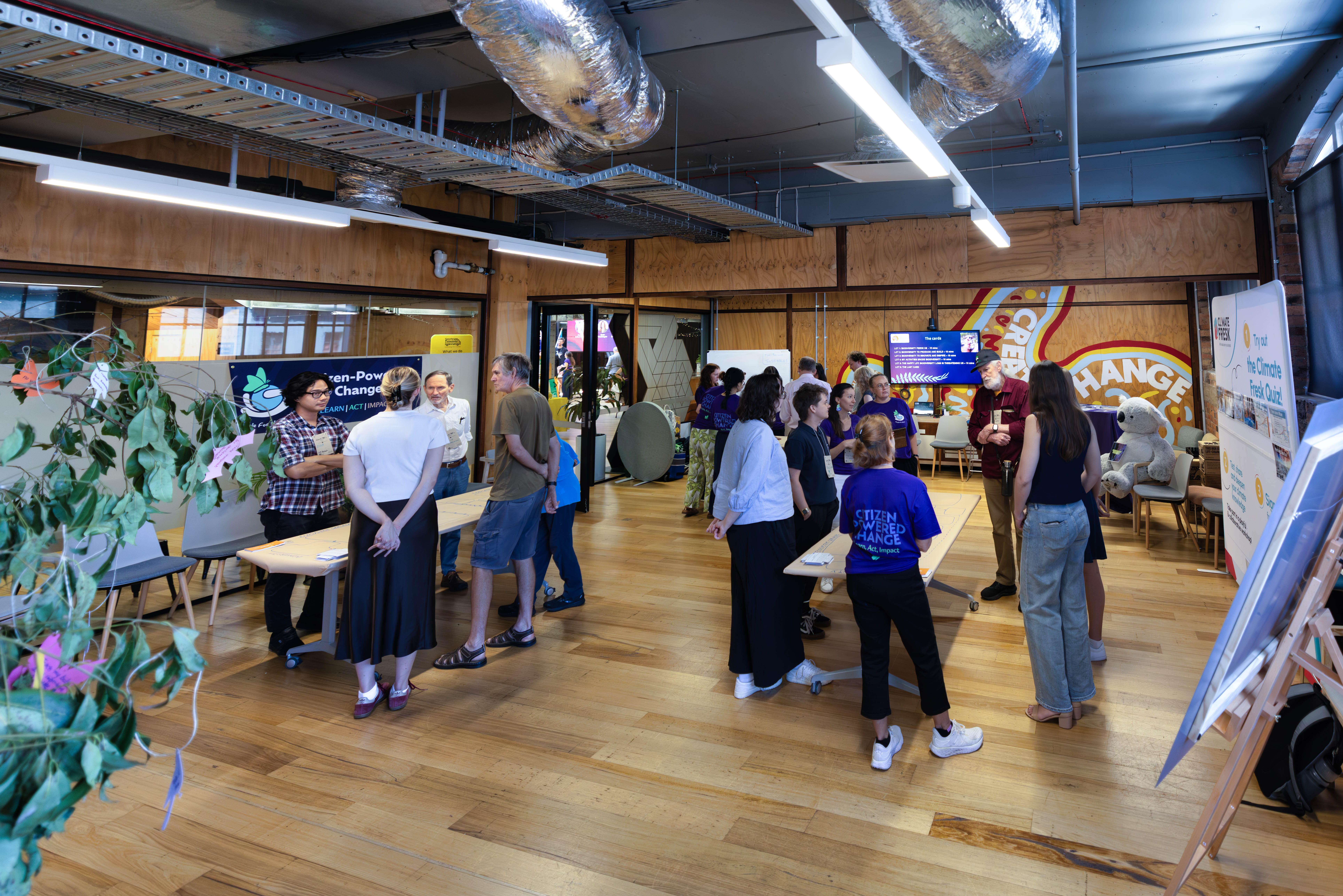
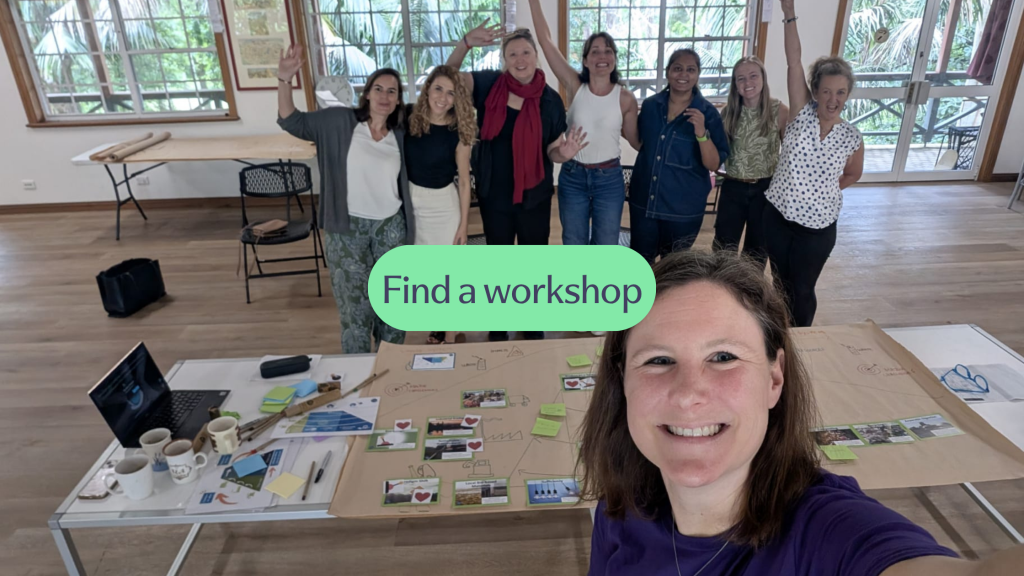
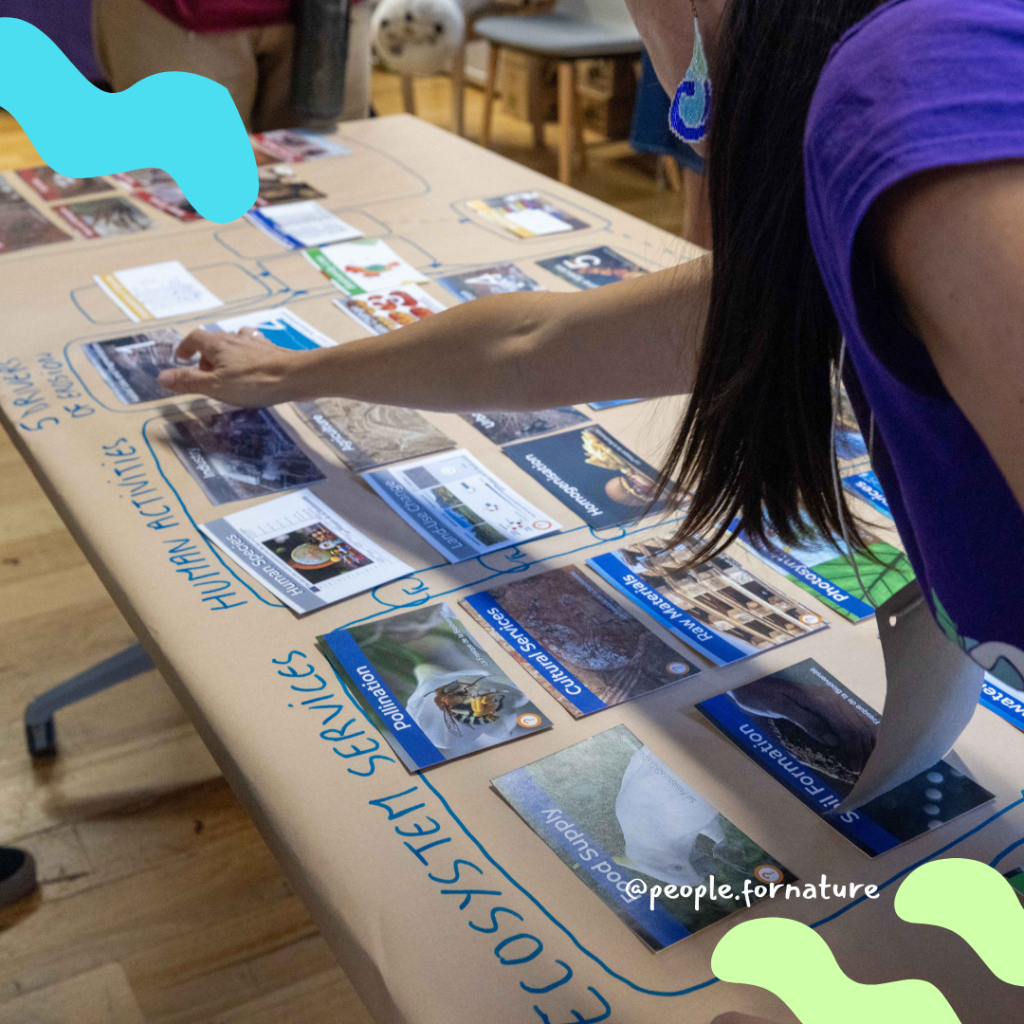
Servier’s journey with People For Nature began with a Climate Fresk for the leadership team and their response was so positive that they decided to organise workshops for all staff. This rollout happened in two phases: first, we organised a Climate Fresk as part of the company’s sales conference; then, we held a two-day Fresk marathon at head office, training 48 employees during seven sessions. Following the workshops, the team came up with a climate action plan, which they are now implementing. Next year, the company is considering expanding their knowledge by running the biodiversity and circular economy workshops.
Objectives
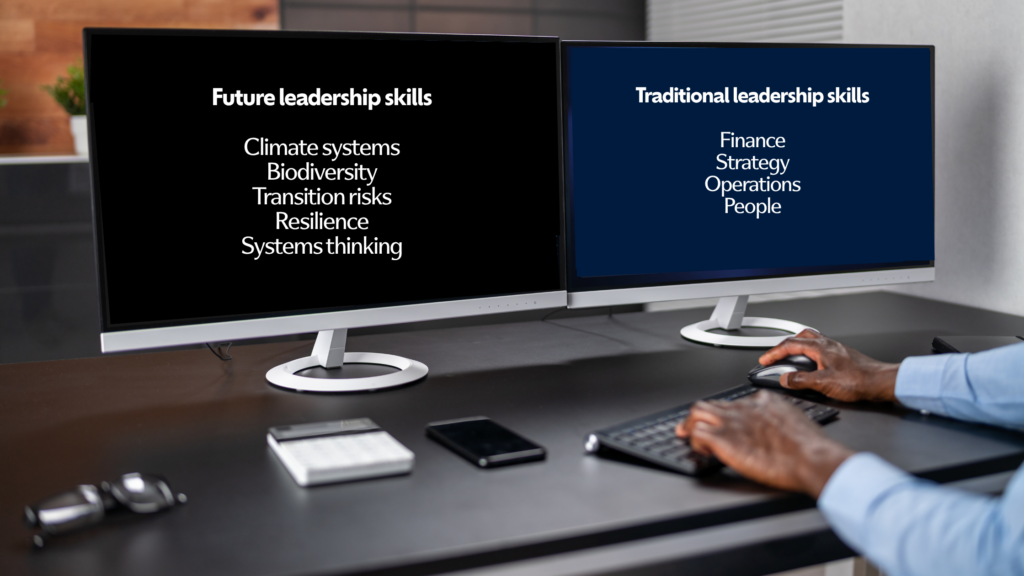
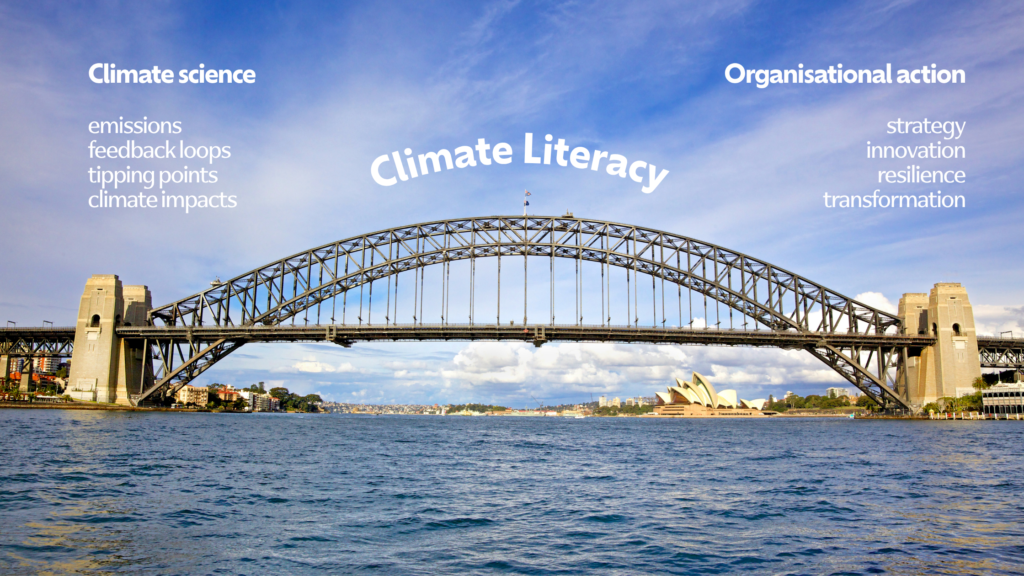
Servier extended Climate Fresk beyond leadership to build a shared, science-based understanding across its workforce—enabling practical action at every level. This reflects a broader shift: future-ready companies embed climate literacy into strategy and operations. For Servier, the strong link between climate and health makes this capability essential for managing risks and driving long-term impact.
Impact / Feedback
“This workshop, Climate Fresk, was a valuable
moment to step back as a Leadership Team as it
strengthened our understanding of climate change
and reinforced our responsibility to act, both
individually and as a company. Taking care of the
planet matters to us, and every step counts !”
– Mélanie Chamaux, General Manager Servier Australia New Zealand
Interested in organising a workshop for your organisation?
We’ll empower your people to power change for nature. Contact us today to find out more.
Outdoor Office Day(s) Australia – 19-23 October (nationwide) — A nationwide movement inviting individuals and organisations to bring more nature, movement and fresh air into their working day.
Growing Place – interactive public art experience (Melbourne, VIC) — A city-wide augmented-reality art trail revealing Indigenous plants and ecosystems across Melbourne.
Spring Street Wisdom WALKshop (online) — A guided online Street Wisdom walk inviting participants to step outside, slow down and reconnect with their environment.
Giant Biodiversity Collage (Sydney,NSW) — A science-based, participatory workshop that helps people understand the causes and consequences of biodiversity loss — and how this connects our economies and our everyday choices.
Giant Biodiversity Collage (Brisbane, QLD) — A science-based, participatory workshop that helps people understand the causes and consequences of biodiversity loss — and how this connects our economies and our everyday choices.
Visioning Biophilic City Beyond NetZero (Sydney, NSW) — A hands-on workshop bringing together academics, local government, developers and industry consultants to co-design a real biophilic city concept, grounded in an actual Australian site.
The Living Neighbourhood – How We Return to the Village (Online) — A permaculture-inspired conversation on designing neighbourhoods that strengthen biodiversity, food resilience and community.
Living Waters: From Harbour Crisis to Climate Action (North Sydney, NSW) — Launch of the Sydney Living Waters Lab, connecting research, industry and community in nature-based responses to climate change.
Local biodiversity in the spotlight: connecting people, places and species (Brisbane, QLD) — A biodiversity talk and guided walk linking historical records with citizen science at Griffith’s Nathan campus.
Intergenerational by Nature: Embedding Youth in Nature Policy in Australia (Sydney, NSW) — Launch of Australia’s first youth nature network, exploring young people’s role in national and global nature policy.
Nature Studio: Connect and Create (Parkville, VIC) — A relaxed drop-in session exploring biodiversity through drawing, journalling and other simple creative activities.
Masterclass on Forest Therapy: Reconnecting with Nature for Health (Online) — An evidence-based online masterclass on Forest Therapy (Shinrin-Yoku) and its benefits for health and wellbeing.
Co-working & Networking Outdoors (Sydney, NSW) — A relaxed outdoor co-working day inviting people to bring their laptop and work alongside others in a greener setting.
Conservation Conflict and Consensus: Finding Common Ground on Introduced Species (Sydney (UTS), NSW) — A research-based session exploring how conservationists can navigate disagreement over introduced species management.
From Citizen Ideas to Visible Action with LOMA (Local Matters) (Online) — A webinar introducing LOMA, a civic participation platform that keeps Citizen COP ideas visible and actioned after events end.
People, Planet, Pastry – Sustainability Meetup (Gold Coast, QLD) — A casual meetup for people working in or curious about biodiversity and sustainability to share local stories and ideas.
Bite by Bite: Supporting Biodiversity Through Everyday Food Choices (Brisbane, QLD) — A hands-on plant-based cooking workshop linking everyday food choices to biodiversity and community resilience.
Biodiversity & Pollinator-Friendly Gardening Workshop (Findon, SA) — A practical workshop on gardening for native pollinators and biodiversity in backyards, courtyards and balconies.
Citizen COP Bird Walk (Canberra, ACT) — A gentle bird walk exploring local birdlife, biodiversity decline and cultural responsibilities to care for Country.
Places That Matter: A Redlands Conversation on Biodiversity (Redlands, QLD) — A community conversation on growth, development pressure and protecting biodiversity-rich places in the Redlands.
Solve The Biodiversity Puzzle & Help Restore Nature (Brisbane, QLD) — A fun, family-friendly morning celebrating biodiversity and taking action for nature.
Creating Systems Change to Support Nature (Sydney, NSW) — An interactive workshop applying eco-centrism and the Three Horizons framework to build actions that create systems change for nature.
Could Car Parks Become Hubs for Biodiversity? (Online) — An online lecture exploring research on turning car parks into joined-up, biodiverse green spaces in cities.
Repair and Swap @ UoN (Newcastle, NSW) — A clothes-swap and repair café for University of Newcastle students and staff, giving pre-loved items a second life.
Leadership on the Edge from Antarctica (Sydney, NSW) — A talk on courage, resilience and leadership drawn from 15+ years travelling to Antarctica, the Arctic and the Amazon.
Backyard Biodiversity Safara with Permaculture Australia (Online) — A relaxed online session on noticing and supporting the biodiversity already present in backyards and balconies.
Gardens for Wildlife Speaker Series (Online) — An online speaker session on habitat gardening and caring for wildlife in backyards, with a network of habitat gardeners.
Biodiversity: The Next Frontier for Finance (Melbourne, VIC) — A webinar with Australian and international experts on including biodiversity in sustainable finance and markets.
Tim Winton’s ‘Coral’s Last Stand’ Film Showing (Chapel Hill, QLD) — A film screening with refreshments and discussion on the threats facing Australia’s coral reefs.
Small Steps Biodiversity Panel and Workshop (Sydney, NSW) — A panel of community doers followed by a Biodiversity Collage workshop, showing how small actions can reverse biodiversity loss.
Turning the Tide on the Cooks River – Stories of Community, Regeneration and Wild Hope (Hurlstone Park, NSW) — A conversation on river and community regeneration along the Cooks River, featuring Finding Nature, Regen Sydney and Wild Hope.
Effective Climate Conversations Training (Online) — An online workshop teaching the skills to have productive, confident climate conversations and counter doomism or denial.
— Book your ticket: https://events.humanitix.com/effective-climate-conversations-training-online-citizen-cop-2026
SUPPORT CITIZEN COP
Citizen COP National raffle – October 19 – November 20 (nationwide) — Citizen COP is built on citizen power, independence, and imagination. This national raffle is one of the creative ways we are building financial independence for Citizen COP.
At People For Nature, our strength comes from the people who guide and shape our work.
Tess brings more than 20 years of professional experience, including over a decade in sustainability leadership. Across corporate, government and not-for-profit sectors, she has consistently worked at the intersection of strategy, governance and impact — helping organisations deliver meaningful environmental, social and governance outcomes.
Her commitment extends well beyond her professional roles. Tess has contributed her time and expertise to a number of influential voluntary positions. She was a founding director of the Social Enterprise Council of NSW/ACT (SECNA), where she led the development of the organisation’s governance approach. She also served as the inaugural Chair of the Net Zero Working Group at the Insurance Council of Australia, playing a key role in catalysing the industry’s Net Zero Roadmap. More recently, she participated as a Board Observer with Red Room Poetry through the Observership Program.
What resonates most strongly with Tess is People For Nature’s focus on bringing community and nature closer together. She believes this connection is fundamental to how people thrive — now and into the future.
As we continue to grow, we’re grateful to have Tess’s experience, integrity and perspective helping guide our journey.
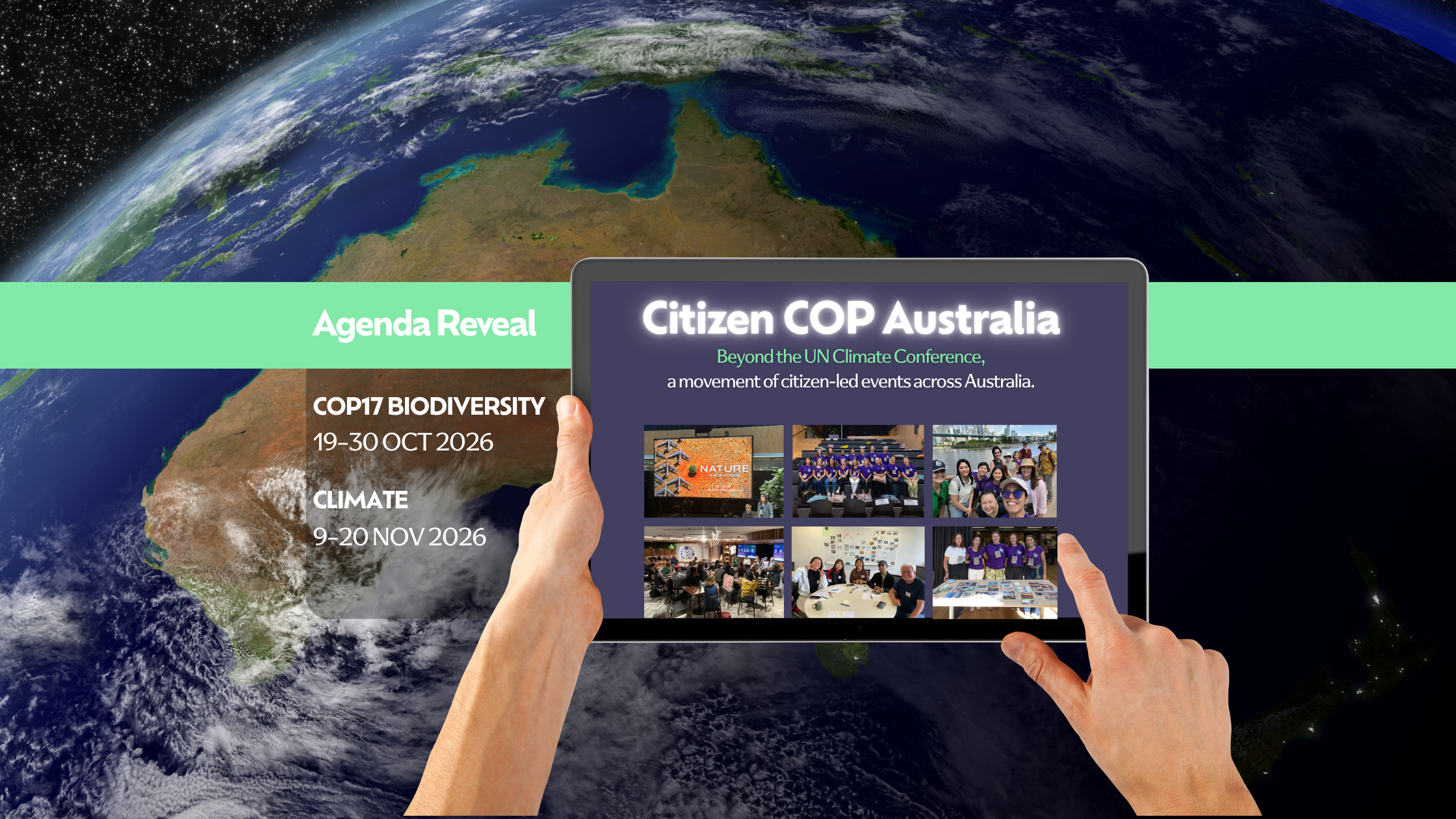
Australia’s Citizen COP movement has today released its 2026 national event program: 90+ events across every state and territory, supported by a growing ecosystem of 75 partner organisations — more than doubling in scale since last year, driven by one thing only: a shared commitment to citizen-powered change.
As preparations intensify ahead of the UN COP17 Biodiversity and COP31 Climate negotiations, Citizen COP continues to grow as a decentralised national platform for civic engagement on climate and nature.
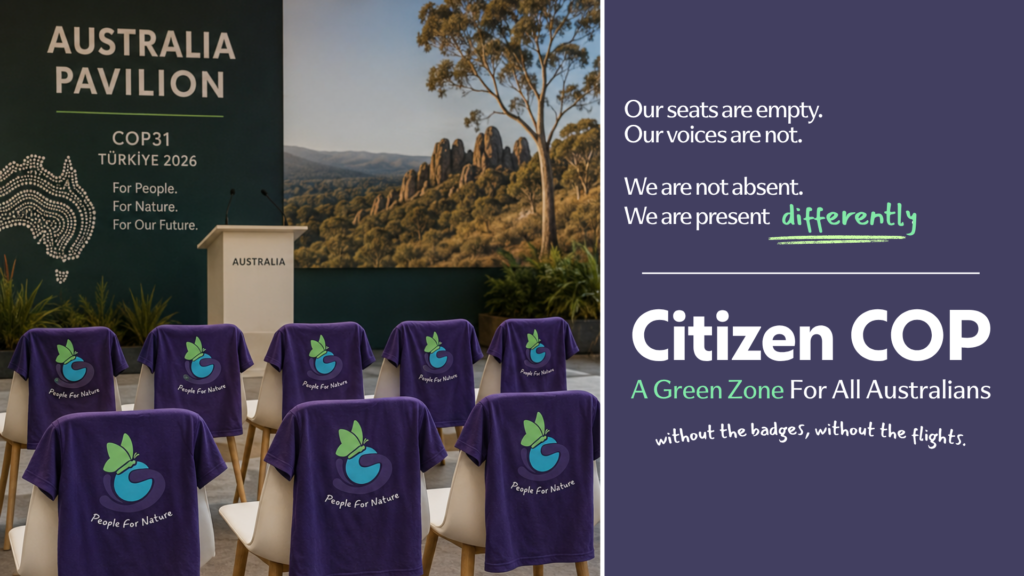
While the official COP runs on badges, delegations and international flights, Citizen COP runs on none of that. It is citizen-led, locally hosted, and open to anyone — demonstrating that participation doesn’t require a conference pass, only a willingness to be part of the conversation.
Building on a successful 2025 pilot that engaged more than 1,400 participants across 42 events, Citizen COP is now moving from pilot initiative to a structured, distributed civic platform for climate and biodiversity engagement across Australia.
A nationwide citizen climate democracy network
Rather than a single conference, Citizen COP operates as a nationwide network of locally hosted events — brought to life by councils, universities, community organisations, and individuals who believe in participatory democracy. Together, they bring global climate and nature discussions into local contexts, connecting citizen perspectives directly into broader policy conversations.
The 2026 program runs from October to November 2026, alongside COP17 (Biodiversity) and COP31 (Climate) — two landmark global negotiations taking place at a critical moment for both nature and climate action. With Australia set to play a leading role in hosting COP31 in partnership with the Pacific, , there is a renewed opportunity to ensure that voices from across the country are not only present, but actively listened to and meaningfully included in shaping the conversation.
Across many countries, there is growing recognition that stronger community engagement is essential to addressing the complexity of climate and biodiversity challenges. At People For Nature, we see democracy itself as one of our most powerful tools for tackling these “wicked” problems — not as a slogan, but as practice. Our contribution is to help make that engagement real in Australia: creating structured, accessible spaces where people can come together, learn from one another, and actively shape responses to the climate and nature crises
Citizen COP events include community forums, workshops, citizen science activities, and locally led action projects — connecting global negotiations with lived experience on the ground. Already, 75 organisations, councils, universities and community groups are participating in the rollout, forming one of the largest coordinated citizen-led climate and nature engagement initiatives in Australia.
Built on principle, not just program.
Citizen COP is deliberately non-partisan, inclusive, and designed for broad public participation. It is intentionally different from the typical sustainability conference model — often shaped by commercial sponsorships, formal venues, and high-emission formats that can drift away from the communities and purpose they claim to serve. Instead of that, Citizen COP is designed as something simpler and more grounded: people coming together, for people and for nature, in ways that stay connected to real places, real voices, and real action.
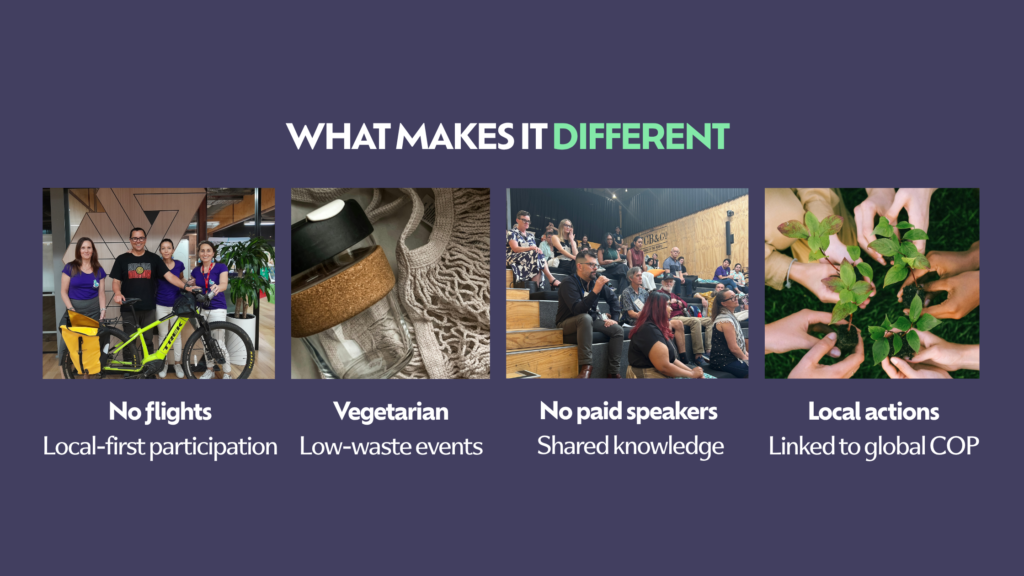
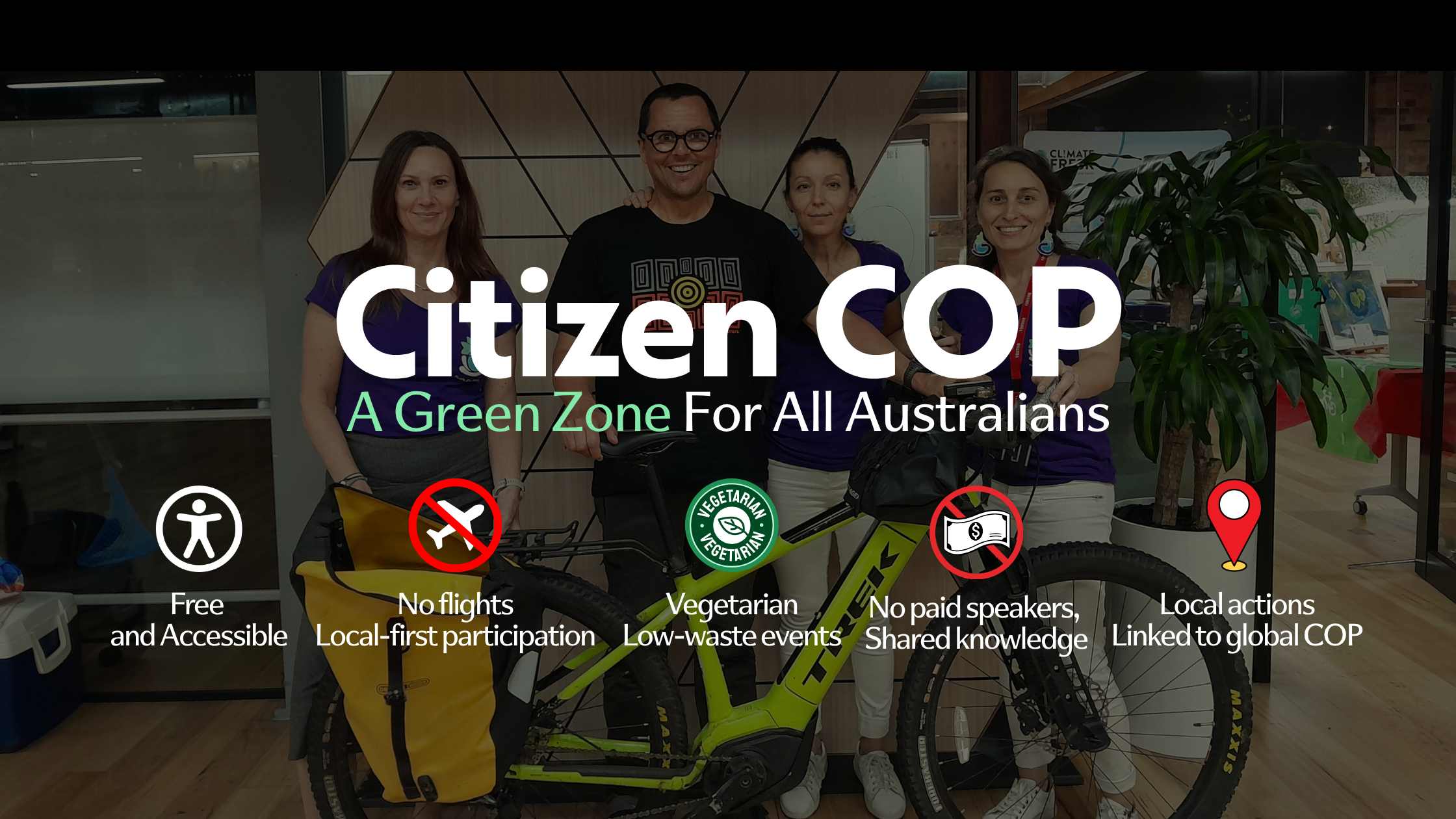
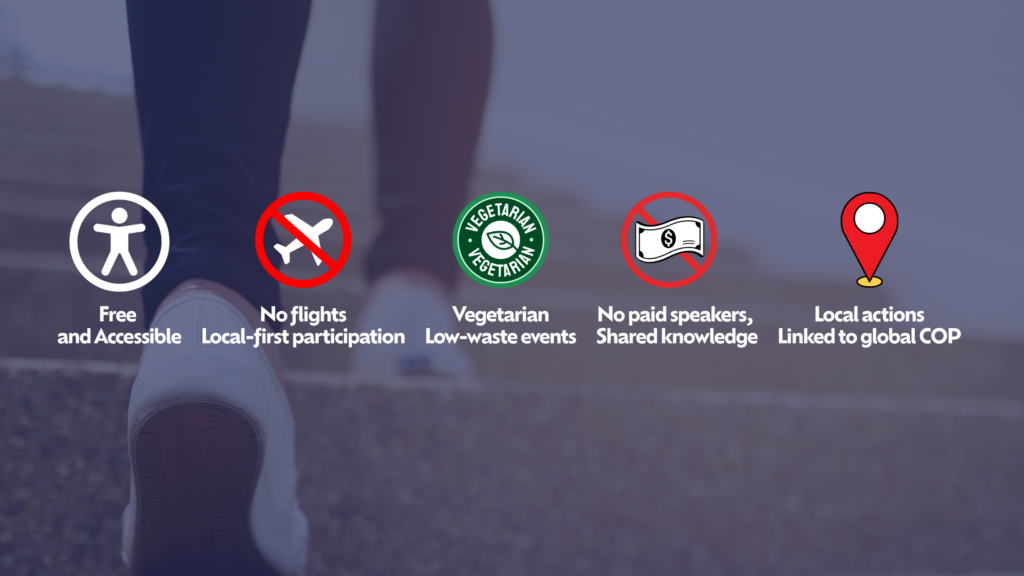
No flights
No paid speakers
Free and accessible participation
Vegetarian catering only
Minimal-waste approach
Participatory funding model
No involvement from fossil fuel companies
“These principles are not symbolic — they are structural. If we are asking society to respond to climate and biodiversity challenges, the way we organise participation must reflect those same values.”
Citizen COP brings together local events under a single national agenda, creating a coordinated framework for engagement across Australia. Each event is part of a shared program supported by an event guide, ongoing coordination with hosting organisations, and continued engagement with DCCEEW to remain connected to the evolving COP process.
Alongside this, Citizen COP is building something more collective: a way to capture the “pulse” of citizen perspectives as communities come together during the program — translating conversations on the ground into a shared, structured signal of public priorities, insights, and concerns on climate and biodiversity.
Expressions of interest to host 2026 events have now closed as the national program moves into delivery. Participation in the movement remains open through volunteering, donating, or sponsoring — as citizens, organisations, and partners continue to help build this distributed national initiative.
Get involved
💜 Make a monthly donation — monthly giving provides the financial stability to grow and sustain Citizen COP as a nationwide citizen-led movement. Every contribution, monthly or one-off, large or small, makes a difference. → www.peoplefornature.org.au/donate
💜 Become a supporter — help grow Citizen COP as a long-term, independent nationwide initiative. Support can take many forms, from helping host events or providing venue space, to contributing modest financial or in-kind support that helps cover practical needs such as event setup, communications, AV, IT, and coordination. We welcome organisations that want to contribute in ways that fit their capacity and values — whether that’s actively collaborating or offering light-touch support in the background.
💜 Book a conscious ticket ($10) — helps cover the work behind delivering Citizen COP events across Australia.
Reny Septiani is a People For Nature Ambassador supporting the Citizen COP national agenda and communications for 2026, building on her previous volunteering role in 2025.
Reny is part of a growing community of young leaders putting nature into action. A Master of Environment student at Griffith University and President of the Planetary Health Club, she is passionate about turning awareness into hands-on impact — from beach clean-ups to youth eco-workshops.
In her role with People For Nature, she is helping support the communications and coordination of Citizen COP Australia, contributing to a growing national movement that connects citizens, science, and policy into shared climate action.
Aiko Nagae is a People For Nature Ambassador supporting the Citizen COP national agenda and communications for 2026, building on her previous volunteering role in 2025.
Aiko is a public health researcher and practitioner whose work sits at the intersection of gender-based violence, climate change, and planetary health across the Asia-Pacific region. Her approach brings together evidence, lived experience, and systems thinking to support more integrated responses to complex global challenges.
She recently completed an internship with UNFPA, where she focused on addressing harmful practices in Asia. This experience deepened her commitment to advancing gender equality and strengthening community-led approaches to health and protection.
Aiko has also been actively involved in a student-led Planetary Health Club at Griffith University, where she explored ways to break down disciplinary silos and encourage collective action on shared environmental and health challenges.
Through her research and programme experience, Aiko’s work centres on translating evidence into practical, real-world action — with a strong focus on planetary health, gender equality, and climate resilience.
In her role with People For Nature, she is helping support the communications and coordination of Citizen COP Australia, contributing to a growing national movement that connects citizens, science, and policy into shared climate action.
Marta is part of the communications team shaping Citizen COP 2026, helping us share the story of People For Nature and amplify the voices behind Australia’s local response to the 2026 UN Climate Change Conferences.
Marta has lived and worked across Europe, the United States, Latin America, and now calls Australia home. This global journey has shaped both her worldview and her creative practice, bringing a rich cross-cultural lens to everything she does.
She has spent much of her career in advertising, working with major brands and agencies as a creative director and copywriter. But over time, something shifted.
Marta no longer wants to use her creativity to make big corporations’ shareholders richer. Instead, she wants her work to serve something more meaningful — organisations that care for people, communities, and our fragile planet.
When she met Audrey and learned about People For Nature — and its guiding motto “Radical collaboration with stubborn optimism” — she knew she had found the right place to contribute.
Marta brings deep expertise in branding, communication strategy, creative direction, and copywriting across multiple channels. She is passionate about crafting ideas that don’t just inform, but move people — emotionally and into action.
She is especially excited to help amplify Citizen COP Australia, People For Nature’s local, citizen-led response to the 2026 UN Climate Change Conferences — helping bring more voices into the conversation and turning awareness into participation.
Amy Lomax is a Senior Climate, Sustainability and Resilience Leader with more than 20 years’ experience working across government, higher education, and with clients and communities in Australia and Aotearoa New Zealand.
Her work focuses on helping organisations understand risk, strengthen resilience, and turn sustainability ambitions into practical, real-world outcomes. Amy brings deep expertise across climate risk and adaptation, ESG readiness, integrated water management, environmental management, organisational capability building, and co-design.
Amy has also been an active contributor to People For Nature’s journey. In 2025, she was part of the core team that brought AlterCOP to Australia, supporting speaker coordination and volunteering her time throughout the event.
A certified Climate Fresk facilitator, Amy is passionate about connecting people and ideas. She volunteers her time to foster community conversations around sustainability, creating welcoming spaces where anyone can engage with climate and environmental challenges.
Arthee Chowdhury is passionate about climate education, community engagement, and creating meaningful opportunities for people to reconnect with nature. With a background in environmental science and active involvement in environmental societies and initiatives, she is committed to making climate education more accessible, engaging, and action-oriented for communities across Australia.
Based in Sydney, Arthee has contributed to a range of environmental and social impact initiatives, including facilitating workshops and supporting education programs that build awareness and empower people to take positive environmental action. Through her work, she brings a strong belief that informed communities are at the heart of meaningful, lasting change.
Arthee continues to volunteer her time with People For Nature, supporting the delivery of Climate Fresk workshops and helping to inspire others to take practical steps towards a more sustainable, nature-positive future.
Caroline O’Brien is a seasoned executive leader with three decades of experience driving innovation, strategy and people‑centred growth across technology and climate‑related initiatives. She serves as an Ambassador for People For Nature, supporting community education and engagement in climate science, systems thinking and biodiversity awareness through interactive workshops and facilitation.
Her background combines engineering, executive leadership and a passion for purpose‑driven work, enabling her to bring strategic insight and collaborative energy to People For Nature’s mission of empowering citizens to understand and act on the interconnected challenges of climate change and ecological decline. Caroline’s involvement helps bridge high‑level strategy with grassroots climate education and community‑level engagement, fostering a more informed and active citizenry.
Daniel Zelli is an executive leader with more than 20 years’ experience in strategy, governance, and enterprise transformation across government, not-for-profit, and higher education sectors. He helps organisations strengthen capability, manage risk, and build resilient, future-ready operations.
Through Better Ideas, Daniel works with boards and executive teams to assess and improve their technology and ESG (Environmental, Social and Governance) maturity. His Technology and ESG Heatmaps provide clear, actionable insights that support organisations to prioritise environmental transformation, digital modernisation, and long-term sustainability outcomes. He also leads multi-year transformation programs that deliver organisation-wide uplift across digital systems, operational performance, and ESG strategy.
Daniel is also an ambassador of People For Nature, where he supports biodiversity awareness, climate and nature education, and community engagement initiatives that encourage Australians to take meaningful action for the environment.
Every year, world leaders, scientists, negotiators, businesses, NGOs, and civil society groups gather for global environmental summits known as COPs — Conferences of the Parties at the UN Climate Change Conference. Here is where major environmental agreements, including the Paris and Kyoto Agreements are negotiated and drafted. This year, there will be two major global COPs.
🌿 COP17 Biodiversity (19–30 Oct) held in Yerevan, Armenia.
🌎 COP31 Climate (9–20 Nov) taking place in Antalya, Türkiye.
These negotiations, which will be led by Australia this year, focus on reducing greenhouse gas emissions, accelerating the energy transition, adapting to climate impacts, and financing climate action globally.
And while these conferences are essential, they can also feel distant from everyday life… unless you’re part of the official agenda.
That is where Citizen COP Australia comes in: a nationwide, people-powered movement bringing the spirit of the COP “Green Zone” (the public area at the UN Conference) into communities across Australia — creating spaces where everyone can learn, connect, share ideas and take action for climate and nature.
Enabled by People For Nature but intentionally independent and distributed, Citizen COP invites communities, organisations, schools, businesses, artists, and local groups across Australia to host their own events during the COP periods.
Rather than a single centralised conference, Citizen COP becomes a network of locally led conversations and actions — a “people’s COP” that makes global negotiations visible, accessible, and relevant at community level.
Help build Australia’s biggest citizen-led Green Zone
The official COP Green Zone creates space for civil society, communities, innovators, youth and organisations to engage beyond formal negotiations. Citizen COP expands that idea.
Our vision is a nationwide Green Zone — where every community, every state and every Australian has the opportunity to participate.
We believe climate and biodiversity action should be participatory, community-driven, and aligned with the values of the future we are trying to create.
Participating events are encouraged to follow a set of shared principles, including:
No flights associated with events or speaker participation
Low-waste and environmentally responsible event design
Vegetarian or plant-forward catering
A focus on local action and community solutions
No paid speakers, encouraging contribution through shared purpose rather than commercialisation
Inclusivity, accessibility, and constructive dialogue
These principles are not about perfection. They are about modelling practical, values-aligned ways of gathering and collaborating.
In a world where large conferences can sometimes carry significant environmental footprints themselves, Citizen COP aims to demonstrate that meaningful engagement can happen locally, affordably, and with minimal impact.
Together, we can build a Green Zone where conversations happen in neighbourhoods, schools, workplaces, community halls, parks and online spaces. A Green Zone where knowledge becomes action.
Many ways to participate
Citizen COP is intentionally designed as a distributed movement rather than a branded, centralised event.
There are many ways you could participate:
Schools may host student climate forums or biodiversity projects.
Councils might facilitate community workshops.
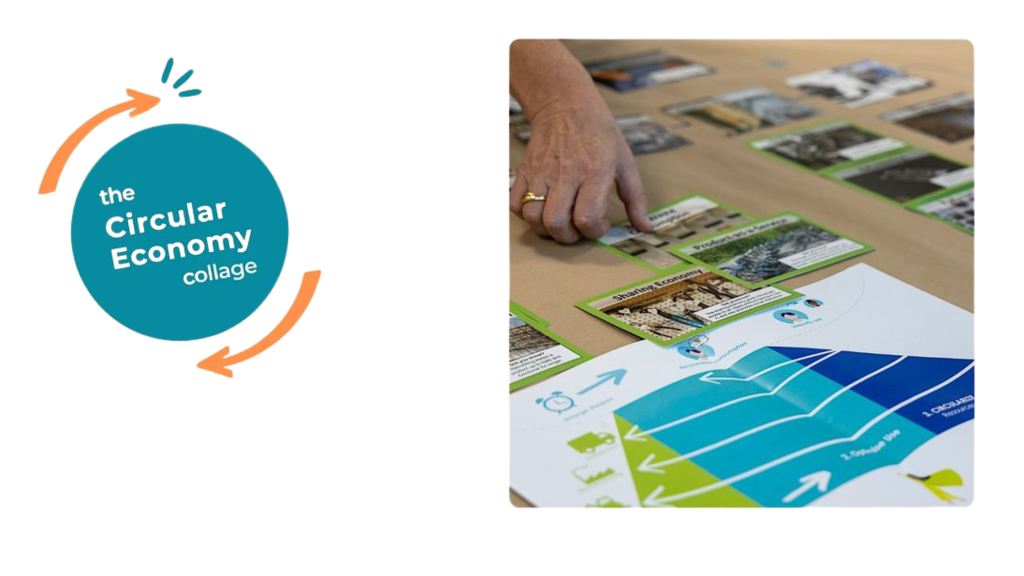
Businesses could organise sustainability discussions or host Climate Fresk, Biodiversity Collage or Circular Economy Collage workshops with staff and customers.
Artists may create exhibitions or performances exploring ecological themes.
Community groups might run repair cafés, nature walks, film screenings, climate cafés, and so much more.
This decentralised approach allows communities to shape discussions around the issues most relevant to them – whether that is renewable energy, biodiversity restoration, circular economy solutions, sustainable food systems, greener cities, climate adaptation, conservation, or community wellbeing.
Global issues call for local solutions
The impacts of climate change and biodiversity loss are deeply local.
At a time when Australia has an unprecedented opportunity to help shape global environmental conversations through its leadership role connected to COP31, Citizen COP creates a way for communities across the country to feel part of that moment.
Citizen COP bridges the gap between global negotiations and everyday life by translating complex environmental issues into practical, human-centred conversations in our neighbourhoods, schools, workplaces, organisations, and communities.
📆 Interested in organising an event, submit your EOI before 31 August.
If you’ve ever looked at a sustainability report and thought, “Where do I even start?” — you’re not alone. And that’s exactly where our ambassador Azra shines.
Based in Melbourne, Azra is a Senior Consultant in the Climate Impact team at Pangolin Associates. Her day-to-day work sits at the intersection of data, strategy, and real-world impact — helping organisations understand their greenhouse gas emissions, define reporting boundaries, and uncover meaningful ways to reduce their climate footprint.
But what really sets Azra apart isn’t just her technical expertise — it’s her ability to make complex climate concepts feel clear, approachable, and even empowering.
Making Climate Make Sense
A big part of Azra’s work is translating the often overwhelming world of climate reporting into something people can actually engage with.
“I spend a lot of time helping organisations feel confident navigating their reporting obligations,” she says. “But more importantly, helping them see that they can take meaningful action.”
That focus on clarity and confidence is at the heart of everything she does — whether she’s working with corporate clients or volunteering in the community.
Passion Meets Purpose
Azra is deeply passionate about climate education and environmental literacy. Not just in a technical sense — but in a human one.
She believes that when people truly understand sustainability, they stop feeling paralysed by it.
Instead, they feel empowered.
“I love helping people move from feeling overwhelmed to feeling capable,” she shares. “That shift is where real change begins.”
Why People For Nature?
For Azra, joining People For Nature was a natural fit.
She was drawn to the organisation’s community-based approach — where learning isn’t just theoretical, but hands-on, social, and deeply connected to the natural world.
“I really value how the program connects people to nature while building understanding,” she says. “It’s such a powerful way to support communities — especially young people — to feel informed, inspired, and part of something bigger.”
Bridging Two Worlds
At the core of Azra’s work — both professionally and as a volunteer — is a simple but powerful mission:
Bridging the gap between technical climate knowledge and everyday understanding.
Whether she’s consulting with organisations, facilitating conversations, or engaging with local communities, Azra is constantly working to make sustainability feel less like a distant concept… and more like something we can all be part of.
And that’s exactly the kind of energy we love to see in our ambassador community 💚
Want to get involved like Azra? Join us in turning knowledge into action — one conversation, one workshop, and one community at a time.
Australia is home to one of the world’s most advanced and well-established citizen science ecosystems. Across cities, suburbs, regional towns and remote landscapes, everyday people are contributing to a shared understanding of how nature is changing — and how we respond.
From backyard observations to structured national programs, citizen science is becoming a critical layer of environmental data. It is helping us understand biodiversity loss, climate impacts, and even material flows in our environment through the lens of circular economy systems.
This is not just data collection. It is a shift in who gets to observe, interpret and respond to environmental change.
From individual observations to national environmental datasets
Every day, Australians are already contributing to platforms that turn simple observations into meaningful scientific insight.
Our Nature Oasis program helps map and connect citizen-led conservation efforts, revealing how backyard and privately managed land are collectively contributing to Australia’s Nature Positive Strategy goals.
Tools such as iNaturalist Australia enable people to record and identify plants, animals and fungi, generating data that feeds directly into national biodiversity systems and global research networks. These observations help track species distribution, habitat change and ecosystem health over time.
Similarly, FrogID allows citizens to record frog calls using their phones, helping scientists monitor amphibian populations and understand how climate and land use change are affecting sensitive species across the country.
Bird enthusiasts contribute through tools such as Merlin Bird ID and eBird, documenting species presence, migration patterns and seasonal shifts that are increasingly linked to climate variability.
Together, these platforms form a living, distributed dataset of Australia’s biodiversity — built by millions of everyday encounters with nature.
Citizen science as a climate monitoring system
Beyond biodiversity, citizen science is increasingly playing a role in understanding climate impacts at local scale.
Initiatives such as ClimateWatch enable people to record seasonal changes in plants and animals — from flowering times to migration and breeding behaviour. These phenological shifts are key indicators of how temperature and rainfall patterns are changing across the continent.
Coastal monitoring initiatives such as CoastSnap allow communities to repeatedly photograph shorelines, building long-term datasets on erosion, sea-level rise and storm impacts.
Together, these tools make climate change visible at a human scale — not as abstract global models, but as observable changes in local environments over time.
Mapping pollution, waste and circular economy systems
Citizen science is also expanding into how we understand material flows through ecosystems — a critical part of the circular economy transition.
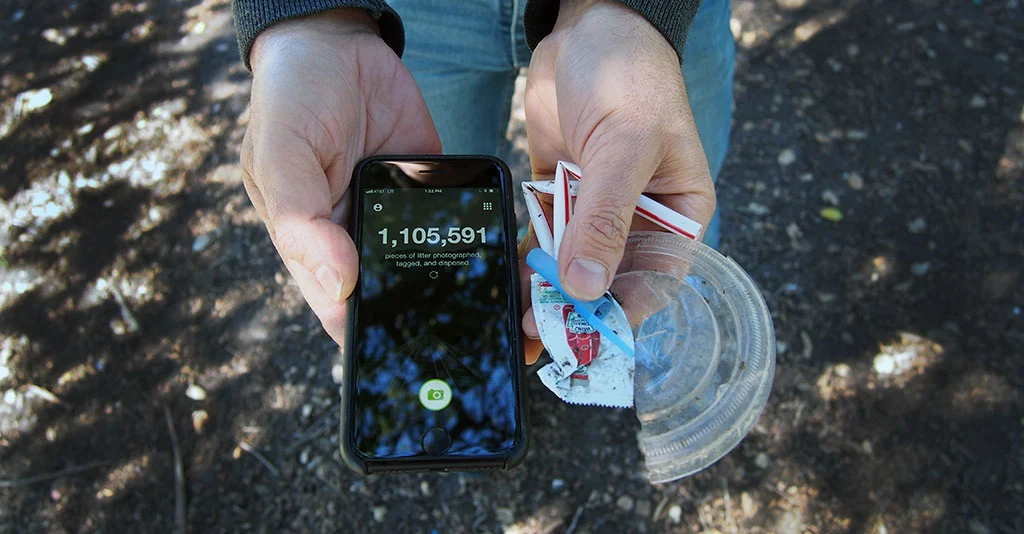
Community-led programs and tools such as Litterati support the mapping of litter and waste types, helping identify patterns in consumption, packaging design and leakage into natural environments.
Marine debris monitoring initiatives such as those led by Tangaroa Blue Foundation bring together thousands of volunteers collecting and categorising waste found on coastlines, informing policy, product redesign and recovery systems.
These datasets are increasingly important for understanding how materials move through society — and where they end up in nature.
In this sense, citizen science is not only tracking ecosystems — it is also helping trace the lifecycle of materials and the effectiveness of circular economy interventions.
A connected system: climate, biodiversity and circularity
What emerges across these platforms is not a collection of separate projects, but a connected environmental intelligence system.
Biodiversity tools show how species and ecosystems are changing
Climate tools reveal how seasonal patterns and physical systems are shifting
Circular economy tools expose how materials and waste flow through landscapes
Together, they form a distributed sensing network powered by people — one that complements scientific institutions and helps fill critical data gaps at scale.
This integration is essential. Climate change, biodiversity loss and resource consumption are not separate crises — they are interconnected systems.
Why this matters
Citizen science is fundamentally reshaping the relationship between people and the natural world.
It shifts nature monitoring from something done by a few experts to something embedded in everyday life. It builds environmental literacy through participation. And it creates datasets that are richer, more local, and more continuous than traditional research alone can achieve.
Most importantly, it enables people to move from awareness to contribution — turning observation into action.
Where this is heading
The opportunity now is to scale participation and integration.
As these tools become more connected, citizen science has the potential to become a core pillar of Australia’s environmental decision-making infrastructure — supporting biodiversity protection, climate adaptation and circular economy transformation.
The next phase is not just more data, but better integration — linking citizen observations into systems that inform policy, planning and regenerative action.
Closing
Across Australia, a quiet shift is already underway.
Millions of everyday observations are building a real-time picture of how our environment is changing — from frogs in suburban backyards to coastlines, forests, and urban ecosystems.
Citizen science is no longer a niche activity. It is becoming a fundamental part of how we understand and respond to the climate and nature crisis.
Not only the things we own, but the things we choose to care for.
The trees we protect. The wildlife we make space for. The knowledge we pass on. The people we inspire to keep going.
A will is more than a legal document. It can be a reflection of what matters to us — and a way to help shape the world we leave behind.
For those who believe nature should have a place at the heart of our future, leaving a gift to People For Nature is one way to make that belief part of your legacy.
What is a bequest?
A bequest is a gift left to an individual or organisation in your will.
It can be a specific amount, a particular asset, or a percentage of what remains of your estate after your other commitments have been met.
Even a small percentage can make a meaningful difference.
Why leave a gift to People For Nature?
We have a big dream: to build a society where nature is central to every decision.
And we want to build it independently.
Too often, charities depend on corporate funding — sometimes from the very industries contributing to the problems they are trying to address. We believe environmental organisations need the freedom to speak honestly, challenge systems and stay true to their purpose.
People For Nature is small, independent and ambitious. We are building something designed to last — powered by citizens, not corporate interests.
A gift in your will can help give this little charity with a big dream the means to survive, grow and keep doing the work for generations to come.
People For Nature is an Australian registered charity and Deductible Gift Recipient. Your gift can help empower more Australians to understand, protect and restore the natural world — today and for generations to come.
Originally from Brazil, Andreia has called Australia home for the past eight years and is now based in beautiful Queensland with her family.
With an 18-year career in the IT industry, Andreia has worked as a project and program manager at SAP, helping organisations navigate complexity and deliver meaningful change. More recently, she has combined her technology expertise with his passion for positive impact, founding a business that supports purpose-driven organisations and NGOs to adopt AI safely and responsibly — reducing administrative burden and amplifying their missions.
Over the past three years, Andreia has dedicated significant time to deepening her understanding of climate change, biodiversity loss, ecological restoration and sustainable food systems. She is passionate about regenerative gardening and is currently exploring native plant identification and foraging, discovering new ways to connect with Australia’s unique ecosystems.
Andreia joined People For Nature to support Citizen COP because she believes in the power of community, collaboration and informed participation to create meaningful change. She is excited to contribute her skills, experience and curiosity to a growing movement of people working towards a healthier relationship with nature.
Climate change is no longer just an environmental issue — it is a leadership challenge
Boards and executive teams are navigating a world of accelerating climate impacts, changing regulations, shifting investor expectations, supply chain disruptions and growing community scrutiny.
Yet one critical capability is often missing from leadership development programs: climate literacy.
Just as financial literacy enables leaders to understand financial performance, climate literacy enables leaders to understand climate-related risks, opportunities and decisions that shape the future of their organisation.
Climate literacy is not about turning executives into climate scientists. It is about giving decision-makers the confidence and shared understanding they need to lead in a rapidly changing world.
At People For Nature, we believe informed leaders are essential to building a resilient future. Through Climate Fresk, a proven science-based collaborative workshop, we help organisations transform complex climate science into practical understanding — empowering leaders and teams to turn climate risk into meaningful action.
The climate challenge is becoming a business challenge
For many years, climate change was treated primarily as an environmental or sustainability issue. Today, it is increasingly recognised as a strategic issue that affects every organisation.
Climate-related risks can influence:
operational continuity through extreme weather events;
supply chain reliability;
insurance availability and costs;
access to capital and investor confidence;
regulatory obligations;
workforce expectations and talent attraction;
long-term business resilience.
Boards and executives are responsible for making decisions under uncertainty. But meaningful decisions require a shared understanding of the systems driving these changes.
Without climate literacy, leaders risk relying on fragmented information, reactive responses or isolated sustainability initiatives rather than embedding climate considerations into strategy.
Climate literacy is a leadership capability
Effective leadership requires the ability to understand complex systems, identify emerging risks and make informed choices.
Climate literacy helps leaders answer fundamental questions:
What is driving climate change? Understanding the science behind greenhouse gas emissions, feedback loops and climate impacts provides a foundation for strategic thinking.
How does climate change affect our organisation? Leaders need to connect global climate trends with operational, financial and reputational risks.
What action creates meaningful impact? Moving beyond awareness requires understanding where organisations can reduce emissions, build resilience and contribute to positive change.
A climate-literate leadership team can move conversations from:
“What is happening?”
to:
“What does this mean for our organisation, and what decisions do we need to make?”
The gap between climate awareness and climate action
Many organisations have committed to sustainability goals. Many leaders genuinely want to contribute to solutions.
The challenge is often not motivation — it is shared understanding.
Climate conversations can become complicated by:
overwhelming amounts of information;
uncertainty about priorities;
technical language;
competing business pressures;
uncertainty about where to start.
This is where participatory learning approaches can make a difference.
Rather than delivering another presentation filled with facts, Climate Fresk brings leaders together to explore the causes and consequences of climate change through a collaborative, evidence-based process.
In just three hours, participants build a shared mental model of the climate system, identify connections between causes and impacts, and begin exploring pathways for action.
Why boards and executives need a shared climate language
Organisations transform when leadership teams align around a common understanding.
Climate literacy enables executives and boards to:
1. Ask better questions
Climate-literate leaders can challenge assumptions, identify blind spots and engage more effectively with sustainability teams, consultants and stakeholders.
2. Make better strategic decisions
Understanding climate systems helps leaders integrate climate considerations into investment decisions, risk management and organisational strategy.
3. Engage teams with confidence
Employees increasingly expect their organisations to take meaningful action. Leaders who understand the challenge can communicate with authenticity and inspire participation.
4. Move beyond compliance
While regulations and reporting requirements are important, climate leadership is about more than meeting obligations. It is about preparing organisations for the future.
From climate risk to meaningful action
The organisations that thrive in the coming decades will be those that can adapt, innovate and collaborate.
Climate literacy is a foundation for that transition.
At People For Nature, we work with organisations to build climate capability through engaging, science-based learning experiences. Our Climate Fresk workshops help leaders and teams understand the climate challenge, connect the science to their context, and identify opportunities for meaningful action.
Because climate action starts with understanding.
And understanding starts with informed leadership.
Build climate capability in your organisation
People For Nature equips corporate leaders with the climate understanding they need to lead with confidence.
Through Climate Fresk’s proven 3-hour collaborative workshop, we transform complex climate science into shared understanding — enabling leaders and teams to turn climate risk into meaningful action.
Businesses have an important role to play in shaping a future where nature is valued, protected and restored.
People For Nature is proud to be registered with Good2Give — a workplace giving platform that helps connect employees and businesses with charities creating positive change.
Workplace giving makes it simple for employees to support causes they care about through regular payroll donations, while enabling organisations to strengthen their sustainability commitments, engage their teams and contribute to meaningful community impact. Many workplaces also choose to amplify their employees’ generosity through matched giving programs.
By choosing People For Nature as part of your workplace giving program, your organisation helps empower Australians to understand, value and protect the natural world.
Your support contributes to: 🌱 science-based climate and biodiversity education 🦘 citizen science initiatives protecting Australian species and ecosystems 🤝 community-led action connecting people with nature 🌏 a growing movement of citizens driving positive change
Because protecting nature is not the responsibility of a few—it is a collective effort.
Whether you are an employee looking for a meaningful way to give, or a business wanting to engage your people around sustainability and purpose, workplace giving provides a practical pathway to create lasting impact.
Find out how your organisation can support People For Nature through Good2Give and help put nature back at the heart of society.
Evelina Lekešiūtė enjoys helping people and organisations navigate complex sustainability challenges by bringing together research, learning, participation, and systems thinking.
She is a sustainability project manager, researcher, climate educator, and community engagement and nature connectedness facilitator.
Based in Sydney, Evelina volunteers with People for Nature, where she facilitates Climate Fresk workshops and is training to become a Biodiversity Collage facilitator. She also leads the Outdoor Office Day Australia movement, inviting people to get up, move, and spend more time outdoors while completing their everyday work tasks, working more efficiently and feeling relaxed.
With experience spanning from civil engineering to non-formal learning, engaging youth, local communities, elderly and migrants,from research agencies and governmental EU institutions to hands-on community engagement, educating and facilitating.
She designs and leads effective educational programmed and experiential activities, and guides people and business towards cross-sector collaboration for a better world.
From revitalising public green spaces and contributing to regional climate adaptation strategies to embedding circular economy principles into vocational education and leading experiential learning in nature, Evelina is passionate about helping people connect, collaborate, and create positive environmental change.
How the People For Nature Ambassador pathway empowers the next generation of sustainability leaders
The challenge: Turning science into action
Climate and biodiversity challenges are complex. While scientific knowledge is growing, many people still struggle to understand what is happening, why it matters, and what they can do.
For Sholihah, the barrier is not a lack of care.
“People often don’t take action not because they don’t care, but because they don’t fully understand the issues at hand.”
With a background in environmental engineering and biology education, Sholihah understood the importance of translating complex science into meaningful conversations that connect with people.
The first step: Experiencing collective intelligence
Sholihah’s journey with People For Nature began as a participant.
Her first Climate Fresk workshop took place in Indonesia in June 2024. Despite having an environmental background, she didn’t know what to expect.
What stood out was that it didn’t feel like a traditional lecture.
Instead, participants worked together to build a shared understanding of climate systems by connecting causes and consequences, drawing on everyone’s knowledge and perspectives.
“It felt like everyone in the room was figuring things out together, and somehow that made the whole thing land so much harder and memorable.”
A few months later, after moving to Melbourne for her Master of Environment at the University of Melbourne, Sholihah joined her first Biodiversity Collage workshop.
The experience reinforced something important: environmental education is most powerful when people are active participants in creating knowledge.
Becoming a facilitator: From learning to empowering others
After experiencing the impact of these workshops, Sholihah wanted to help create the same experience for others.
She trained as a Climate Fresk facilitator and later joined People For Nature’s facilitator community, expanding her skills to deliver Biodiversity Collage and Circular Economy Collage workshops.
“I didn’t want to facilitate because I had all the answers. I wanted to help create the space where people could discover and understand these issues together.”
Through People For Nature, Sholihah found not only training opportunities, but a supportive community of people working towards the same goal.
Building confidence and professional skills
The People For Nature Ambassador pathway gave Sholihah opportunities to move from volunteer facilitation into professional environmental engagement.
After facilitating more than five workshops, she began supporting paid corporate Climate Fresk sessions — adapting workshops for different audiences and organisational contexts.
This experience helped her develop skills beyond environmental knowledge:
Facilitating conversations across diverse audiences
Communicating complex science clearly
Supporting groups through challenging topics
Listening and creating inclusive spaces
Connecting sustainability concepts with real-world action
“When you’re facilitating, your job is to hold space for the group, not to steer it toward your own perspective. That’s harder than it sounds, and it’s something I’m still working on.”
Impact beyond the workshops
Today, Sholihah has facilitated many Climate Fresk and Biodiversity Collage workshops, reaching diverse audiences including students, communities and corporate teams.
Her environmental engagement work also contributed to her receiving a Highly Commended award in the Student Leadership category at the University of Melbourne Sustainability Awards 2025.
But the impact goes beyond numbers.
Through the Ambassador community, Sholihah has developed confidence, leadership skills and a network of people working across climate and sustainability.
Why the Ambassador pathway matters
Sholihah’s journey demonstrates the power of citizen-powered change.
People do not need to be climate scientists to contribute to solving climate and biodiversity challenges.
They need:
Access to trusted knowledge
The confidence to start conversations
Skills to bring others together
A community that supports their journey
The People For Nature Ambassador pathway transforms participants into environmental leaders who can bring science, dialogue and action into workplaces, universities and communities.
Her message to future ambassadors
“You don’t need to be an expert in climate change or biodiversity to facilitate these workshops. You just need to be curious and willing to listen. The model is built on collective intelligence, which means the group does the work together.”
Interested in becoming a People For Nature Ambassador? Join our growing community of facilitators helping Australians understand, connect with and protect nature.
As we build towards Citizen COP Australia 2026, we are proud to highlight our partnership with Green Scope Prod — a collaboration that brings a powerful new dimension to citizen-led climate and biodiversity action: storytelling through film.
In 2025 Green Scope Prod supported People For Nature by documenting our events, capturing not only what happened — but what it felt like. Through their lens, moments of connection, curiosity, and collective action were preserved and shared far beyond the rooms where they took place.
Adding a lens to citizen action
Citizen COP is built on a simple idea: global decisions should be shaped by the people they affect. It is a decentralised, people-powered movement that invites communities across Australia to host their own events alongside global COPs — creating a distributed “Green Zone” grounded in local conversations and action.
But for these conversations to travel, to inspire others, and to create a ripple effect — they need to be seen.
This is where Green Scope Prod plays a vital role.
By documenting Citizen COP and our broader programs, they help amplify citizen voices, making local initiatives visible, accessible, and shareable. Their work transforms ephemeral moments into lasting stories — ensuring that ideas, energy, and insights continue to circulate beyond each event.
A shared vision
At the heart of this partnership is a shared belief: storytelling is not just about documentation — it is a tool for change.
By combining citizen engagement with visual storytelling, we are helping ensure that the voices, ideas, and solutions emerging from communities are not only heard, but remembered, shared, and built upon.
We are deeply grateful to Green Scope Prod for their support, creativity, and commitment to amplifying citizen-powered change.
Together, we are not only creating spaces for dialogue — we are capturing a movement in motion.
At People For Nature, our story is deeply rooted in the connection between France and Australia — not just geographically, but through ideas, innovation, and shared responsibility for the living world.
Our co-founders bring French origins and influences that have shaped the way we approach environmental education today. It is from this background that we were first introduced to powerful participatory learning tools such as Biodiversity Collage and Climate Fresk — methods that translate complex scientific knowledge into accessible, engaging, and collective experiences. These tools are now helping communities across Australia build climate and biodiversity literacy in a way that is fun, social, and empowering.
But France’s contribution to global environmental thinking goes far beyond cultural stereotypes. Yes, it is the country of fine cuisine, art, and yes… champagne and iconic design. But it is also a nation that helped shape modern democracy through the First Revolution, and a key player in global climate diplomacy through the adoption of the Paris Agreement — a landmark commitment to collective climate action.
As we bring these tools and ideas into Australia, we do so with a sense of shared purpose. Australia is a uniquely multicultural nation, and we believe these cross-cultural exchanges are essential to building the kind of ecological awareness and action our time demands.
At events, festivals, and public spaces, waste bins are often the first place we are asked to “do the right thing”.
Recycle this. Compost that. Landfill the rest.
It seems simple enough.
But in reality, waste sorting is just one small part of a much bigger system—and it’s often where confusion begins.
This is the thinking behind our video “Help Kokonut sort it right!”, created to make waste systems more visible, more playful, and easier to understand.
Because when people are confused, it’s rarely due to lack of care. It’s usually because systems themselves are complex.
Why waste sorting is harder than it looks
At first glance, bins appear straightforward:
♻️ Recycling
🌿 Compost
🔴 Landfill
💰 Containers for Change
But the reality behind each stream is more complicated.
Some items that look recyclable are not accepted in standard recycling systems. Some “compostable” packaging requires industrial facilities that aren’t widely available. Some materials technically can be recycled—but only if they are clean, separated, and processed correctly.
Even well-intentioned decisions can end up in landfill.
This is not a failure of individuals. It’s a reflection of how systems are designed.
The role of confusion (and why it matters)
When people are unsure where something goes, it often leads to one of two outcomes:
placing it in recycling “just in case”
or defaulting to landfill to avoid contamination
Both are understandable. Both are common.
But both highlight a deeper issue: we are asking individuals to navigate systems that are not always intuitive.
This is why education and clarity matter—but also why design matters just as much as behaviour.
What Kokonut helps us see
Through simple examples—like bottles, food scraps, coffee cups, and takeaway packaging—the video shows:
Not everything that looks recyclable actually is
Food waste belongs in biological cycles (compost), not landfill
Container Deposit Schemes provide a clear recovery pathway for some materials
Many everyday items still end up in landfill, even when sorted correctly
The goal is not perfection.
It is understanding.
The bigger question: why are we sorting so much waste at all?
Waste sorting is important. It helps reduce contamination and improves recovery where systems exist.
But it also raises a bigger question:
Why are we generating so many materials that require sorting in the first place?
Many single-use items are designed for convenience, not recovery. Some materials are complex combinations that cannot easily be separated. And even with good sorting, a significant proportion still ends up in landfill.
This is where the conversation begins to shift—from behaviour at the bin, to design upstream.
From sorting waste to reducing it
A more effective system starts earlier in the cycle:
choosing reusable over single-use
designing packaging that is truly recoverable
supporting systems like refill and return
reducing unnecessary material use altogether
This doesn’t replace recycling or composting. It strengthens it by reducing pressure on the system in the first place.
The takeaway
Waste sorting matters. It plays a role in keeping materials in circulation where possible.
But it is not the end of the story.
If we stop at sorting, we miss the bigger opportunity: designing systems that create less waste in the first place.
Tom Borthwick is a Principal Chemical Engineer and passionate sustainability facilitator dedicated to bridging engineering expertise with environmental action. As an Ambassador for People For Nature, Tom brings a unique blend of technical insight and public engagement to support climate and biodiversity education, helping diverse audiences explore systems‑based thinking and collaborative solutions to environmental challenges.
With a professional background in chemical engineering, Tom has led complex technical processes and safety‑critical projects, where analytical rigour, risk assessment and innovative problem‑solving are core to success. He applies these strengths to his facilitation work — guiding workshops such as Climate Fresk that translate climate science into accessible, interactive learning experiences that inspire curiosity and action among participants.
Tom is also active in community‑driven climate initiatives, contributing to People For Nature that bring together citizens, professionals and change‑makers to deepen climate literacy and collective agency. Through his ambassadorial role, he champions inclusive learning environments where people can connect knowledge with purpose‑driven action for a healthier planet.
A takeaway coffee on the way to work. A bottle of water picked up at an event. A quick, convenient choice in the middle of a busy day.
Individually, these moments feel insignificant. But together?
They tell a much bigger story.
Every single day in Australia, we throw away 4.1 million coffee cups1 and 2.7 million plastic bottles2.
Let that sink in for a second.
Most coffee cups aren’t actually recyclable. Despite looking like paper, they’re lined with plastic, making them difficult to process. And while plastic bottles can be recycled, only about one in three actually are.
The rest?
They end up in landfill.
Now imagine this.
All that waste, from just one day, lined up in front of you. It would fill the equivalent of about 51 school buses3.
Every. Single. Day.
The things we throw “away” don’t disappear. They accumulate. They linger. They become part of the legacy we leave behind.
And here’s where it becomes more than just numbers.
Because those school buses don’t just represent waste. They represent the future we are shaping. A future that today’s children will inherit. A future defined, in part, by the everyday choices we make without thinking.
But this isn’t a story about guilt.
It’s a story about possibility.
Because the same way small choices add up to a problem, they can also add up to a solution.
Choosing a reusable cup.
Bringing a water bottle.
Pausing for a second before reaching for something disposable.
These actions might feel small. But multiplied across communities, events, and cities, they have the power to change the trajectory.
This is what collective impact looks like.
Want to go further?
Awareness is just the first step. Real change happens when we understand the systems behind these challenges — and our role within them.
At People For Nature, we exist to reconnect people with nature by making climate and biodiversity science understandable, relevant, and actionable.
Join one of our workshops: https://collections.humanitix.com/people-for-nature-literacy-workshops
Start by looking at your own impact — next time you head out for a coffee or attend an event, take your reusable coffee cup, a water bottle, and notice what you’re consuming and discarding along the way.
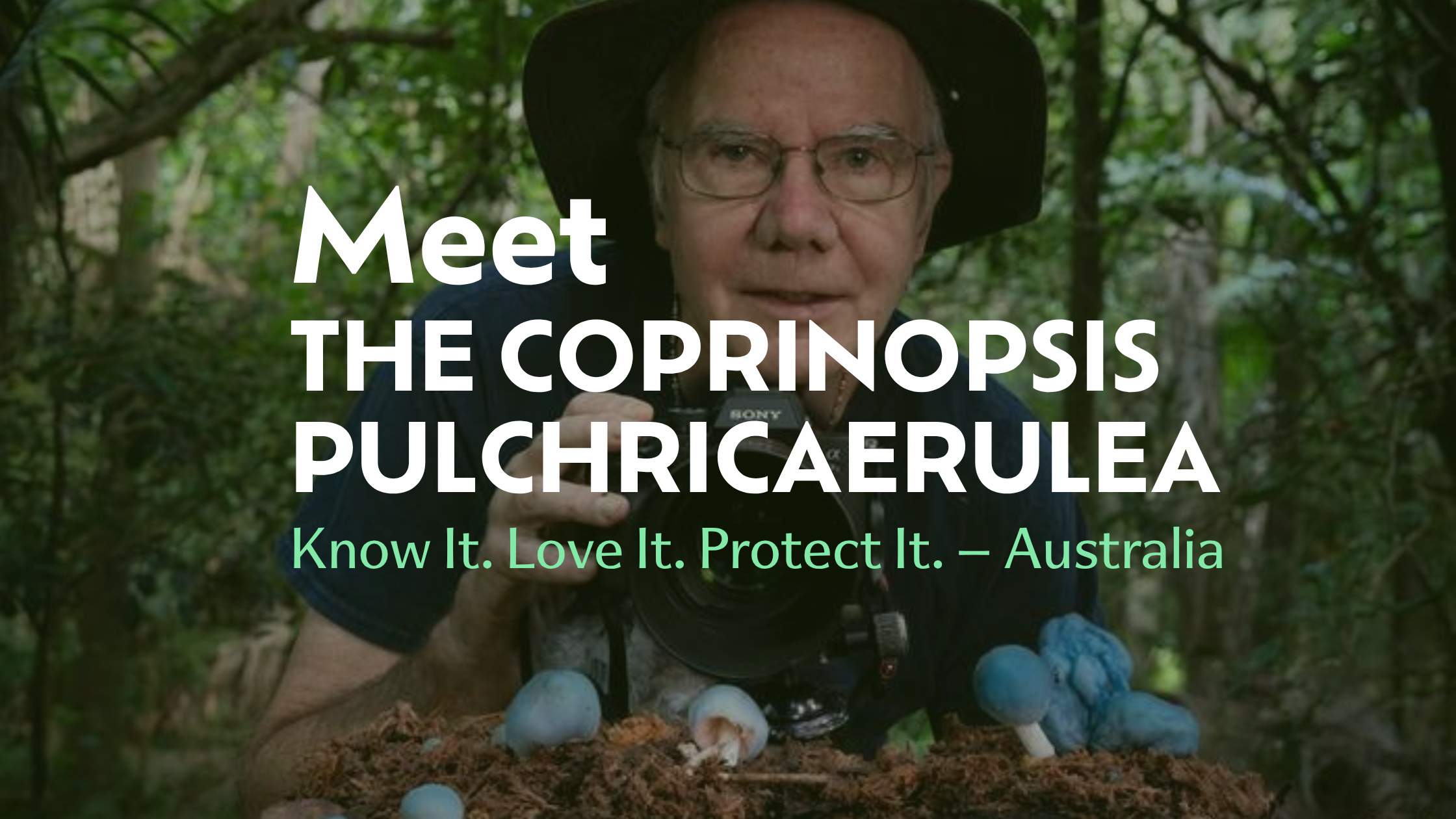
Hidden among decaying leaf litter in the rainforests of northern New South Wales is one of Australia’s most remarkable fungi, a tiny blue mushroom so unusual that it was only recognised by science in 2012.
Discovered by nature photographer Stephen Axford, Coprinopsis pulchricaerulea quickly captured attention for its vivid blue colouring and became a reminder of how much of Australia’s biodiversity remains undocumented.
It is proof that even today, entirely new species are waiting to be discovered.
Why it matters
Fungi play an essential role in keeping ecosystems healthy and functioning.
🪱 They break down dead plant material and recycle nutrients back into the soil
♻️ They support forest health by contributing to nutrient cycling and dcomposition
🕸️ They help sustain the complex relationships that underpin biodiversity
👀 They remind us that many of the most important species in nature are often overlooked
Although small and rarely seen, fungi such as Coprinopsis pulchricaerulea are part of the hidden processes that keep ecosystems alive.
Fun facts
🤓 Coprinopsis pulchricaerulea is a small blue mushroom found only rarely in Australia.
🤓 Unlike many related fungi, it produces pale spores rather than the dark spores common within its genus
🤓 Its fruiting bodies enclose spores in a truffle-like structure rarely seen in related species
🤓 Its fruiting bodies are extremely short-lived and can sometimes dissolve into liquid as they age, much like the Wicked Witch of the West in The Wizard of Oz
Coprinopsis pulchricaerulea. Photo by Steve Axford at Tara Ridge, Booyong, New South Wales. CC BY-SA 3.0.
A deeper reflection
The discovery of Coprinopsis pulchricaerulea challenges the assumption that we already know most of the species that share our planet.
Scientists estimate there may be as many as 250,000 fungal species in Australia, yet fewer than 12,000 have been formally described.
This means the overwhelming majority of Australia’s fungi remain unnamed and largely unexplored.
In a country with more than 600,000 native species, many found nowhere else on Earth, discoveries such as Coprinopsis pulchricaerulea remind us that biodiversity is not just something from the past, but something we are still uncovering today.
How we protect forests, rainforests and other natural habitats will determine whether many of these hidden species are ever known at all.
From Wonder to Action
Learn & understand
Explore how biodiversity, climate, and land systems are deeply connected through our workshops with People For Nature.
Create your Nature Oasis
Plant native species to restore habitat and support the insects, birds, and wildlife that depend on them.
Join citizen science
Record native species around you on iNaturalist and contribute to real conservation data.
(Special thanks to Simon Andrews, Ambassador for People For Nature, for helping shape this story)
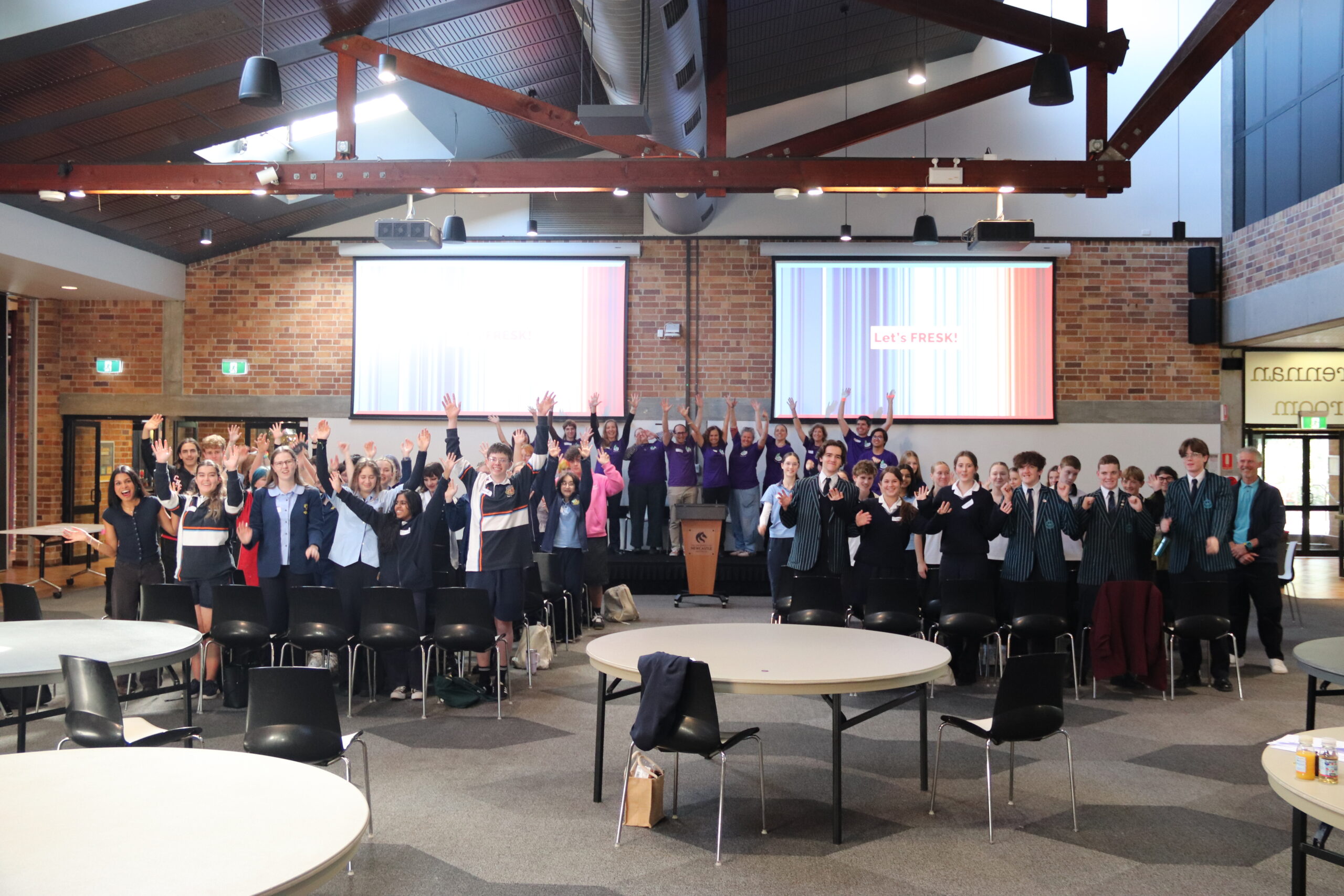
On 12 June 2026, the University of Newcastle hosted the inaugural Shaping Our Future Youth Summit, bringing together 48 students from Years 9–12 across six Newcastle region high schools.
Designed to empower young people to better understand the climate crisis, strengthen emotional resilience, and explore pathways for action, the Summit offered a deeply interactive and hopeful day of learning, reflection, and collaboration.
A day of learning, connection, and action
The Summit was built around five interconnected experiences:
Climate Fresk Workshop, facilitated by 11 trained facilitators
Ecomind Workshop, focused on climate emotions and eco-anxiety
Solutions & Actions Session, exploring youth-led responses to the climate crisis
Keynote speakers, Dr Brodie Beales and Ms Devni Edirisinghe
Future Studies Expo, showcasing seven University of Newcastle faculties and sustainability-related study pathways
Students from different schools worked together throughout the day, building new connections, sharing perspectives, and engaging in collaborative discussions on some of the most pressing challenges of our time.
Transformative learning through systems thinking
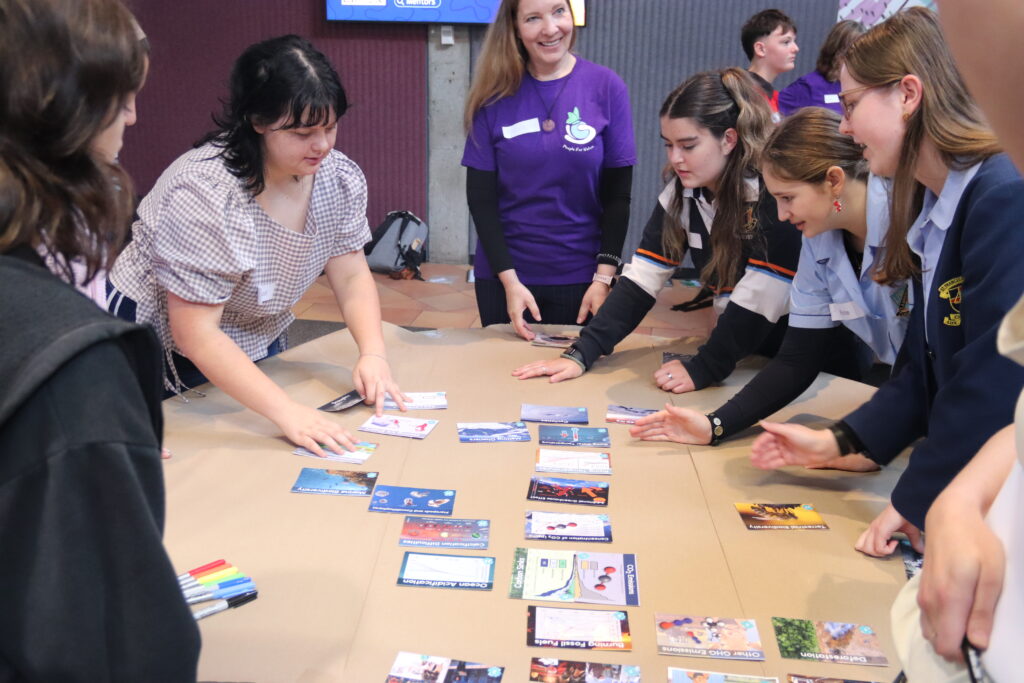
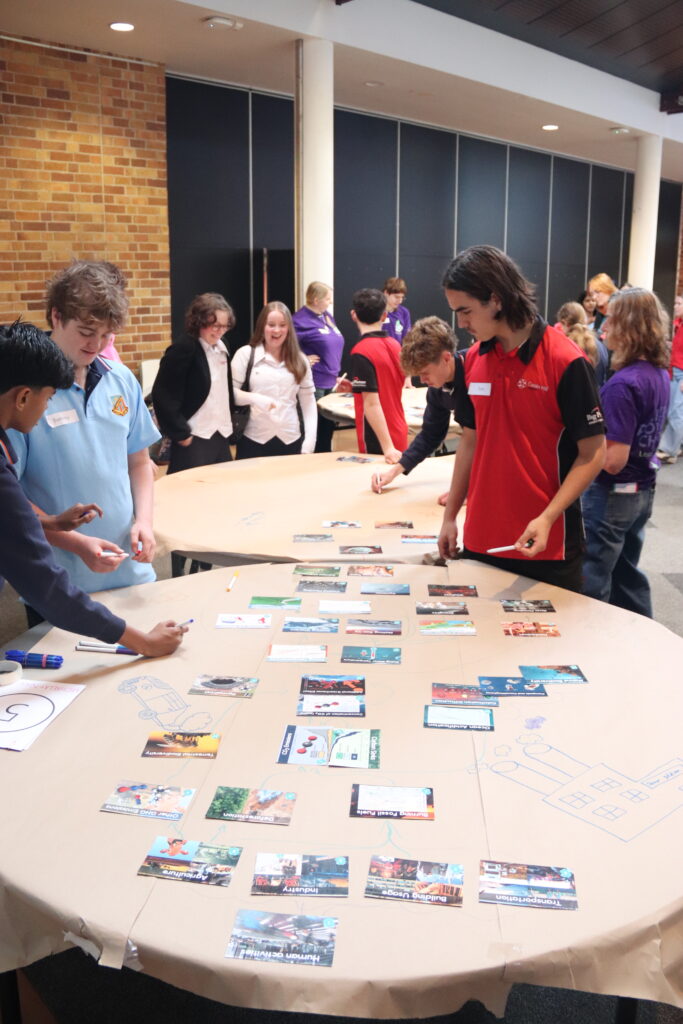
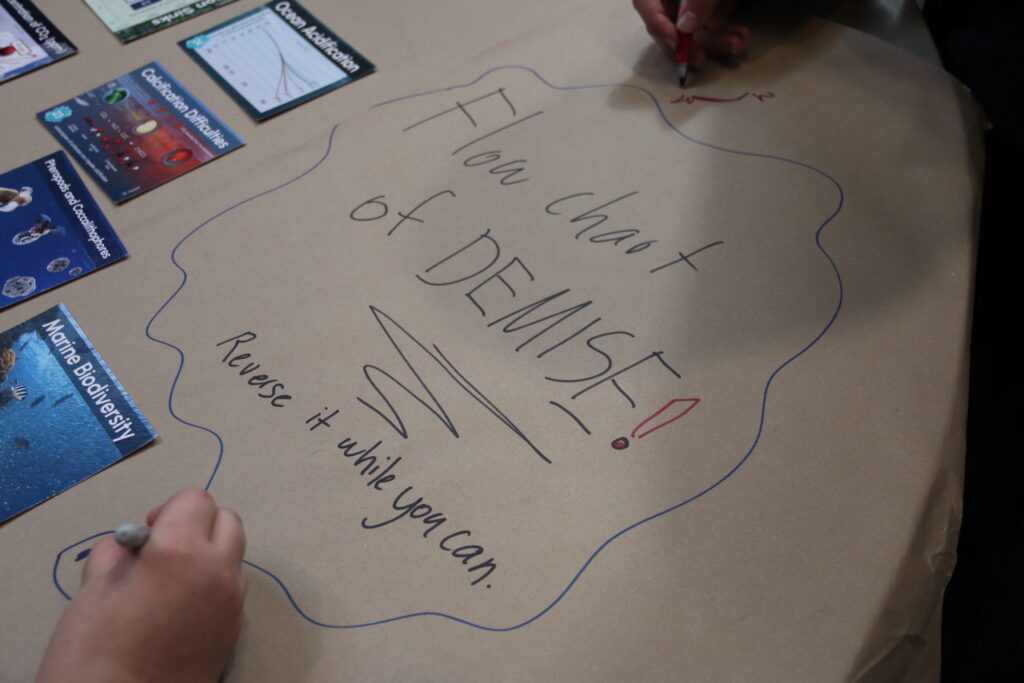
The Climate Fresk workshop emerged as one of the most impactful components of the Summit. Students explored the interconnected nature of climate change and gained a systems-level understanding of how human activity, environmental impacts, and solutions are deeply linked.
Post-event evaluation showed:
100% of students reported a deeper understanding of the climate crisis
100% of teachers confirmed improved student understanding
Consistently high engagement, curiosity, and critical thinking throughout the workshop
As one student reflected:
“Doing the Fresk and connecting all the problems made me realise how everything is connected and helped me gain a larger understanding of the climate problems and solutions.”
Climate emotions, resilience, and hope
The Ecomind workshop provided students with tools to better understand and manage emotions linked to climate change, including anxiety, overwhelm, and uncertainty.
Key findings included:
88% of students reported improved understanding of eco-anxiety and climate emotions
Teachers observed strengthened awareness of emotional wellbeing in 66% of students
One student shared:
“I’ve been feeling a lot of climate apathy due to the vastness of the issue. The conference helped me feel hopeful about the future for the first time in ages.”
These insights highlight the importance of pairing climate education with emotional literacy and wellbeing support.
High engagement and strong student satisfaction
Across the day, engagement remained exceptionally high. Students particularly valued:
Collaborative learning with peers from other schools
The Climate Fresk workshop
Group discussions exploring solutions and actions
Exposure to future study and career pathways in sustainability
Both students and teachers awarded the Summit a 5/5 satisfaction rating, reflecting the quality of the experience and the strength of the program design.
Facilitator insights
The Summit was supported by 11 Climate Fresk facilitators, who observed:
Strong collaboration and engagement across student groups
High-quality systems thinking discussions
Creative and practical solutions emerging from students
A strong sense of hope and agency
Importantly, 100% of facilitators expressed interest in supporting future Youth Summits.
A strong foundation for the future
While feedback was overwhelmingly positive, participants also shared thoughtful suggestions to further strengthen future editions, including:
Increased youth leadership opportunities
More time for collaborative solution-building
Expanded representation of disciplines in future studies pathways
Stronger integration between climate emotions and climate action
With thanks
This event was made possible through the generous support of the City of Newcastle, whose funding helped bring the vision to life. We extend our sincere gratitude to Heather Stevens and the Environment & Sustainability team for their trust, flexibility, and commitment.
We also acknowledge the University of Newcastle for hosting the Summit and providing an inspiring setting for learning and connection. Special thanks to Tarin Cromarty for her outstanding support, energy, and dedication throughout the planning and delivery of the event.
Conclusion
The Shaping Our Future Youth Summit demonstrated the power of bringing young people together to explore climate science, process emotions, and co-create solutions.
When given the space to understand complex systems, reflect on their emotions, and engage with real-world pathways, young people respond with clarity, creativity, and hope.
This inaugural Summit has laid a strong foundation for future programs that integrate climate literacy, wellbeing, and action — empowering the next generation to shape a more sustainable future.
Every year, governments from around the world come together at COP to make decisions about climate and biodiversity.
These decisions matter to all of us.
They shape the policies, investments and priorities that affect our communities, our environment and our future. Yet the conversations can feel very far removed from everyday life — happening in international meeting rooms, behind technical language, accreditation systems and closed-door negotiations.
We believe they shouldn’t be.
That is why People For Nature created Citizen COP Australia: to bring the conversation back into communities and create more space for people to learn, question, connect and participate.
So, what is a Green Zone?
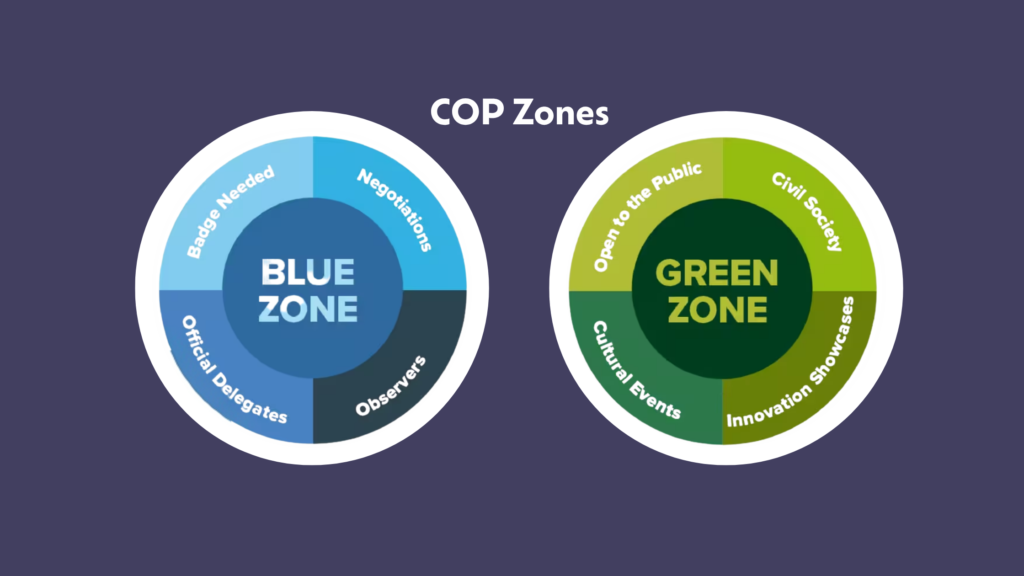
When you hear about COP, you will often hear about the Blue Zone and the Green Zone.
The Blue Zone is where the formal UN negotiations take place. It is where accredited country delegations, observers and other participants engage in the official COP process.
The Green Zone is different.
It is the public-facing space around COP — where civil society, community organisations, businesses, researchers, young people, artists and others can come together to share knowledge, discuss ideas and engage with the issues being considered at COP.
It is where the conversation can become more open, accessible and human.
But you shouldn’t have to fly across the world to be part of it.
What if the Green Zone came to us?
That is the idea behind Citizen COP.
Rather than creating one big event in one city, Citizen COP creates a decentralised Green Zone across Australia — made up of local conversations, workshops, walks, exhibitions, film screenings, community gatherings, youth events and other activities.
Citizen COP runs running alongside two important global moments:
🌿 The Convention on Biological Diversity (CBD), known informally as the Biodiversity Convention.
🌏 Conference of the Parties (COP), also known as the United Nations Framework Convention on Climate Change (UNFCCC)
As the global conversations happen, people across Australia can gather locally to understand what is happening, explore what it means for their communities, and consider what role they can play.
Why does this matter?
Because environmental decisions should not be something that happens to people.
People need opportunities to understand what is happening, ask questions, share knowledge and have a voice in the conversations shaping their future.
And participation shouldn’t depend on whether you can afford a flight, work for an accredited organisation or already know the language of climate and biodiversity policy.
You don’t need to be an expert.
You don’t need to belong to an environmental organisation.
You don’t need to travel overseas.
You just need to care enough to join the conversation.
Citizen COP is about creating that civic space.
A Green Zone in your community
A Citizen COP event can look almost anything like a community wants it to.
It might be:
a workshop
a conversation about local biodiversity
a nature or cultural walk
a film screening
a school or youth-led event
an exhibition or creative project
a community meal
a panel or public conversation
a workshop on food, cities, climate resilience or the circular economy
an online gathering
The point isn’t the format.
The point is creating space for people to participate.
Citizen COP is not one conference.
It is a national network of people creating their own spaces for participation.
No flights. No badges. No closed doors.
Citizen COP is designed around a few simple principles.
No flights — participate locally rather than travelling across the world.
No badges — you don’t need special credentials to be part of the conversation.
No closed doors — make environmental knowledge and discussion accessible.
No fossil fuel influence — protect the independence of the space.
And wherever possible, events are designed to be free, low-waste, vegetarian and based on shared knowledge rather than paid speakers.
Give nature a seat at the table
Ultimately, Citizen COP is about more than creating events.
It is about strengthening the civic space around climate and biodiversity.
Because democracy depends on people being able to understand the issues that affect them, participate in conversations about them and connect with others who care.
The formal COP process has an important role to play.
But the work of creating change cannot happen only inside conference centres.
It happens in neighbourhoods, schools, universities, workplaces, community halls, councils, gardens, streets and online spaces.
It happens when people start talking.
When they learn something new.
When they listen to another perspective.
When they organise.
When they act.
That is our vision for Citizen COP: a Green Zone that belongs to everyone, everywhere.
A shared effort
Explore the growing programme of Citizen COP events across Australia, support the growth of our national Green Zone, or get in touch to find out how you can be part of it.
Aish became a Fresker in 2022. After meeting Laure Legros at a hackathon, she was encouraged to attend a Fresk event in Perth. She went with a friend, and it turned out to be a life-changing experience for both of them.
Aish’s motivation comes from her fascination with science communication, recognising how often we fear what we don’t understand. The Fresk process allowed her to be part of a story that breaks down complex science into something accessible and relatable.
One of Aish’s most inspiring experiences was facilitating a multi-group Fresk with the French-Australian Chamber of Commerce. The event brought together multiple groups, facilitators, and organisations, and the discussions were transformative.
Several participants shared that their understanding of climate science had changed, and they felt inspired to make significant changes in their lives. They appreciated the clarity the Fresk process provided, which made the complex subject matter easier to trust.
When it’s tough to inspire action, Aish reflects on the belief that perfection is the enemy of progress. She believes that even reaching a small portion of the audience is worth it, knowing that every step forward contributes to the larger cause.
Carmelo became a Fresker in April 2023, driven by a desire to engage his students in climate change education.
One of his proudest achievements was facilitating the largest Climate Fresk, held in Australia with more than 120 IGS staff participating in the workshop facilitated by students.
You can read the IGS Climate Freskcase study here.
Today, he also runs Biodiversity Collage workshop; it’s exciting to see him share his knowledge of biodiversity with schools.
When it’s tough to inspire action, Carmelo reflects on the world his students will inherit, striving to ensure he does his part to make it better.
We feel blessed to have Carmelo as part of the team because students are the seeds of the future we want to cultivate.
Bruce became a Fresker in October 2022 after attending a workshop at his office, led by Laure Legros, the Climate Fresk Country Lead at that time.
After a conversation with her, Bruce knew this was a journey he wanted to continue.
Although he was already aware of the climate issues we face, he was deeply moved by the effectiveness of the Fresk delivery and saw how it impacted other participants. It inspired him to contribute in a meaningful way.
One of his proudest moments was when his workshop inspired two of his students, Tim and Erica, to become facilitators themselves. Soon, he’ll be helping them deliver their first workshop, continuing the cycle of empowerment and education.
What keeps Bruce motivated, especially when it’s tough to inspire action, is the thought of future generations who will inherit the world we shape today.
While the challenges ahead are significant, he believes that every small positive impact counts, and we owe it to those yet to be born to do what we can now.
“There are a lot of people – a lot of generations – that have not yet been born. There is little doubt that the world that they face is going to be worse by almost every measure than the one that we live in. But it is not a binary outcome. It will not be a matter of success or failure. Any small impact we can make is positive. And we owe it to those who have no voice because they have not yet been born to do what we can.“
Inspire change. Empower others. Lead with purpose.
Are you a trained facilitator of Climate Fresk or Biodiversity Collage — or an expert in conservation or sustainability?
Are you passionate about nature, climate, and creating real impact in your community? Join our growing movement of changemakers across Australia as a People For Nature Ambassador.
🌱 What is the Ambassador Program?
Our Ambassador Program is at the heart of a national effort to reconnect people with nature through education, action, and citizen-powered change. Ambassadors are trained and supported to run engaging, science-based workshops on climate change, biodiversity, and nature-based solutions — empowering others to understand and act on the most pressing environmental challenges of our time.
From school classrooms to boardrooms, Ambassadors help build awareness and momentum, one meaningful conversation at a time.
🌏 Why Join?
As an Ambassador, you’ll:
Facilitate meaningful conversations on climate and biodiversity
Use proven tools like Climate Fresk and the Biodiversity Collage to inspire action
Join a supportive network of passionate, like-minded leaders
Share your expertise in conservation, sustainability, or environmental education
Help shape a future where people and nature thrive together
Whether you’re a teacher, student, scientist, community leader, parent, or professional — if you care about the planet and want to make a difference, you belong here.
💬 What Our Ambassadors Do
Facilitate interactive workshops using tools like Climate Fresk and Biodiversity Collage
Share knowledge and spark conversations in schools, communities, and workplaces
Help grow a national movement of citizen conservationists and scientists
Act as local champions for nature-based education and action
💚 Ready to Take the First Step?
We believe in people power — and it starts with you. If you’re ready to host a workshop, become an Ambassador, or simply learn more, we’d love to hear from you.
👉 Get in touch and let’s grow something beautiful together.
Over the past 18 months, 120+ people across 5 states in Australia have joined People For Nature through our Ambassador program.
That number matters — not because it is large, but because of what it represents.
People willing to step into a new model of change.
People choosing action over observation.
People For Nature has always been built on a simple belief: our strength is our people.
And that means you!
Why we exist
We left our careers and stable incomes because we believe there is another way to create change.
Not through more complexity.
Not through waiting for top-down solutions alone.
But by informing, empowering, and reconnecting citizens — and transforming scientific facts into accessible, meaningful knowledge.
When people understand, they act.
When people feel connected, they participate.
And when people participate, systems begin to shift.
A citizen-powered shift
We named this organisation People For Nature for a reason.
Across climate change, biodiversity loss, and the extractive linear economy, we no longer believe technology or top-down decision-making alone will be enough.
We need something more fundamental: a citizen-powered shift.
And yes — perhaps our French roots make us stubbornly optimistic — but we also believe it is necessary.
What becomes possible when we scale participation
With the support of a few of you, we explored what happens if we apply our Theory of Change at scale.
We made a conservative assumption: that only 50% of ambassadors are currently in a position to be active.
From there, we modelled two simple scenarios:
Scenario 1
If each active ambassador facilitates just one workshop every 8 weeks, with 7 participants — and each workshop produces one new facilitator who continues the cycle — then within less than 2.5 years, we could theoretically reach the entire Australian population.
Scenario 2
If the same delivery rate applies, but only one new facilitator emerges every 16 weeks, the same outcome would take under 3.5 years.
These are not predictions.
They are illustrations of what becomes possible when participation compounds.
The real shift happens in the room
One workshop every two months is well within reach for most of us.
But more importantly, these sessions are not only about participants.
They change us too.
Every workshop creates space for something rare: real conversation about climate, biodiversity, and systems change — grounded in shared understanding rather than overwhelm.
People leave inspired.
And so do we.
As Robert Swan, Antarctic explorer and environmental advocate, once said:
“The greatest threat to our planet is the belief that someone else will save it.”
At People For Nature, we believe the opposite is also true:
The greatest opportunity lies in what happens when we decide to act — together.
Every week, we get a similar question: How do you go from attending a workshop to actually working in this space?
It’s a great question—and the answer is encouraging. There is a pathway. But it’s not a shortcut. It’s a progression.
1. It Starts with Awareness
For most people, the journey begins as an ally.
This means showing up — attending a workshop, being curious, and wanting to understand the challenges our planet is facing. Whether it’s climate change, biodiversity loss, or the circular economy, the first step is building a solid foundation of knowledge.
Workshops like Climate Fresk, Biodiversity Collage, and Circular Economy Collage are designed exactly for this: to make complex systems accessible, engaging, and actionable.
What transforms an ally into someone who can create impact is facilitation.
Facilitation is often underestimated, but it’s the single most important skill in this journey. It’s what turns understanding into action.
A great facilitator doesn’t lecture—they:
Guide conversations
Hold space for different perspectives
Help people connect the dots
Navigate emotions like eco-anxiety or resistance
Enable groups to move towards meaningful action
This is where real upskilling happens.
And importantly, facilitation training is accessible and based on a train-the-trainer model, making it easy for anyone motivated – even without prior knowledge of the topic – to get involved. Once you’ve attended a workshop, you will be offered the opportunity to step into this next phase and begin learning by doing.
3. From Ally to Ambassador
With practice comes confidence.
As people begin facilitating public workshops and engaging different audiences, they transition from Allies to Ambassadors.
This stage is all about:
Gaining real-world experience
Co-facilitating and eventually leading sessions
Learning from peers
Being supported through mentoring and shared resources
As an Ambassador, you’re not doing this alone. You gain access to a network of like-minded people, practical tools to run sessions, and ongoing support to build your confidence and skills.
It’s hands-on, practical, and deeply human work.
And it’s often where something shifts — where people realise: this is something I want to do more of.
4. Stepping into Professional Opportunities
To move into professional facilitation, experience matters.
We require facilitators to run a certain number of public workshops before progressing to pro facilitation. This ensures quality, confidence, and consistency.
At this level, new opportunities open up:
Facilitating for corporates
Working with councils and universities
Delivering workshops at scale
And importantly—this is where remunerated roles begin to emerge.
Some facilitators work with us on a casual basis. Others go on to build their own businesses, using the skills they’ve developed to create impact independently.
The Bottom Line
Moving from ally to professional isn’t about knowing more—it’s about becoming capable of guiding others.
Knowledge builds awareness. Facilitation creates impact. Practice opens opportunities.
If you’ve already taken that step, consider what it would look like to move from learning… to leading. If you are ready to upskill and become a facilitator, get in touch for the next training opportunity.
Daniel joins the Citizen COP team to help lead Government Engagement and Impact Reporting.
Based in Brisbane, he brings a strong background in technology, innovation, and stakeholder engagement, with experience spanning AI, product development, and cross-sector collaboration.
Passionate about translating complex ideas into real-world impact, Daniel is focused on strengthening connections between policy, community, and innovation to help maximise the reach and effectiveness of Citizen COP.
After attending AlterCOP 30 Australia, Angus joins us as an ambassador for Citizen COP 2026, bringing a grounded systems perspective on the energy transition and climate resilience.
A graduate engineer working in the renewable energy sector, Angus focuses on climate adaptation and resilience across energy systems. His experience spans Australia and the broader Indo-Pacific, where he has worked alongside intergovernmental organisations, communities, policymakers, and industry to better understand how energy transitions can be both equitable and resilient in a changing climate.
He is passionate about designing systems that not only support decarbonisation, but also strengthen communities and deliver lasting benefits for future generations. Angus is driven by the belief that the clean energy transition must be shaped through collaboration, and embedded with sustainability in both principle and practice.
He continues to explore how technology, policy, and community engagement can come together to build climate-resilient, human-centred energy futures.
Ewa became a Fresker in June 2022 through the WorkForClimate Academy, where the Climate Fresk workshop played a pivotal role in her training. She is also a Biodiversity Collage facilitator. She has co-facilitated many workshops, reaching hundreds of participants.
Her motivation to get involved came after the birth of her son, when she realised the challenges future generations would face due to climate change. Unsure where to begin, she connected with Laure, the Climate Fresk Country Coordinator at the time, who recommended the Academy. This led her to become a Climate Fresk facilitator.
Ewa is passionate about raising awareness in Australia and volunteers at local markets while also contributing to the creation of communication tools for Climate Fresk Australia’s social media. With a background in marketing communications, she enjoys using her skills to further the mission.
“Being part of this community is a reminder that our collective voice is stronger. I also prefer to focus on what I can do rather than being discouraged by the inaction of others.”
Fien Van den Steen is a former international investigative journalist specialising in environmental issues, now working as a Sustainability Manager for tech start-ups. She applies her strengths in communication and sustainability to help amplify positive impact across companies, services, and clients, bridging the gap between global environmental policy and local practice.
Driven by a deep commitment to systemic change, Fien has founded and contributed to several impactful initiatives, including the award-winning UniSC Enactus club and the co-founding of the Upskilling Sustainability Initiative. Her work extends into global and national policy spaces, including contributions to the UN Summit of the Future, alongside leadership and speaking roles with the United Nations Young Professionals. She also serves as an Earth Charter Commissioner for UNAA Queensland.
As part of the People For Nature Youth Voices support team, Fien brings her expertise, energy, and systems-thinking approach to empower young people and strengthen collective action for nature.
As we reflect on 2025, we are proud to acknowledge our partnership with the Queensland Decarbonisation Hub — a collaboration that strengthened the connection between research, industry, policy, and citizen-led climate and nature action.
The Queensland Decarbonisation Hub brings together industry, research and policy to support Queensland’s transition to a low-carbon economy. By drawing on evidence-based research from universities across the state, the Hub helps identify practical pathways for decarbonisation and informs real-world implementation across sectors and communities.
Their support of AlterCOP 30 Australia — the Australian AlterCOP chapter initiated by People For Nature in 2025 — reflected a shared commitment to accelerating climate action through collaboration, knowledge-sharing, and grounded, practical engagement.
We designed AlterCOP 30 Australia as an independent, values-driven gathering running alongside the United Nations Climate Conference (COP30). Its purpose was simple: to create a free and inclusive space where voices often absent from formal negotiations — youth, First Nations leaders, local communities, scientists, artists, and grassroots changemakers — could come together to engage meaningfully with climate and nature action, while reducing the footprint of participation itself.
While Australia sent 494 official delegates to COP30, AlterCOP engaged more than 1,400 people nationwide — extending the spirit of open participation through citizen-led events and conversations across the country.
This first iteration demonstrated the importance of bridging structured, evidence-based climate work with citizen engagement — ensuring that knowledge does not remain siloed, but becomes part of a shared societal response.
As Dr Liz Young, QLD Decarbonisation Hub shared:
“Last night’s AlterCOP 30 Australia at the Precinct was truly extraordinary, filled with courage, leadership, and a deep generosity of spirit. People For Nature showcased remarkable leadership, shaping an evening marked by respect, curiosity, and connection. The evening’s message was clear: Listen deeply, connect with Country, share knowledge, and act with hope.”
Building on this foundation, the Queensland Decarbonisation Hub has continued to support People For Nature as we expand this work through Citizen COP Australia — a decentralised, people-powered initiative running alongside global COPs in 2026, designed to make climate and biodiversity engagement more locally grounded, inclusive, and participatory.
Across both initiatives, People For Nature’s focus remains consistent: strengthening environmental literacy, enabling citizen participation, and translating complex challenges into accessible, collective action.
We are grateful for the Queensland Decarbonisation Hub’s ongoing support and their role in helping connect science, policy, and community in meaningful ways.
As we reflect on 2025, we acknowledge the organisations that contributed to the early development and delivery of AlterCOP 30 Australia — the Australian AlterCOP chapter brought to life by People For Nature.
AlterCOP 30 Australia was designed as an independent, values-driven gathering running alongside the United Nations Climate Conference COP30. Its purpose was simple: to create a free and inclusive space where voices often absent from formal negotiations — youth, First Nations leaders, local communities, scientists, artists, and grassroots changemakers — could come together to engage meaningfully with climate and nature action, while actively reducing the environmental footprint of participation.
While Australia sent 494 official delegates to COP30, AlterCOP 30 Australia engaged more than 1,400 people nationwide — extending the spirit of open civic participation through citizen-led events and conversations across the country.
CO2 Australia supported AlterCOP 30 Australia because they believe sustainability and productivity go hand in hand — creating lasting value for people, land, and the planet.
As Chris Wilson, Chief Consulting and Strategy Officer at CO2 Australia shared:
“Events like AlterCOP 30 Australia are vitally important as we look to bridge the gap between those ‘talking’ at the global level, and those who are ‘doing’ locally. At CO2 Australia, we pride ourselves on execution and People for Nature clearly share the same philosophy. Connecting communities, creating shared understanding and then collaborating in service of our planet were clear themes throughout the AlterCOP 30 event.”
One of Australia’s most distinctive marsupials, the Numbat is a small, striped mammal that has become a symbol of resilience and conservation success.
Found in pockets of native woodland and forest, this remarkable species is perfectly adapted to life as a termite specialist, using its long, sticky tongue and sharp claws to hunt its favourite food.
It is a reminder that some of Australia’s most extraordinary wildlife can also be among its most vulnerable.
Why it matters
The Numbat plays an important role in Australia’s ecosystems.
🪱 It helps regulate termite populations by feeding almost exclusively on termites
🌳 It forms part of the complex food webs that support healthy woodland ecosystems
🌏 Its presence highlights the importance of protecting native habitats and ecological connections
🌿 Its recovery efforts have become a symbol of broader conservation initiatives across Australia
Although small in size, the Numbat demonstrates how every species contributes to the balance and health of natural systems.
Fun facts
🤓 Numbats have a diet that consists almost entirely of termites
🤓 They can consume up to 20,000 termites in a single day
🤓 They are largely solitary animals and spend much of their time sheltering in hollow logs and burrows
🤓 Their long, sticky tongue is specially adapted to extracting termites from their nests
A deeper reflection
The Numbat challenges the assumption that Australia’s iconic wildlife is secure.
Once widespread across southern Australia, the species has experienced significant declines due to habitat loss, land clearing and predation by introduced species.
Its story highlights both the fragility of native ecosystems and the importance of targeted conservation efforts.
In a country with more than 600,000 native species, many found nowhere else on Earth, the Numbat reminds us that protecting biodiversity requires safeguarding the habitats and ecological relationships that allow species to survive.
How we manage our landscapes, support conservation programs and share space with wildlife will shape the future of this remarkable marsupial and the ecosystems it calls home.
From Wonder to Action
Learn & understand
Explore how biodiversity, climate, and land systems are deeply connected through our workshops with People For Nature.
Create your Nature Oasis
Plant native species to restore habitat and support the insects, birds, and wildlife that depend on them.
(Special thanks to Simon Andrews, Ambassador for People For Nature, for helping shape this story)
Masha Kondrasheva is a sustainability practitioner and casual academic at the University of Newcastle, with a Master’s in Disaster Resilience and Sustainable Development. Her work sits at the intersection of disasters, waste and climate – she’s genuinely drawn to the “messy”, multidisciplinary space where these challenges overlap.
As a People For Nature Ambassador, Climate Fresk and Circular Economy Collage facilitator, Masha’s approach is pretty straightforward: meet people where they are. Whether that’s a community group or a university classroom, she’s interested in activities that are accessible, grounded, and genuinely useful. Masha is committed to creating space for people to engage with complex environmental topics, bringing the same curiosity and practicality to everything she does.
Matt joined us last year as a volunteer, supporting the delivery of AlterCOP Australia and helping behind the scenes to bring the event to life. He also trained as a Climate Fresk facilitator, strengthening his ability to support climate education through collaborative and accessible learning.
He is now part of the Support Team behind Citizen COP 2026, continuing to contribute his time, energy, and practical support to help the movement run smoothly.
Matt brings a deep interest in understanding the causes, impacts, and solutions to the climate and biodiversity crises, and is curious about the transformational changes unfolding across our societies, economies, places, and environment in the coming decades.
He has strong expertise in managing large multidisciplinary teams and complex planning projects, with a proven track record in strategic infrastructure master planning, program and project development, and business sustainability leadership. His approach is grounded in placing the needs and experiences of end users at the heart of infrastructure planning, supported by extensive stakeholder engagement across government (all levels), regulators, industry, contractors, and communities.
Matt is also a compassionate leader with a strong focus on the wellbeing, development, and achievement of his team members.
We are grateful for his steady presence, analytical strengths, and commitment to both people and systems change, which continue to strengthen the work behind Citizen COP.
Audrey joined us at AlterCOP last year as Chair of our biodiversity panel, where she guided a rich and thoughtful discussion across science, policy, business, and community perspectives. She is also a Biodiversity Collage facilitator, bringing systems thinking and participatory learning into the spaces she works in.
A Social Ecologist with over 30 years’ experience, Audrey works across education, business, policy, and community sectors to contextualise sustainability in real-world settings. Her expertise spans sustainability strategy, ESG and corporate social responsibility, systemic thinking, and industry engagement, with a strong focus on translating complex principles into meaningful, practical outcomes—particularly within the built environment.
We are grateful for her contribution and the depth, clarity, and systems lens she brought to our biodiversity conversation.
Heidi joined us through AlterCOP last year and returns as part of the Citizen COP 2026 team. She was also a speaker at last year’s event, where her insights and hands-on experience deeply resonated with our community.
Heidi is a civil and humanitarian engineer passionate about nature-based solutions, circular economy, and inclusive development. Her work spans Indonesia, Nepal, and Australia, with a focus on improving access to safe drinking water, reducing plastic waste and emissions, and advancing sustainable menstrual health solutions.
Currently a water engineer at GHD, Heidi’s career has been shaped by field experience, including work in Indonesia exploring the impacts of limited access to clean water, and research in Nepal on innovative, low-impact materials for menstrual products. She has also worked with local NGOs to support the development of biodegradable menstrual pads and improve product quality on the ground.
Heidi brings a grounded, practical perspective to systems change, and we are grateful for her continued involvement, energy, and commitment to amplifying youth voices and advancing more equitable, sustainable development.
Valentine has been instrumental in shaping our social media strategy and strengthening how we communicate impact and purpose. She was part of the core team behind AlterCOP 30 Australia and returns as part of the support team for Citizen COP 2026.
Since joining People For Nature, she has also chosen to deepen her commitment to education and collective action by becoming a Climate Fresk facilitator.
Founder of Green Socials, she works with purpose-driven businesses and nonprofits around the world, helping them rethink how sustainability and ethics are communicated in a way that actually connects with audiences.
Her work challenges a key question: how do we cut through noise and hyper-consumerism without relying on doom-and-gloom messaging—and instead inspire real engagement and action?
We’re grateful to have her insight, creativity, and strategic thinking helping shape this movement.
Most of us are familiar with recycling. We sort our bottles, flatten our cardboard, and hope it ends up somewhere useful. But what if recycling is only the beginning of the story?
Across Australia—and around the world—communities are starting to rethink something much bigger than what goes in our bins. They are reimagining the entire system that shapes how we design, make, use, and dispose of everything in our lives. This shift is known as the circular economy.
Unlike the traditional “take–make–waste” model, which relies on extracting resources, producing goods, and discarding them, a circular economy is designed to keep materials in use for as long as possible. Products are reused, repaired, shared, remanufactured, and ultimately regenerated—so that waste is designed out of the system altogether.
This shift is not just about recycling better—it’s about redefining value. Materials are no longer seen as disposable, but as part of a living system that should circulate, much like nature does.
A new way of learning: the Circular Economy Collage
To make this complex system accessible and engaging, an interactive workshop called the Circular Economy Collage has been developed.
Now running across Australia through People For Nature, a registered environmental charity, the workshop transforms global systems thinking into a hands-on, collaborative experience.
Participants work together using illustrated cards that represent different parts of our economy—resource extraction, manufacturing, consumption, waste, and innovation. Step by step, they build a visual map of how our current system operates, before exploring how it can be redesigned.
Rather than passively receiving information, participants actively construct understanding together. The result is often described as a moment of clarity—when the scale and interconnectedness of the system suddenly clicks.
Like its sister initiatives, Climate Fresk (which has engaged more than 2.3 million people worldwide) and Biodiversity Collage, the Circular Economy Collage is grounded in science and designed to be engaging, accessible, and action-oriented. It helps people move beyond overwhelm and into meaningful action.
Because when people understand how the system works, they begin to see where change is possible—in households, workplaces, councils, and across entire industries.
Why this matters in Australia
In an increasingly volatile and uncertain world, building resilience at the local level is becoming essential across Australia.
From supply chain disruptions and rising costs of living to population growth, housing pressures, waste challenges, and biodiversity loss, the systems we rely on are being tested. The question is no longer whether change is coming—but how prepared we are to respond.
The circular economy offers a practical and hopeful framework for navigating this reality. By keeping resources in use for longer, it reduces reliance on fragile global supply chains and strengthens local economies. It supports repair and reuse culture, empowers small businesses, reduces pressure on landfill, and reconnects people with the resources that sustain everyday life.
Importantly, it also fosters a deeper cultural shift—from accepting waste as inevitable to recognising it as a design flaw we have the power to fix.
In doing so, it helps communities become more self-reliant, adaptable, and better equipped to thrive in the face of change.
An invitation to take part
If you’re curious about how these ideas can be applied in everyday life—and how communities across Australia can be part of the solution—you’re warmly invited to take part in an upcoming workshop.
We gratefully acknowledge all individuals and organisations who supported People For Nature in 2025, including our anonymous donors.
As we reflect on the past year, we want to take a moment to express our deep gratitude to the individuals and partners who have stood beside us. Your support has not only helped us grow—it has helped us reach more communities, deepen our impact, and bring climate and biodiversity learning to life in ways that are accessible, hopeful, and action-oriented.
Our Blue Partners
*Blue Partners provide national-scale support for programs across Australia.
Our Green Partners
Green Seedling Partners support local events and community actions.
Every contribution, big or small, makes a difference — get in touch to find out how your company can support our work.
A Thriving Ecosystem of Collaboration
Without the support and collaboration of our partners, none of what we do for nature would be possible.
To all of our supporters, collaborators, facilitators, and community members: thank you. You are part of a growing movement of people choosing action over apathy, connection over disconnection, and nature-positive change over business as usual.
We are so grateful to be on this journey with you.
Biodiversity isn’t just a “nice-to-have” — it’s the foundation of our economy. From agriculture and tourism to supply chains and product innovation, healthy ecosystems underpin every business activity. Yet understanding the state of the world’s ecosystems can feel overwhelming. That’s where the IPBES reports come in — and why they are essential for Australian businesses.
What is IPBES?
The Intergovernmental Science-Policy Platform on Biodiversity and Ecosystem Services (IPBES) is often called the “IPCC for nature.” Its mission is to provide scientifically rigorous assessments of the state of global biodiversity and the ecosystem services it provides — the benefits humans rely on, from clean water and fertile soil to pollination and climate regulation.
IPBES reports identify the drivers of biodiversity loss, the consequences for society and the economy, and the urgent actions needed to safeguard nature. They translate complex science into actionable insights for governments, NGOs, and businesses.
Why IPBES Matters in Australia
Australia is home to some of the world’s most unique and fragile ecosystems. Its biodiversity is deeply tied to the economy:
Agriculture depends on healthy soils, pollinators, and water systems
Tourism relies on vibrant natural landscapes
Urban and resource development must account for ecosystem resilience
The IPBES reports highlight that biodiversity loss is not just an environmental problem — it’s an economic risk.
Ecosystem degradation threatens productivity, disrupts supply chains, and increases business exposure to regulatory and reputational risk. For Australian companies, this makes understanding and acting on biodiversity critical.
Why Businesses Must Pay Attention
Biodiversity underpins every product and service. A business that ignores the state of ecosystems is exposing itself to hidden risks:
Supply chain disruption from resource scarcity or species loss
Increased operational costs due to degraded ecosystems
Reduced resilience to climate impacts
Reputational damage as stakeholders demand responsible practices
The IPBES reports give businesses the evidence and guidance to identify these risks, make informed decisions, and invest in solutions that safeguard both nature and the bottom line.
Making Complex Science Digestible
The challenge is that IPBES reports are dense and technical. That’s why tools like Biodiversity Collage (Fresque de la Biodiversité) are so valuable. Through interactive workshops, businesses can:
Understand the key findings of IPBES in a fun, visual way
Explore how their operations impact biodiversity
Identify practical solutions that reduce risk and improve resilience
Build team awareness and culture around sustainability
In short, Biodiversity Collage transforms complex science into actionable insights, helping teams make nature-informed decisions while fostering collaboration and engagement.
For Australian businesses, biodiversity is not optional — it’s a strategic asset. The IPBES reports provide the knowledge needed to understand the risks and opportunities. Tools like Biodiversity Collage make this science accessible, engaging, and actionable, empowering businesses to protect ecosystems, strengthen resilience, and future-proof their operations.
Investing in biodiversity knowledge isn’t just good for nature — it’s essential for the sustainability and success of business in Australia and beyond.
If you’re a business leader who wants to understand how biodiversity impacts your operations — and discover practical ways to build resilience while engaging your team — we’d love to have a conversation. Get in touch with us at People For Nature to explore how Biodiversity Collage can make these insights actionable for your organisation, turning complex science into real-world impact.