Author: Audrey Barucchi

  • Embedding Climate Literacy in Banking

    Embedding Climate Literacy in Banking

    The Bank Australia Approach

    Bank Australia is a customer-owned bank with a strong commitment to social and environmental impact. With 70% of its customers prioritizing climate action, the bank is committed to aligning its operations with a sustainable future. As part of its broader purpose, the organisation has been actively integrating climate and biodiversity considerations into its operations, strategy, and decision-making.

    To empower its people to navigate the complexities of climate change, and to embed climate awareness into the bank’s culture, Bank Australia has engaged in climate literacy and systems thinking initiatives that help employees better understand the links between finance, nature, and long-term risk.

    Through interactive learning experiences, staff are encouraged to explore how climate science connects to their roles and how their decisions can contribute to more sustainable outcomes. 

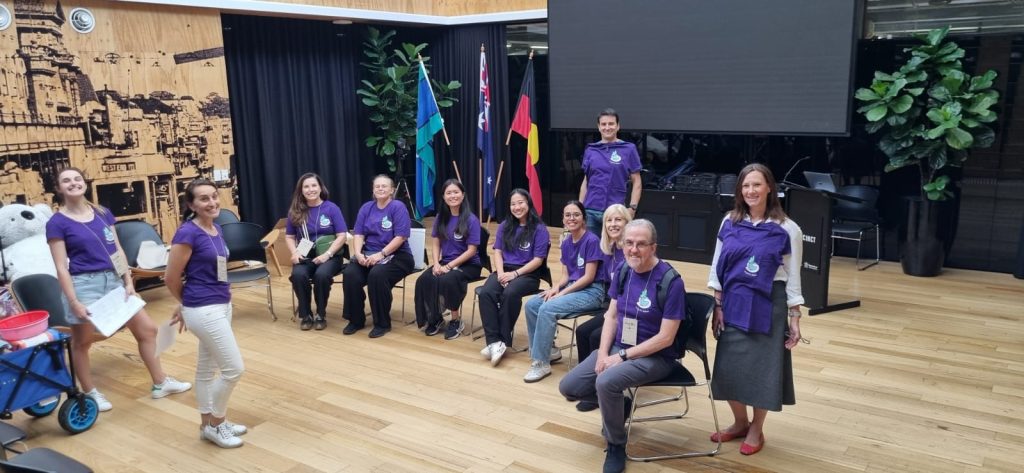
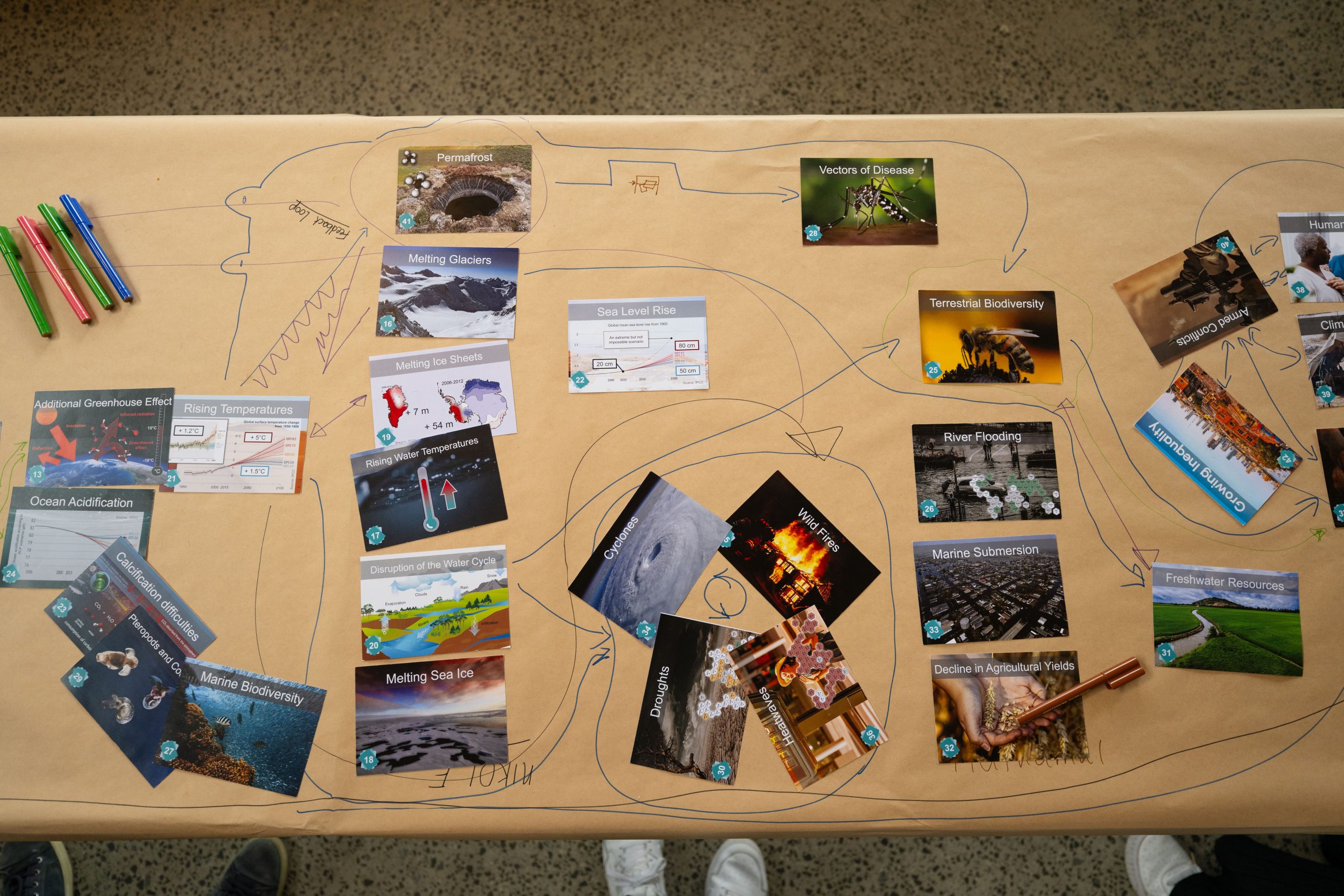
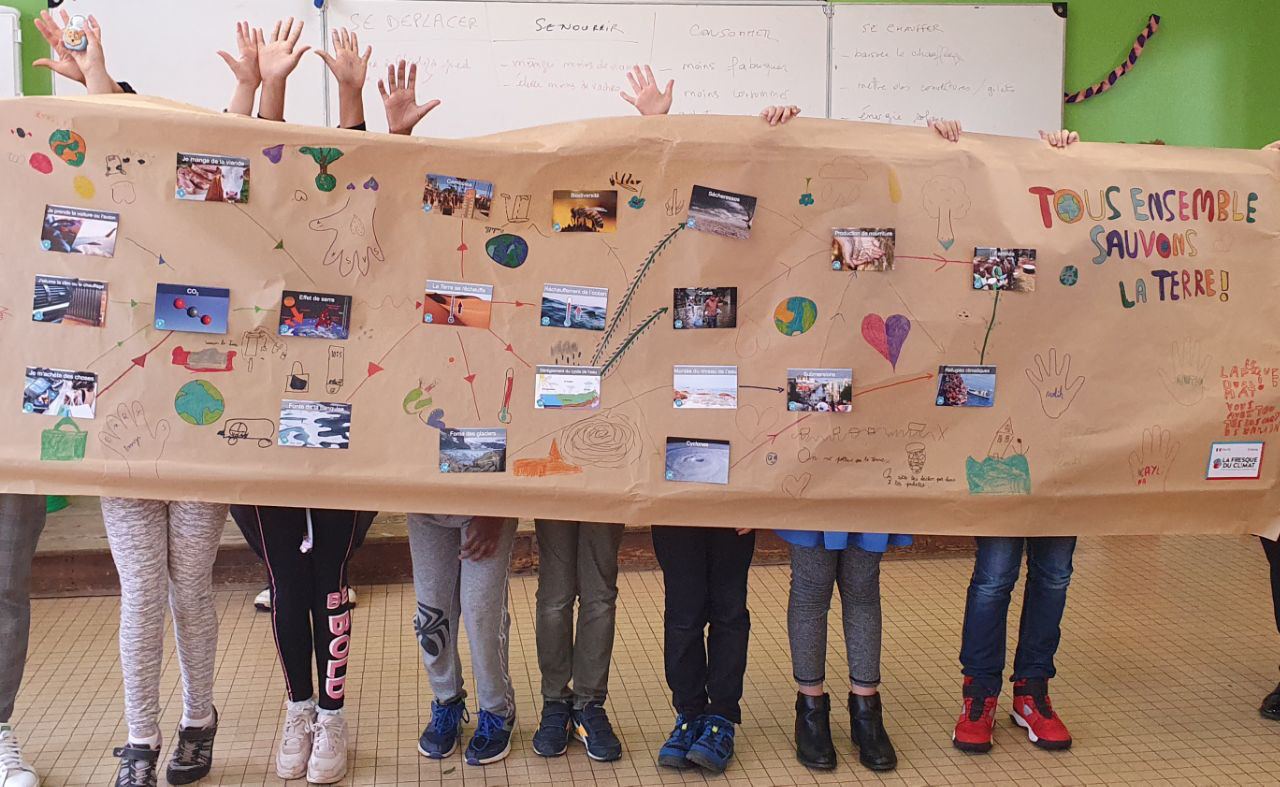
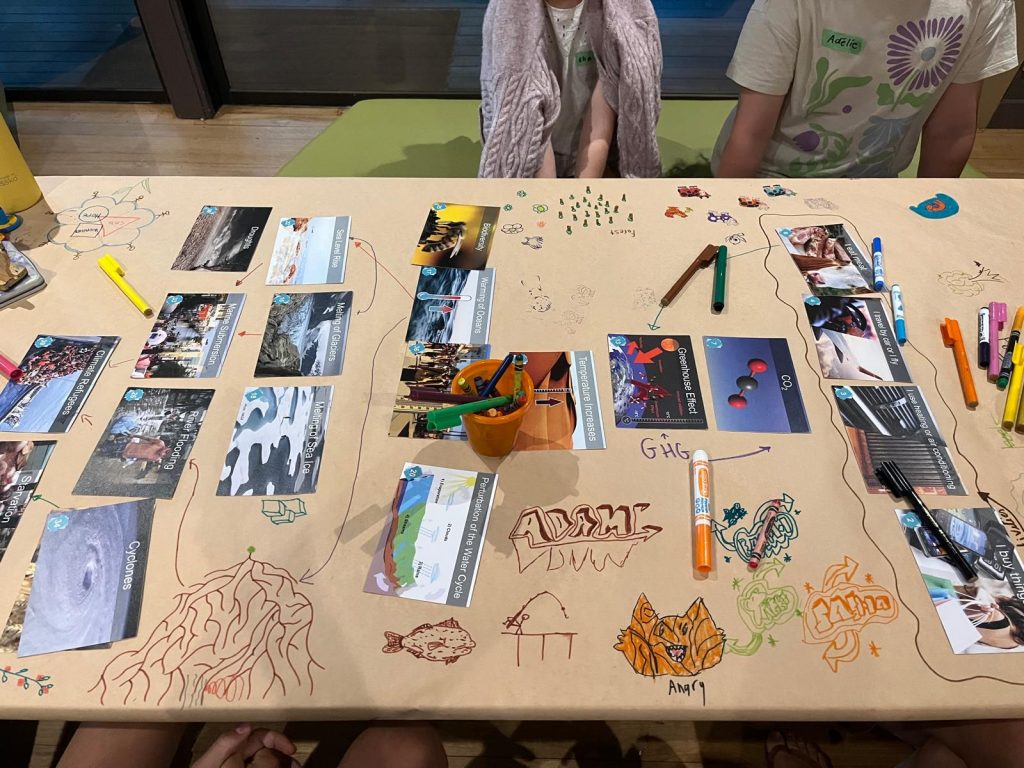
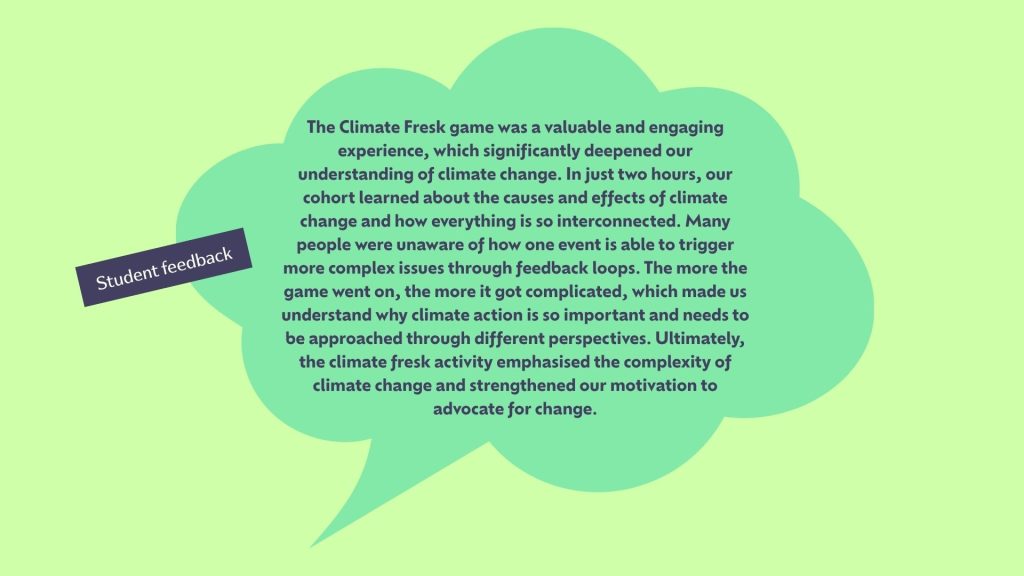
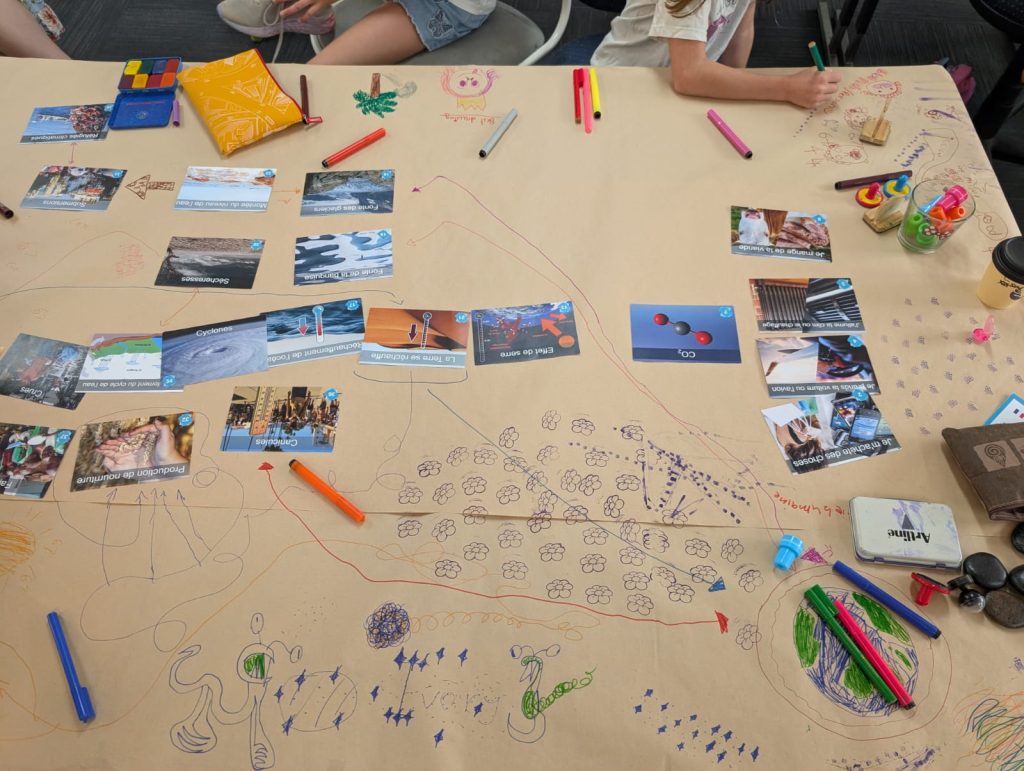
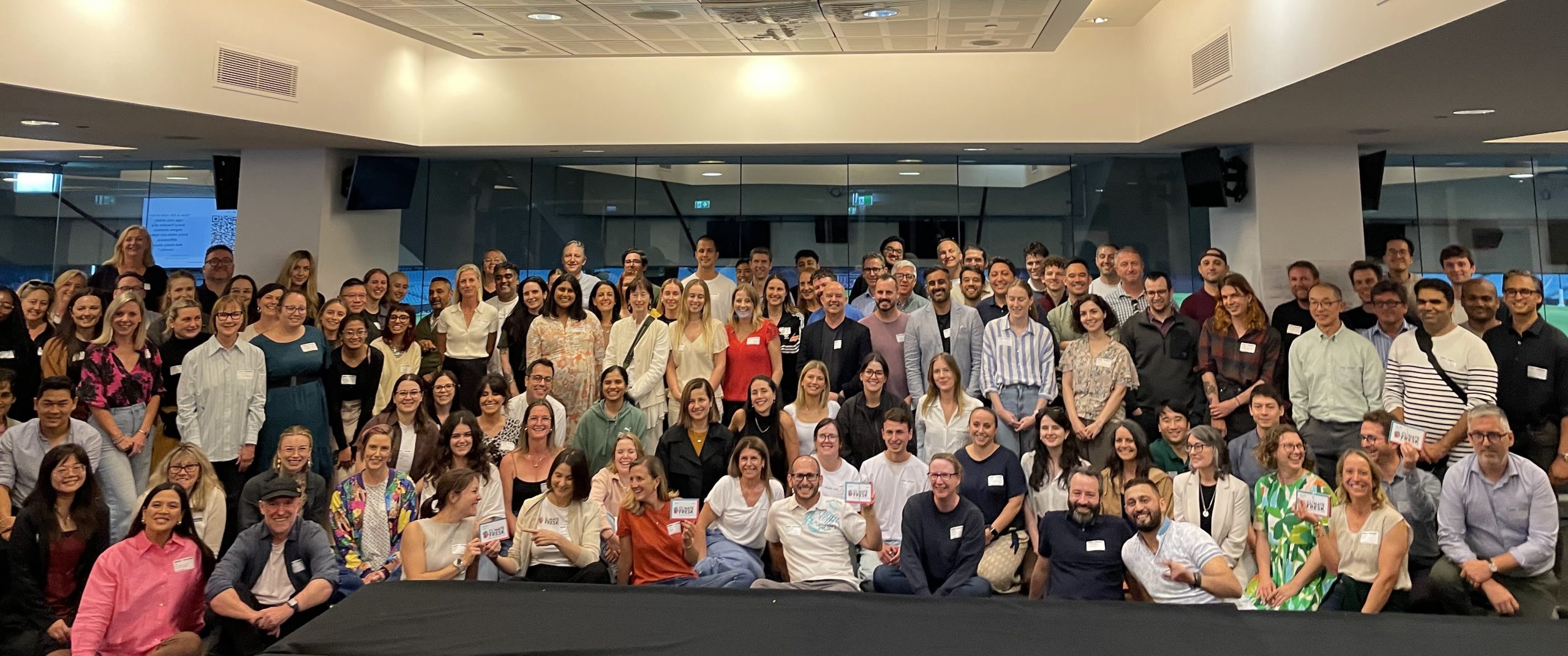
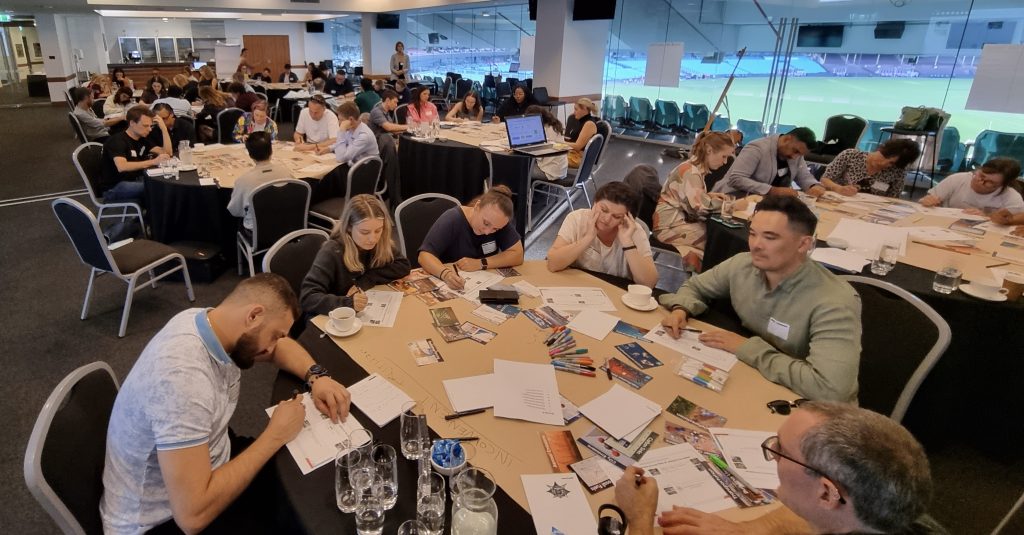
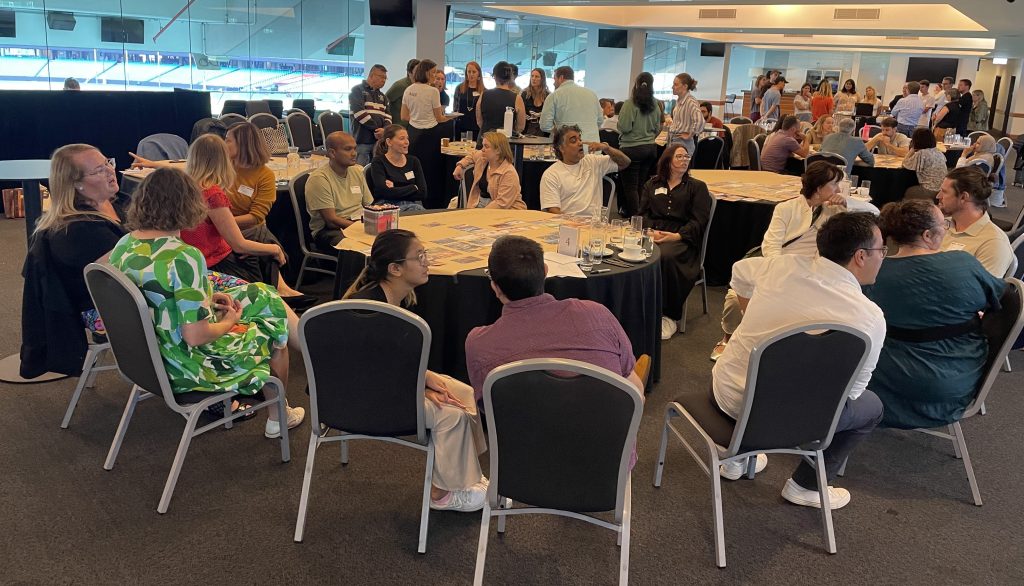
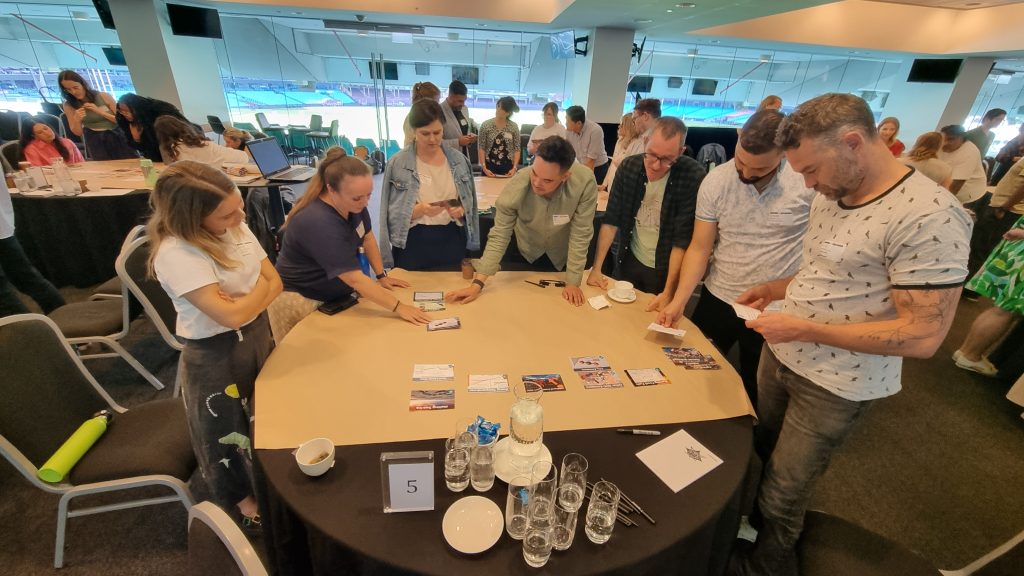
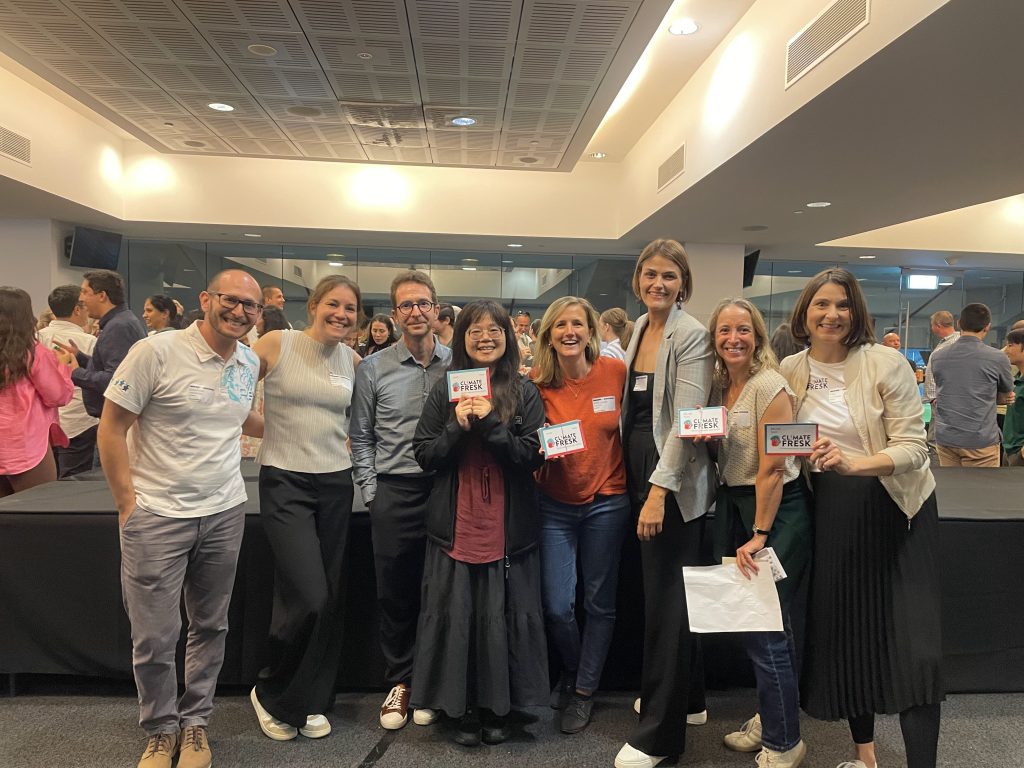
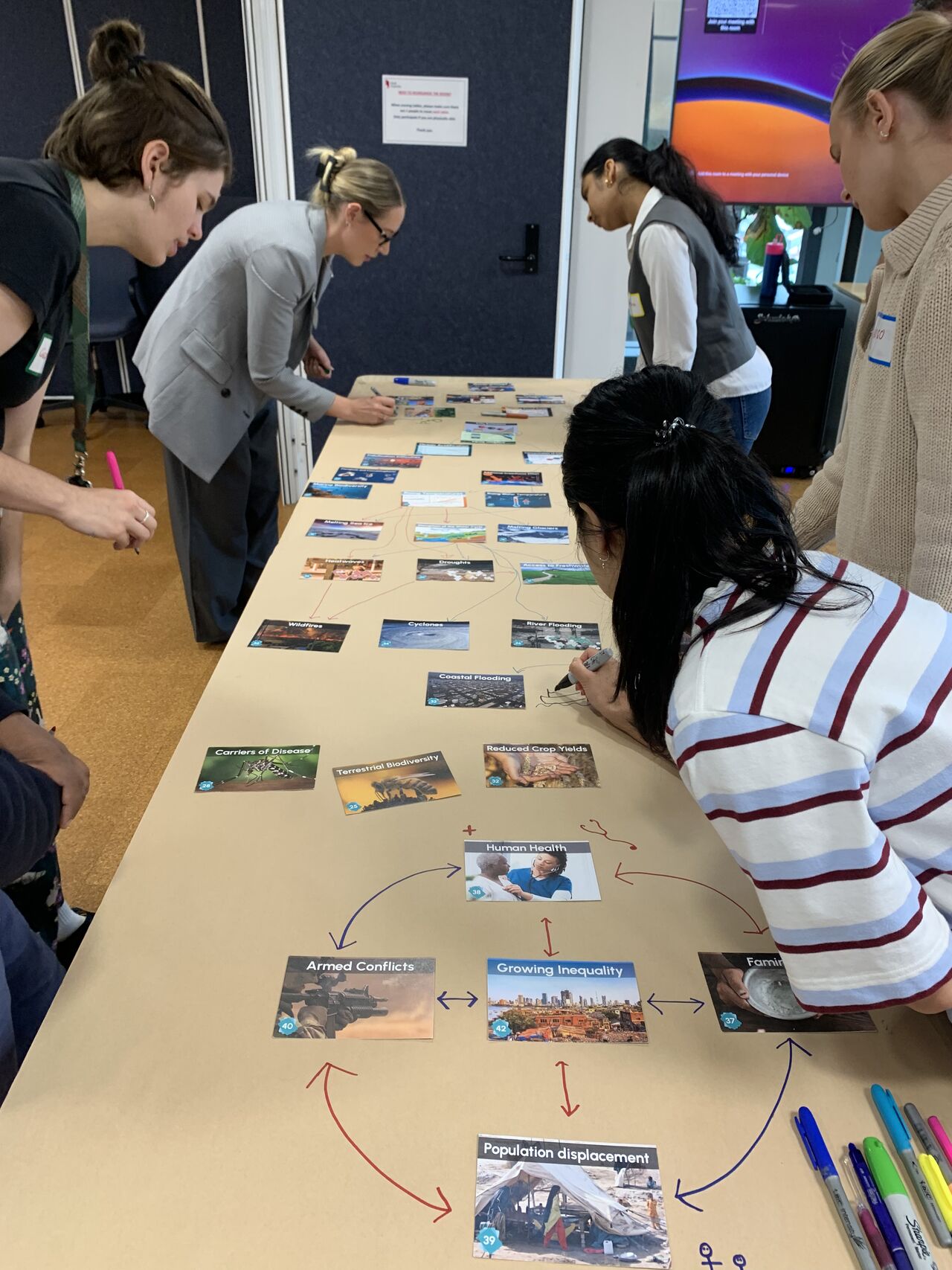
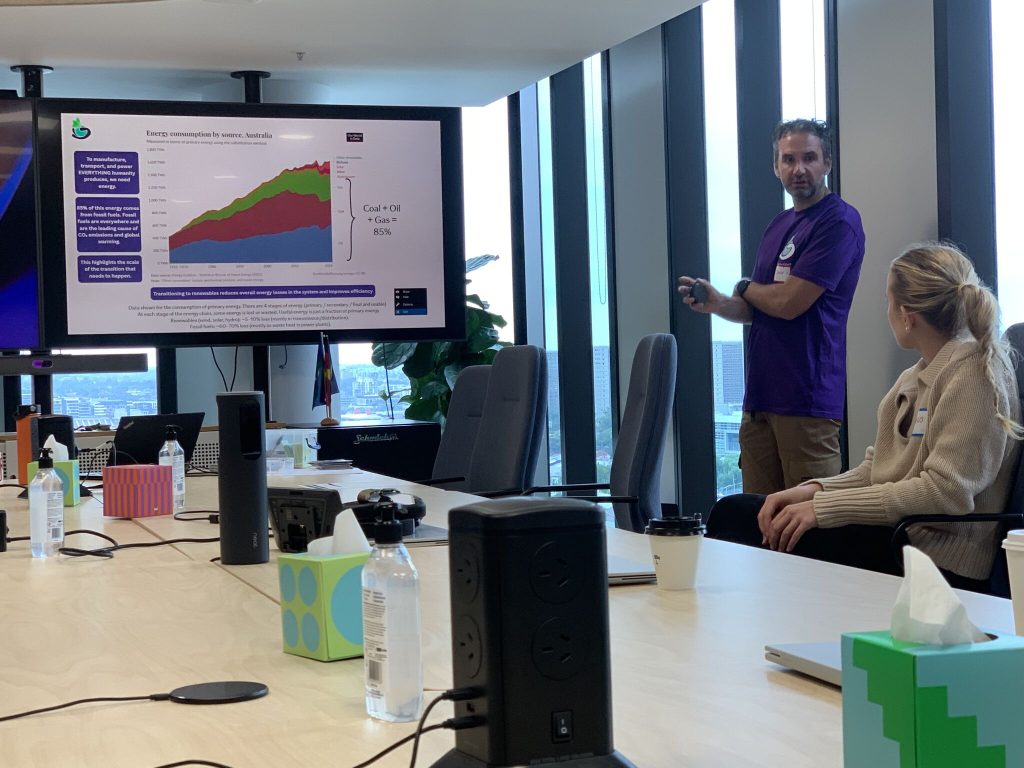
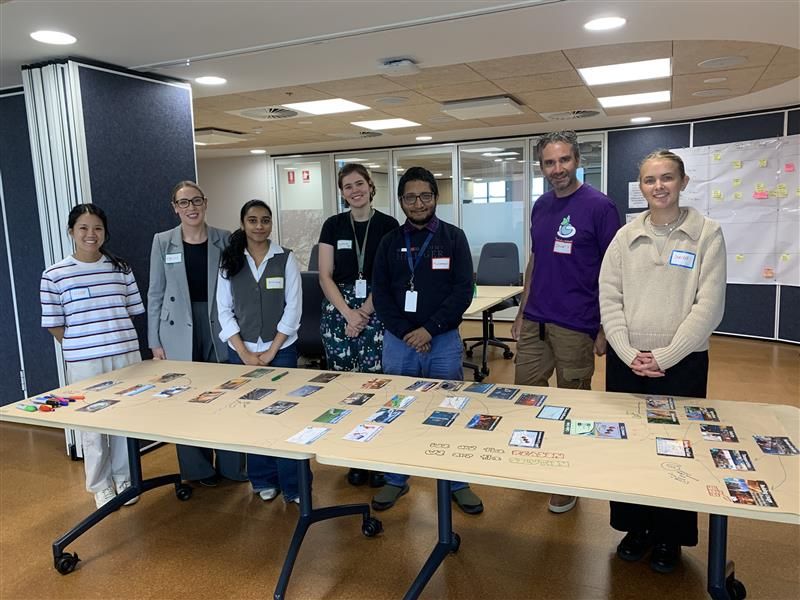
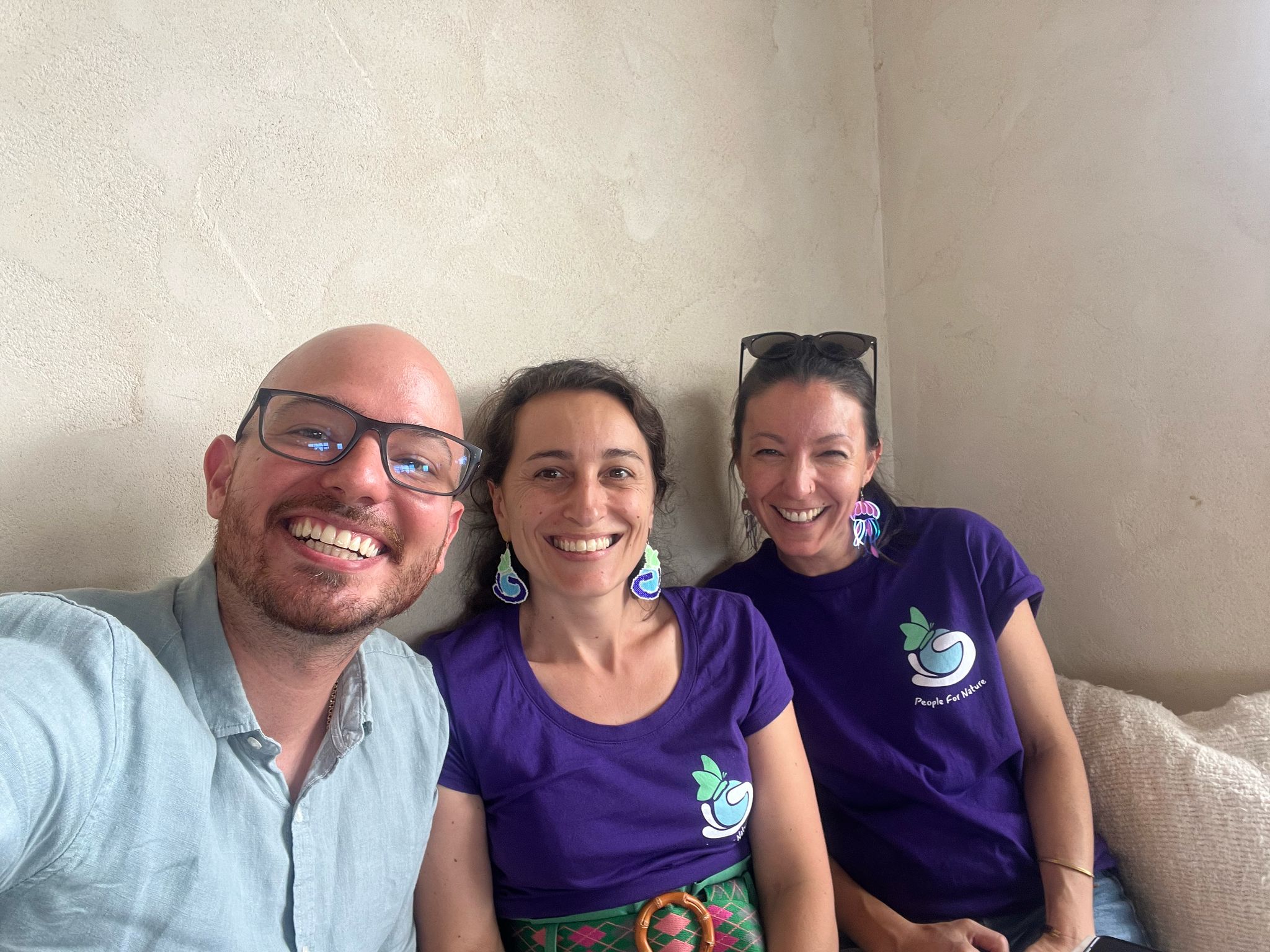
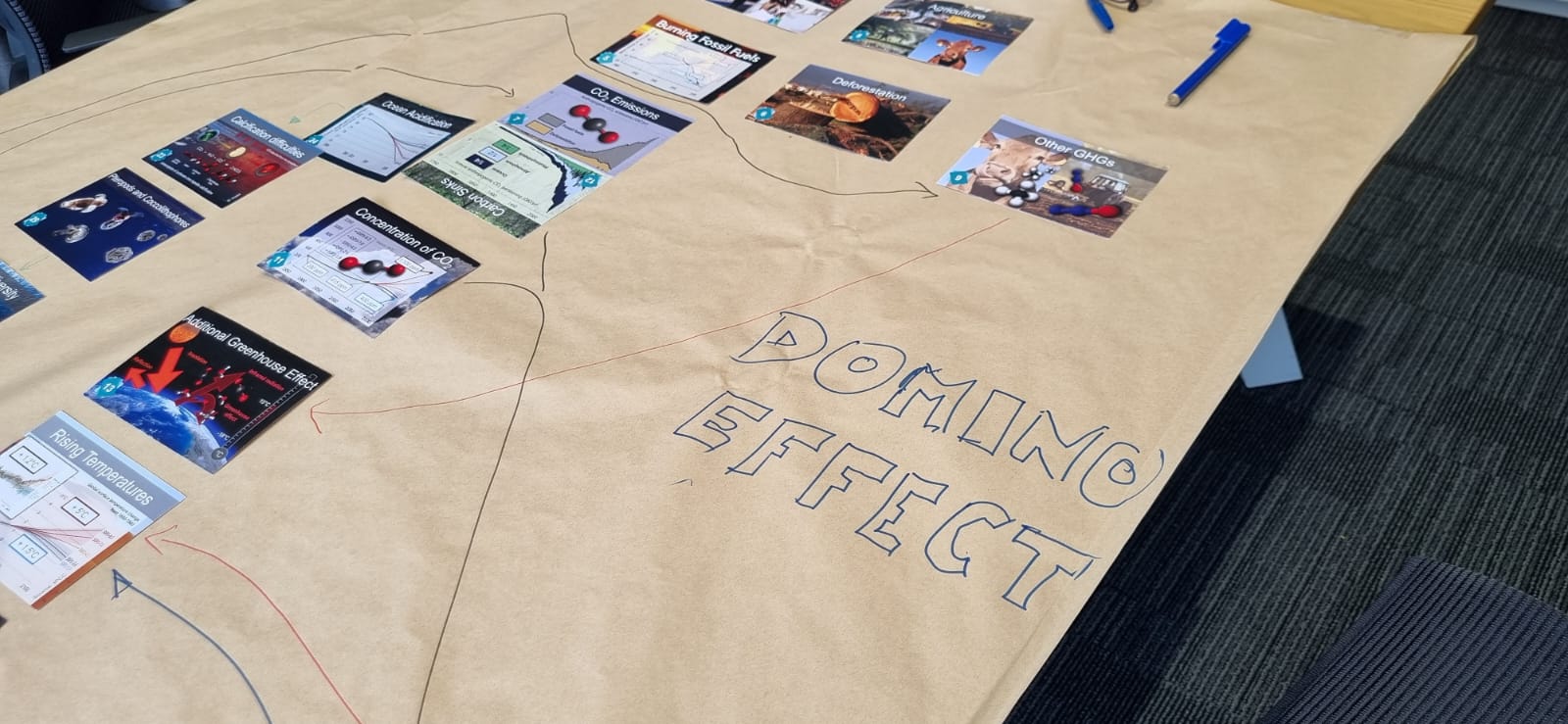
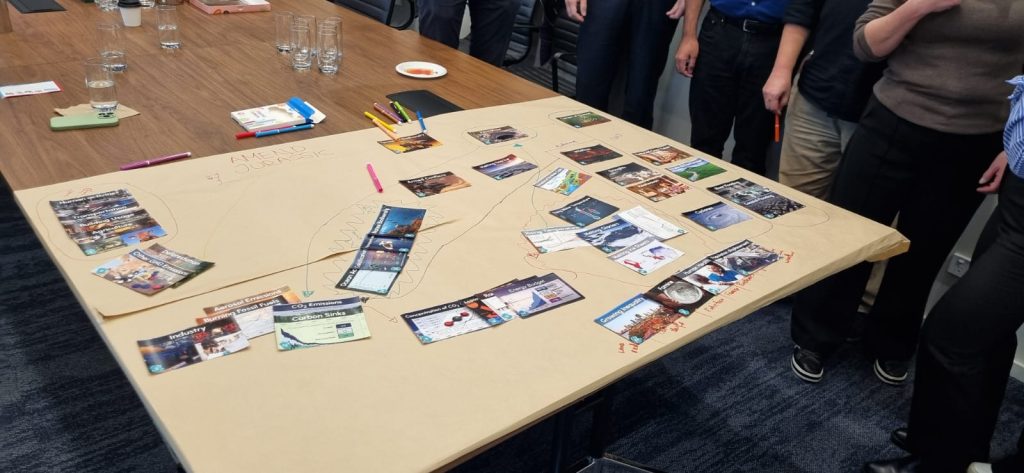
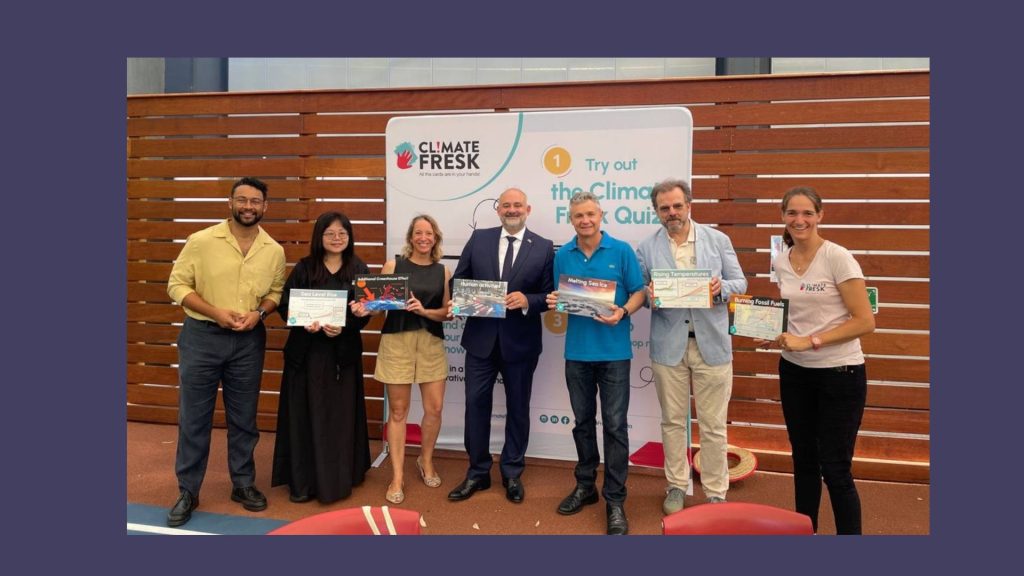
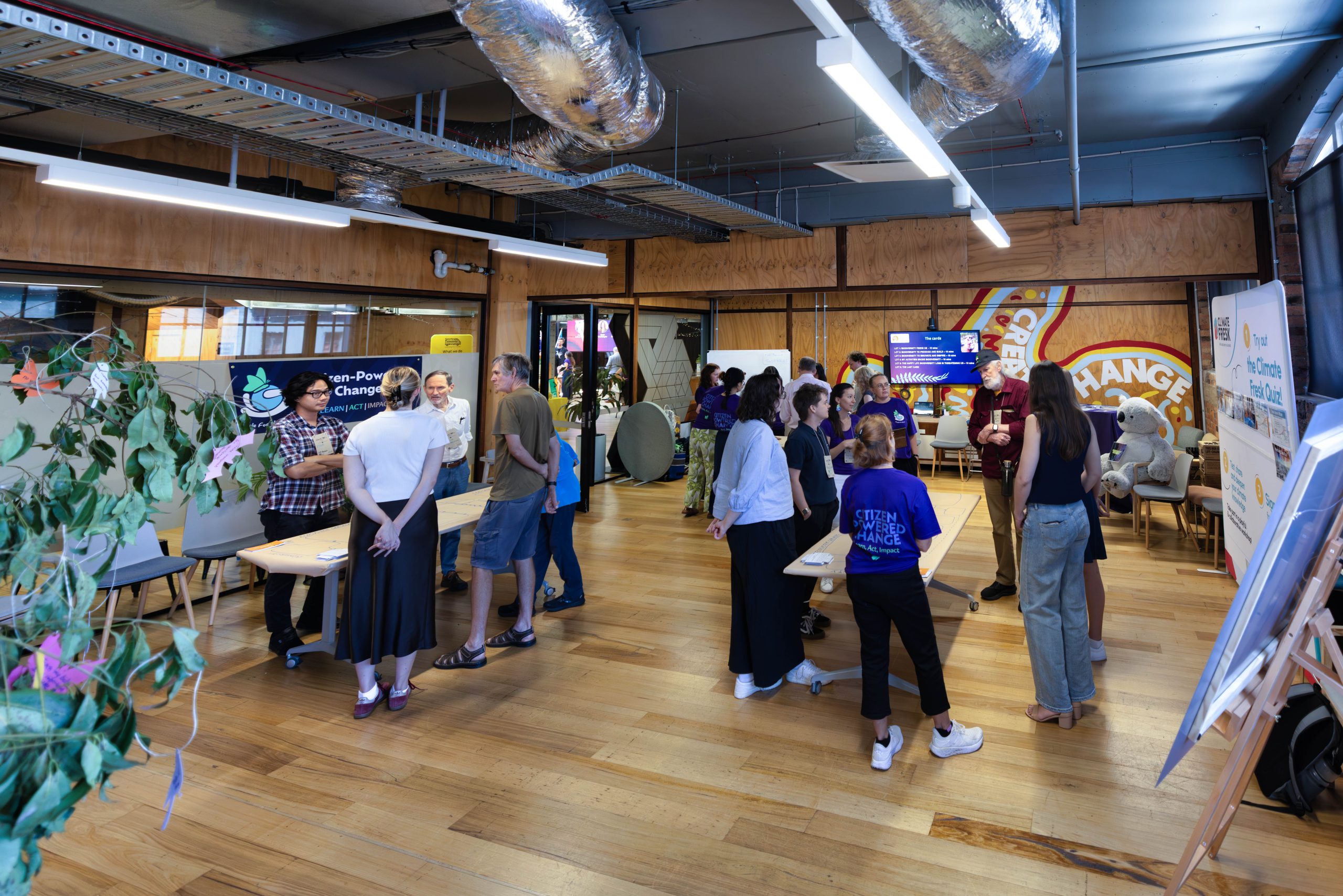
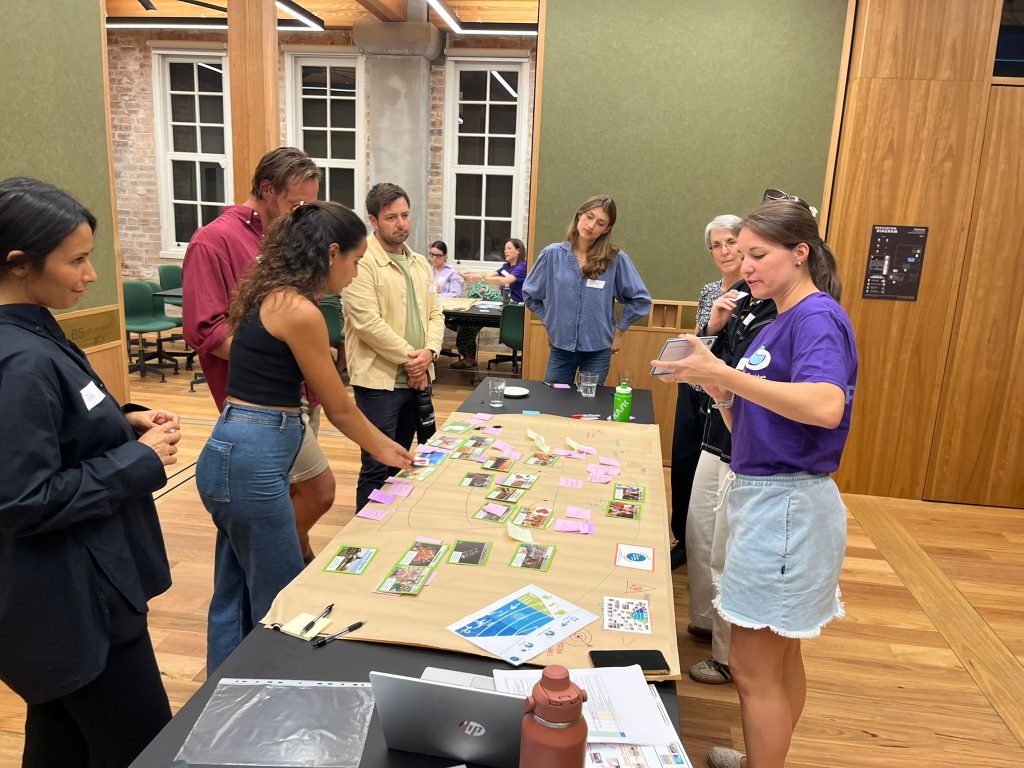
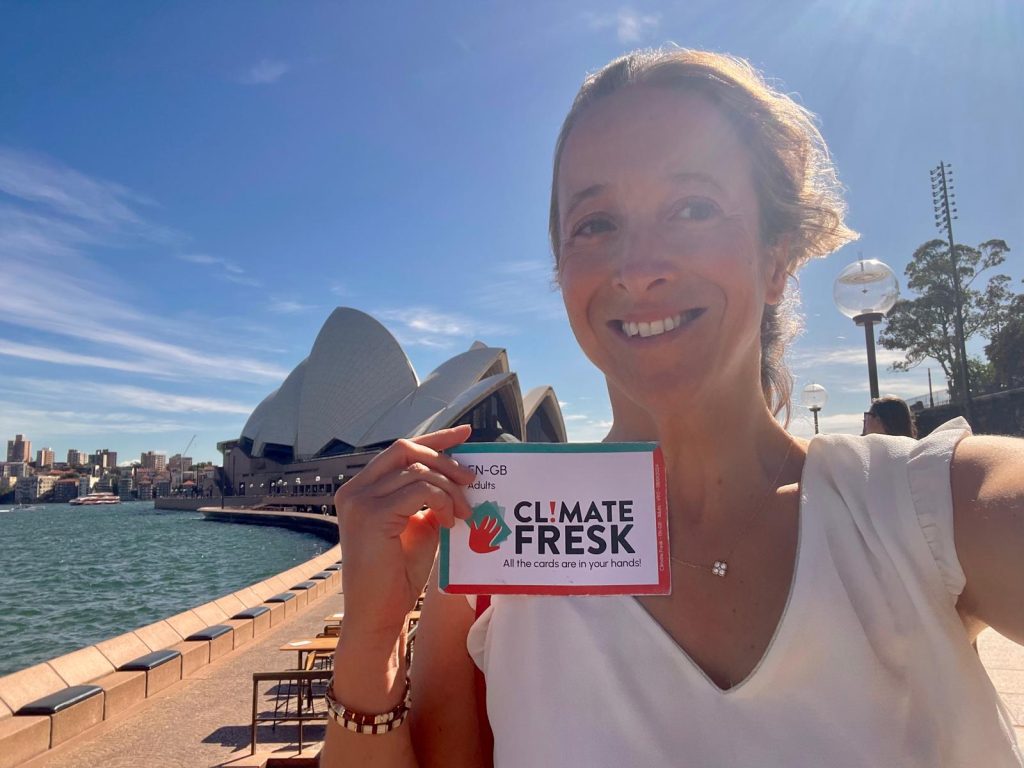
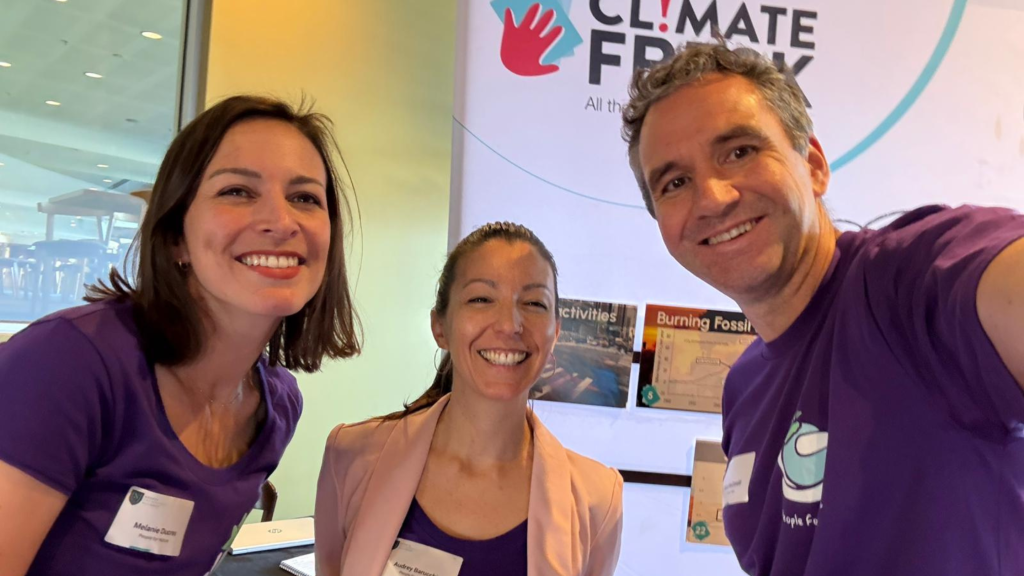
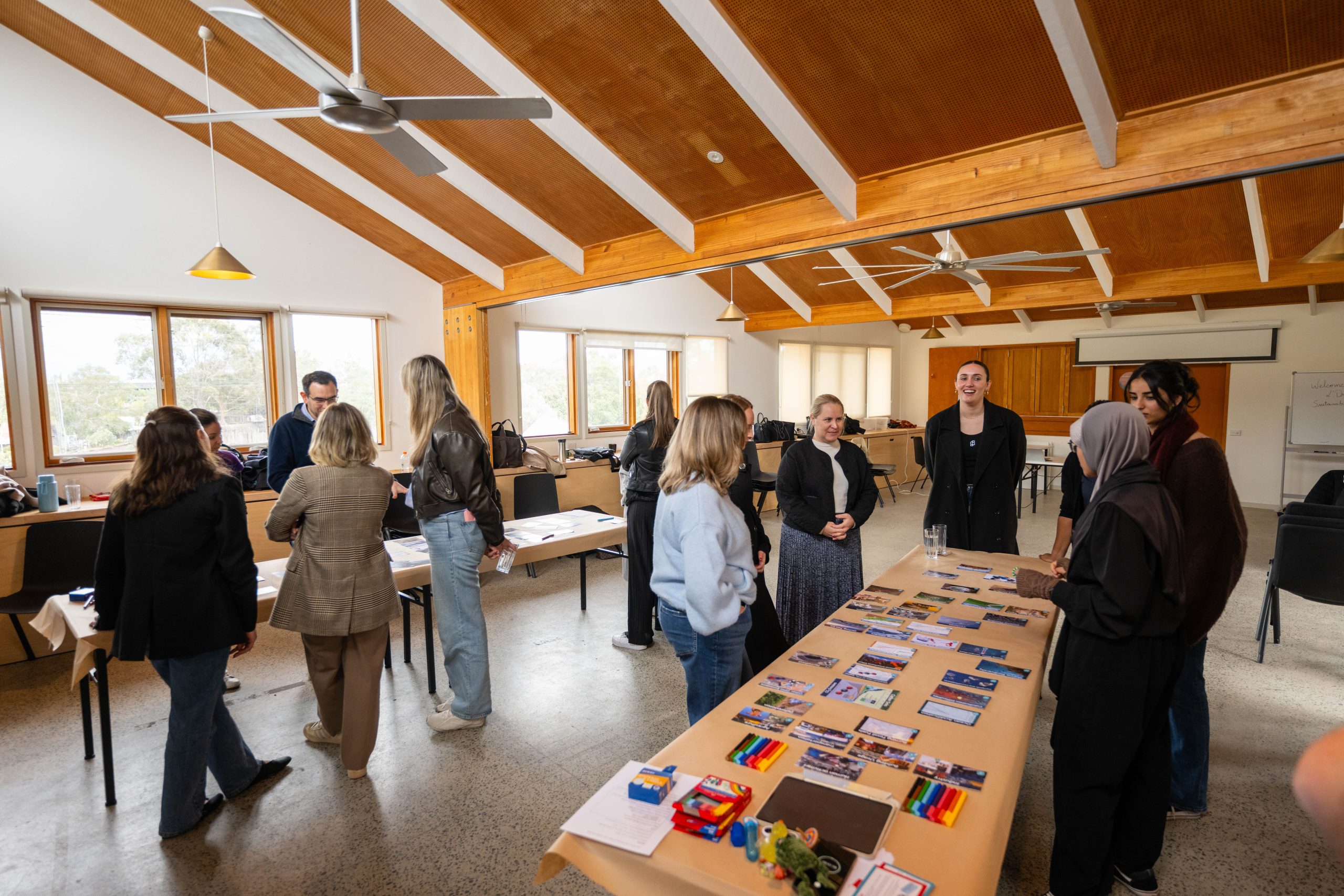
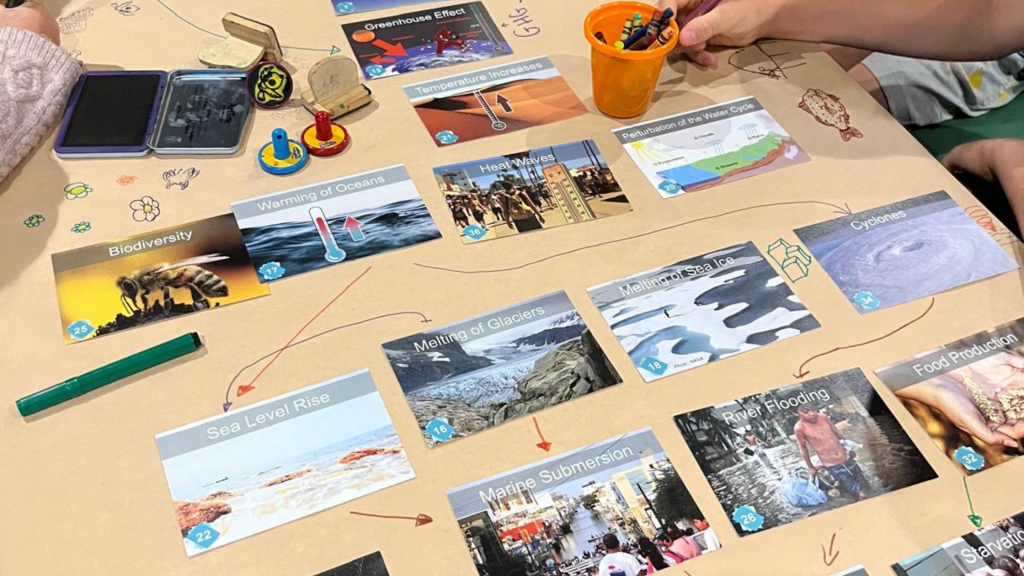
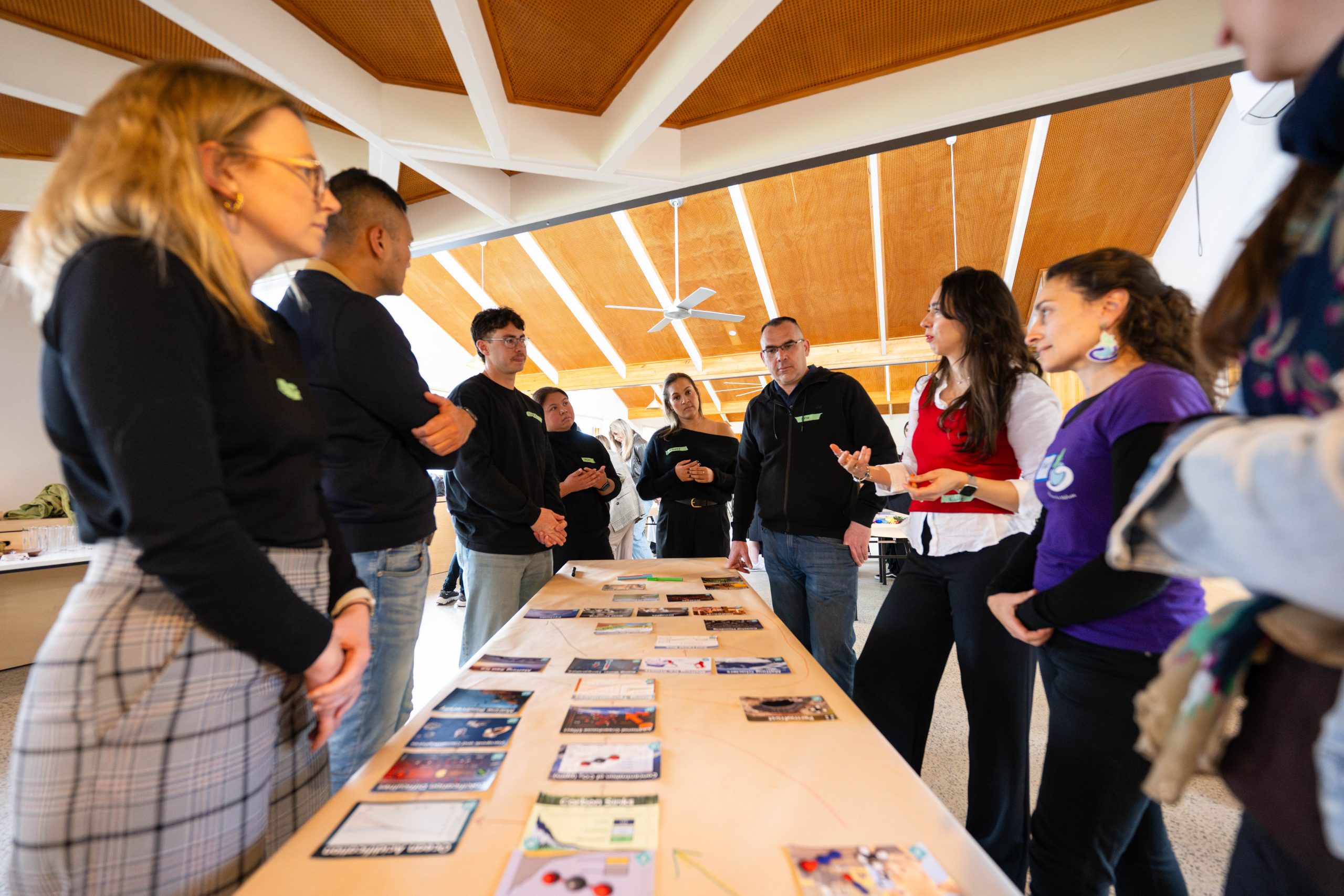
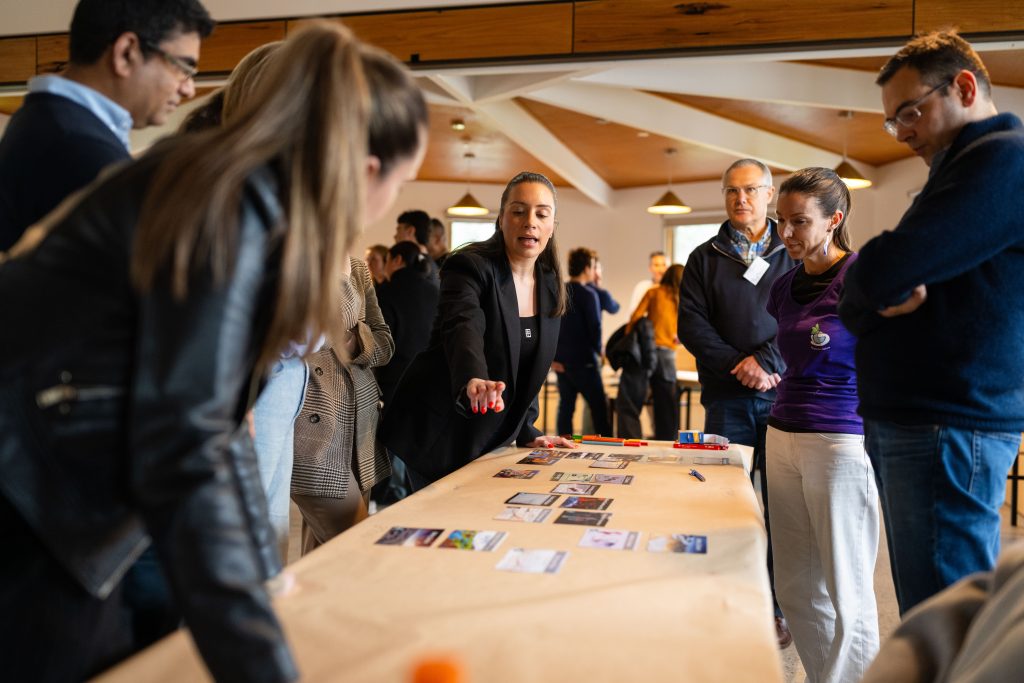
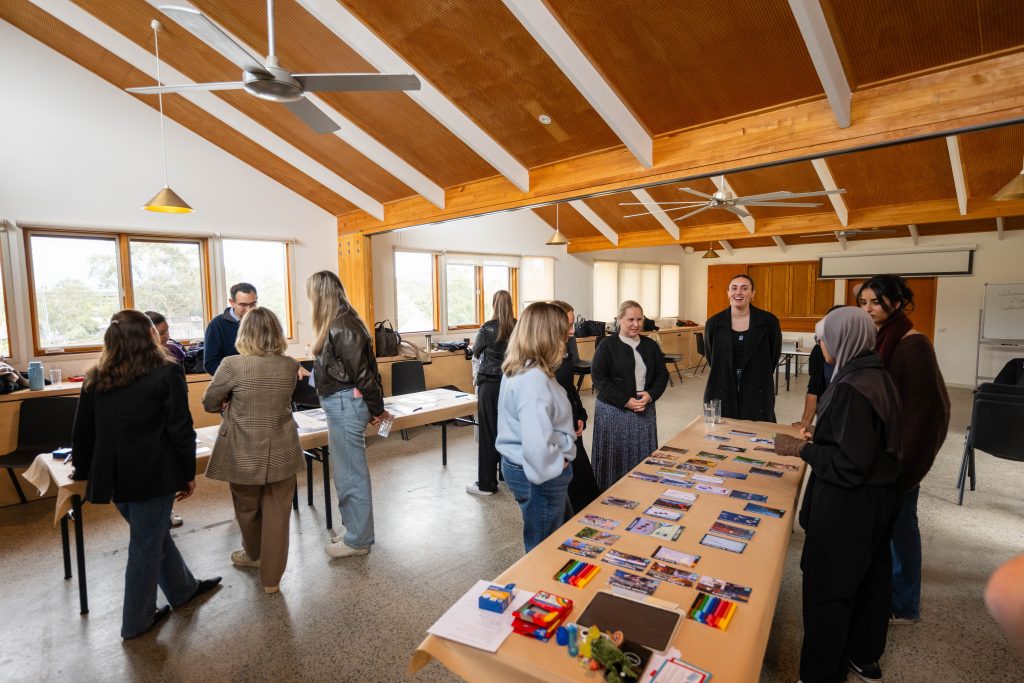
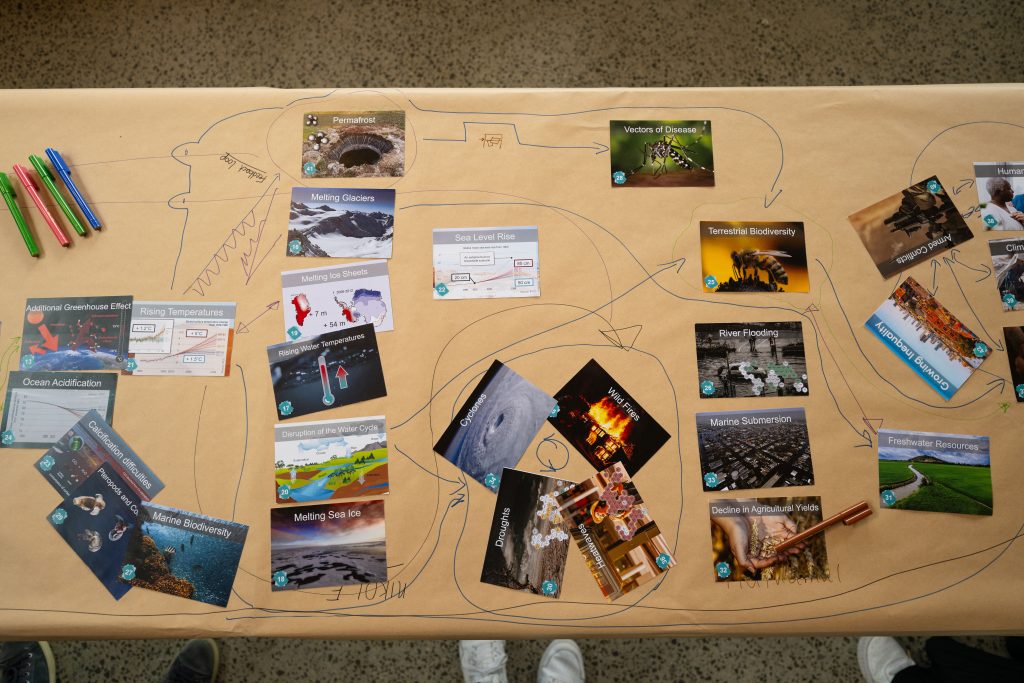
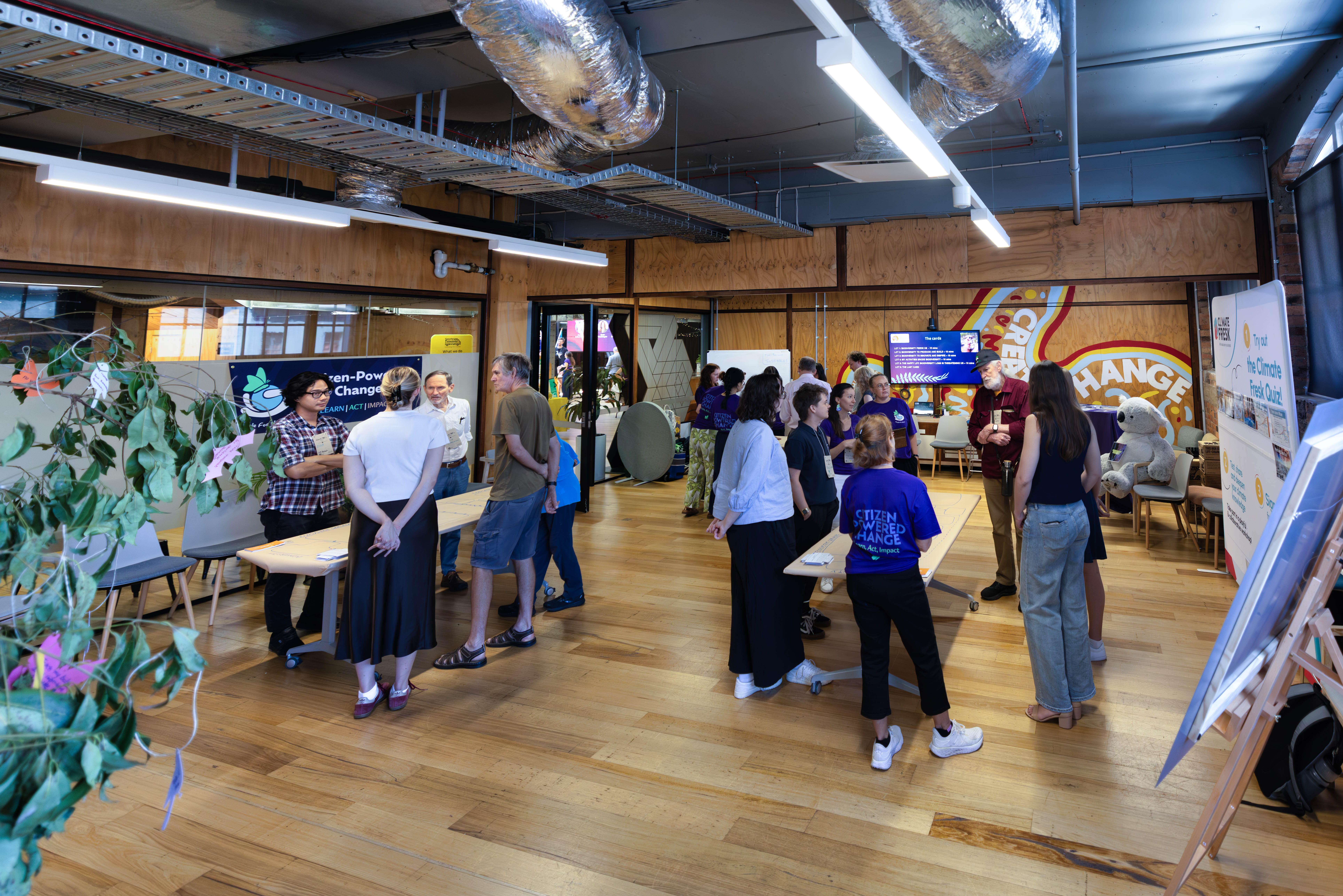
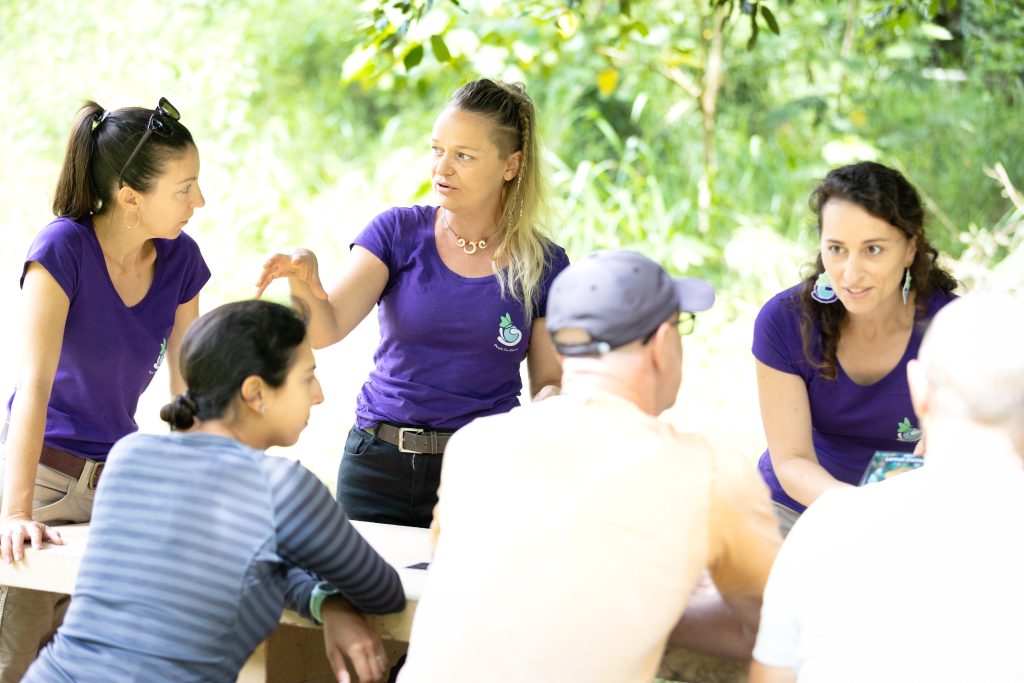
    β€œI recently had the opportunity to attend the Climate Fresk workshop at our Bank Australia Collingwood head office moderated by Bruce M. from People For Nature, and it was a really good reminder of just how imminent and interconnected the impacts of climate change are.

    The session breaks down complex climate science in a clear, practical way and helps put the bigger picture into perspective. It resets and prompts you to keep climate awareness still at the front of mind and not lose it in the noise around.

    What I appreciated most was how the conversation stayed grounded and it wasn’t overwhelming, instead, it was a chance to pause, reflect, and rethink how our everyday choices and work connect to broader climate outcomes

    It also aligned nicely with Bank Australia’s Climate Action Strategy focus, encouraging shared responsibility and practical thinking rather than grand gestures.

    Also, a small fun fact I learned along the way: β€œFresk” is an English adaptation of the French word β€œfresque”, meaning a fresco or mural which feels fitting, as the session is all about stepping back and seeing the whole picture.”

    Minisha Reddy, Impact Lending Support Consultant at Bank Australia.

    By investing in climate education, Bank Australia is strengthening internal awareness, aligning its workforce with its values, and building the capability needed to support Australia’s transition to a low-carbon, nature-positive economy.

    This approach reflects a growing recognition that informed employees are key to driving meaningful, organisation-wide change. It also positions Bank Australia as a leader in sustainable finance, earning recognition from customers for its authentic commitment to climate action.

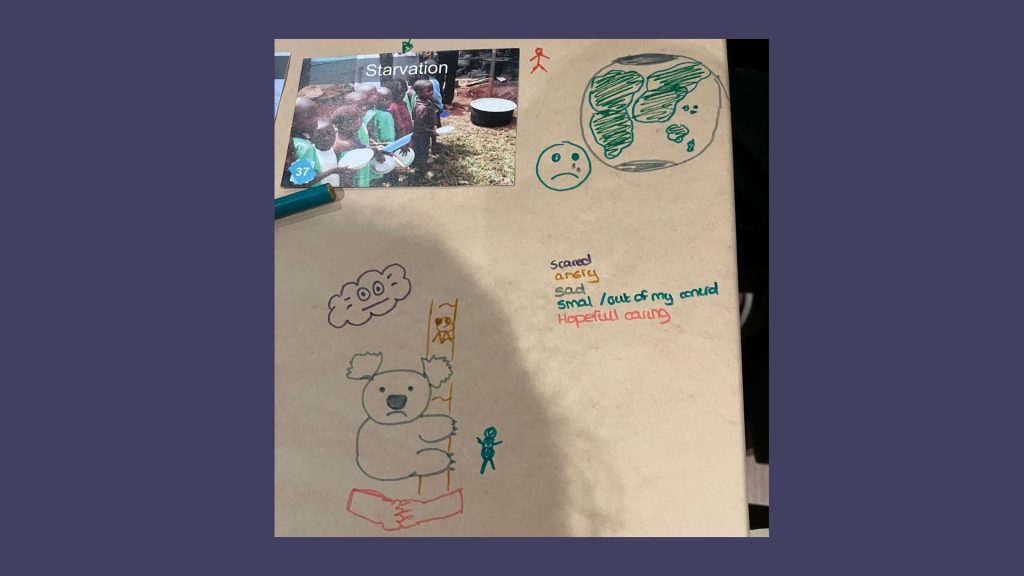
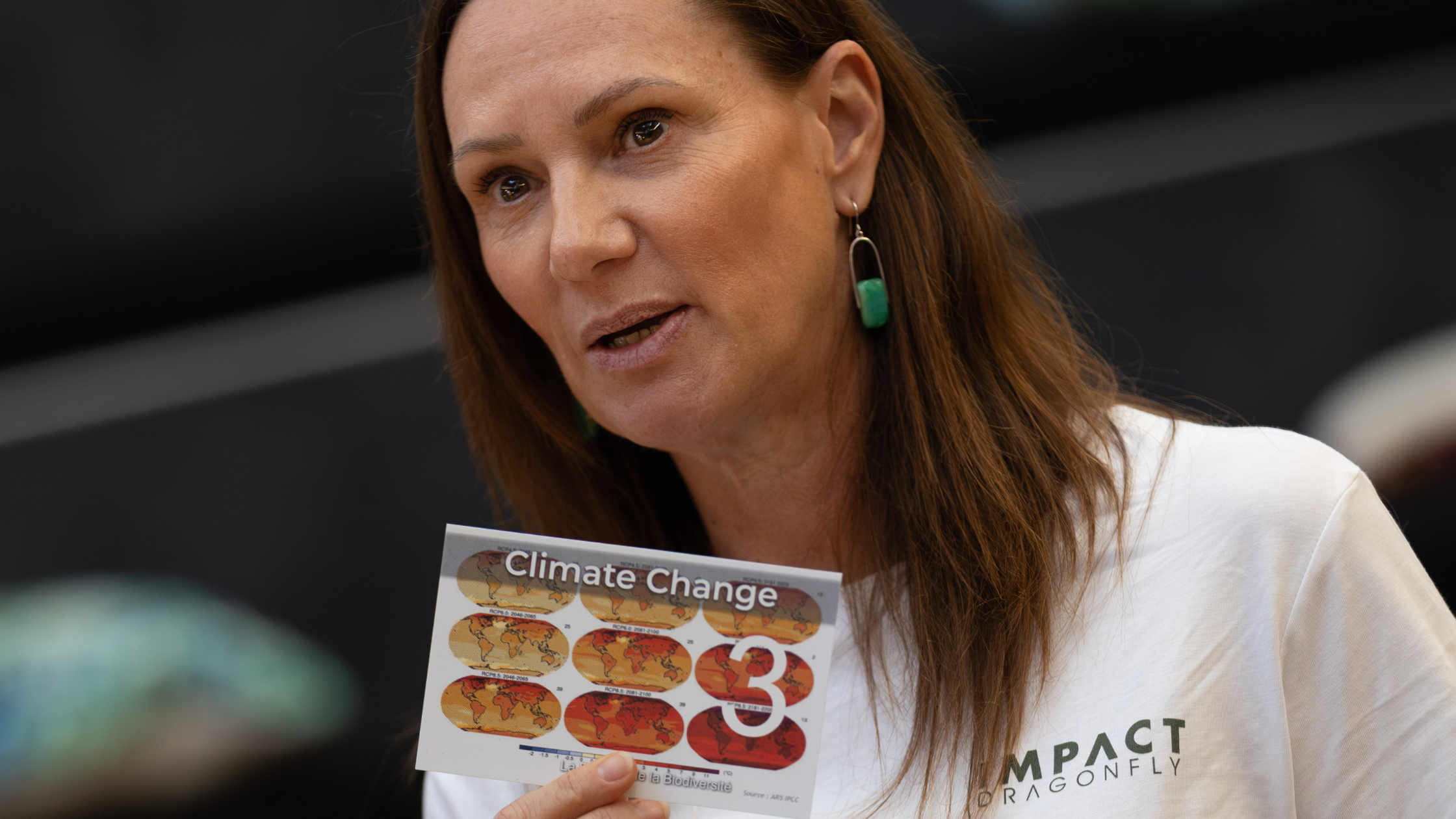
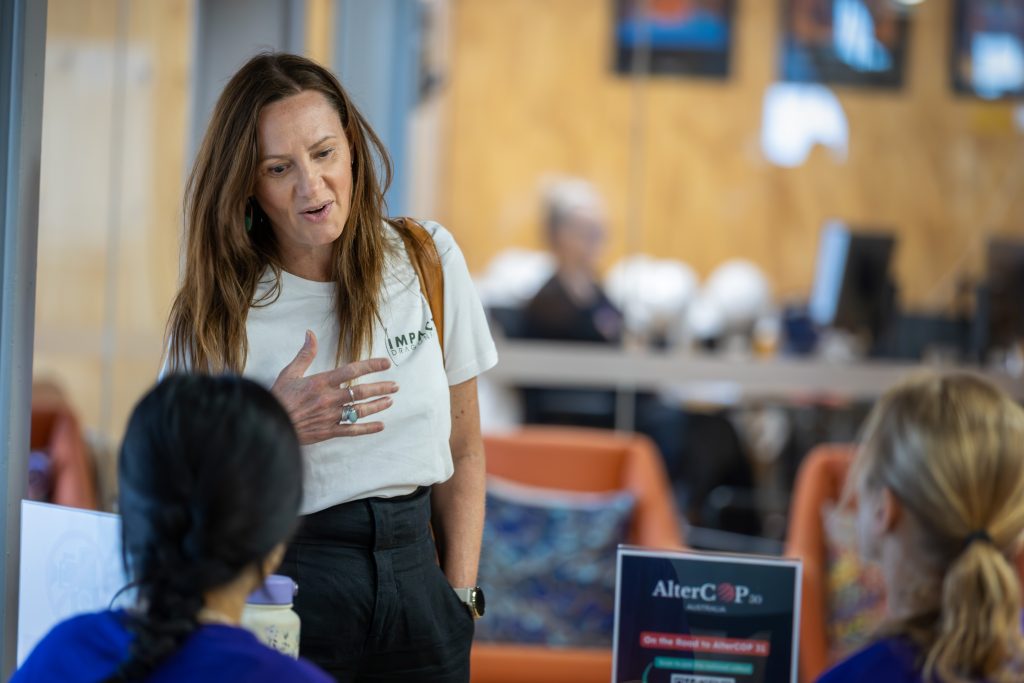
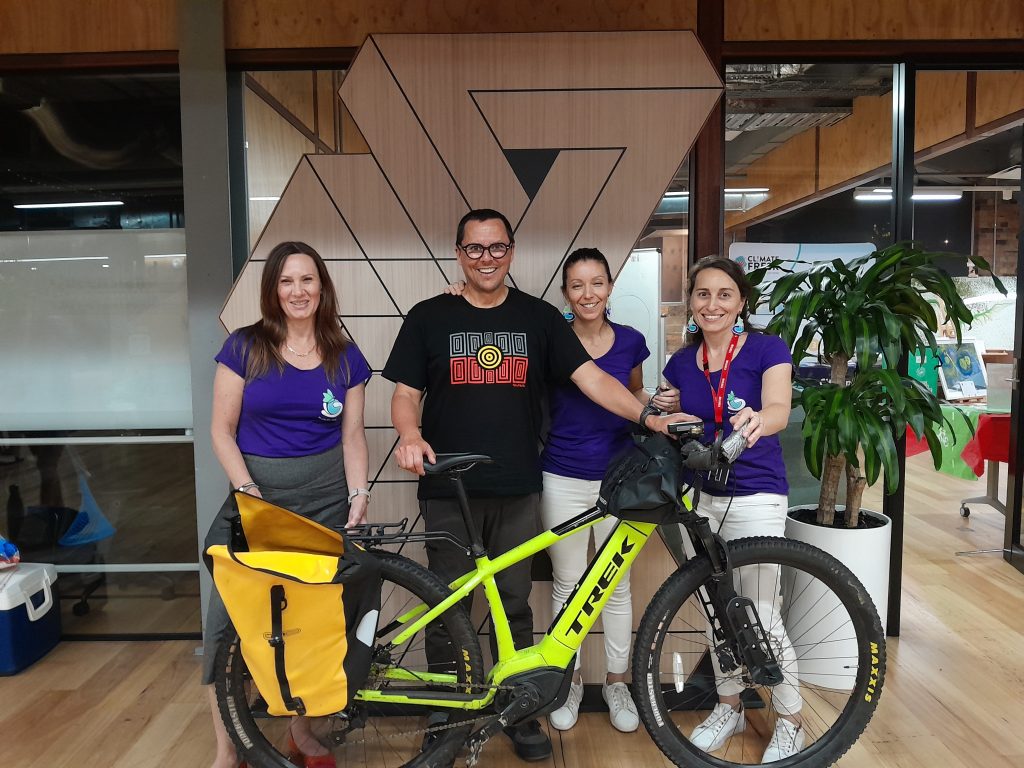
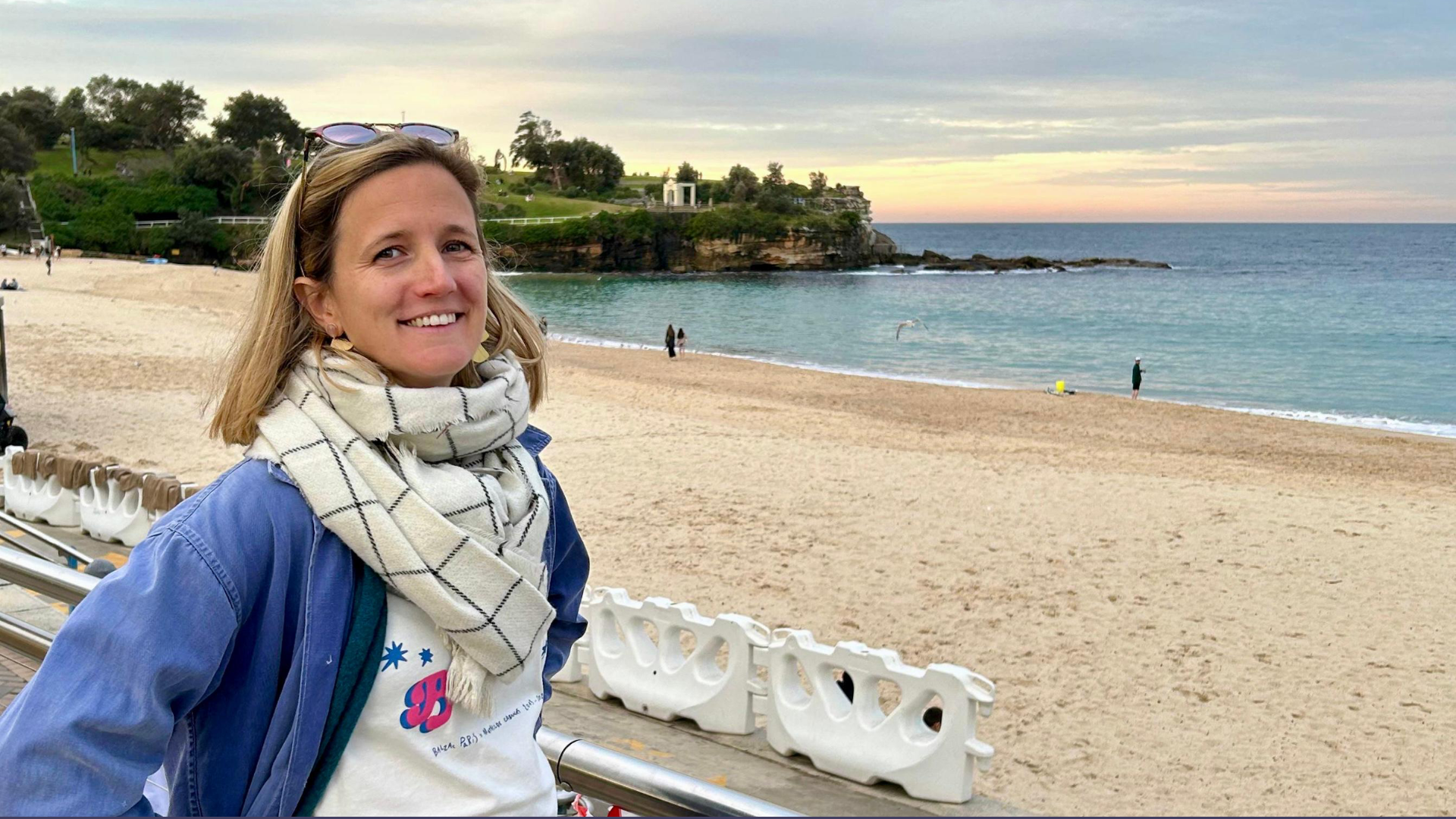
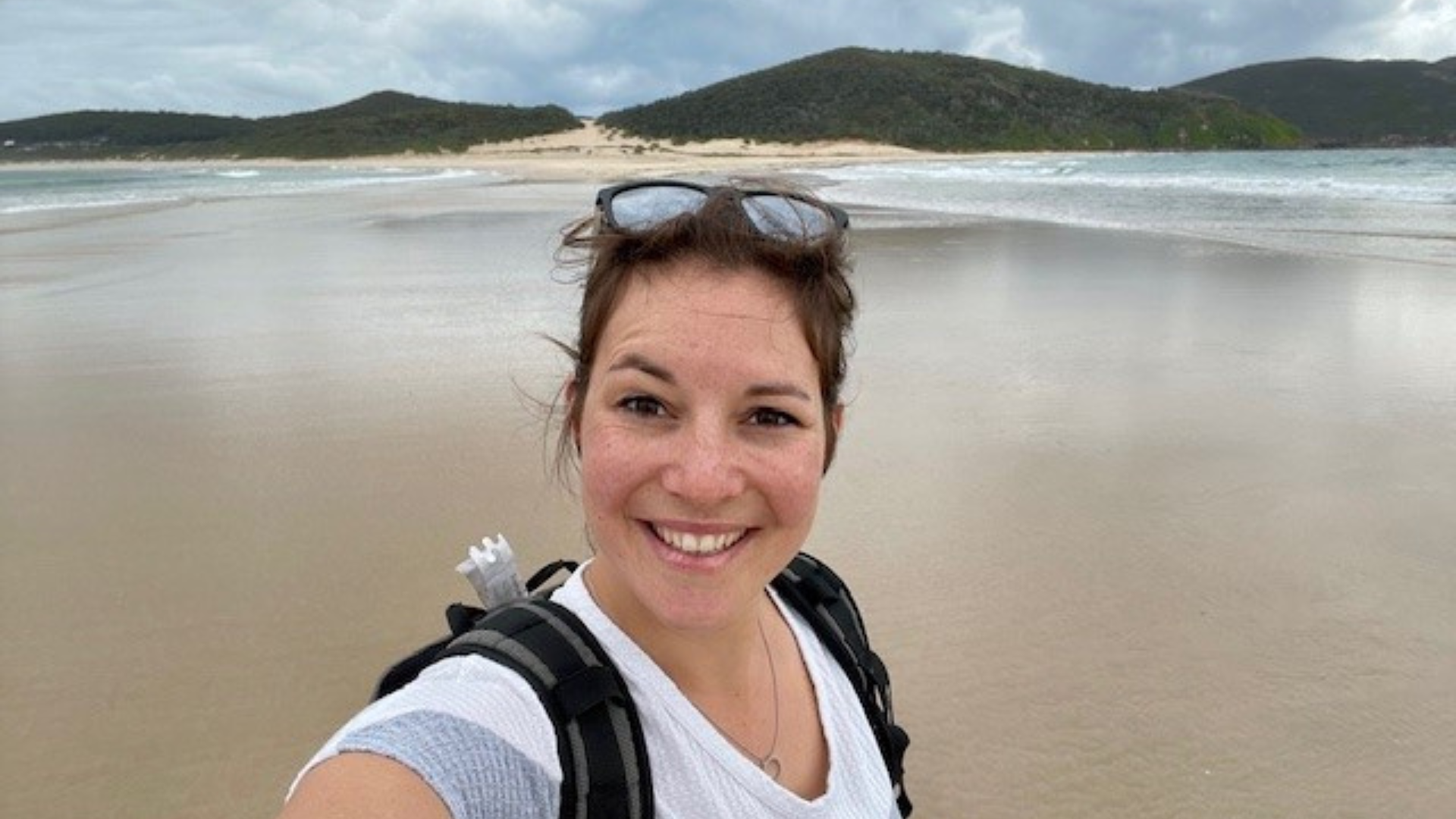
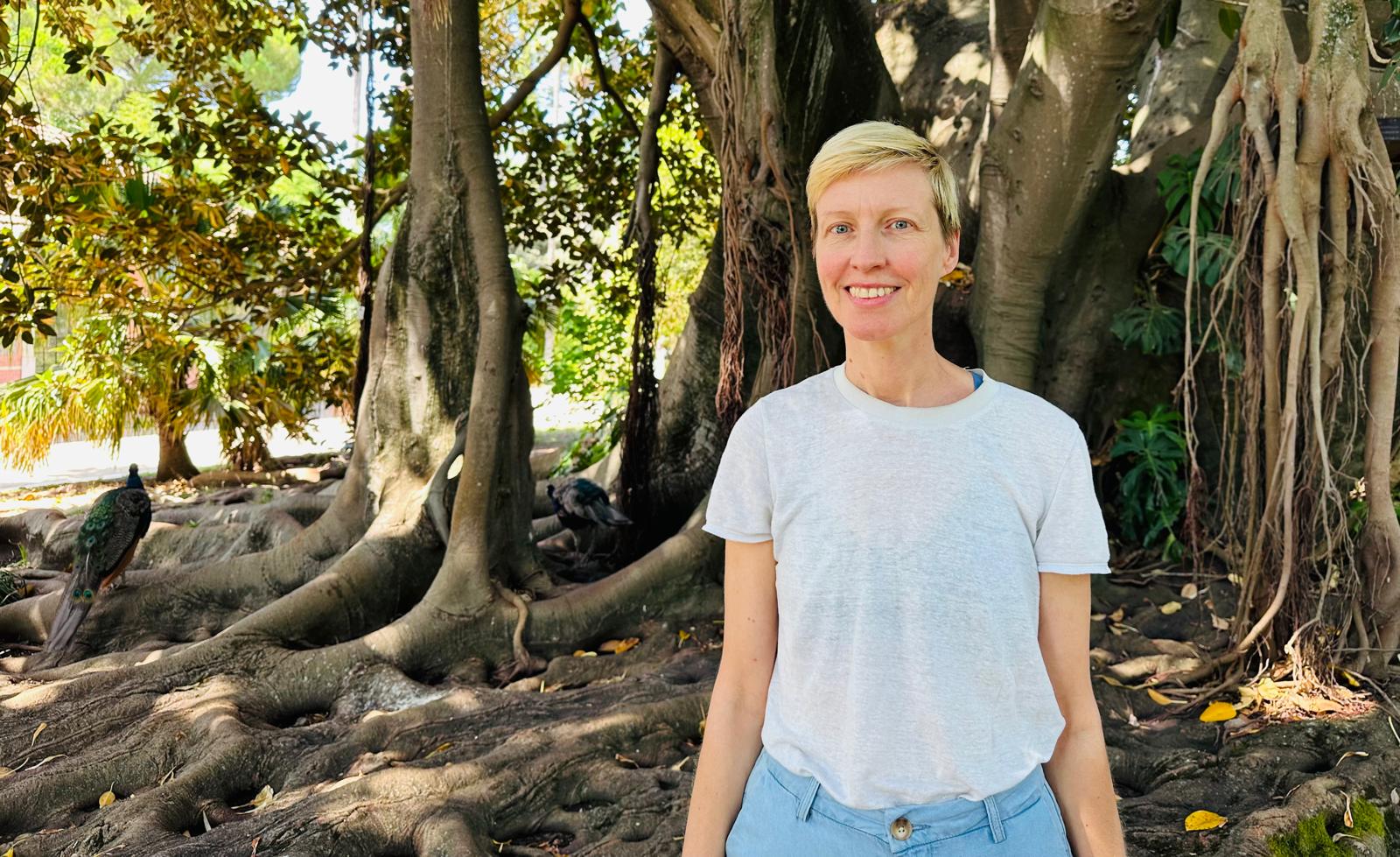
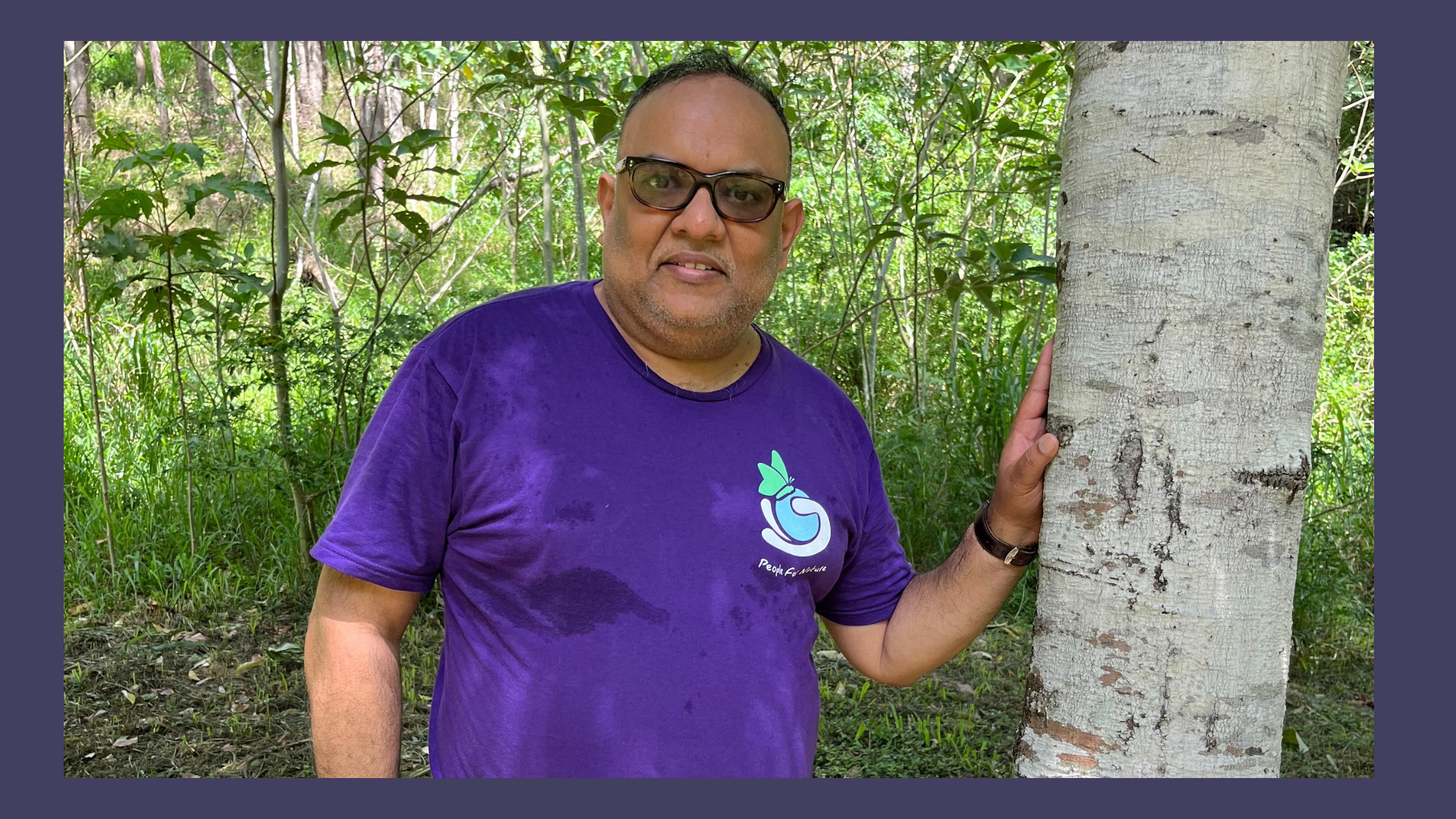
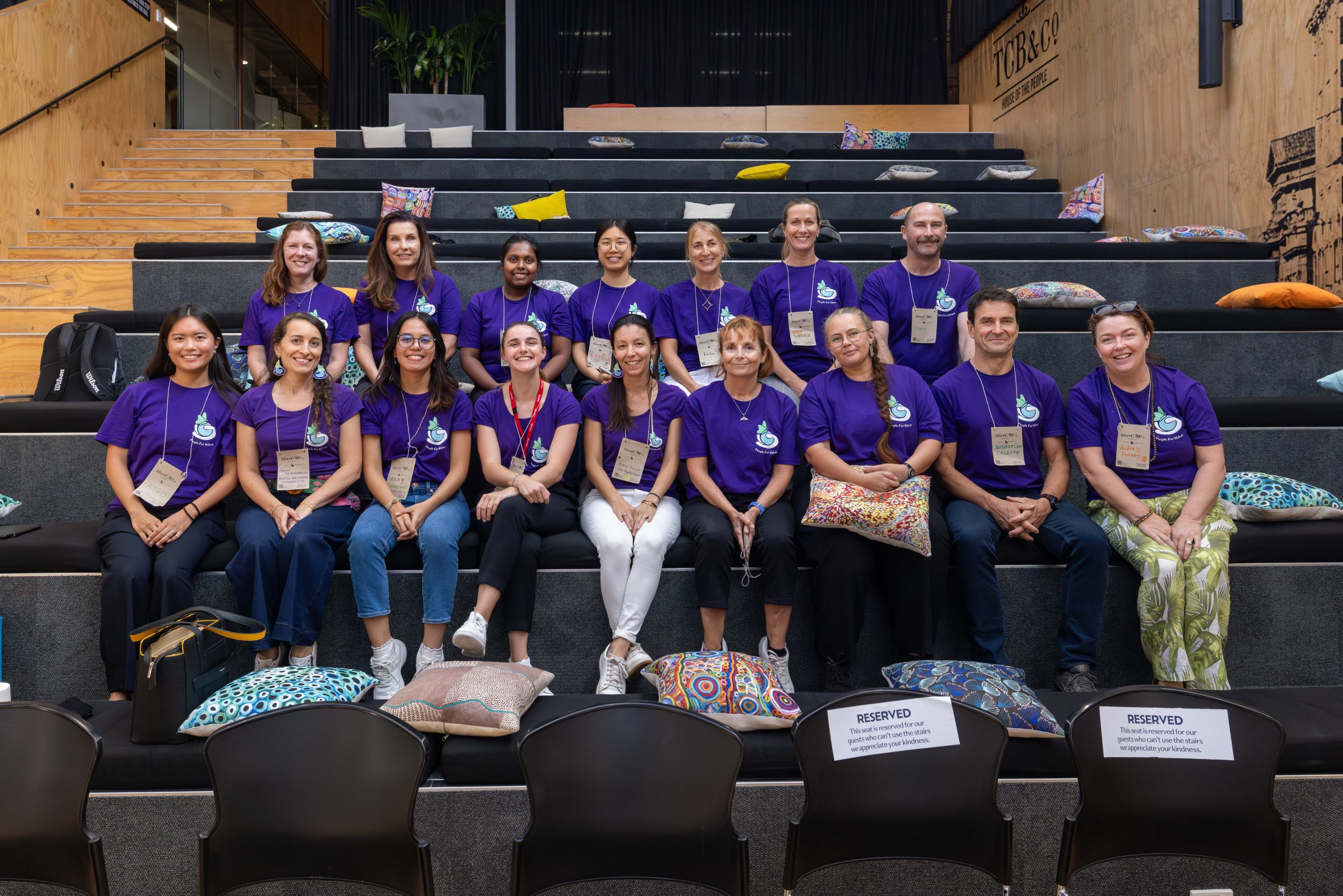
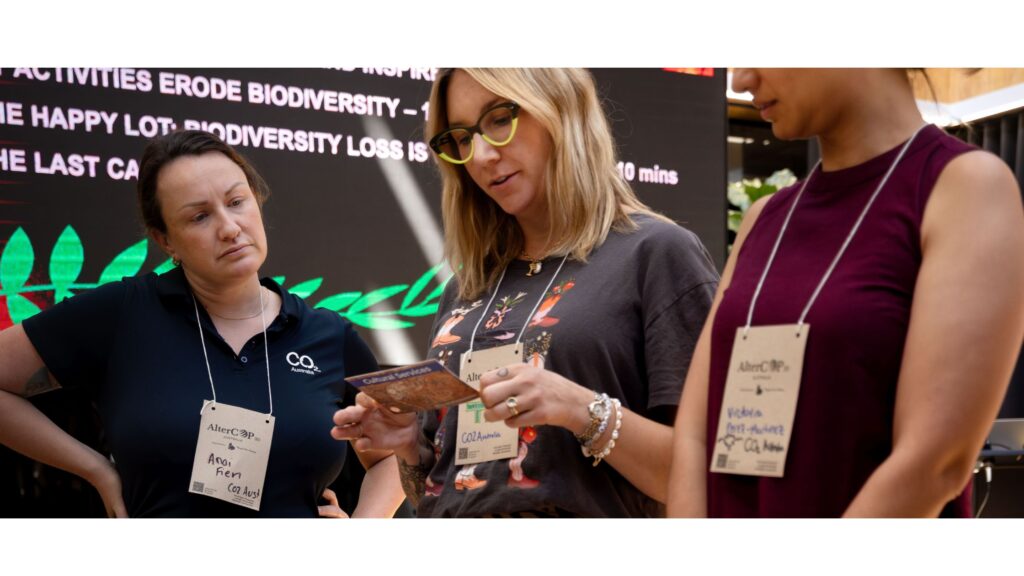
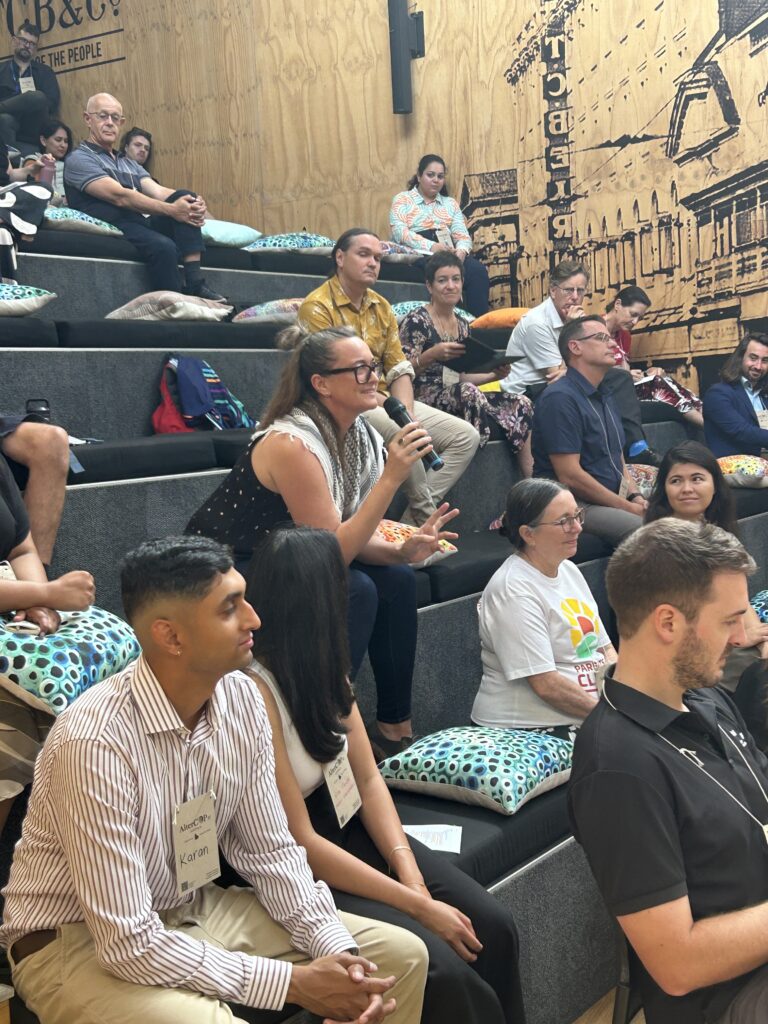
    Photos credit: Minisha Reddy, Bank Australia.

    πŸ“© Let’s start the conversation.

    Contact us today to organise a Climate Fresk, Biodiversity Collage or Circular Economy Collage workshop for your team.

    Together, we can drive positive change, one action at a time.

    This article was originally published on LinkedIn by Climate Fresk Australia.

  • Meet the Fairy Wren (Malurus splendens)

    Meet the Fairy Wren (Malurus splendens)

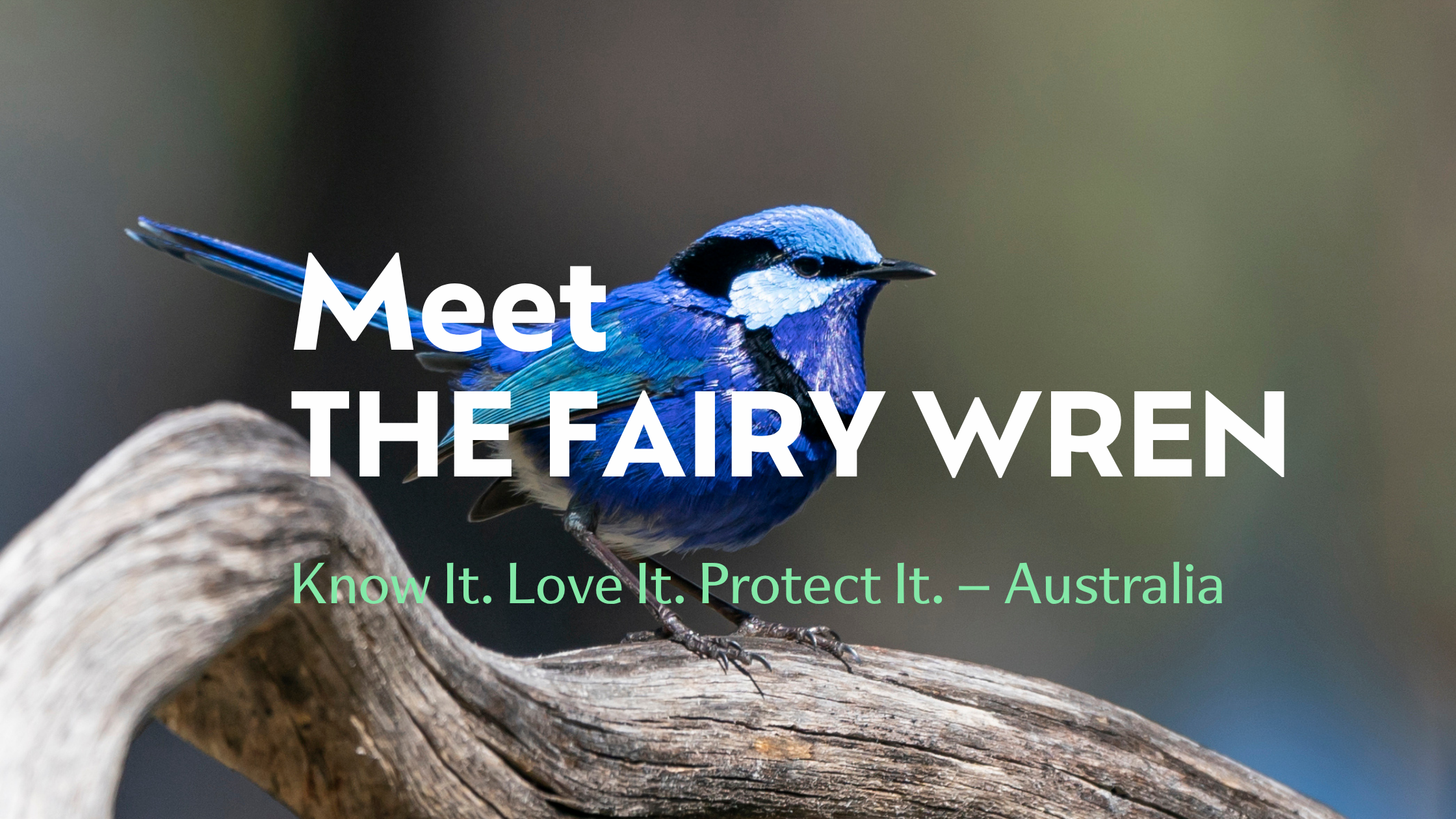
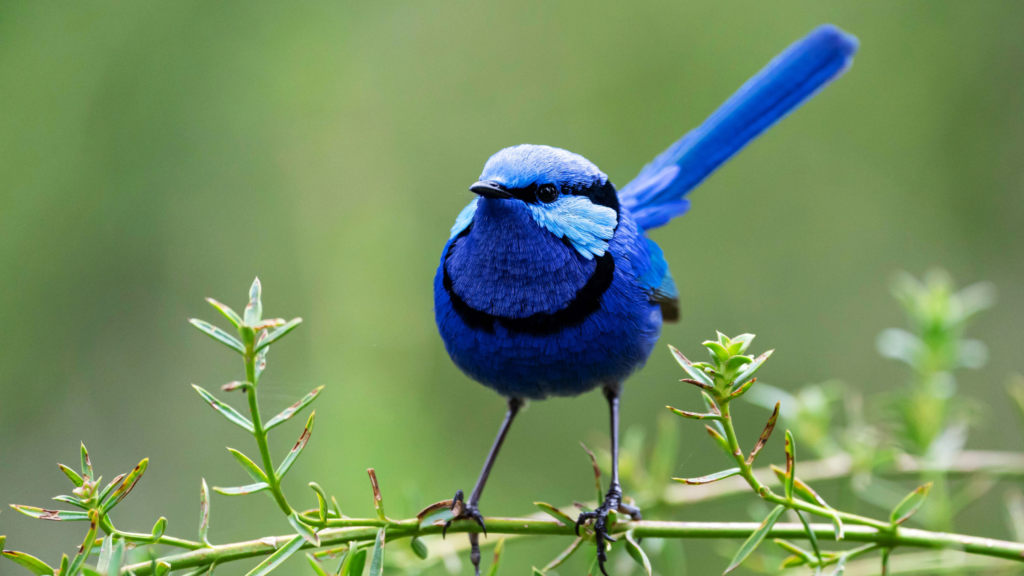
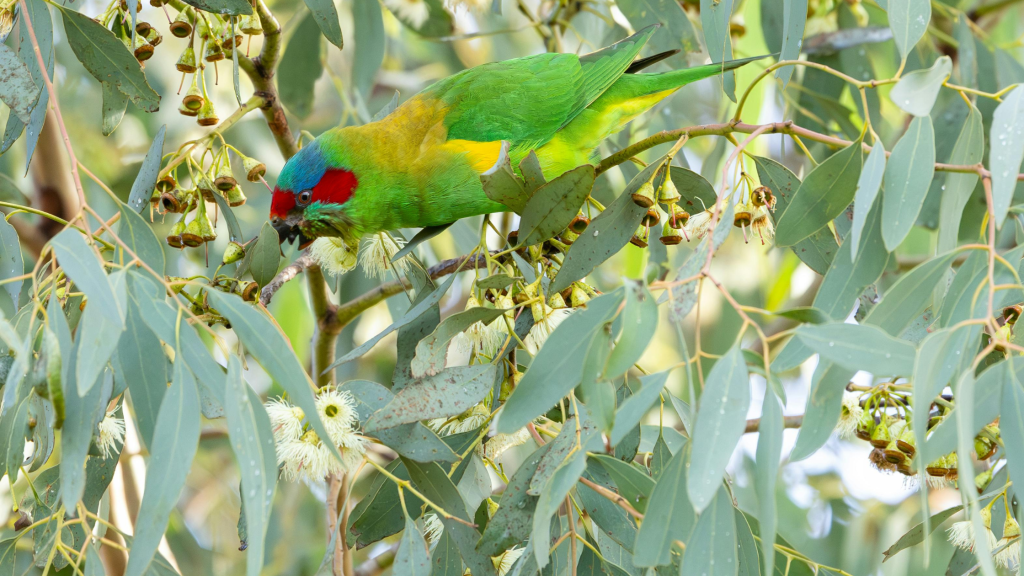
    Small in size but bursting with colour and personality, the Fairy Wren is one of Australia’s most beloved native birds, known for its brilliant blue feathers and energetic behaviour.

    Found across open forests and scrublands, these tiny birds are a familiar sight as they hop through dense vegetation in search of insects and shelter.

    They are a reminder that some of Australia’s most captivating wildlife can be found in our own backyards.

    Why it matters

    Fairy Wrens play an important role in Australia’s ecosystems.

    πŸͺ² They feed on insects and other small invertebrates, helping maintain ecological balance

    🌿 They rely on dense native vegetation, highlighting the importance of healthy understorey habitats

    πŸ•ŠοΈ They contribute to the rich diversity of birdlife that makes Australia’s landscapes so unique

    🌏 Their presence can indicate the health and connectivity of native habitats

    Although small, Fairy Wrens are an important part of the intricate web of life that supports healthy ecosystems.

    Fun facts

    πŸ€“ Male Fairy Wrens develop striking bright blue plumage during the breeding season

    πŸ€“ They live in cooperative social groups and are often seen foraging together

    πŸ€“ Their songs are surprisingly complex and play an important role in communication

    πŸ€“ Despite their delicate appearance, Fairy Wrens are active and highly adaptable birds

    The Fairy Wren reminds us that biodiversity is often found in the small and familiar species we encounter every day.

    A deeper reflection

    These birds depend on dense native vegetation for protection from predators and access to food, making them particularly sensitive to changes in habitat quality.

    As urban development, habitat fragmentation and introduced predators continue to alter Australia’s landscapes, creating and protecting suitable habitat becomes increasingly important.

    In a country with more than 600,000 native species, many found nowhere else on Earth, the Fairy Wren is a reminder that conserving biodiversity begins with caring for the everyday places where nature persists.

    How we manage our gardens, parks and native vegetation can have a meaningful impact on the future of these delightful birds.

    From Wonder to Action

    Learn & understand

    Explore how biodiversity, climate, and land systems are deeply connected through our workshops with People For Nature.

    Create your Nature Oasis

    Plant native species to restore habitat and support the insects, birds, and wildlife that depend on them.

    Join citizen science

    Record native species around you on iNaturalist and contribute to real conservation data.

    (Special thanks to Simon Andrews, Ambassador for People For Nature, for helping shape this story)


    References:

  • Meet our ambassador: Andres De Saavedra

    Meet our ambassador: Andres De Saavedra

    With expertise in digital systems, machine learning, and impact dashboards, Andres develops websites, apps, and digital assets that enhance community engagement and measure conservation outcomes.

    Currently focused on applied analytics, machine learning, and AI, he empowers People For Nature to leverage technology, brand, and data for impact.

  • Meet our ambassador: Peter Netherclift

    Meet our ambassador: Peter Netherclift

    Climate Fresk Facilitator

    Peter Netherclift is a civil engineer with over 20 years of experience delivering infrastructure projects across Australia, the United Kingdom, and the Caribbean. His work spans multiple sectorsβ€”including mining, rail, airports, water, and building engineeringβ€”bringing deep expertise in planning, feasibility studies, and project delivery across complex environments.

    Alongside his engineering career, Peter has cultivated a strong interest in sustainable living and regenerative practices. He has completed training in natural building, permaculture, and holds a Diploma of Sustainable Living from the University of Tasmania.

    As an Ambassador for People for Nature, Peter brings a practical, solutions-focused perspective and a passion for integrating sustainable approaches into how we design, build, and live.

    Connect with Peter on LinkedIn

  • Meet our Ambassador: Anne-Laure Chapuis

    Meet our Ambassador: Anne-Laure Chapuis

    Climate Literacy Facilitator

    Anne-Laure has a background in corporate sustainability and now works in the public sector.

    She is passionate about the role businesses and communities can play in the transition to net zero, with a strong interest in reducing emissions across agriculture and food supply chains.

    She enjoys facilitating Climate Fresk, 2 Tonnes, and Biodiversity Collage workshops.Β Β 

    Connect with Anne-Laure onΒ LinkedIn.

  • Meet our ambassador: Virginie Parisot

    Meet our ambassador: Virginie Parisot

    Climate and Circular Economy Literacy Facilitator

    Ginny Parisot is a certified environmental consultant with over 15 years’ experience in the recycling industry.

    She came to Australia in 2015 and spent three months volunteering in a wildlife sanctuary in QLD, an experience that sparked her commitment to protecting biodiversity.

    A few years later, Ginny participated in a Climate Fresk workshop, which was a revelation in connecting knowledge with action. Inspired, she became a facilitator and continued to expand her expertise through 2Tonnes and Circular Economy workshops.Β 

    Connect with Ginny onΒ LinkedIn.

  • Meet our ambassador: Aye VerckensΒ 

    Meet our ambassador: Aye VerckensΒ 

    Communications Lead

    Aye Verckens brings over 20 years of international experience in communications and marketing, having worked across Europe and Australia in B2B technology and corporate environments.

    In recent years, she has shifted her focus towards sustainabilityβ€”driven by a strong belief in the power of communication to inspire change and accelerate climate action.

    As Communications Lead and Ambassador at People For Nature, Aye plays a key role in amplifying our mission to reconnect people with nature. She is passionate about making complex environmental challenges accessible and engaging, helping individuals and organisations move from awareness to meaningful action.

    Connect with Aye on LinkedIn.

  • Meet our Board: Germain Briand

    Meet our Board: Germain Briand

    Β Non-Executive Director

    Germain reconnects people with nature through innovation.

    After 12 years in petroleum, he founded Urban Canopee, pioneering Nature-Based Placemaking in Australia.

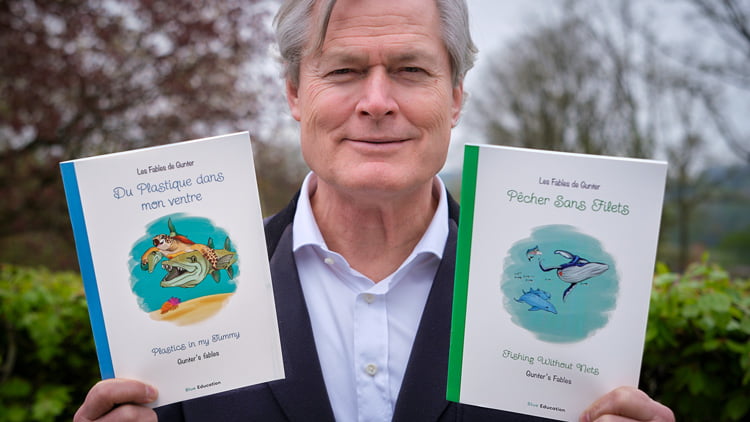
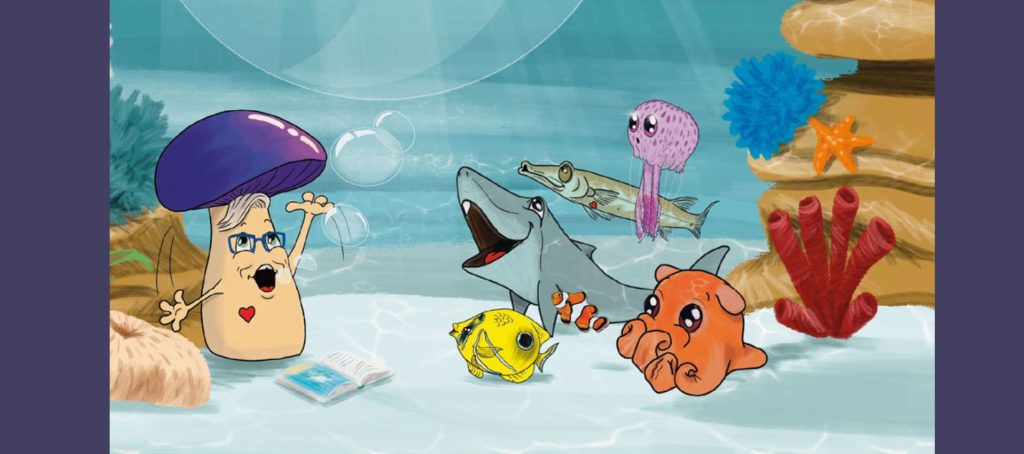
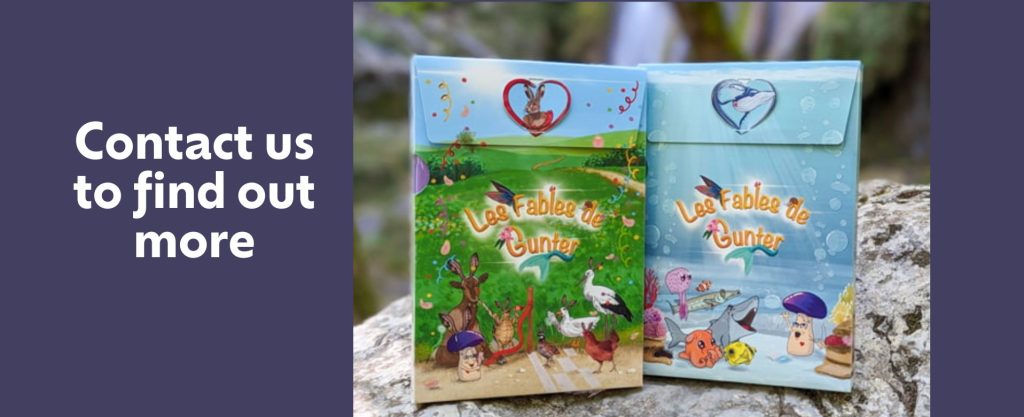
    Now leading the Bio… Group, his ventures include Aglae (luminescent plants), Glowee (bioluminescent lighting), Luminokrom (paint), and Gunter’s Fables (books).

    Guided by nature’s wisdom, Germain drives environmental and societal change.

    Connect with Germain onΒ LinkedIn.

  • Meet our Board: Mylene Turban

    Meet our Board: Mylene Turban

    Non-Executive Director

    MylΓ¨ne graduated with a Master’s in chemical engineering and worked across the solar and water treatment industry for two years before switching to climate consulting.

    After learning the intricacies, but also the limits of carbon accounting to drive positive change, she shifted gears to join the University of New South Wales as a Manager for sustainability engagement.

    With a special interest in public education and regeneration, Mylène co-led Climate Fresk Australia and is a Director at Regen Sydney to implement the doughnut economics model in Sydney.

    Connect with Mylène on LinkedIn.

  • Meet our Board: Dr Fanny de Busserolles

    Meet our Board: Dr Fanny de Busserolles

    Co-Founder & Chief Program Officer

    Fanny is a Certified Environmental Practitioner with a PhD in Animal Biology and Neuroscience.

    After more than a decade in academia researching the sensory ecology of marine animals, she transitioned into conservation and community engagement.

    Based in Brisbane, she is a passionate advocate for sustainability and wildlife, committed to raising environmental awareness and inspiring meaningful action.

    People For Nature is about giving people the tools, knowledge, and confidence to take simple yet meaningful action for natureβ€”right where they are. By connecting these individual efforts into a broader, citizen-led network, we can transform backyards, farms, and cities into a collective force for conservation.

    I believe that when everyone does their small part, these small actions grow into something far greaterβ€”strengthening ecosystems, deepening our connection to nature, and contributing to a shared vision for Australia’s future.

    Connect with Fanny onΒ LinkedIn.

  • Meet our Board: Audrey Barucchi

    Meet our Board: Audrey Barucchi

    Co-Founder & Chief Executive Officer

    A Certified Environmental Practitioner and purpose-driven executive with an MBA in Global Management, Audrey has extensive experience in cleantech, conservation, scientific communications, and sustainability project management.

    Based in Brisbane, she is a passionate wildlife advocate dedicated to fostering community engagement for biodiversity conservation and driving educational initiatives that inspire action. 

    Through my work with People For Nature, I’ve come to believe that the solutions to the climate and biodiversity crises already exist β€” in people, in nature, and in the collective courage of citizens who choose to act rather than wait.

    For too long, many of us believed change would come from somewhere else β€” through global agreements or technological breakthroughs. But hope without action is not enough.

    What gives me optimism is witnessing everyday people stepping into their power: communities coming together, sharing knowledge, and building solutions grounded in care, justice, and systems thinking.

    We are fortunate to live in a democracy, where our voices and choices matter. As I often say, criticising is easy β€” building alternatives takes courage. And that courage is what drives real, lasting change.

    Connect with Audrey onΒ LinkedIn.

  • Meet our Board: Shiva Prasad Bebarta

    Meet our Board: Shiva Prasad Bebarta

    Treasurer

    Shiva Prasad Bebarta is an experienced global senior executive, specialised in managing complex financial services transformations.

    He has successfully led many large-scale initiatives for major financial institutions across Asia, the Americas, Europe, and Australia. Shiva is currently a partner at consulting firm Deeply Digital, advising clients in the banking and superfunds sector.  He brings deep expertise in strategic leadership, digital innovation, and change management and a strong passion for purpose-driven work.

    His financial services expertise and extensive board experience in the NFP sector make him a valuable addition to the People for Nature board.

    Connect with Shiva onΒ LinkedIn.

  • Meet our Board: Kylie Flament

    Meet our Board: Kylie Flament

    Chair

    Kylie Flament is an award-winning social enterprise leader and sustainability expert with experience across corporate, government, and not-for-profit sectors.

    She currently serves as the CEO of the Social Enterprise Council of NSW & ACT and as an Expert in Residence at iAccelerate, University of Wollongong. Her extensive board experience and commitment to sustainable, community-driven outcomes enrich People For Nature’s mission, driving ethical, impactful change while fostering strong governance and transparency.

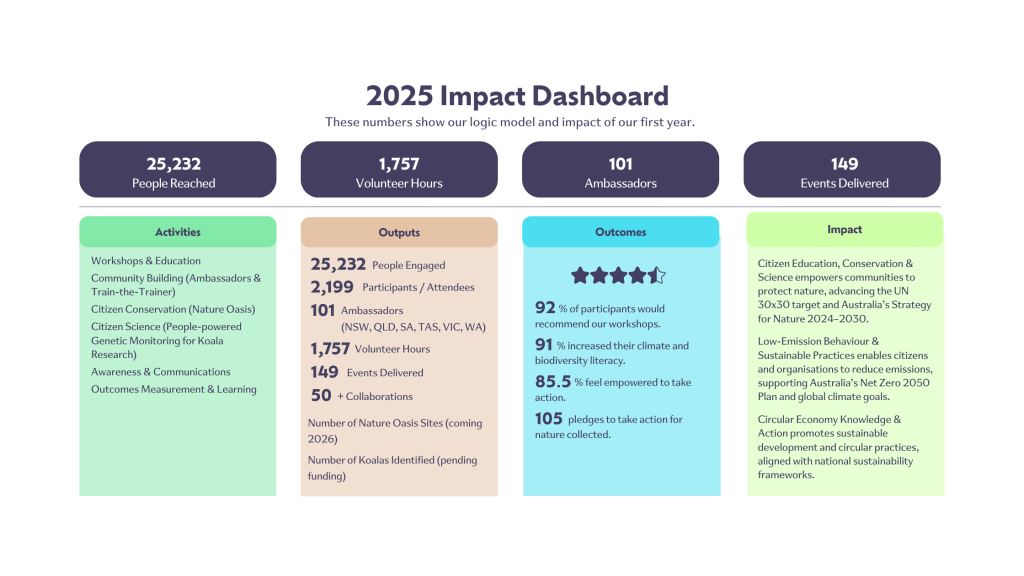
    I have often heard it said that social enterprises are β€œhope in action” and People for Nature is exactly that. Over our first year in operation, we have already reached more than 25,000 people who are all learning, acting and impacting the world in ways that benefit nature.

    As First Nations communities all over the world know, the future of humanity is deeply tied to the future of the planet. We are one. When we hurt nature, we hurt ourselves. When nature benefits, so do we. In Australia, more and more of us are waking up to this reality and changing our personal behaviours, our communities and our organisations to put nature first.

    I am thrilled to have joined People for Nature as the inaugural Chair, and to be working alongside some of the brightest minds and biggest hearts in the country. Our staff and our ambassadors inspire me every day, and inspire all of us to do better.

    I look forward to what the coming years will bring as we all learn, act and impact nature for the better, together.

    Connect with Kylie onΒ LinkedIn.

  • Boosting Climate Literacy at the Treasury

    Boosting Climate Literacy at the Treasury

    People For Nature has been working with the Treasury, a State Government department that recognises the importance of employees embracing climate science with hope and systemic thinking. To support this, we designed a fun climate literacy workshopβ€”Climate Conversations: Awareness and Impactβ€”delivered as part of their employee wellbeing program.

    Program Objectives

    We created a tailor-made science-based workshop to boost climate literacy, linking awareness to wellbeing and professional growth. This department has put climate science at the centre of its staff training, empowering teams to have meaningful climate discussions. The positive, engaging approach in the workshop has sparked optimism and inspired several of the team to become climate workshop facilitators themselves.

    Why This Matters to Us

    The Treasury plays a key role in shaping Australia’s economic and policy decisions, including those related to climate action. By strengthening climate literacy within the department, employees are better equipped to understand the risks and opportunities linked to climate change, and to consider long-term, systems-based impacts in their work. This matters to all Australians, as these decisions influence the resilience of our economy, the stability of our communities, and the way we transition toward a more sustainable future.

    Impact & Feedback

    This workshop is brilliant, helping us think deeply about how we interact with nature. We can see that the impacts of climate change are profound and reversing those effects takes time and effort. The facilitators were great – creating a safe space to discuss the issues, while giving us hope about the future.

    Interested in organising a workshop for your organisation?

    We’ll empower your people to power change for nature. Contact us today to find out more.

    Click below to download the case study.

  • Meet our ambassador: Himanshu Kulkarni

    Meet our ambassador: Himanshu Kulkarni

    Climate Fresk Facilitator, NSW

    Himanshu is a recent Master’s in IT graduate from Monash University and a software engineer based in Melbourne. Outside of coding, he loves getting outdoors and exploring nature with friends, drawn to Australia’s stunning landscapes. For Himanshu, spending time in nature isn’t just recreation β€” it’s what makes you truly want to protect it.

    He strongly believes that technology can be a powerful force for conservation. β€œWith the right tools, we can monitor ecosystems, track wildlife, and turn data into meaningful action,” he says. By harnessing tech for good, Himanshu hopes to help build systems that not only understand the natural world but actively contribute to saving it.

    Joining People For Nature was a natural step for Himanshu.

    β€œI wanted to contribute my skills to a mission that is critical for our survival,” he explains. For him, technology and nature aren’t opposites β€” they can work together. With purpose-driven tech, he believes we can create a future where both thrive.

    Himanshu’s passion reminds us that innovation and conservation go hand in hand, and that the next generation of environmental action will be powered by people who can think in code and in ecosystems.

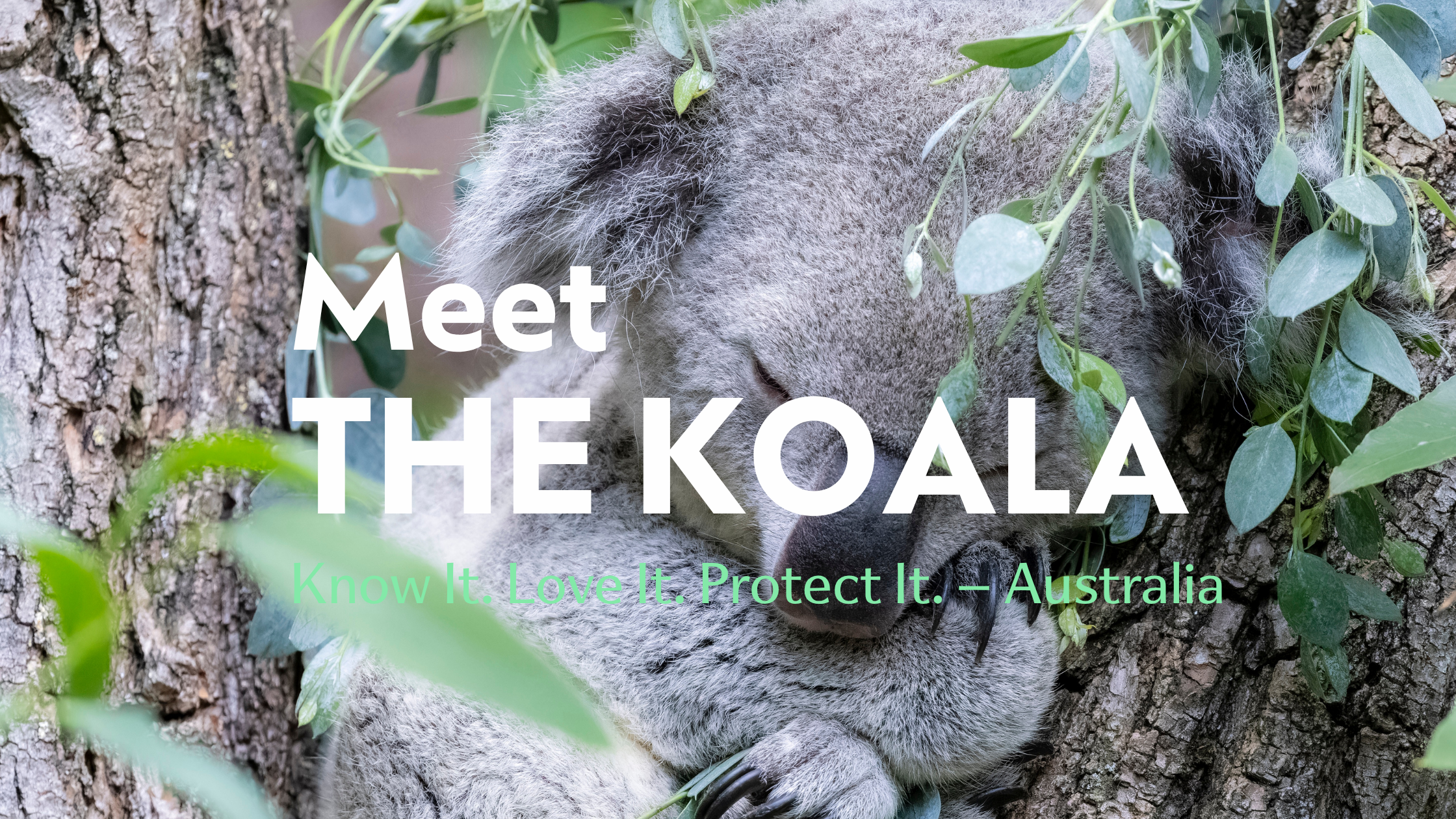
  • Meet the Koala (Phascolarctos cinereus)| Biodiverse Australia

    Meet the Koala (Phascolarctos cinereus)| Biodiverse Australia

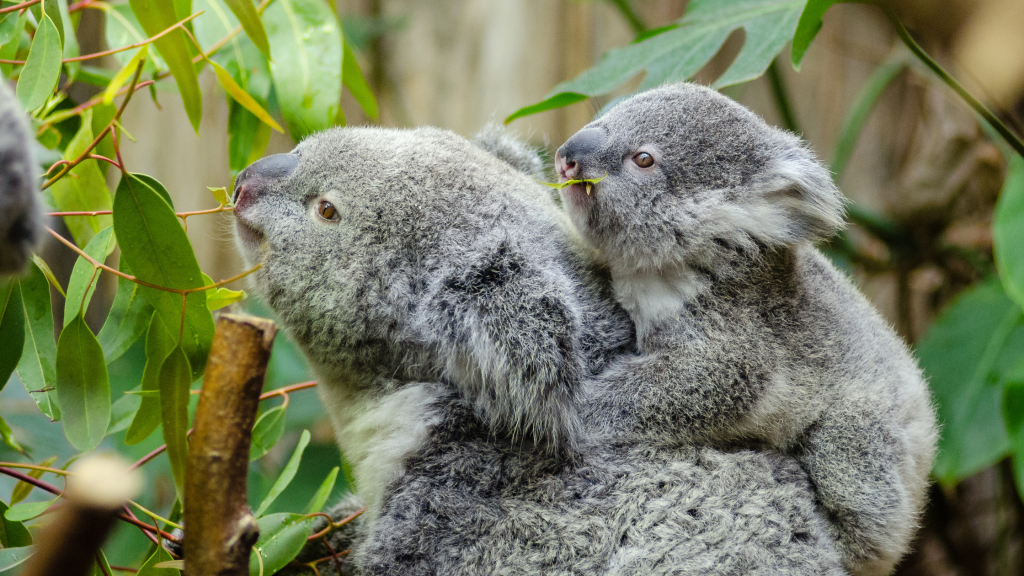
    One of Australia’s most iconic animals, the Koala is a tree-dwelling marsupial known for its fluffy ears, button nose and calm demeanour.

    Found in eucalyptus forests along Australia’s eastern and southern coasts, the Koala has become a global symbol of the country’s unique wildlife and the extraordinary species found nowhere else on Earth.

    It is a reminder that Australia’s biodiversity is both internationally celebrated and increasingly vulnerable.

    Why it matters

    Koalas play an important role in Australia’s forest ecosystems.

    🌿 They are closely linked to the health of eucalyptus forests, relying on these habitats for both food and shelter

    🌿 Their presence can indicate the health and connectivity of native forest ecosystems

    🌿 They help draw attention to the importance of protecting Australia’s biodiversity-rich landscapes

    🌿 Their conservation supports the protection of countless other species that share their habitat

    As an iconic umbrella species, protecting koalas also helps safeguard the broader ecosystems on which many native plants and animals depend.

    Fun facts

    πŸ€“ Koalas can sleep for up to 20 hours a day to conserve energy from their low-nutrient eucalyptus diet

    πŸ€“ Their sharp claws and strong limbs make them expert tree climbers perfectly adapted to life in the canopy

    πŸ€“ Every Koala has a unique nose pattern, much like a human fingerprint

    πŸ€“ Despite their cuddly appearance, koalas are highly specialised animals with diets limited to a relatively small number of eucalyptus species

    A deeper reflection

    The koala challenges the assumption that familiar and beloved species are automatically secure.

    Despite being one of Australia’s most recognised animals, koala populations continue to face significant pressures from habitat loss, land clearing, road mortality, bushfires and climate change.

    Their decline highlights how quickly even iconic species can become vulnerable when the ecosystems they depend upon are degraded.

    In a country with more than 600,000 native species, many found nowhere else on Earth, the Koala reminds us that biodiversity conservation is not just about protecting rare species, but also ensuring that our most treasured wildlife remains part of Australia’s future.

    How we care for eucalyptus forests today will shape whether future generations inherit a landscape that still echoes with the presence of this national treasure.

    From Wonder to Action

    Learn & understand

    Explore how biodiversity, climate, and land systems are deeply connected through our workshops with People For Nature.

    Create your Nature Oasis

    Plant native species to restore habitat and support the insects, birds and wildlife that depend on them.

    Join citizen science

    Record native species around you on iNaturalist and contribute to real conservation data.

    (Special thanks to Simon Andrews, Ambassador for People For Nature, for helping shape this story)


    References:

  • Meet our ambassador: Mandy Chan

    Meet our ambassador: Mandy Chan

    Climate Fresk Facilitator, NSW

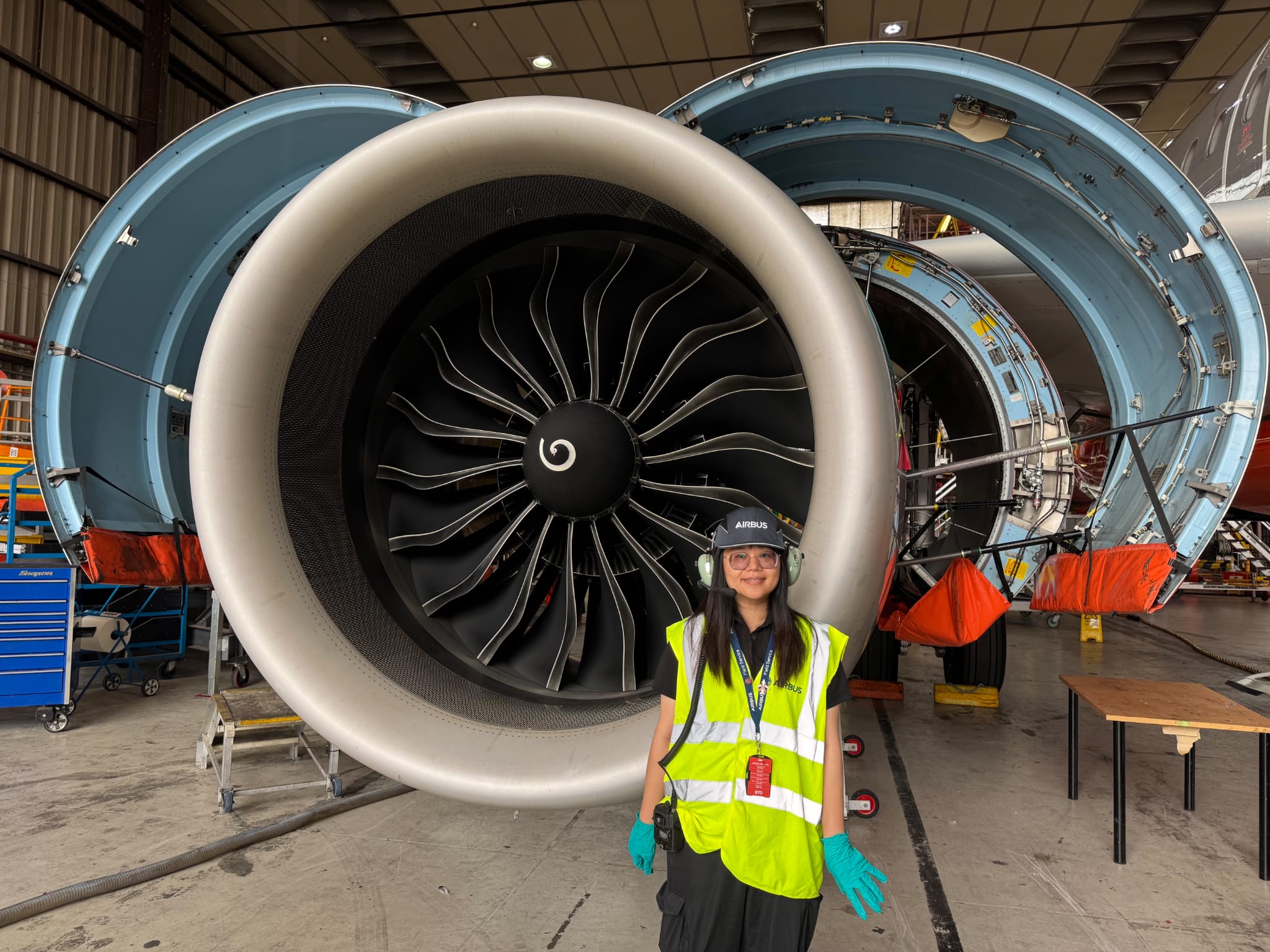
    Mandy started her Climate Fresk journey at her current workplace, Airbus, in May 2024. She decided to become a facilitator herself as she felt she could do more to expand climate literacy within her company and among the general public.

    As a facilitator within her company, Mandy admits it can be challenging to stay up to date with two sets of materials: one pack of Climate Fresk cards focusing on the aviation industry, and one for the general public. At the same time, she is excited about the number of people her workshops can reach.

    I believe that increasing climate literacy in Australia is incredibly important. By being a part of People For Nature, I’m able to reach more people from all walks of life.

    Mandy joined People For Nature as an ambassador and is excited to continue spreading climate education among everyday citizens, and within her workplace.

    I’m excited to be a part of People For Nature, as we not only work on climate education but also advocate biodiversity conservation and rescue activities for our precious native wildlife.

    🀝  Connect with Mandy on LinkedIn. πŸ’š

  • When citizens come together during COP: Insights from 2025

    When citizens come together during COP: Insights from 2025

    According to Carbon Brief and UNFCCC registration data, Australia had 494 delegates registered to attend COP30 in Brazil.

    Travel from Australia alone likely generated at least 1,500 tonnes of COβ‚‚ from flights β€” or over 3,000 tonnes COβ‚‚e when accounting for the full climate impact of aviation. While these global summits play a critical diplomatic role, they also highlight the opportunity to reimagine climate engagement through more local, decentralised, and low-carbon approaches.

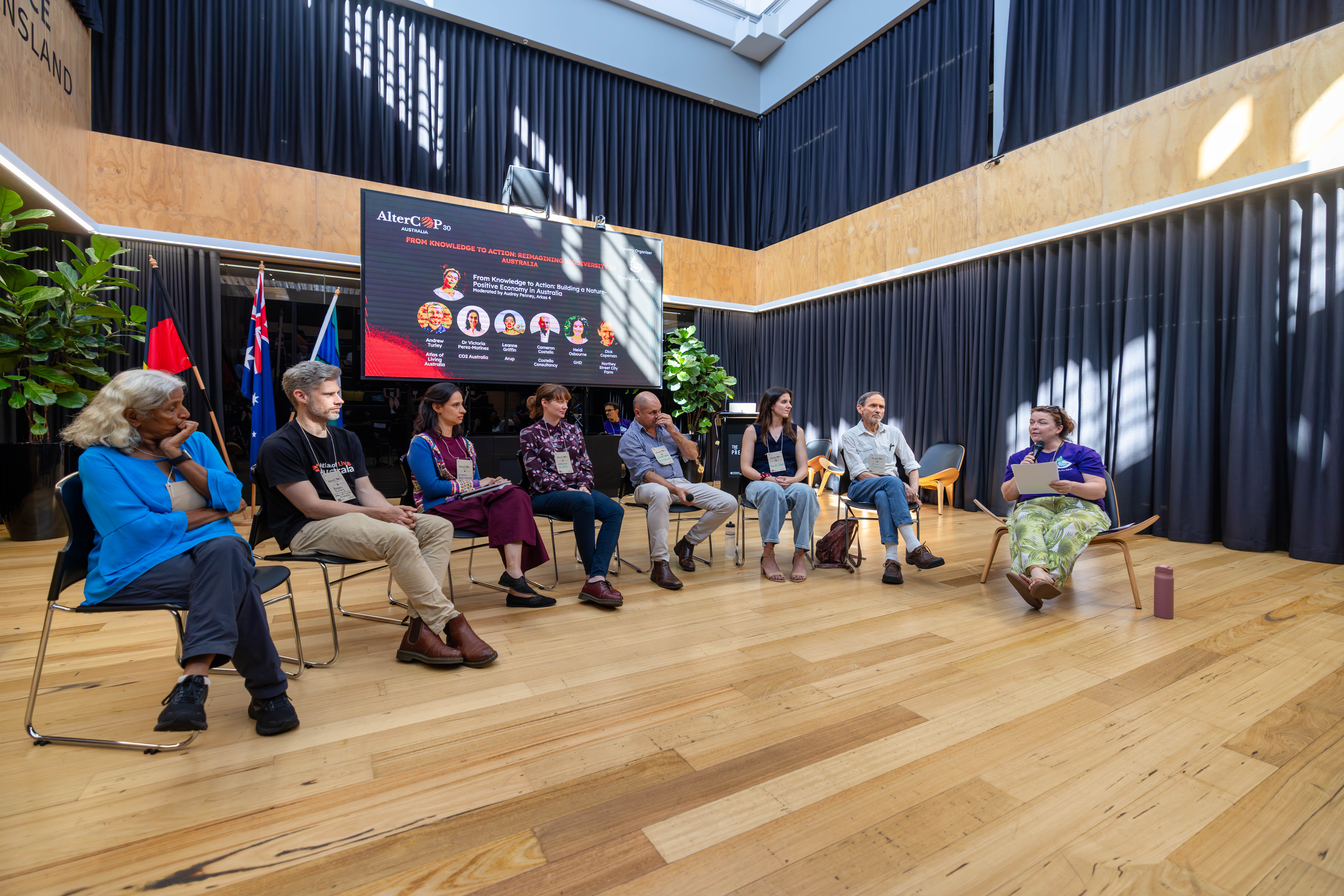
    This is why we took on the challenge of organising a Citizen COP β€” bringing together more than 1,400 citizens across Australia* to reflect, learn, and act on the pressing environmental challenges of our time, all while maintaining a minimal footprint. This locally led approach shows that climate engagement and collaboration can happen at scale, with significantly lower impact.

    πŸ‘‰ No Flights | Minimal Waste | No Jargon | Real Conversations

    By raising awareness, forging alliances, and building collaboration across the country, participants shared not only priorities and policy ideas, but also personal reflections on hope, agency, and collective action.

    Top Environmental Priorities

    Three key areas stood out:

    Climate & Energy:

    • Decarbonise electricity,
    • Phase out fossil fuel subsidies
    • Scale renewable energy

    Biodiversity & Nature:

    • Protect ecosystems
    • Restore degraded landscapes

    Circular Economy & Accountability

    • Reduce waste
    • Embed sustainable production
    • Hold businesses and governments accountable

    Citizen-Informed Climate Roadmap

    From discussions, participants co-created a citizen-informed roadmap to guide climate action in Australia:

    1. Just Transition & Equity

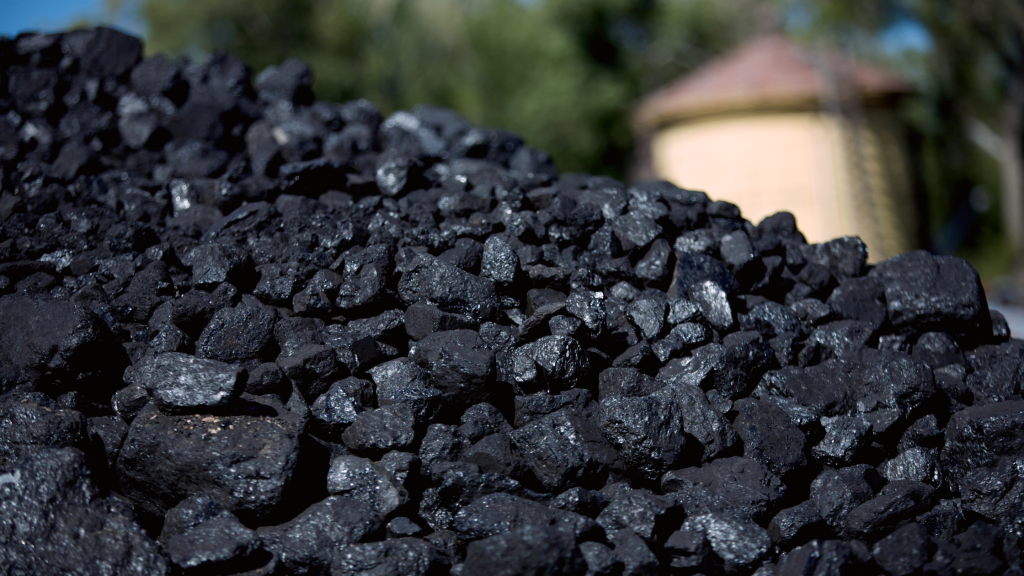
    • Fair climate action must support coal-dependent towns and vulnerable communities.
    • Reskilling, economic diversification, and equitable access to green infrastructure are essential.

    2. Practical Decarbonisation

    • Citizens value actionable solutions, toolkits, and real-life case studies.
    • Key focus areas: emissions reduction, sustainable transport, agriculture, and waste minimisation.

    3. Integrated Environmental Outcomes

    • Renewable energy must be balanced with biodiversity protection, water security, and waste reduction.
    • Co-benefits across environmental domains were highlighted as critical.

    4. Policy & Regulatory Levers

    • Legislative reform (EPBC Act, Corporations Act) and market incentives are crucial.
    • Policies should prioritise sustainability and enable practical, citizen-led action.

    5. Communication & Narrative

    • Storytelling and success stories inspire engagement.
    • Combating misinformation and sharing hopeful, practical narratives is key to sustaining momentum.

    6. Sustainable Cities & Liveability

    • Human-scale urban planning, equitable public transport, and water-sensitive design are priorities.
    • Circular economy approaches can enhance urban liveability.

    7. Systemic Thinking

    • Citizens emphasised the interconnectedness of climate, biodiversity, health, technology, and economics.
    • Cross-sector alliances and integrated strategies are necessary for lasting impact.

    Actions Participants Plan to Take

    Attendees showed a real commitment to turn knowledge into action. Here are the categories of actions we saw from their pledges:

    • Educate and advocate for sustainability in communities and workplaces.
    • Reduce personal environmental footprints through everyday choices.
    • Join or lead local initiatives, workshops, and citizen science projects.
    • Advocate for sustainable practices in workplaces and policy spheres.

    Voices from AlterCOPβ€―30 Australia

    β€œTo tackle climate change, we need more than new technologies β€” we need new systems and new stories… Positive narratives and positive tipping points are essential to unlocking hope and action.”
    β€” Dr Leila Alem, UTS

    β€œBeing surrounded by First Nations leaders, changemakers, scientists, business innovators, and community organisers left me feeling energised and hopeful… Everyday Australians have real agency in the climate conversation.”
    β€” Janelle Court, Griffith University

    β€œI thought I was β€˜just a volunteer,’ but I realised I’m part of a broader climate movement… Being surrounded by people who practise active hope reminded me how powerful collective action truly is.”
    β€” Aiko Nagae, Student

    β€œThe Youth Climate Changemakers Summit was a powerful reminder of just how deeply young people care… They envision a future guided by Indigenous knowledge, deeply connected to community and nature, and powered by clean, renewable energy.”
    β€” Carole Defago

    β€œPeople arrive curious, and they leave with a shared mental model of the climate system, a clearer sense of agency, and a foundation for meaningful change.”
    β€” Tom Foster, EcoProsper Consulting


    A sincere thank you to all the people and organisations who believe in citizen-powered change. Together, you are proving that meaningful transformation starts with informed, engaged communities.

  • Adapting to Climate Change workshop

    Adapting to Climate Change workshop

    From Awareness to Adaptation: Helping People and Organisations Prepare for a Changing Climate

    For many years, climate conversations have focused primarily on mitigation β€” reducing emissions, transitioning energy systems, and limiting future warming. These efforts remain essential.

    But as climate impacts intensify across Australia and around the world, another conversation is becoming unavoidable: how do we adapt to the changes already underway?

    At People For Nature, our work has always been about transforming knowledge into action. Through Climate Fresk, we help people understand the physical science behind climate change. The next natural step is helping individuals, organisations, and governments move from understanding climate change to preparing for it.

    This is why we offer the Adapting to Climate Change workshop, a science-based, collaborative experience designed to build climate confidence and practical adaptation thinking.


    Why Adaptation Matters Now

    Climate change is no longer a distant risk. Across Australia we are already experiencing its effects β€” more intense heatwaves, floods, droughts, bushfires, and pressure on ecosystems and infrastructure.

    Yet many organisations feel stuck between awareness and action. Climate risks can feel complex, uncertain, or overwhelming. Teams may understand the problem but struggle to translate it into meaningful decisions.

    Adaptation provides a pathway forward.

    Rather than asking only how to reduce impact, adaptation asks:

    • How will climate change affect our people, operations, and communities?
    • Where are we most vulnerable?
    • What actions strengthen resilience rather than create unintended consequences?
    • How do we adapt in ways that also support nature and society?

    Adaptation is not about fear. It is about preparedness, agency, and collective intelligence.


    A Workshop Designed for Clarity and Action

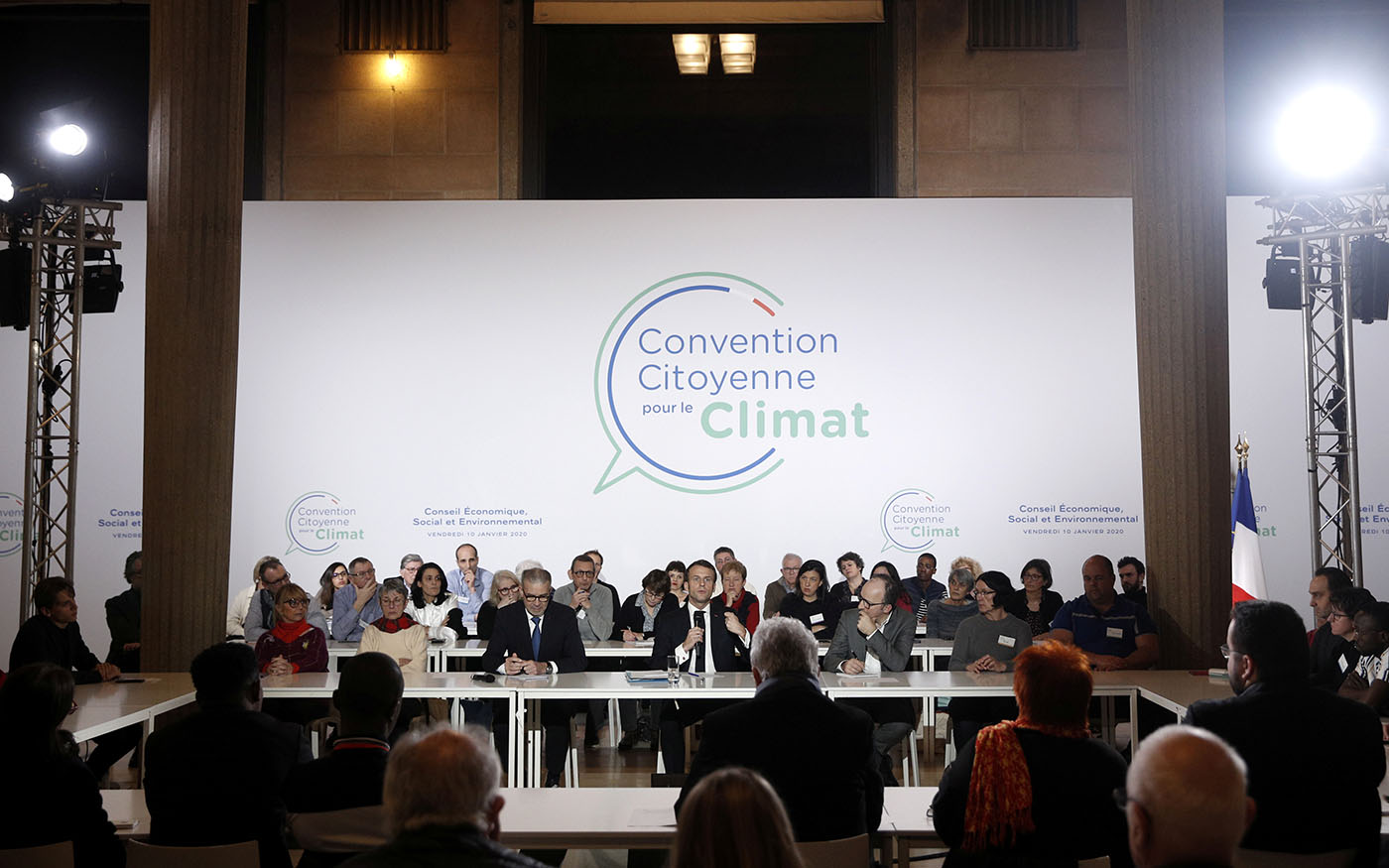
    Originally developed in France as Les Ateliers de l’Adaptation au Changement Climatique, this workshop complements existing climate education tools by focusing on decision-making in a changing world.
    The experience helps participants:

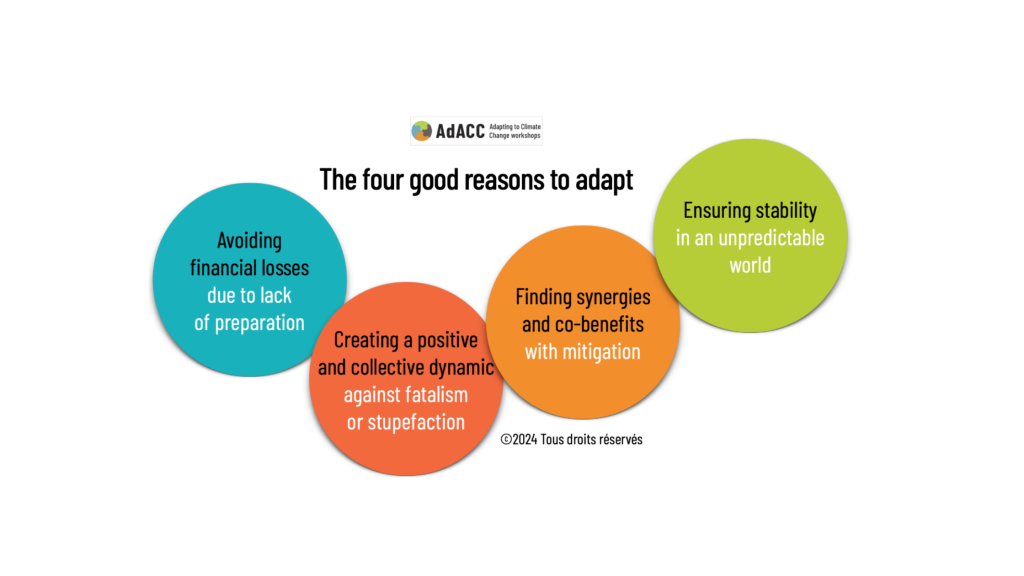
    • Understand the difference between mitigation and adaptation
    • Explore climate risks and vulnerabilities in real-world contexts
    • Evaluate adaptation options and avoid maladaptation
    • Develop a shared language across teams
    • Co-design practical and strategic responses relevant to their own context

    The workshop is highly interactive and collaborative, creating a psychologically safe space where participants can explore uncertainty without blame or overwhelm.

    This approach strongly aligns with People For Nature’s philosophy: learning happens best when people think together.


    From Climate Literacy to Climate Capability

    Over the past years, we have seen thousands of participants leave workshops with a deeper understanding of climate and biodiversity challenges. Increasingly, the next question we hear is:

    β€œSo what do we do now?”

    Adaptation answers that question.

    It moves organisations from awareness to capability. It helps teams integrate climate thinking into strategy, operations, and long-term planning. And importantly, it reconnects climate action with human experience β€” how we live, work, and care for places.

    Adaptation is also inseparable from nature. Healthy ecosystems reduce climate risks, support water systems, cool cities, and strengthen community resilience. Nature-based solutions therefore sit at the heart of meaningful adaptation pathways.


    Building Climate Confidence in Australia

    Australia faces some of the most acute climate risks globally, but also holds extraordinary expertise across science, business, local communities, and First Nations knowledge systems.

    What is often missing is not knowledge β€” but shared understanding and spaces for collective sense-making.

    By bringing this workshop to Australia, People For Nature aims to contribute to building that shared capacity. Whether working with businesses, local governments, community organisations, or leadership teams, the goal is the same:

    to move from climate anxiety to informed, collective action.

    Because adaptation is not a technical exercise alone. It is a social process β€” one that requires collaboration, creativity, and courage.


    Looking Ahead

    Climate change will continue to shape the coming decades. The question is not whether change will happen, but how prepared we choose to be.

    If you are interested in bringing the Adapting to Climate Change workshop to your organisation or community, we would love to start the conversation.

  • Get involved with People For Nature

    Get involved with People For Nature

    At People For Nature, we believe everyone has a role to play in shaping a future where people and nature thrive together.

    Whether you have time, energy, skills, or funds to give β€” there’s a meaningful way for you to get involved.

    Here’s are a few ways you can join our movement:

    1. Become an Ally 🌱

    Allies are people and organisations who participate in one of our workshops, events, or community initiatives. Whether you join a Climate Fresk, Biodiversity Collage, Circular Economy Collage, or one of our nature-based experiences, you are already part of the change.

    No ongoing commitment β€” just curiosity, open-mindedness, and a willingness to learn.

    🎟️ -> ATTEND A WORKSHOP:

    https://collections.humanitix.com/people-for-nature-literacy-workshops

    2. Become an Ambassador

    Ambassadors are trained and active volunteers who generously contribute their time and energy to support our purpose in their local community and within the organisation.

    From learning and facilitating workshops to supporting events, securing and delivering projects, fundraising, and growing our community, our ambassadors are at the heart of our grassroots power.

    This is a volunteer role and can be as flexible or involved as your time allows.

    As representatives of People For Nature, Ambassadors are expected to comply with our Code of Conduct. Ambassadors are also expected to accept personal accountability for their conduct and contribute to safe, collaborative spaces β€” whether online or in person.

    3. Join our Core Team 🌺

    Core Team members are committed leaders who help guide the strategic direction of People For Nature. This includes Board Members, Executive Leads, Comms Lead, Program Leads, Regional Leads.

    All team members are required to:

    • Sign and adhere to our Conflict of Interest Policy, declaring any actual, potential, or perceived conflicts of interest.
    • Avoid direct competition with People For Nature’s activities.
    • Uphold our values and purpose in all engagements.
    • Adhere to our Code of Conduct, acting with integrity, respect, and accountability.

    This role requires dedication, accountability, and shared ownership of our purpose. Core Team members may hold either volunteer or remunerated positions, depending on the nature of the role and available funding.

    4. Partner With Us 🌻

    Partners are organisations, businesses, educational institutions, and networks that support our Theory of Change through aligned collaboration. This can include financial contributions, pro bono expertise, shared resources, or joint initiatives.

    Partnerships take many forms β€” from co-hosted events and capacity-building support to strategic programmes and innovation projects β€” depending on shared goals and impact opportunities.

    All partnerships are established under agreed terms, aligned with project needs and available funding. To ensure clarity, transparency, and mutual commitment, we formalise our collaborations through a partnership agreement.

    We value partnerships grounded in purpose, trust, and a shared commitment to creating meaningful, long-term impact for people and nature.

    Get in touch >

    5. Donate🌾

    Donors are individuals, organisations, or businesses who contribute funds to sustain our work. As a registered charity with Deductible Gift Recipient (DGR) status, donations to People For Nature are tax-deductible, providing a valuable benefit to our supporters. This status also strengthens our eligibility for grants and funding opportunities.

    Your donation helps us reach more people with climate and biodiversity and other planetary boundaries education, deliver high-impact programs, and grow our team sustainably. Every dollar helps us plant the seeds of change. Regular or one-off donations are welcome.

    To donate, visit https://www.blog.peoplefornature.org.au/donate

  • Our 2025 Impact Report is here!

    Our 2025 Impact Report is here!

    2025 was a big year for People For Nature. Together with our amazing community, we educated thousands of Australians on climate and biodiversity, ran hands-on workshops, and inspired action for nature.

    From citizen science projects to corporate partnerships, our collective efforts are making a real difference β€” and we want to share it with you.

    Dive into our 2025 Impact Report to see the stories, the numbers, and the people driving change. Let’s celebrate what’s possible when people power meets nature.

    -> Read the Full Report


    We turn knowledge into action by making science accessible, empowering citizens, and building lasting impact for nature.

    Our mission is to empower 30,000 Australians to take action for nature by 2030.

  • Meet our ambassador: Gaye Foster

    Meet our ambassador: Gaye Foster

    Climate Fresk Facilitator, QLD

    As a psychologist Gaye believes that our wellbeing is inseparable from the health of the Earth.

    I want to help people reconnect with the natural world and nurture the emotional resilience and care needed to protect our planet in the face of climate change.

    A Climate Fresk facilitator, Gaye played a key part in bringing the Youth program for AlterCOP 30 to life in Brisbane in November 2025.

    Being part of a community helps tackle climate change by turning individual concern into collective action – sharing knowledge, changing habits together, and building the momentum needed for real, lasting impact and change.

  • Your Nature Oasis is a citizen science hotspot

    Your Nature Oasis is a citizen science hotspot

    Why People For Nature encourages every Oasis to use iNaturalist

    At People For Nature, we believe that protecting nature starts with connection β€” and that everyday people play a vital role in restoring and understanding the living world around them.

    That’s why we encourage everyone creating a Nature Oasis to use iNaturalist: a simple, joyful way to turn your patch of nature into a living contribution to science.

    What is iNaturalist?

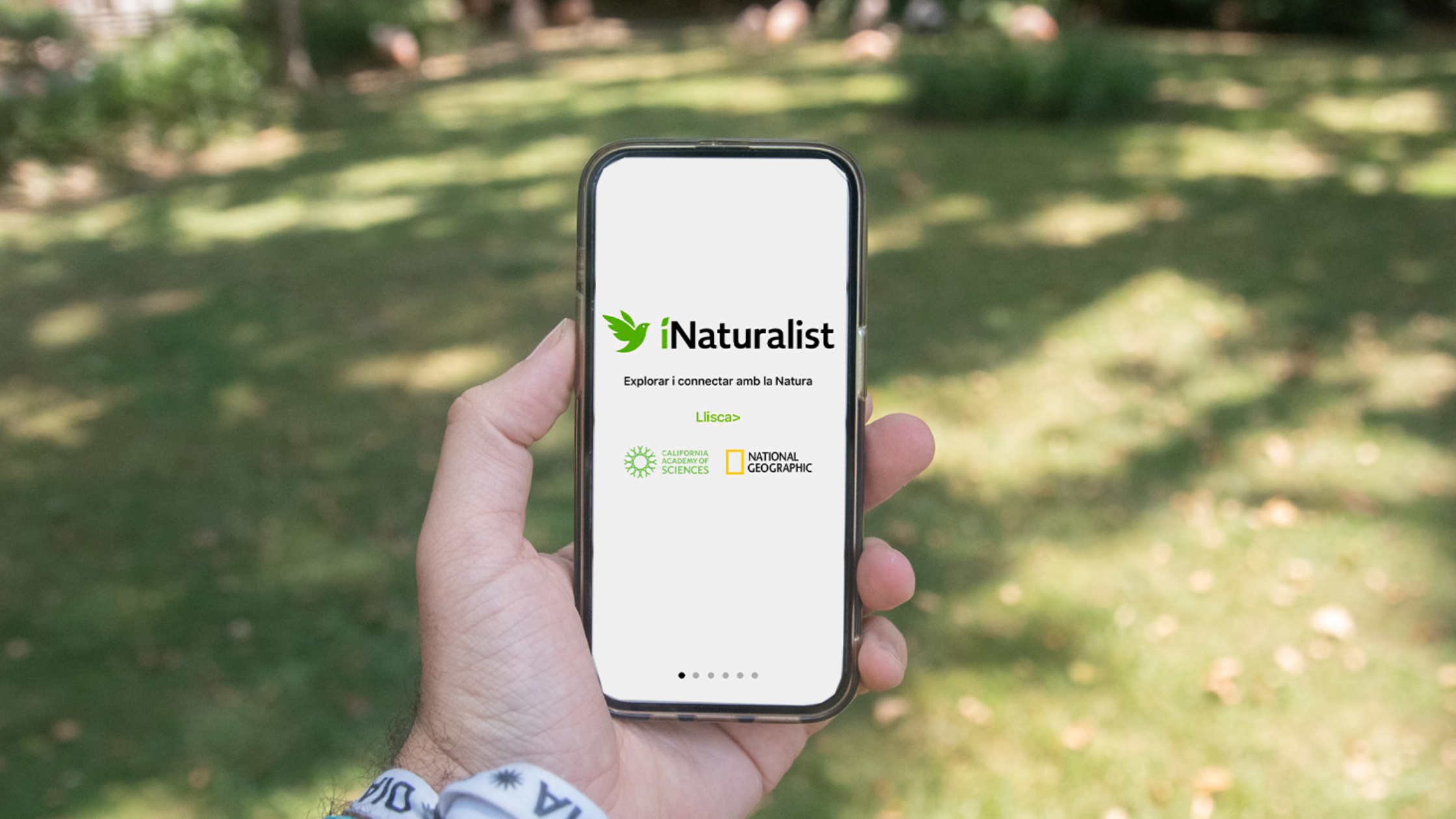
    iNaturalist is a free app that allows you to photograph plants, animals and fungi, upload your observations, and help build one of the world’s largest biodiversity databases.

    Your sightings don’t just stay on your phone β€” they become real data, used by scientists, conservation groups and decision-makers to better understand biodiversity and how it’s changing.

    Why iNaturalist belongs in every Nature Oasis

    Nature Oases are designed to restore habitat, invite biodiversity back, and reconnect people with the natural world. iNaturalist helps make those changes visible.

    By using the app, you can:

    • 🌿 see what species are already present in your Oasis
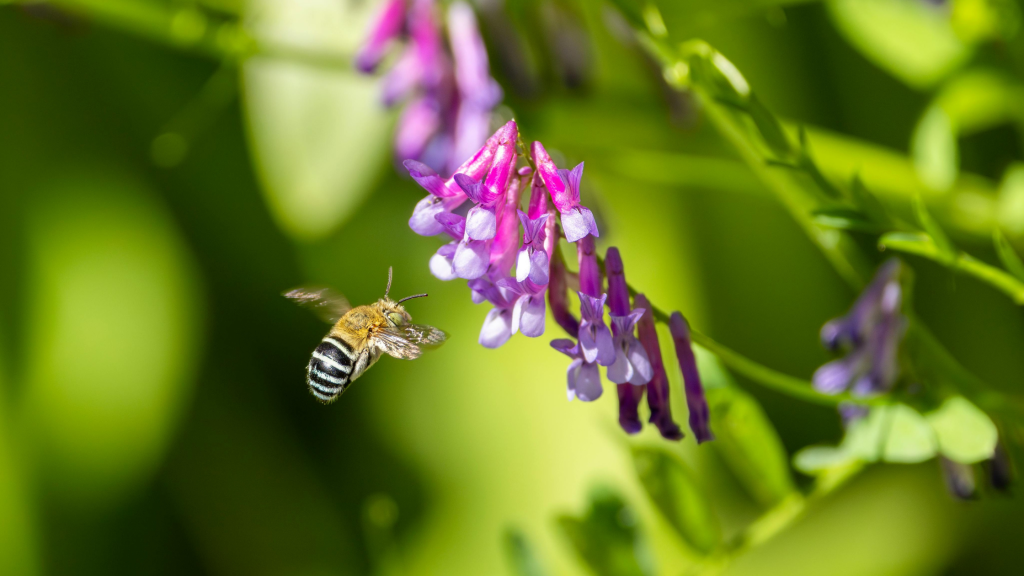
    • 🐝 track pollinators, birds and other wildlife as habitat improves
    • πŸ“ˆ observe changes over time as your Oasis grows and matures
    • 🧩 contribute valuable local data to national and global research

    Every observation strengthens the case for nature-positive action β€” starting right where you live.

    Citizen science that’s genuinely fun

    You don’t need to be a scientist. You don’t need special equipment.
    All you need is curiosity.

    Using iNaturalist often feels like:

    • a nature scavenger hunt
    • a shared learning experience with kids, friends or neighbours
    • a moment of wonder when you realise how much life is around you

    And the iNaturalist community is there to help identify species, answer questions and celebrate discoveries with you.

    From individual Oases to collective impact

    One Nature Oasis matters.
    Thousands of Nature Oases? That’s a movement.

    When many People For Nature participants use iNaturalist, we begin to:

    • build a clearer picture of biodiversity across communities
    • support citizen-led conservation and monitoring
    • strengthen Australia’s contribution to global biodiversity knowledge
    • show that people power can make nature visible β€” and valued

    This is climate and biodiversity action grounded in place, care and participation.

    How to get started

    1. Download iNaturalist (free on iOS and Android)
    2. Step into your Nature Oasis
    3. Photograph what you see β€” plants, insects, birds, fungi
    4. Upload your observation and let the community help identify it

    That’s it. You’re now part of a global citizen science network β€” through People For Nature.

    Because every Nature Oasis tells a story.
    And with iNaturalist, we can make sure those stories count.

  • COP30: what did it really deliver for nature – and why it matters for Australia

    COP30: what did it really deliver for nature – and why it matters for Australia

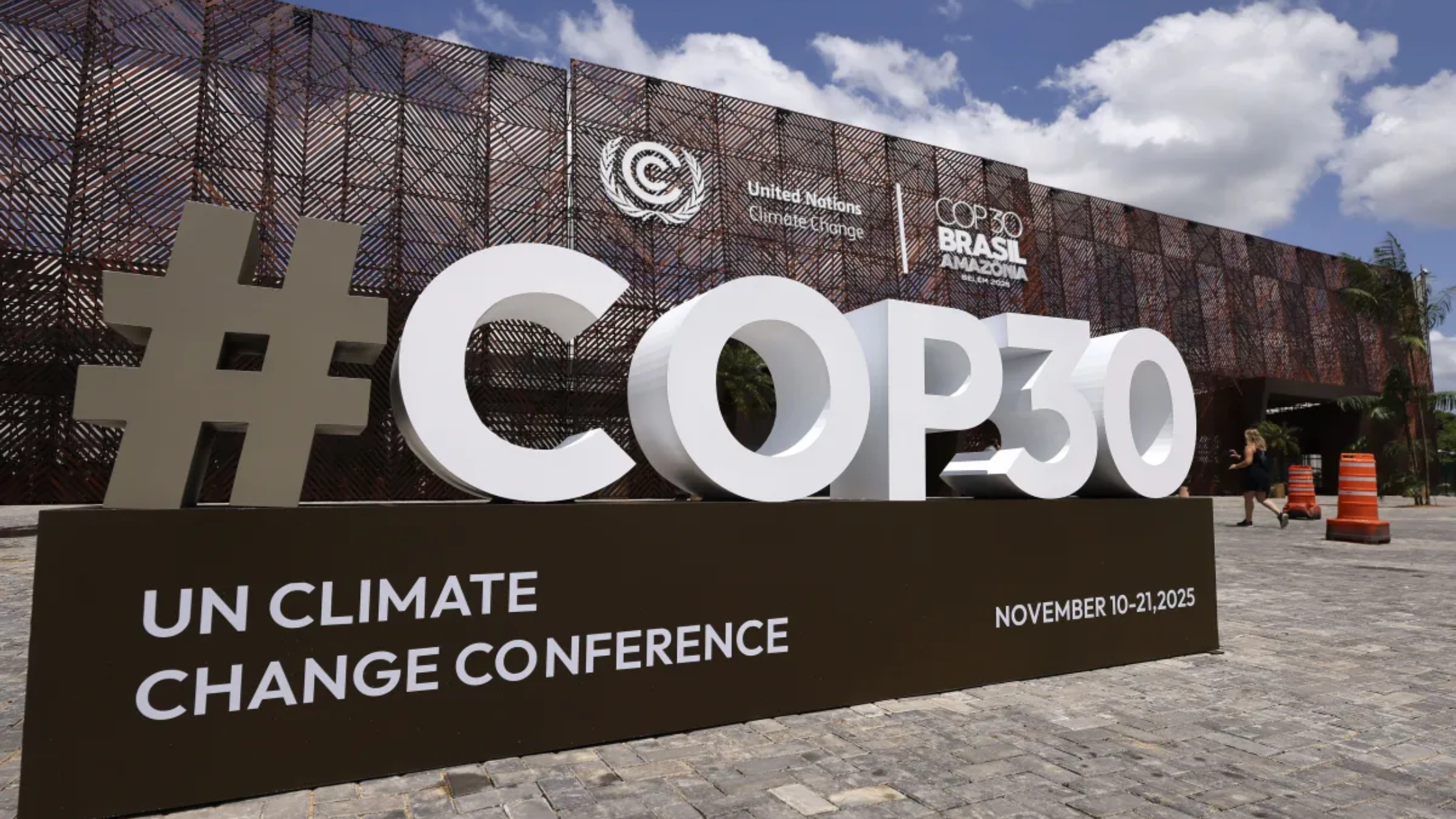
    Held in BelΓ©m, at the gateway to the Amazon, COP30 was widely framed as β€œthe COP of nature”. Expectations were high: forests, biodiversity, food systems and Indigenous stewardship were meant to sit at the heart of climate action. The reality was more mixed.

    So what actually came out of COP30 for nature β€” and what does it mean for Australia?

    Nature recognised, but not prioritised

    The main outcome of COP30 was the Global mutirΓ£o (meaning β€œcollective effort”), which highlights the need to better connect climate action with biodiversity, land and ocean protection. The language is strong: nature is clearly recognised as essential to achieving the Paris Agreement goals.

    But recognition didn’t translate into concrete commitments. Despite being hosted in the world’s most biodiverse country, no specific global action or dedicated funding for halting deforestation was agreed β€” a major missed opportunity given forests’ critical role in climate mitigation, adaptation and biodiversity protection.

    For Australia, a country facing accelerating land clearing, ecosystem collapse and species extinction, this gap is particularly concerning.

    Deforestation: words without a roadmap

    More than 90 countries supported the idea of a global roadmap to halt and reverse deforestation by 2030. However, consensus wasn’t reached, and the proposal was pushed outside the formal UN process.

    While Brazil signalled it would continue working on a deforestation roadmap ahead of COP31, there is still no binding global pathway. For Australia β€” one of the world’s deforestation hotspots β€” this reinforces the need for stronger domestic action, not just international rhetoric.

    Food systems and agriculture: progress delayed

    Agriculture and food systems were discussed under the Sharm el-Sheikh Joint Work on Agriculture, with growing recognition of:

    • the links between food systems and biodiversity
    • agroecology and regenerative approaches
    • the limited share of climate finance going to agriculture
    But disagreements over language meant no final decision was adopted, pushing outcomes to 2026. For Australia, where climate impacts on food security are already being felt, this delay matters.

    Growing momentum on climate–nature synergies

    One of the more positive signals from COP30 was the increasing focus on aligning climate, biodiversity and land agendas. New initiatives launched during the COP aim to better coordinate the three Rio Conventions (climate, biodiversity, desertification), improve policy coherence, and track nature-positive action and finance.

    This aligns strongly with Australia’s own commitments under the Global Biodiversity Framework and its national climate targets β€” but only if translated into joined-up policies and investment at home.

    Nature finance: promising ideas, familiar risks

    The launch of the Tropical Forest Forever Facility (TFFF) β€” a new fund designed to reward countries for protecting tropical forests β€” signalled growing interest in nature-positive finance. While innovative, it also raised concerns around greenwashing, equity, and whether funds will genuinely reach ecosystems and Indigenous communities.

    For Australia, this highlights a broader challenge: scaling nature finance without losing integrity, while ensuring public funding also plays a strong role.
    What COP30 means for Australia

    COP30 reinforced a clear message: nature is finally being talked about β€” but still not acted on at scale.

    For Australia, the implications are clear:

    • Climate and biodiversity can no longer be treated separately
    • Land clearing, ecosystem restoration and nature-based solutions must be central to climate policy
    • International leadership must be matched by credible domestic action

    With COP31 on the horizon and global attention increasingly on nature, the real test will be whether Australia turns alignment into action β€” for climate, for biodiversity, and for future generations.

    Conclusion

    In a year when nature was meant to finally take centre stage at the global climate talks, COP30 delivered important recognition β€” but fell short on concrete actions that match the scale of the interlinked climate and biodiversity crises. For Australia, the outcomes underscore the urgency of moving beyond dialogue to ambitious policy, funding and on-the-ground implementation that protects ecosystems, supports First Nations leadership, and integrates nature into our national climate response.

    That’s exactly why we organised AlterCOP30 β€” to ensure that all Australians, especially those whose voices are too often excluded from formal climate and biodiversity negotiations, were heard and included in these critical discussions. By bringing together citizens, community leaders, scientists and storytellers, AlterCOP30 created space for perspectives, values and solutions that reflect Australia’s unique landscapes and communities.
    We’re grateful to Ateliers BiodiversitΓ© for their detailed insights on the outcomes of COP30 β€” their analysis helped shape our thinking and reporting. You can read their original piece here: https://www.ateliersbiodiversite.org/post/cop30-climat-quelles-retomb%C3%A9es-pour-la-nature.

    As the global climate and biodiversity agenda continues to evolve, it’s up to all of us β€” at local, national and international levels β€” to demand that commitments translate into action. Australia’s nature depends on it.

  • Our Code of Conduct

    Our Code of Conduct

    Our Commitment

    At People For Nature, we are committed to fostering a respectful, inclusive, and purpose-driven environment for everyone involved β€” whether you are an ally, ambassador, donor, contractor, partner, or team member.

    This Code of Conduct outlines the principles that guide how we work together to reconnect people with nature and empower meaningful action for climate and biodiversity.

    β€œAs part of People For Nature, I stay grounded in the reality of the environmental challenges we face, but I choose to act with stubborn optimism. I work collaboratively, valuing diverse perspectives and collective intelligence to drive systemic change. I lead with integrity and am committed to openness and transparency in all I do.”

    This code of conduct follows the EIANZ Code of Ethics and Professional Conduct.


    1. Respect and Inclusion

    We recognise that protecting nature requires diverse voices and lived experiences.
    We listen deeply, value differences, and co-create solutions grounded in empathy.

    • We respect all people β€” regardless of background, identity, ability, age, gender, sexuality, race, or belief.
    • We promote an inclusive, welcoming environment where everyone feels seen and valued.
    • We communicate with care and compassion, always assuming positive intent.
    • We tap into the wisdom of communities, scientists, and citizens to protect and regenerate nature.

    2. Integrity and Transparency

    We act with honesty and integrity to build trust, strengthen relationships, and align our actions with our mission.

    • We are transparent in our decisions, communications, and use of resources.
    • We declare any potential or perceived conflicts of interest.
    • We uphold the responsibilities of public trust as a values-led nonprofit organisation.

    3. Environmental Responsibility

    We strive to live the change we wish to see β€” embedding sustainability and regeneration in how we work and what we deliver.

    • We lead by example, making sustainable choices in daily operations and events.
    • We design programs that embed science-based, community-led responses to environmental challenges.
    • We minimise our footprint and maximise our impact β€” using digital-first communications, reducing travel, and hosting low-carbon events.
    • We champion urban greening, habitat restoration, citizen conservation, and sustainable consumption.

    4. Collaboration and Learning

    We believe transformative change happens when we come together, learn together, and act together.

    • We share knowledge freely and support one another’s growth through collaboration and mentorship.
    • We foster a culture of curiosity, creativity, and continuous learning.
    • We acknowledge contributions, celebrate collective achievements, and give credit where it’s due.
    • We partner with organisations, businesses, and policymakers that align with our mission and values.

    5. Safety and Wellbeing

    We care for one another and commit to safe, supportive spaces β€” both emotionally and physically.

    • We do not tolerate harassment, discrimination, bullying, or violence of any kind.
    • We support each other’s wellbeing and take action if we witness unsafe, harmful, or unethical behaviour.
    • We approach challenges with care and seek resolution through respectful dialogue.

    6. Responsible Representation

    Whether as a volunteer, partner, or team member, we represent People For Nature with professionalism and care.

    • We only speak on behalf of the organisation when authorised to do so.
    • We use our platforms and influence to uplift others and advocate for a just, regenerative future.
    • We lead by example and align our personal actions with our collective values.

    7. Confidentiality and Data Ethics

    We handle information with care and ensure the trust placed in us is protected.

    • We respect the confidentiality of sensitive information shared internally or by participants.
    • We collect, store, and use personal data responsibly and in line with relevant privacy laws.

    Accountability

    Everyone involved with People For Nature is expected to uphold this Code of Conduct. Breaches may lead to a review of involvement or removal from roles, depending on the severity and context of the issue.


    Raising Concerns

    If you witness or experience behaviour by any member of People For Nature β€” including Directors β€” that does not align with this Code or our organisational values, please report it in confidence to a member of the leadership team. We are committed to ensuring all concerns are addressed respectfully, fairly, and promptly.

    People For Nature’s Directors include Certified Environmental Practitioners (CEnvP), bound by the EIANZ Code of Ethics. If you believe that a co-founder or Director has breached this Code, you may lodge a confidential concern directly with the EIANZ using their online complaint form.


    Our Shared Responsibility

    This Code reflects who we are and what we stand for. When acting on behalf of or representing People For Nature, you are expected to uphold this Code and contribute to a culture of respect, care, and collective action for nature and people.

  • Meet the Sturt’s Desert Pea

    Meet the Sturt’s Desert Pea

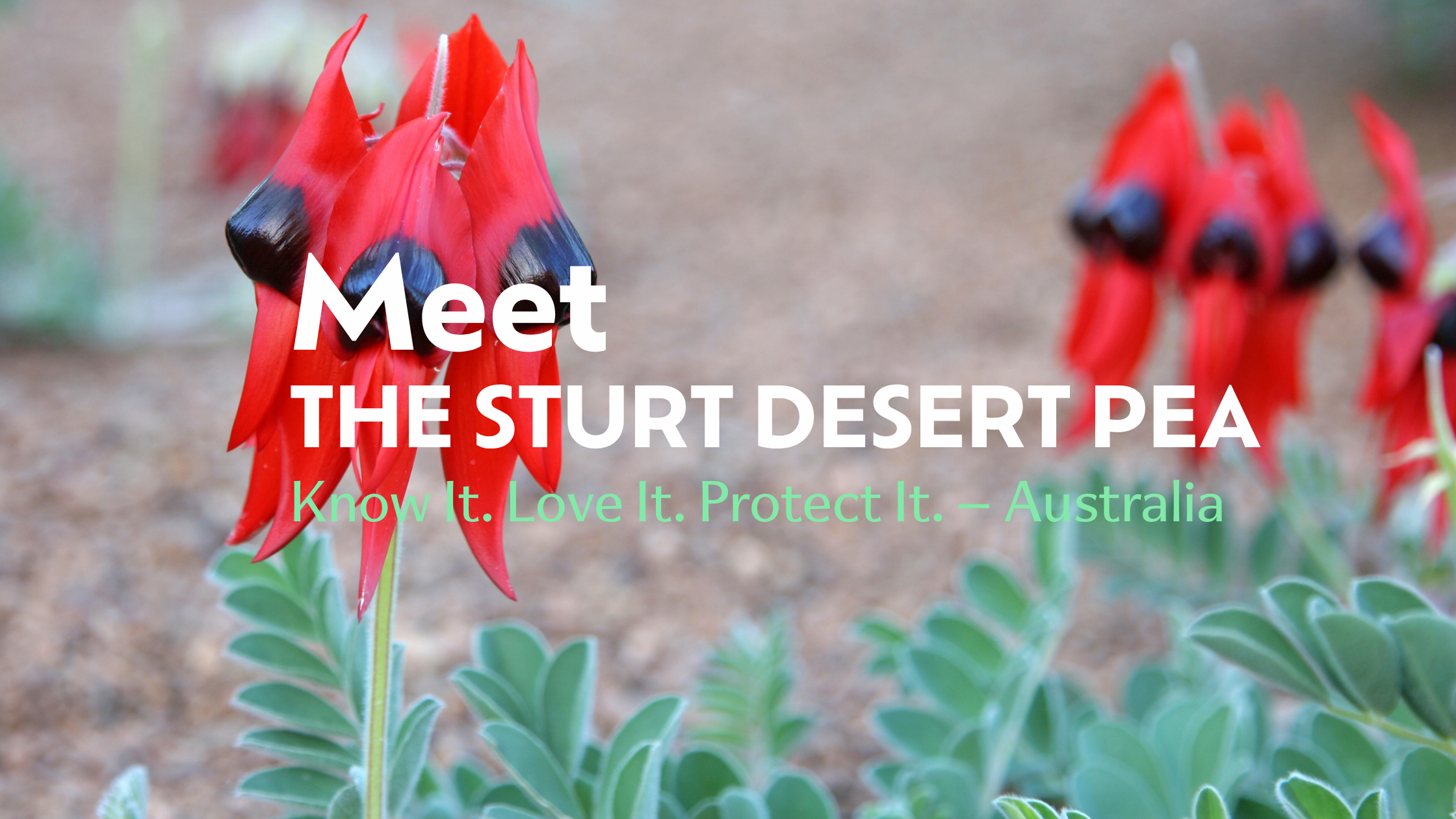
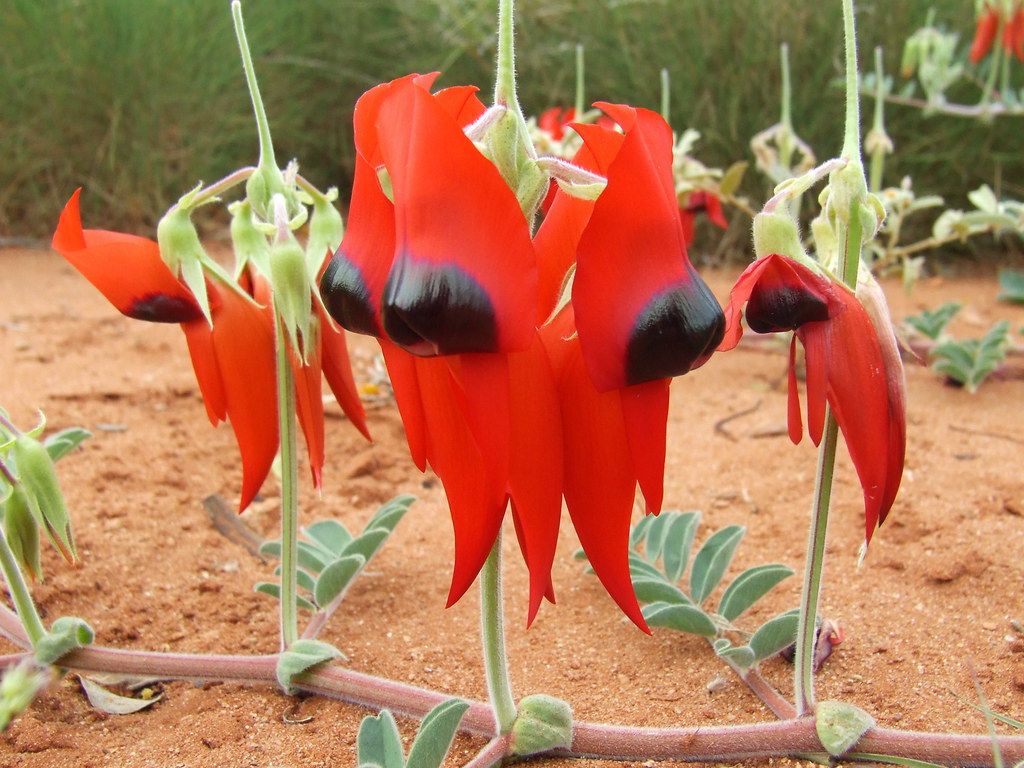
    One of Australia’s most striking native flowers, the Sturt’s Desert Pea is instantly recognisable for its vibrant red petals and distinctive black centres that stand out against the arid landscapes it calls home.

    Found in some of the country’s harshest environments, this iconic wildflower has evolved remarkable adaptations that allow it to survive and flourish where many other plants cannot.

    It is a powerful symbol of resilience and the extraordinary diversity of life that has adapted to Australia’s unique conditions.

    Why it matters

    The Sturt’s Desert Pea is an important part of Australia’s arid ecosystems.

    πŸ¦— It provides food and resources for native insects and other wildlife

    🌱 Its deep roots help it survive prolonged dry periods and contribute to the resilience of desert plant communities

    πŸ•ΈοΈ It forms part of the complex web of species that support healthy arid landscapes

    🦎 It highlights the remarkable adaptations that have evolved in response to Australia’s challenging environments

    Although deserts can appear harsh and lifeless, species such as the Sturt’s Desert Pea reveal them to be dynamic ecosystems rich in biodiversity.

    Fun facts

    πŸ€“ Sturt’s Desert Pea is the floral emblem of South Australia and symbolises resilience and survival in tough conditions

    πŸ€“ Its long roots allow it to access deep water reserves and bloom even during drought

    πŸ€“ The flower was named after nineteenth-century explorer Charles Sturt, who noted its beauty during his travels

    πŸ€“ Its vivid red and black flowers have made it one of Australia’s most iconic and celebrated native plants

    A deeper reflection

    The Sturt’s Desert Pea challenges the perception that Australia’s deserts are barren landscapes with little ecological value.

    Arid regions support an extraordinary range of specialised plants and animals that have evolved to survive under some of the most demanding conditions on Earth.

    Yet these ecosystems face growing pressures from habitat degradation, invasive species and a changing climate.

    In a country with more than 600,000 native species, many found nowhere else on Earth, the Sturt’s Desert Pea reminds us that biodiversity extends far beyond rainforests and coastlines and thrives even in the driest corners of the continent.

    How we care for Australia’s arid landscapes today will determine the future of many remarkable species that depend on them.

    From Wonder to Action

    Learn & understand

    Explore how biodiversity, climate, and land systems are deeply connected through our workshops with People For Nature.

    Create your Nature Oasis

    Plant native species to restore habitat and support the insects, birds, and wildlife that depend on them.

    Join citizen science

    Record native species around you on iNaturalist and contribute to real conservation data.

    (Special thanks to Simon Andrews, Ambassador for People For Nature, for helping shape this story)


    References:

  • Meet our ambassador: MΓ©lanie Ducros

    Meet our ambassador: MΓ©lanie Ducros

    VIC Community Lead

    Some people work on climate solutions in boardrooms. Others bring them to life in circles of conversation β€” where citizens become part of the solution.

    Meet MΓ©lanie Ducros.

    Originally from New Caledonia and now based in Victoria, MΓ©lanie is deeply committed to climate action across the Pacific region. Her work is grounded in a simple but powerful belief: when people are informed and empowered, they become a driving force for change.

    MΓ©lanie is a process, energy and environmental engineer, with nine years of experience working on international development projects across West and North Africa and the Indo-Pacific. Her work has focused on the intersection of renewable energy, sustainable water access and climate adaptation β€” where technical solutions meet real human needs.

    Today, she continues this journey through her work on energy transition with the French–Australian Indo-Pacific Centre for Energy Transition (FACET), helping shape conversations around a more sustainable future between France, Australia and the broader region.

    But one of her most meaningful contributions happens in a very different setting: a room full of people, markers on tables, and a Climate Fresk unfolding through shared discovery.

    She shares:

    β€œBeing an ambassador for People For Nature inspires me because I am convinced that citizen-led initiatives like P4N are essential to driving real change. Facilitating Climate Fresk workshops gives me the strong feeling that I am contributing to meaningful impact. It is also incredibly enriching β€” I always leave each workshop inspired and energised by the conversations and insights shared by participants. As ambassadors, we receive as much as we give.”

    This is what citizen-powered change looks like: not distant, not abstract β€” but shared, participatory, and deeply human.

    And it grows every time someone steps into the conversation.

    🀝 Connect with MΓ©lanie on LinkedIn πŸ’š

    .

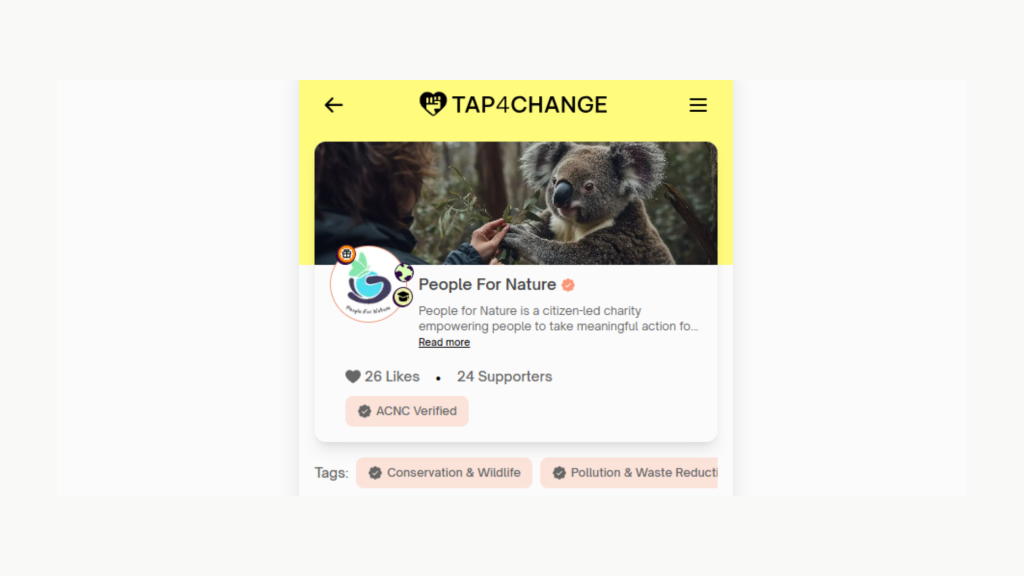
  • People For Nature on Tap4Change

    People For Nature on Tap4Change

    We’re thrilled to share that People For Nature is now listed on Tap4Change β€” a digital giving platform designed to make donating to impactful causes easier, more transparent, and more rewarding for everyday supporters.

    Tap4Change is all about bringing the impact ecosystem together. It’s a modern platform where people can discover, support, and track giving to charities they care about, and where organisations can build an impact profile and connect with purpose‑driven donors and supporters online.

    What is Tap4Change?

    Tap4Change is a user‑friendly online platform that helps:

    • People find and give to charities they care about
    • Charities share updates
    • Donors track their giving and feel confident about where their support goes

    Unlike traditional giving channels, Tap4Change aims to make donating digital, convenient, and transparent β€” especially for the next generation of changemakers who want clarity and connection when they give.

    How it works

    On Tap4Change, supporters can:

    1. Browse causes and charities that align with your values
    2. Create your own giving profile
    3. Make one‑off or recurring donations
    4. Track and share with friends, colleagues, and networks

    πŸ‘‰ You can see our Tap4Change profile here:
    https://tap4change.org/charities/people‑for‑nature

    Every donation β€” big or small β€” adds another voice and another action toward protecting nature and empowering people to make a difference.

  • Benevity Workplace Giving: Help Protect Australia’s Nature & Biodiversity

    Benevity Workplace Giving: Help Protect Australia’s Nature & Biodiversity

    The challenges facing our planet can feel overwhelming. Climate change, biodiversity loss and ecosystem decline are interconnected challenges that require collective action.

    At People For Nature, we believe that everyone has a role to play in creating a future where nature is central to every decision. Through education, citizen science and community action, we empower Australians to understand the challenges facing our planet and take meaningful steps to protect the natural world.

    Now, there is another way for employees and organisations to support this mission: workplace giving through Benevity.

    What is Benevity workplace giving?

    Benevity is a global corporate purpose platform that helps connect employees and businesses with charities and causes creating positive social and environmental impact.

    For businesses, workplace giving is more than a donation mechanismβ€”it is a way to engage employees, strengthen purpose-driven culture and create measurable positive impact.or supporters to donate through their employer.

    How to support People For Nature on Benevity

    If your workplace uses Benevity, supporting us is easy:

    1. Log in to your company’s Benevity portal
    2. Search for People For Nature
    3. Choose a one-off or recurring donation
    4. Check whether your employer will match your contribution

    You can also access our public Benevity Causes profile here:

    πŸ‘‰ https://causes.benevity.org/causes/036-42681884355

    (Please note: you’ll need to log in through your employer to donate.)

    Join the movement for nature

    People For Nature is proud to be available through Benevity, making it easier for employees and organisations to support citizen-powered change.

    Whether you are an employee looking to make your giving more impactful, or a business seeking meaningful ways to engage your people around sustainability, workplace giving provides a practical pathway to support a healthier future for nature.

    Find People For Nature on Benevity and help put nature back at the heart of society.

    Together, we can empower people to protect biodiversity, build climate resilience and create a future where nature thrives.

  • Climate literacy should not be a choice

    Climate literacy should not be a choice

    Across Australia, our Ambassadors are deeply concerned by the questions young children are already asking about their future:

    “Will the climate be worse when we grow up if people don’t do anything about it?”

    These questions highlight a reality that cannot be ignored:

    Climate literacy should not be optional.

    Imagine if our politicians, teachers, or business leaders did not know English or maths. Would we trust them to make decisions on our behalf? Most of us would agree that these basic skills are non-negotiable for anyone in a position of responsibility.

    Yet, while education systems ensure that reading, writing, maths, history, and science are taught to everyone, understanding climate change and biodiversity is often left as a choice. And unlike optional subjects,

    Climate literacy is fundamental to the decisions that shape our communities, our economies, and our lives.

    Climate literacy gives leaders the knowledge and tools to make informed choices β€” about energy, food systems, urban planning, and conservation. It empowers them to act responsibly, advocate effectively, and implement solutions that safeguard the natural world for the generation growing up today.

    At People For Nature, we go beyond awareness β€” we empower.

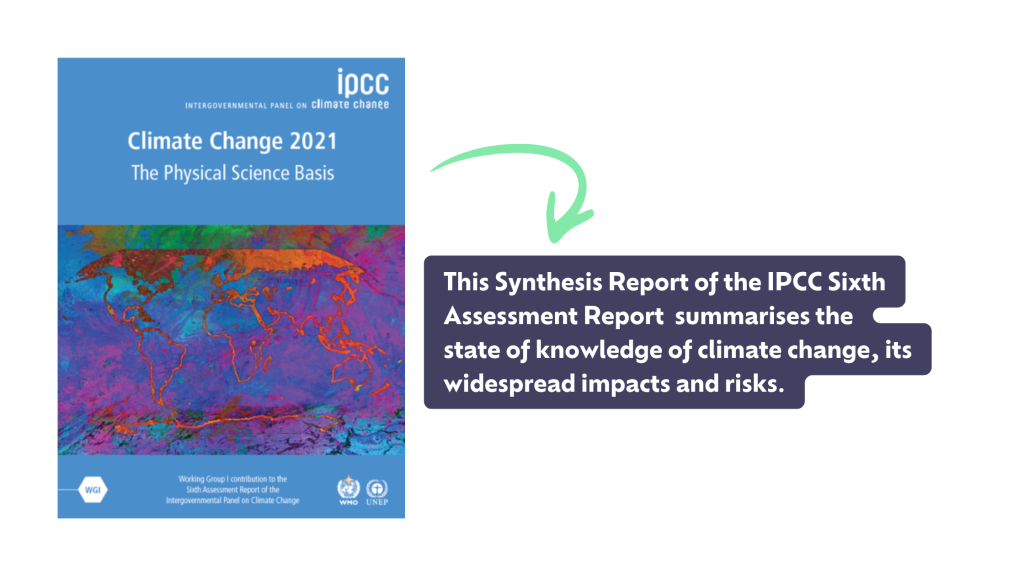
    Our workshops are designed so that everyone, regardless of background, can understand the science behind climate change. Participants explore the work of the Intergovernmental Panel on Climate Change (IPCC), including the contributions of its working groups and the data that underpin global climate reports.

    Join one of our workshops:

    https://events.humanitix.com/host/people-for-nature

    At People For Nature, we believe every citizen deserves access to climate and biodiversity education.

    But knowledge alone is not enough.

    The people making decisions on our behalf β€” politicians, teachers, and corporate leaders β€” must also be fully climate-literate.

    If you believe climate literacy should be mandatory for all those in positions of power and influence, join us in demanding change.

    Together, we can ensure that those shaping our future understand the stakes β€” and take meaningful action.

  • Partnering on climate literacy with L’OrΓ©al Australia and New Zealand

    Partnering on climate literacy with L’OrΓ©al Australia and New Zealand

    As the world’s largest beauty company, L’OrΓ©al recognises and understands its responsibility to drive meaningful change: from addressing the impacts of climate change, to safeguarding natural resources, to championing circularity, and building community resilience, its actions are anchored in latest environmental science and underpinned by a desire for constant improvement.

    InΒ Β 2020 it introduced the L’OrΓ©al for the Future program. This sustainability strategy is centred on four key pillars:

    – Steward the climate transition;

    – Safeguard nature;

    – Drive circularity;

    – Support communities.

    In Australia and New Zealand (ANZ), L’OrΓ©al is partnering with People For Nature to deliver climate and biodiversity educational programs that support this sustainability strategy.

    Program objectives

    Delivering on the organisation’s sustainability goals and ambitions requires engaged employees who understand the role they play.

    The team in ANZ is focusing on growing climate literacy among staff so everyone understands how their actions support a healthier planet and help the company advance its sustainability commitments.

    People For Nature delivered a Climate Fresk workshop during L’OrΓ©al’s Sustainability Retreat in August 2025, which gathered about 40 ANZ employees.

    Empowering teams with climate knowledge

    People For Nature delivers tailored training programs that move staff from awareness to action. We empower teams with science-based learning experiences that inspire understanding, care, and change.

    Through our collaborative workshops we build climate and biodiversity literacy, inspiring staff to embed sustainability into their daily operations and culture.

    Interested in organising a workshop for your organisation?

    We’ll empower your people to power change for nature. Contact us today to find out more.

    Click below to download the L’OrΓ©al case study.

  • Our Partnership with Mott MacDonald

    Our Partnership with Mott MacDonald

    As we reflect on 2025, we are pleased to acknowledge and celebrate our partnership with Mott MacDonald β€” an organisation working at the forefront of sustainable infrastructure, engineering, and systems transformation.

    Mott MacDonald is an employee-owned engineering and management consultancy with over 20,000 people in more than 50 countries. These teams design, deliver, and maintain infrastructure that connects communities, supports sustainable economic growth, and builds environmental resilience.

    Mott MacDonald aims to make a positive difference by delivering sustainable outcomes through its activities and to continuously improve its performance. The teams are committed to collaborating with broader communities to establish actions and make business decisions that consider the climate, environmental, and social aspects of their work.

    Their support of AlterCOP 30 Australia – the Australian AlterCOP Chapter brought to Australia by People For Nature in 2025 – reflects this commitment to positive change across buildings and infrastructure, and to engaging with initiatives that bring people closer to climate and nature solutions.

    We designed an independent, values-driven gathering running alongside the official United Nations Climate Conference (COP30). Our aim was simple β€” to create a free and inclusive space where voices often absent from formal negotiations β€” youth, First Nations leaders, local communities, scientists, artists, and grassroots changemakers β€” could come together to engage meaningfully with climate and nature action, while actively reducing the environmental footprint of participation itself.

    While Australia sent 494 official delegates to COP30, we engaged more than 1,400 people nationwide, extending the spirit of the COP β€œgreen zone” through citizen-led events and conversations across the country.

    As Riya Tailor, Senior Sciences Engineer and BMS Coordinator – QLD & SAN, at Mott MacDonald shared:

    β€œAlterCOP 30 Australia closely aligned with Mott MacDonald’s commitment to positive change in buildings and infrastructure. Engaging with People For Nature allowed our colleagues, both speakers and attendees, to feel inspired to drive environmental change in their work and personal lives. The event provided valuable insights that will inform future decisions, strengthen our role in creating sustainable places, and inspire ongoing action across the communities and projects we support.”

    Alongside this partnership, People For Nature focused on citizen engagement, biodiversity literacy, and participatory learning experiences β€” helping translate complex climate information into accessible formats that inspire understanding and action.

    Together, this collaboration helped strengthen the foundations for what has now evolved into Citizen COP Australia β€” a decentralised, people-powered movement running alongside global COPs in 2026, designed to make climate and biodiversity action more locally grounded, inclusive, and participatory.

    We are deeply grateful to Mott MacDonald for their engagement in 2025. Their commitment to sustainable infrastructure and systems thinking plays an important role in shaping resilient futures, and we look forward to continuing to build connections between engineering, community, and citizen action.

    https://www.mottmac.com/Find out more about Mott MacDonald:https://www.mottmac.com/

  • People For Nature’s sponsorship philosophy

    People For Nature’s sponsorship philosophy

    At People For Nature, partnerships matter deeply.

    As a charity working at the intersection of climate science, biodiversity, and collective intelligence, we are intentional about who we partner with and how we work together. Sponsorships are not simply a funding mechanism for us β€” they are a shared commitment to integrity, impact, and long-term systems change.

    This is why we’ve developed a clear Sponsorship Philosophy to guide our work and ensure our partnerships serve people, nature, and the public good.


    Partnerships, Not Transactions

    We believe sponsorships should go beyond logos and visibility. At their best, they are purpose-driven partnerships that enable meaningful action, learning, and impact.

    Our sponsorships are designed to:

    • deliver tangible outcomes for biodiversity conservation and climate education,
    • strengthen climate and nature literacy within organisations,
    • support citizen-led and place-based initiatives,
    • and contribute to a more equitable and regenerative future.

    This approach helps ensure that our work β€” and the work of our partners β€” creates lasting value well beyond a single campaign or event.


    Our Role: Translating Science Into Action

    People For Nature exists to make complex environmental science accessible, engaging, and actionable.

    Grounded in authoritative research and inspired by participatory learning approaches such as the Climate Fresk, our workshops and programs use collective intelligence to help people:

    • understand the science behind climate change and biodiversity loss,
    • explore systemic risks and interconnections,
    • engage in informed dialogue,
    • and identify meaningful pathways for action.

    Through sponsorship partnerships, we scale this work responsibly β€” supporting education, community empowerment, and long-term resilience across Australia.


    What We Look For in Partners

    We partner with organisations that demonstrate:

    • a genuine commitment to environmental sustainability and social responsibility,
    • openness to learning, reflection, and transformation,
    • respect for evidence-based decision-making,
    • a desire to engage their people meaningfully on climate and nature,
    • and an ambition to contribute to measurable, real-world impact.

    Alignment of values, intent, and impact ambition is essential. When alignment is strong, partnerships are more effective, credible, and enduring.


    Our Ethical Boundaries

    Integrity is non-negotiable.

    Guided by the EIANZ Code of Ethics and our charitable purpose, People For Nature does not engage in sponsorships with organisations whose core activities conflict with our environmental mission.

    This includes activities that:

    • drive fossil fuel extraction or expansion,
    • contribute to deforestation or biodiversity destruction,
    • undermine climate science or environmental protections.

    We reserve the right to decline or conclude partnerships that compromise our independence, credibility, or public trust.


    How We Design Our Partnerships

    Every sponsorship partnership is intentionally designed.

    Our approach is:

    • Impact-led β€” tied to clear outcomes in education, conservation, and community empowerment,
    • Transparent β€” with defined scope, expectations, and review points,
    • Collaborative β€” co-designed where appropriate, without compromising independence,
    • Balanced β€” recognition and visibility are proportionate and secondary to impact.

    This ensures partnerships remain grounded in substance, not symbolism.


    Accountability and Honest Reporting

    We are committed to clear, honest communication with our partners and broader community.

    Depending on the partnership, this may include:

    • annual impact and insights briefings,
    • program-level reporting,
    • qualitative and quantitative outcomes,
    • lessons learned β€” including what didn’t work.

    We believe credibility comes from reporting reality, not just success stories.


    Our Commitment

    In every partnership, People For Nature commits to:

    • acting with integrity, independence, and care,
    • stewarding funds responsibly and transparently,
    • prioritising people and nature over growth or branding,
    • maintaining public trust in our work.

    We seek partners who see sponsorship not as visibility, but as shared stewardship β€” a chance to contribute to a thriving future for people and the planet.


    Our Partners

    This philosophy is not theoretical β€” it is reflected in the organisations we already work with.

    Our current partners include values-aligned organisations across climate education, biodiversity, business, and community sectors who share our commitment to integrity, evidence-based action, and long-term impact. They engage with us not for visibility alone, but to meaningfully support climate and nature literacy, empower people, and contribute to systemic change.

    We are proud to collaborate with partners who:

    • invest in learning and capability-building,
    • respect scientific evidence and collective intelligence,
    • support citizen-led and place-based action,
    • and are willing to lead with integrity.

    If this philosophy resonates with you, we’d love to explore what meaningful partnership could look like together: info@blog.peoplefornature.org.au

  • Meet the Echidna | Biodiverse Australia

    Meet the Echidna | Biodiverse Australia

    A living link to Australia’s ancient past, the echidna is one of the world’s most extraordinary mammals and one of only two egg-laying mammals on Earth, alongside the platypus.

    Often overlooked as it quietly moves through forests, grasslands and even suburban backyards, this spiny species belongs to one of the oldest surviving mammal lineages on the planet: the monotremes.

    It is a reminder that Australia is not just home to unique wildlife, it is home to deep evolutionary history still alive today.

    Why it matters

    The echidna plays an important ecological role far beyond what its quiet presence suggests.

    🐜 It feeds on ants and termites hidden beneath soil and logs

    πŸ•³οΈ Its constant digging aerates soil and improves structure

    πŸ‚ It helps cycle organic matter back into the earth

    🌱 Its activity supports seed burial and carbon storage in soils

    In doing so, the echidna contributes to the health of entire ecosystems, from soil fertility to vegetation growth and carbon dynamics.

    It is a small animal with a large ecological footprint.

     Fun facts

    πŸ€“ Echidnas lay eggs, one of the rarest reproductive strategies among mammals

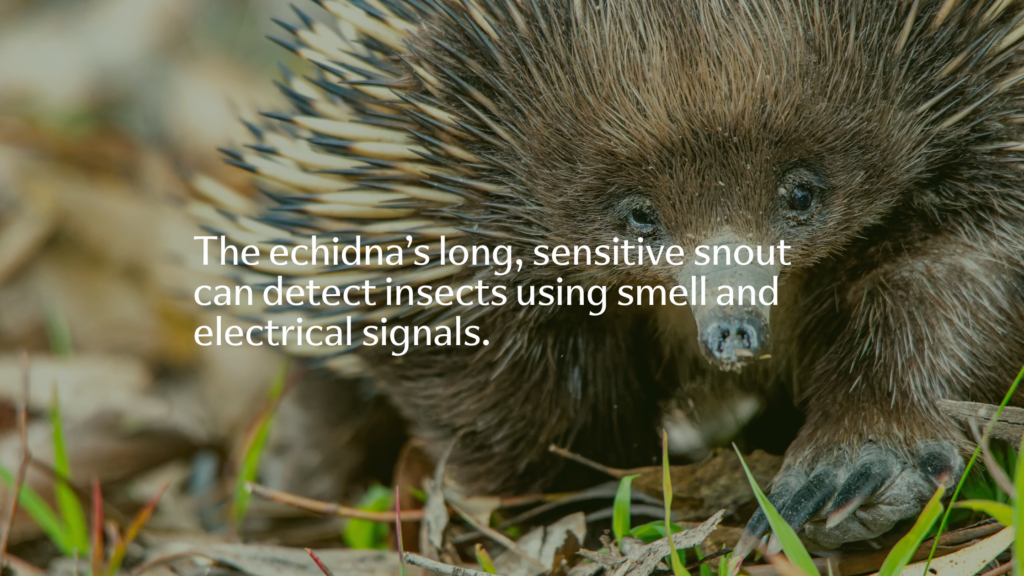
    πŸ€“ Their long, sensitive snout can detect insects using smell and electrical signals

    πŸ€“ During mating season, males may follow a female in a line known as an β€œechidna train”

    πŸ€“ They have survived largely unchanged for millions of years

    A deeper reflection

    The echidna challenges how we think about β€œprimitive” and β€œadvanced” in nature.

    Despite its ancient lineage, it is highly adapted to modern Australian landscapes, surviving fires, droughts, and fragmented habitats.

    But like many native species, it now faces pressure from:

    😒 land clearing and habitat loss

    😒 domestic dogs and road mortality

    😒 changing fire regimes and climate stress

    In a country with over 600,000 native species, most found nowhere else on Earth, the echidna is a quiet reminder that biodiversity is not just something we observe, it is something we are actively shaping.

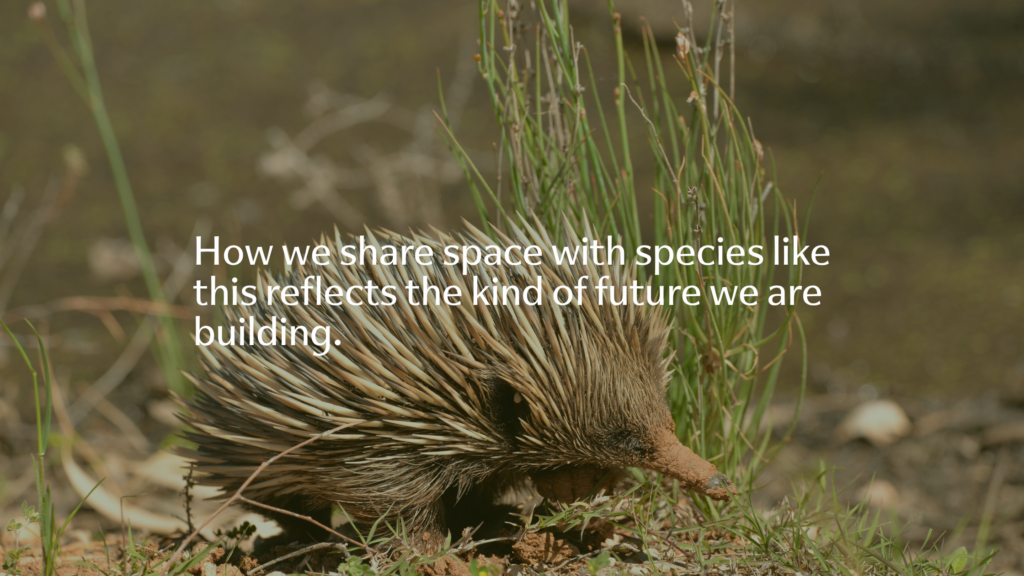
    How we share space with species like this reflects the kind of future we are building.

    From Wonder to Action

    Learn & understand
    Explore how biodiversity, climate, and land systems are deeply connected through our workshops with People For Nature.

    -> https://collections.humanitix.com/people-for-nature-literacy-workshops

    Create your Nature Oasis
    Plant native species to restore habitat and support the insects, birds, and wildlife that depend on them.

    Join citizen science
    Record native species around you on iNaturalist and contribute to real conservation data.

    (Special thanks to Simon Andrews, Ambassador for People For Nature, for helping shape this story)


    References:

    NSW Department of Climate Change, Energy, the Environment and Water. Echidnas.

    https://www.environment.nsw.gov.au/topics/animals-and-plants/native-animals/native-animal-facts/land-mammals/echidnas

    Australian Museum. Short-beaked Echidna (Tachyglossus aculeatus).

    https://australian.museum/learn/animals/mammals/short-beaked-echidna/

  • Simple ways to help biodiversity

    Simple ways to help biodiversity

    Protecting biodiversity doesn’t have to be complicated. Small actions, taken consistently, can make a real difference for the plants, animals, and ecosystems we rely on every day. Here are a few simple ways anyone can start helping nature right now.

    1. Welcome Nature Into Your Space

    Whether you have a backyard, balcony, or even just a windowsill, you can create habitat.
    Add native plants, leave a few wild corners, or put out a small dish of water for birds and insects. Nature thrives when we make room for it.

    2. Choose Native Plants

    Native species support local wildlife far better than exotic plants. They provide food, shelter, and resilience. Even one native plant can become a tiny oasis.

    3. Reduce Chemicals

    Pesticides and herbicides harm insects, soil health, and waterways. Try natural alternatives, spot weeding, or simply accepting a few β€œimperfections” as part of a healthy ecosystem.

    4. Shop With Nature in Mind

    Support farmers and businesses that protect biodiversity. Choose products that are organic, sustainably sourced, and free from unnecessary packaging.

    5. Join Local Citizen Science

    From bird counts to waterway monitoring, citizen science helps track the health of our ecosystems. Anyone can participateβ€”and it’s a great way to learn.

    6. Volunteer for Nature

    Give a little time to local conservation groups, habitat restoration projects, or community gardens. Volunteering boosts biodiversity and wellbeing.

    7. Share What You Learn

    Talk with friends, family, and colleagues about the importance of nature. Your enthusiasm can inspire others to take action too.

  • What role has fossil energy played in shaping our economy and standard of living β€” and what happens as that energy surplus declines?

    What role has fossil energy played in shaping our economy and standard of living β€” and what happens as that energy surplus declines?

    Since the advent of the Industrial Revolution, fossil fuels β€” coal, oil and natural gas β€” have underpinned our economic growth and transformed human living standards in a way nothing before could.

    • Mechanisation, mass manufacturing and new industries became possible once people could tap energy far beyond what human or animal labour alone could supply. Steam engines and then internal combustion engines powered factories, transport, and infrastructure that brought unprecedented productivity and wealth.
    • Fossil fuels provided the raw energy for electricity generation β€” lighting homes, powering machines, heating or cooling environments, enabling modern conveniences, health care, global communication, transport, trade and more.
    • In macroeconomic terms, there’s a strong historical correlation between global primary energy consumption and global GDP (economic production). One recent long‑term study found that physical energy inputs (what we call β€œprimary energy consumption”) have driven both physical capital and human capital, fueling growth across centuries.
    • Although energy efficiency has improved over time β€” meaning we now need less energy per dollar of GDP than in the past β€” the overall scale of energy consumption remains huge, feeding modern complex economies.

    Put simply: fossil fuels have supplied the energy surplus β€” the abundant, high‑density energy β€” that allowed economies to scale, societies to urbanise, food systems to industrialise, transport and trade to flourish, and living standards to climb globally.

    What the β€œsurplus” meant: how fossil energy extended human possibility

    Because fossil energy is dense, concentrated, and relatively easy to exploit (especially when reserves are young and accessible), it created a surplus that underpins much of what we consider β€œmodern living.” Some of the key ways that surplus shaped society:

    • Global mobility and trade β€” oil-powered shipping, trucking and aviation connected markets, enabled global supply chains, movement of people, goods, and ideas β€” foundational to globalised economies.
    • Industrial agriculture and food security β€” fossil fuels powered machinery, synthetic fertilisers and pesticides, transport of food β€” enabling production and distribution of enormous volumes of food for billions.
    • Urbanisation and infrastructure β€” energy-intensive industries built cities, housing, sanitation, electricity grids, transport networks, communications β€” enabling high population densities and complex societies.
    • Access to goods and services β€” manufacturing of consumer goods, plastics, chemicals, medicines and more all leveraged energy inputs derived from fossil fuels.
    • Improved health, comfort and longevity β€” heating or cooling, lighting, medical facilities, global trade of food and medicine, mass agriculture β€” all contributed to massive improvements in human welfare.

    In short: fossil‑fuel surplus didn’t just push GDP numbers up. It expanded the possibility space of what societies could do β€” allowing humans to transition from subsistence-level existence to global industrial civilisation.

    The signs of change β€” increasing limits on fossil energy, and what that means

    But as we move into the 21st century, multiple pressures (sometimes referred to as “planetary boundaries”) β€” geological, economic, environmental β€” are signalling that the age of abundant, cheap fossil‑fuel surplus is ending, or at least must be constrained. The consequences will be significant.

    Declining surplus and rising constraints

    • Fossil fuels are finite. While estimates vary, experts warn that under current consumption rates, proven reserves will not last indefinitely, especially when accounting for extraction costs, environmental regulations and declining energy return on energy invested (EROEI).
    • As fossil energy becomes scarcer or more costly to extract, energy prices rise β€” and with that, the cost base of industries that rely on cheap, abundant energy: manufacturing, transport, agriculture, logistics. This in turn can slow economic growth or even reverse output.
    • The tight historical link between energy supply and GDP suggests that declining energy surplus could constrain growth. In the absence of equivalent new energy inputs, some researchers argue economic activity could slow or shift dramatically.
    • Overconsumption of fossil fuels has also led to major environmental and public health problems β€” pollution, climate change, biodiversity loss β€” meaning the β€œsurplus” has come with long-term costs.

    What could happen as energy surplus declines

    If fossil energy β€” or accessible, affordable fossil energy β€” becomes less abundant, several structural shifts become likely:

    • Re-evaluation of growth paradigms: With energy supply constrained, perpetual economic growth may no longer be sustainable. Some economists argue there may be a thermodynamic cap on how large our global economy can grow β€” unless we decouple growth from energy consumption via efficiency gains, renewable energy, or radical system change.
    • Necessity to transition to renewables and sustainable energy systems: To maintain well‑being, economies will need to invest heavily in renewable energy, energy efficiency, electrification.
    • Restructure of industries reliant on cheap energy: High‑energy industries β€” like long‑haul transport, heavy manufacturing, conventional agriculture β€” may shrink or need to transform. Localisation of production, new low‑energy economic models, circular economy, and regenerative practices might become more advantageous.
    • Potential reduction in consumption, slower growth, simpler lifestyles: Without surplus energy, societies may shift toward lower‑energy consumption, rethinking what β€œstandard of living” means β€” more local, leaner, less resource-intensive ways of living.
    • Social and political challenges: Resource scarcity, economic stress, inequality, supply disruptions could trigger instability, especially in fossil-energy dependent economies.

    Conclusion β€” Fossil fuels gave us a head start, but we must not assume the surplus will last

    Fossil energy was the diesel behind the engine of industrial civilisation β€” powering growth, lifting living standards, enabling the modern world. But it was always a borrowed power: ancient biological energy concentrated over millions of years.

    As that surplus wanes β€” through depletion, rising extraction costs, environmental constraints β€” we can expect deep structural shifts: slower growth, higher costs, transformation of industries, and a need for new paradigms. How well humanity adapts will determine whether we regress, stagnate, or reinvent our societies around sustainability, equity, and harmony with the natural world.

    For those committed to biodiversity, climate justice, and education β€” as you are if you have read this far β€” this transition is both a challenge and an impetus: an opportunity to help shape the next chapter, grounded in respect for nature’s limits and collaborative human ingenuity.


    References & Sources

    β€œRole of Fossil Fuels in a Sustainable Energy System” – United Nations, 2022. https://www.un.org/en/chronicle/article/role-fossil-fuels-sustainable-energy-system

    β€œFossil Fuels Contribute to Human Flourishing” – Life Powered, 2023. https://lifepowered.org/fossil-fuels-contribute-to-human-flourishing

    β€œExplain the Importance of Fossil Fuels to Modern Society” – VAIA, Environmental Science Textbook, 2022. https://www.vaia.com/en-us/textbooks/environmental-science/environmental-science-for-a-changing-world-4-edition/chapter-9/problem-2-explain-the-importance-of-fossil-fuels-to-modern-s

    β€œThe Role of Energy in Economic Growth” – ArXiv preprint, 2020. https://arxiv.org/abs/2008.10967

    β€œEnergy Technology Perspectives 2020” – OECD, 2020. https://www.oecd.org/content/dam/oecd/en/publications/reports/2020/09/energy-technology-perspectives-2020_21abbde0/d07136f0-en.pdf

    β€œHow Fossil Fuels Shaped Our World” – Green Ambassador Challenge, 2021. https://greenambassadorchallenge.com/challenge/fossil-fuels/activity/how-fossil-fuels-shaped-our-world

    β€œOil Depletion” – Wikipedia, 2023. https://en.wikipedia.org/wiki/Oil_depletion

    β€œThe Sustainability of Fossil Fuel Use: Declining Surplus and Economic Implications” – MDPI Sustainability, 2022. https://www.mdpi.com/2071-1050/14/8/4792

    β€œAustralia’s Energy Crisis & America’s Energy Surplus” – University of Sydney, 2023. https://www.ussc.edu.au/australias-energy-crisis-americas-energy-surplus

    β€œHow Curbing Reliance on Fossil Fuels Will Change the World” – Wilson Center, 2021. https://www.wilsoncenter.org/article/how-curbing-reliance-fossil-fuels-will-change-world

  • Inaugural AlterCOP 30 Australia climate summit mobilises more than 1,400 people across 42 events nationwide

    Inaugural AlterCOP 30 Australia climate summit mobilises more than 1,400 people across 42 events nationwide

    Volunteer-powered, free & inclusive grassroots climate conference showcased local innovations and action

    AlterCOP 30 Australia has concluded after four powerful days of community-led climate action, bringing together more than 1,400 registered participants across 42 events nationwide.

    Running in parallel to the UN COP30 summit in Brazil, AlterCOP 30 Australia offered a platform for inclusive, locally grounded conversations on climate change, biodiversity, sustainable cities, health, and community resilience, fostering hope, connection and tangible pathways to action. 

    Audrey Barucchi, CEO and Co-Founder of Australian charitable social enterprise, People For Nature, commented

    AlterCOP 30 Australia has shown what’s possible when citizens are empowered to lead.Β 

    This wasn’t just a climate conference, it was a nationwide movement demonstrating that climate action is happening now, led by everyday people who care deeply about the future of our planet.

    The energy we witnessed in Brisbane and across our satellite events was extraordinary. From packed workshops to meaningful conversations and new collaborations, AlterCOP 30 Australia has strengthened Australia’s grassroots climate ecosystem and proven that people-powered solutions are essential to driving real change.

    We know there were close to 500 Australian delegates at COP30 in Brazil, carryinga considerable logistical and carbon-footprint burden. On the flipside, our citizen-powered events brought together 1,400 people locally with near to no budget and a minimal environmental footprint.

    As a local extension of the Green Zone (without the heavy footprint), we enabled everyday Australians to engage with climate dialogue and innovation without having to travel across the world.


    In partnership with AlterCOP

    AlterCOP was co-founded in 2024 by The Matcha Initiative and The Transmutation Principle in Singapore, as an accessible alternative to the United Nations COP, making climate action discussions available to communities, professionals, and youth. This year, the summit expanded to 12 new countries, including Australia, highlighting the enthusiasm around the region for inclusive, locally grounded climate dialogue. 

    Anne Langourieux and Thibaut Meurgue-Guyard, co-founders of AlterCOP, commented: β€œIt’s amazing and exciting to see AlterCOP grow. It proves that a global, community-led movement for climate action is not just possible, it’s thriving. We’re committed to our mission of making climate dialogue accessible to regional communities without air travel while raising awareness of the official COP summit. We look forward to growing the movement to be even bigger next year.”

    Audrey Barucchi concluded:

    β€œPeople For Nature is proud to have helped activate a community-powered space that builds engagement, showcases real solutions, and connects Australians to the global climate conversation.

    β€œAustralia may have lost the opportunity to host COP31, but this hasn’t diminished our ambition. Instead, we’re planning to grow AlterCOP next year. Our vision is to include more cities, more local communities, and deeper citizen-led climate engagement across Australia. in 2026 and beyond”

    Powered by volunteers, grounded in community, and radiating active hopeΒ for Australia’s climate and nature movement, AlterCOP showed what happens when citizens lead with purpose and imagination.


    AlterCOP 30 Australia β€” By the Numbers

    πŸ“ 42 events nationwide
    πŸŒ… 10+ Sunrise Actions
    πŸ‘₯ 1,400+ participants registered

    A main 4-day gathering in Brisbane, with major satellite events in Sydney and Melbourne, and additional events in Huon Valley (TAS), Bright (VIC), Wollongong, Newcastle, and Narara (NSW)

    🀝 33 on-site volunteers in Brisbane, and 37+ more supporting events across the country.
    πŸ’‘ AΒ core team of 15 volunteersΒ driving the entire program across Brisbane and the satellite cities.

    🌏 AΒ Giant Climate FreskΒ reaching at least 200 participants across 8 locations in Australia and New Zealand β€” supported byΒ 25+ facilitators.

    🎀 85 speakers in Brisbane alone, and well over 100 nationally
    πŸ›οΈΒ 49 organisationsΒ backing this movement β€” 15 partners and an ecosystem of 34 collaborations.


    How We Shaped The Program in 2025

    Our work was structured around five core working groups:


    🌑 Climate 

    🌿 Biodiversity 

    πŸ™ Sustainable Cities 

    🧠 Health 

    πŸ§’ Youth

    Through strong collaborations with organisations and communities across the country, these working groups didn’t just shape the main Brisbane program β€” they also enabled satellite events nationwide, all running in parallel with the same overarching agenda.

    Each local hub explored the same themes through its own community lens, grounding the discussions in local realities, challenges, and opportunities. This meant that whether people gathered in Sydney, Melbourne, Huon Valley, Bright, Wollongong, Newcastle, or Narara, they contributed to a unified national conversation while elevating the unique stories and solutions of their region.

    These groups didn’t just curate sessions β€” they embedded the values that make AlterCOP what it is: collaborative, community-led, and rooted in both science and lived experience.


    Why we loved delivering the first AlterCOPΒ in Australia?

    • Inclusive: ensured First Nations perspectives and Youth voices were present on every panel.
    • Citizen-powered: designed, led, and delivered entirely by volunteers.
    • Events that walk the talk: no flights, no waste, and only vegetarian cateringΒ 
    • Free and independent: open to all, without corporate influence or paywalls.
    • A local extension of the Green Zone: including live interviews and videos with delegates who are on the ground at COPs to share insights on the proceedings.
    • Positive and solutions-focused: grounded in science, driven by active hope, and inspired by community action.Β 

    A big thank you to the people and organisations who believed in AlterCOP from day one β€” especially our partners who supported us with the simple, practical logistics that make an event like this actually work. Your trust and collaboration truly mattered.

    For all media enquiries, please email Aye Verckens (aye@blog.peoplefornature.org.au).Β 

  • Meet the Richmond Birdwing Butterfly

    Meet the Richmond Birdwing Butterfly

    One of Australia’s most spectacular insects, the Richmond Birdwing Butterfly is among the country’s largest butterflies and is found only in the rainforests of Queensland and northern New South Wales.

    With its striking colours and impressive size, this beautiful species has become a symbol of the unique biodiversity that makes Australia’s rainforests so special.

    It is also a reminder that even some of our most iconic species can be vulnerable to environmental change.

    Why it matters

    The Richmond Birdwing Butterfly plays an important role in the health of rainforest ecosystems.

    πŸ¦‹ Adult butterflies feed on nectar from a wide variety of native and introduced flowering plants

    🌼 They contribute to pollination and support the reproduction of many plant species

    🌳 Their lifecycle is closely linked to the health of rainforest habitats

    🌏 Their recovery is seen as symbolic of broader efforts to protect Australia’s unique biodiversity

    As both pollinators and indicators of ecosystem health, Richmond Birdwing Butterflies highlight the importance of conserving interconnected natural systems.

    Fun facts

    πŸ€“ The Richmond Birdwing Butterfly has a close relationship with the native Birdwing Vine (Pararistolochia praevenosa), which is the sole food source for its larvae

    πŸ€“ The Birdwing Vine contains aristolochic acid, making the caterpillars toxic to vertebrate predators

    πŸ€“ Despite this defence, the caterpillars can still fall prey to other invertebrates, including other larvae

    πŸ€“ Adult butterflies prefer feeding on white and red flowers, including native frangipani, lilly pillies and hibiscus

    A deeper reflection

    The Richmond Birdwing Butterfly reminds us that no species exists in isolation.

    Its survival depends entirely on the presence of a single native vine, demonstrating how deeply interconnected biodiversity can be.

    Yet habitat destruction, climate change and the introduction of non-native plants have significantly restricted the butterfly’s range and placed increasing pressure on its future.

    In a country with more than 600,000 native species, many found nowhere else on Earth, the Richmond Birdwing Butterfly is a powerful example of why conservation is about protecting relationships between species as much as protecting individual plants and animals.

    How we care for rainforests and native habitats today will determine whether future generations can continue to witness one of Australia’s most beautiful butterflies.

    From Wonder to Action

    Learn & understand

    Explore how biodiversity, climate, and land systems are deeply connected through our workshops with People For Nature.

    Create your Nature Oasis

    Plant native species to restore habitat and support the insects, birds, and wildlife that depend on them.

    Join citizen science

    Record native species around you on iNaturalist and contribute to real conservation data.

    (Special thanks to Simon Andrews, Ambassador for People For Nature, for helping shape this story)


    References:

  • Introducing Gunter’s Fables

    Introducing Gunter’s Fables

    Climate education using storytelling, creativity and imagination

    At People For Nature, climate literacy is at the heart of what we do. We firmly believe that education isn’t just about understanding the problem, it’s about inspiring people to act. Because, when people understand, they care – and when they care, they act.

    That’s why we love Gunter’s Fables, a bilingual (French and English) collection of educational stories that help children see nature not as something fragile and separate, but as a source of solutions for humanity’s biggest challenges. 

    Climate education needs to start with those that are already at the frontline: our youth. Teaching children and young adults about the science of climate change, its impacts, and potential solutions can inspire a new wave of climate-conscious leaders, entrepreneurs, and activists who will shape Australia’s future. Early education fosters a sense of responsibility and urgency, ensuring that the next generation is ready to tackle the challenges ahead.

    Download the presentation to learn more.

    A collection of 365 fables

    Gunter’s Fables were created by Gunter Pauli, a Belgian-born climate visionary, who has dedicated his life to the radical transformation of business and society. He is the founder of the Zero Emissions Research Initiative and author of The Blue Economy, a framework adopted by the United Nations, governments, and industries worldwide. 

    Aimed at children aged 3 to 15, Gunter’s Fables evolve in depth and complexity as readers grow, showing how nature already holds the answers to many of our sustainability problems. 

    Each set of fables explores a different theme: water, health, food, energy, housing, work, and education / ethics.

    Just like People For Nature’s educational workshops – Climate Fresk, Biodiversity Collage and Circular Economy collageGunter’s Fables are fun and interactive. They encourage curiosity, questioning and experimentation, cultivating the mindset that we can all make a difference.

    Combining storytelling with science and action

    What makes Gunter’s Fables so powerful as an educational tool is the way it blends storytelling with science and action. Inspired by educators like Maria Montessori, Rudolf Steiner, and Paulo Freire, the series awakens five kinds of intelligence: scientific knowledge, emotional intelligence, artistic expression, understanding of complex systems, and the ability to take action. Children aren’t just learning facts; they’re exploring, questioning, and discovering how they can make a difference.

    Each fable is a guided exploration that encourages reflection, creativity, and reinforces the innate desire to contribute to the good of all. The fables turn sustainability from an abstract topic into a lived experience. Each one ends with real-world examples, helping young readers see that change is already happening and that they can be part of it.

    Empowering tomorrow’s leaders

    Gunter’s Fables are a great tool to equip our future leaders with the knowledge, skills, and passion to drive meaningful change.

    In a world where climate headlines can feel overwhelming, Gunter’s Fables offer something rare: hope grounded in understanding. By nurturing imagination and action, these stories help raise a generation of thoughtful, empowered β€œplanet protectors.”

    Whether you are a parent, a grand parent or an educator, these books are a great tool to pass on important messages to the next generation.

    Interested in finding out more or getting a copy of Gunter’s Fables?

    Contact us today.

  • Meet our ambassador: Lisa Selbie

    Meet our ambassador: Lisa Selbie

    Climate Fresk and Circular Economy Collage Facilitator, NSW

    Lisa became a People for Nature Ambassador in 2025. She’s a Climate Fresk and Circular Economy Collage Facilitator based in Sydney.

    Lisa draws on her background in biotechnology research and education to inspire citizen science and drive collective climate action. As a scientist, educator, and advocate, Lisa champions evidence-based innovation and community engagement to tackle environmental challengesβ€”from ocean health to climate resilience.

    I believe the true solution lies in empowering individuals through education and fostering collective responsibility for a sustainable future.

    🀝 Connect with Lisa on LinkedIn πŸ’š

  • Meet the Clownfish | Biodiverse Australia

    Meet the Clownfish | Biodiverse Australia

    Made famous by the animated film Finding Nemo, the Clownfish is one of the world’s most recognisable marine species and a fascinating example of the remarkable life found on Australia’s Great Barrier Reef.

    Also known as the Eastern Clown Anemonefish, Amphiprion percula is a small, brightly coloured fish that lives among coral reefs and shallow lagoons, where it forms a unique partnership with sea anemones.

    It is a reminder that some of nature’s most extraordinary relationships can be found beneath the ocean’s surface.

    Why it matters

    The Clownfish plays an important role in the health and functioning of coral reef ecosystems.

    🐠 It forms a mutualistic relationship with sea anemones, with both species benefiting from the partnership

    🧼 It helps provide nutrients to its host anemone and keeps it clean

    πŸͺΈΒ It is part of the intricate web of relationships that support the biodiversity of coral reefs

    🌊 It highlights the importance of healthy reef systems that sustain thousands of marine species

    Through its relationship with sea anemones, the Clownfish demonstrates how interconnected life in the ocean truly is.

    Fun facts

    πŸ€“  Clownfish can live safely among the venomous tentacles of sea anemones because they have a protective coating on their bodies

    πŸ€“  They live in groups organised around a dominant female

    πŸ€“  All Clownfish are born male

    πŸ€“  If the dominant female dies, the dominant male can change sex and take her place within the group

    A deeper reflection

    The Clownfish challenges the idea that survival in nature is always based on competition.

    Its partnership with sea anemones shows that cooperation and interdependence are also powerful forces that shape the natural world.

    Yet the future of this remarkable species is closely tied to the health of coral reefs, which are increasingly under pressure from coral bleaching, habitat loss and rising sea temperatures.

    In a country with more than 600,000 native species, many found nowhere else on Earth, the Clownfish is a reminder that protecting biodiversity means protecting the relationships that sustain entire ecosystems.

    How we respond to the challenges facing our oceans will shape the future of one of Australia’s most colourful and charismatic marine species.

    From Wonder to Action

    Learn & understand

    Explore how biodiversity, climate, and land systems are deeply connected through our workshops with People For Nature.

    Create your Nature Oasis

    Plant native species to restore habitat and support the insects, birds, and wildlife that depend on them.

    Join citizen science

    Record native species around you on iNaturalist and contribute to real conservation data.

    (Special thanks to Simon Andrews, Ambassador for People For Nature, for helping shape this story)


    References:

    Australian Museum. Clown Anemonefish (Amphiprion percula).

    https://australian.museum/learn/animals/fishes/clown-anemonefish-amphiprion-percula/ 

  • Meet our ambassador: Jonathan Handschuh

    Meet our ambassador: Jonathan Handschuh

    Climate Fresk & Biodiversity Collage Facilitator, Sydney

    Jonathan has been a Climate Fresk facilitator since 2022 and a Biodiversity Collage facilitator since 2024.

    He is driven by a strong will to prove to his children that we can be part of the solution to the climate crisis. His aim is to expand climate and biodiversity literacy as wide as possible to help create that critical mass of responsible people who will shift the system and challenge the status quo.

    Being an ambassador for People For Nature offers me an amazing platform to spread awareness on the climate and biodiversity crisis whilst being supported by an incredible bunch of people. I love being part of this community. It brings me strength and perseverance to keep pushing when it sometimes feels like we are not making any progress.” 
    πŸ”— Connect with Jonathan on LinkedIn.

    πŸ“… You can often find Jonathan leading our workshops in Sydney. Check out our events on Humanitix to catch him at the next one! 🌿

  • Meet the Banksia | Biodiverse Australia

    Meet the Banksia | Biodiverse Australia

    Found across much of Australia, the Banksia is one of the country’s most recognisable native plants, known for its striking flower spikes and distinctive woody cones.

    With 173 species occurring across a wide range of habitats, from coastal regions and tropical areas to deserts and sub-alpine environments, the Banksia demonstrates the remarkable adaptability of Australian flora.

    It is a reminder that Australia’s biodiversity is not only found in its animals, but also in the plants that support entire ecosystems.

    Why it matters

    Banksias play an important role in supporting wildlife and ecological health across Australia.

    🌸 Their flowers provide food for birds, insects and other pollinators

    πŸ‚ Many species flower during autumn and winter when food resources can be limited

    🌰 Their cones provide food for species such as cockatoos

    🌿 They help support biodiversity across a wide range of Australian landscapes

    Through these interactions, Banksias help sustain the complex relationships that keep ecosystems healthy and functioning.

    Fun facts

    πŸ€“ There are 173 Banksia species and all but one occur naturally only in Australia

    πŸ€“ Banksias were named after Sir Joseph Banks, who collected the first specimens in 1770

    πŸ€“ Each flower spike is made up of hundreds, and sometimes thousands, of tiny flowers

    πŸ€“ Indigenous people in south-western Australia traditionally enjoyed Banksia nectar and used flower spikes to make a sweet drink

    A deeper reflection

    The Banksia reminds us that plants are often the overlooked foundation of biodiversity.

    While animals frequently capture our attention, native plants create the habitat, food and ecological connections that support life across entire landscapes.

    Many Australian plant communities now face pressures from land clearing, habitat fragmentation, invasive species and a changing climate.

    In a country with over 600,000 native species, most found nowhere else on Earth, the Banksia is a reminder that protecting biodiversity begins with protecting the ecosystems that sustain it.

    How we care for native plants today will shape the future of the wildlife that depends on them.

    From Wonder to Action

    Learn & understand

    Explore how biodiversity, climate, and land systems are deeply connected through our workshops with People For Nature.

    Create your Nature Oasis

    Plant native species to restore habitat and support the insects, birds, and wildlife that depend on them.

    Join citizen science

    Record native species around you on iNaturalist and contribute to real conservation data.

    (Special thanks to Simon Andrews, Ambassador for People For Nature, for helping shape this story)


    References:

    Australian National Botanic Gardens. Banksia.

    https://www.anbg.gov.au/gnp/interns-2002/banksia.html 

    Department of Biodiversity, Conservation and Attractions, Western Australian Government. Banksia Atlas.

    https://www.dbca.wa.gov.au/science-research/flora-conservation-research/banksia-atlas 

  • Meet our ambassador: Oscar D’Silva

    Meet our ambassador: Oscar D’Silva

    Climate Fresk, Biodiversity Collage, and Circular Economy Collage Facilitator, NSW

    Oscar is an experienced sustainability educator, passionate about demystifying the science behind climate change through gamification.

    He is a Climate Fresk, Biodiversity Collage, and Circular Economy Collage Facilitator, based in Sydney, NSW. 

    Oscar believes education is key to driving real change in the way we treat our only home.

    β€œI love the energy of being among people keen on protecting our earth. At People For Nature I see the passion and creativity required to make an impact using education. It’s why I love being here.”

    🀝 Connect with Oscar on LinkedIn πŸ’š

  • Meet our ambassador: Carole Defago

    Meet our ambassador: Carole Defago

    Climate Fresk & Biodiversity Collage Facilitator, NSW

    Carole is an experienced Climate Fresk and Biodiversity Collage Facilitator based in Sydney, NSW.

    With over 15 years of experience driving improvement and leading high-performing teams across diverse sectors, Carole brings a deep understanding of what it takes to create meaningful change. Her climate journey is rooted in a belief that education is the first step towards action.

    Carole channels her passion for learning into empowering individuals and organisations to take informed climate action. Whether she’s delivering workshops or mentoring others, Carole is helping build a future where climate knowledge leads to confident, collective action.

    🀝 Connect with Carole on LinkedIn πŸ’š

  • Meet our ambassador: Jenni Philippe

    Meet our ambassador: Jenni Philippe

    Circular Economy Collage Facilitator, NSW

    Jenni is an experienced circular economy collage facilitator, who believes in the power of collective intelligence and action.

    Day to day, she works on changing the overall economic system with government and private organisations where she co-develops and implements circular economy initiatives. She also volunteers as Co-Chair of the Infrastructure & Precincts Taskforce at Circular Australia bringing industry, government and academia together to advocate and activate place-based circularity.

    Her focus is on educating and enabling circular economy actions from the ground up, at a community level.

    We need to transform our mindset and systems, and it will take all of us to move toward a regenerative, life-centered society. I joined People For Nature as an Ambassador to contribute to grass-roots citizen change, which is another critical part of the ecosystem.

    In her personal time, Jenni loves being in nature and meditating. She also dedicates a lot of time researching, volunteering and attending events about regeneration, first nations knowledge, decolonisation and community engagement.

    The three pillars that are core to People For Nature, “learn, act, impact” totally resonate with me. To make changes we need to gain knowledge on the climate and biodiversity crisis that we are in. But, also, it is essential to harness our strength and identify how / where we can take action so we can truly make an impact. People For Nature does exactly that, translating science-based knowledge into accessible and engaging learning experiences and offering tangible actions that we can all make a difference.

    🀝 Connect with Jenni on LinkedIn πŸ’š

  • Meet our ambassador: Virginie Rubio

    Meet our ambassador: Virginie Rubio

    Climate Fresk Facilitator, NSW

    Virginie is a Climate Fresk facilitator in NSW. She joined the Fresking community a few years ago and has loved being a part of it ever since.

    “I’m passionate about how climate education can spark change even for those who already have a strong knowledge of climate science. There’s always another layer to uncover. Every workshop leaves me inspired by the rich, honest conversations that unfold. They help all of us (me included) see more clearly the paths we’re on, and the choices we can make, together or individually, for a more sustainable future.”

    “I’m genuinely excited to guide others through these workshops and share what I’ve learned, so they leave feeling empowered, just as I do after every single session, to take on more climate action.

    I’m equally excited to keep learning alongside this caring community, who bring such a wealth of ideas and perspectives. It’s a powerful group from all over Australia, with different mindsets and backgrounds, coming together to turn knowledge into meaningful action, one step at a time” 

    🀝 Connect with Virginie on LinkedIn πŸ’š

  • Meet our ambassador: Tom Foster

    Meet our ambassador: Tom Foster

    Climate Fresk facilitator, NSW

    Tom is a seasoned, pro-trained Climate Fresk facilitator for business, based in Sydney.

    He also volunteers as an ambassador with People for Nature, supporting climate education and engagement across the community.

    Through his firm, EcoProsper Consulting, Tom helps leaders navigate the converging crises of climate, ecology, and economic disruption, transforming uncertainty into strategic clarity and action.

    He supports businesses and mission-led organisations across Australia to become more regenerative, resilient, and future-fit, using globally recognised tools like Climate Fresk, the Doughnut Economics Design for Business tool, and the En-ROADS climate simulator.

    β€œFresking is one of the most effective ways to build shared understanding and motivation for action, whether in the community or inside an organisation. It’s fun, team-building, and evidence-based. Action on climate is urgent, and helping more people experience a workshop like Climate Fresk is part of how we scale awareness and action.”

    Tom is available to deliver Climate Fresk workshops for organisations during business hours, Australia-wide.

     πŸ€ Connect with Tom on LinkedIn πŸ’š

  • Certified Environmental Practitioners (CEnvP): credibility, ethics and environmental expertise

    Certified Environmental Practitioners (CEnvP): credibility, ethics and environmental expertise

    Did you know?

    People For Nature was founded by Audrey Barucchi and Dr Fanny De Busserolles, both Certified Environmental Practitioners. Audrey brings extensive experience in climate education, engagement, and systems change across sectors, while Fanny is a marine biologist and research scientist with deep expertise in biodiversity, ocean ecosystems, and climate science. Together, they combine science-based insight with practical, action-oriented approaches to help people and organisations better understand and respond to the nature and climate crisis.

    What does it mean?

    The Certified Environmental Practitioner (CEnvP) Scheme assesses the experience, skills, and ethical conduct of environmental professionals. Our three founders have been formally vetted and endorsed as leading environmental experts.

    CEnvPs uphold and are accountable under the EIANZ Code of Ethics for the environmental profession, which provides a formal framework for practicing ethically, competently, and responsibly with regard to the natural and cultural values of our shared environment.

    The EIANZ or Environment Institute of Australia and New Zealand is Australasia’s leading body for environmental practitioners.

    Why does it matter?

    CEnvP certification is a rigorous and impartial process.

    It sets environmental professionals apart by proving their expertise, ethical standards, and commitment to best practice. Recognised across Australasia, it builds trust and strengthens credibility.

    To find out more about the CEnvP certification, visit https://www.cenvp.org.

  • Meet the Giant Prickly Stick Insect

    Meet the Giant Prickly Stick Insect

    One of Australia’s largest and most striking insects, the Giant Prickly Stick Insect can grow up to 20 centimetres long and has evolved an extraordinary appearance that allows it to disappear into its surroundings.
    With its spiny, branch-like body and prickly legs, this remarkable insect resembles a twig or piece of vegetation and can even sway like a branch in the wind to avoid being detected by predators.

    It is a reminder that some of nature’s most impressive adaptations are hiding in plain sight.

    Why it matters

    The Giant Prickly Stick Insect is part of the rich diversity of insects that support healthy ecosystems.

    πŸƒ Stick insects are important herbivores that interact with native vegetation and contribute to ecological processes

    πŸ•ΈοΈ They form part of food webs and provide prey for birds, reptiles and other animals

    🌿 Their presence reflects the health and complexity of native habitats

    πŸ¦— They highlight the incredible diversity and adaptability of Australia’s invertebrate life

    Although often overlooked, insects such as the Giant Prickly Stick Insect are essential components of functioning ecosystems.

    Fun facts

    πŸ€“ The Giant Prickly Stick Insect can grow up to 20 centimetres long, making it one of Australia’s largest stick insects

    πŸ€“ If threatened by a predator, it can shed a leg or part of its body to distract the attacker and make its escape

    πŸ€“ Females can reproduce through parthenogenesis, meaning they can produce offspring without mating
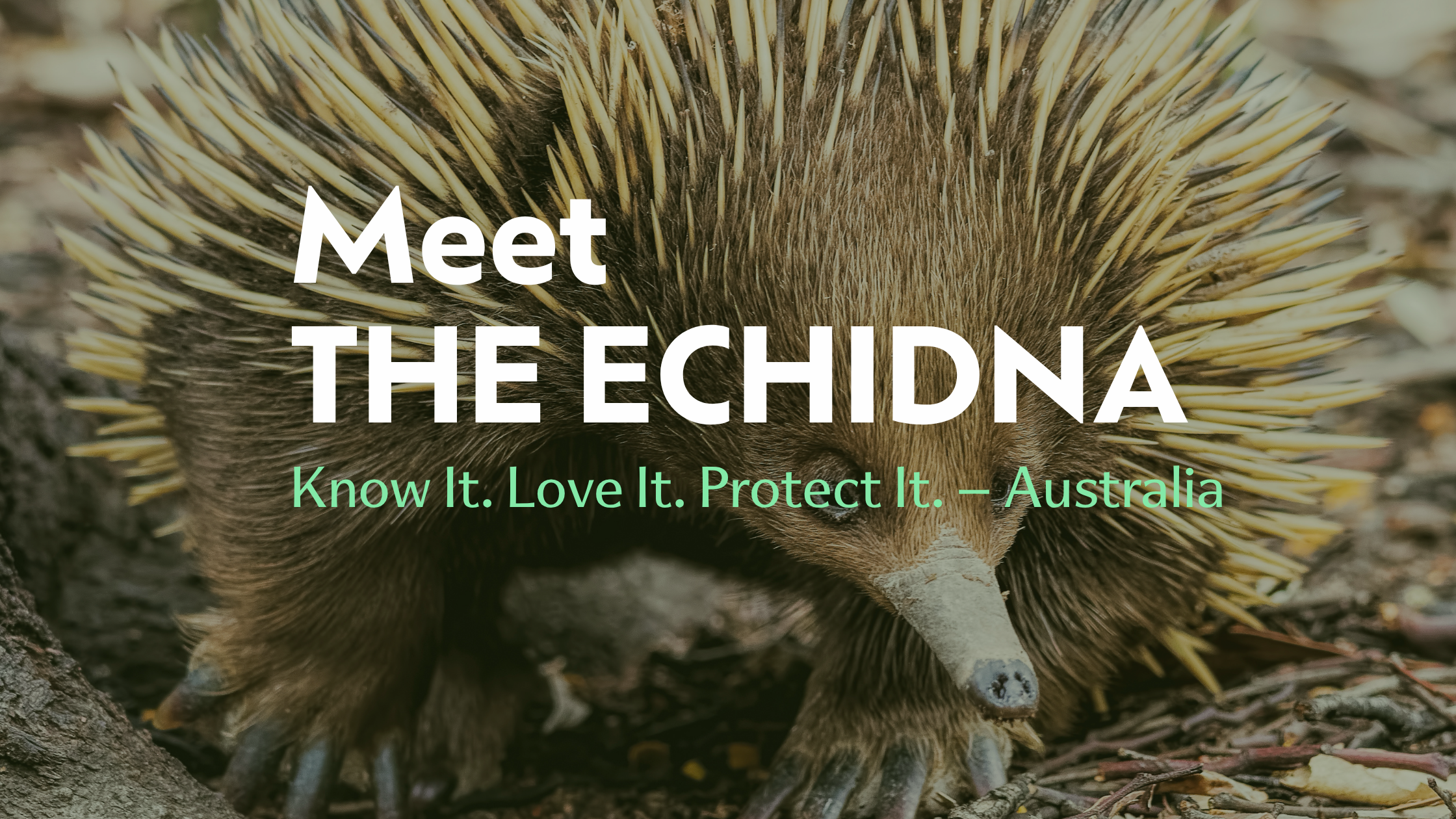
    πŸ€“ Despite this ability, males remain important because they help maintain genetic diversity and long-term adaptability within the species

    A deeper reflection

    The Giant Prickly Stick Insect challenges the idea that conservation is only about protecting large or charismatic animals.

    Invertebrates make up the vast majority of biodiversity and perform countless ecological roles that support the health of ecosystems, yet they are often overlooked in conservation conversations.

    Like many native species, stick insects are vulnerable to habitat loss, climate change and the degradation of the environments they depend upon.

    In a country with more than 600,000 native species, many found nowhere else on Earth, the Giant Prickly Stick Insect reminds us that biodiversity includes the small, hidden and easily forgotten species that quietly keep ecosystems functioning.

    How we care for insects and their habitats will shape the resilience of Australia’s natural systems for generations to come.

    From Wonder to Action

    Learn & understand

    Explore how biodiversity, climate, and land systems are deeply connected through our workshops with People For Nature.

    Create your Nature Oasis

    Plant native species to restore habitat and support the insects, birds, and wildlife that depend on them.

    Join citizen science

    Record native species around you on iNaturalist and contribute to real conservation data.

    (Special thanks to Simon Andrews, Ambassador for People For Nature, for helping shape this story)


    References: