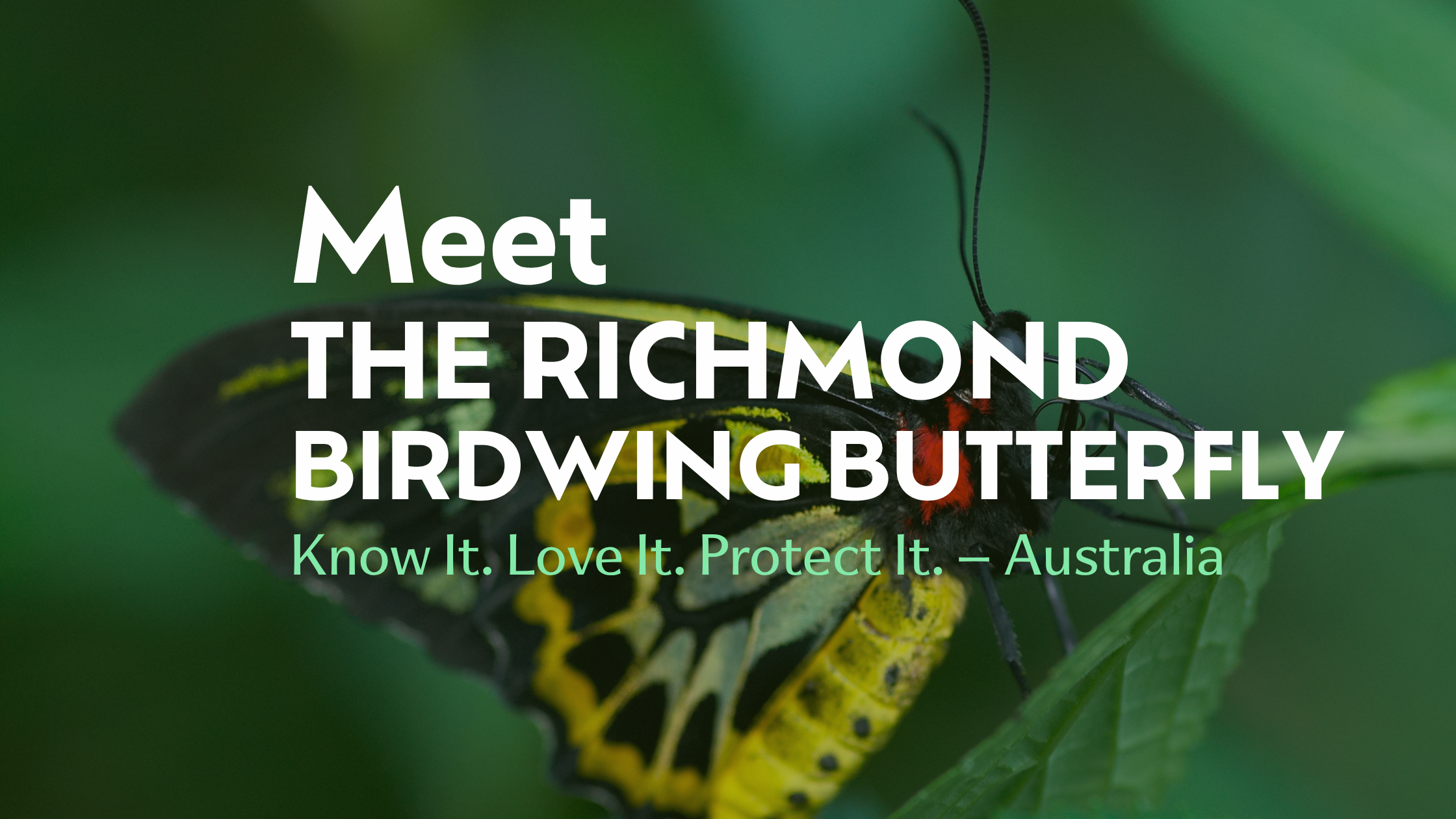
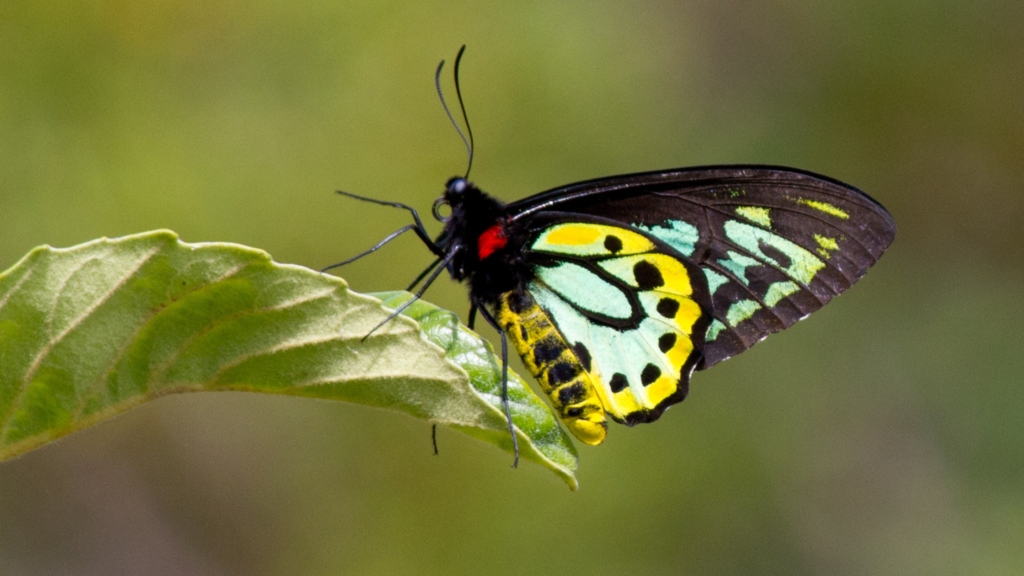
One of Australia’s most spectacular insects, the Richmond Birdwing Butterfly is among the country’s largest butterflies and is found only in the rainforests of Queensland and northern New South Wales.
With its striking colours and impressive size, this beautiful species has become a symbol of the unique biodiversity that makes Australia’s rainforests so special.
It is also a reminder that even some of our most iconic species can be vulnerable to environmental change.
Why it matters
The Richmond Birdwing Butterfly plays an important role in the health of rainforest ecosystems.
🦋 Adult butterflies feed on nectar from a wide variety of native and introduced flowering plants
🌼 They contribute to pollination and support the reproduction of many plant species
🌳 Their lifecycle is closely linked to the health of rainforest habitats
🌏 Their recovery is seen as symbolic of broader efforts to protect Australia’s unique biodiversity
As both pollinators and indicators of ecosystem health, Richmond Birdwing Butterflies highlight the importance of conserving interconnected natural systems.
Fun facts
🤓 The Richmond Birdwing Butterfly has a close relationship with the native Birdwing Vine (Pararistolochia praevenosa), which is the sole food source for its larvae
🤓 The Birdwing Vine contains aristolochic acid, making the caterpillars toxic to vertebrate predators
🤓 Despite this defence, the caterpillars can still fall prey to other invertebrates, including other larvae
🤓 Adult butterflies prefer feeding on white and red flowers, including native frangipani, lilly pillies and hibiscus
A deeper reflection
The Richmond Birdwing Butterfly reminds us that no species exists in isolation.
Its survival depends entirely on the presence of a single native vine, demonstrating how deeply interconnected biodiversity can be.
Yet habitat destruction, climate change and the introduction of non-native plants have significantly restricted the butterfly’s range and placed increasing pressure on its future.
In a country with more than 600,000 native species, many found nowhere else on Earth, the Richmond Birdwing Butterfly is a powerful example of why conservation is about protecting relationships between species as much as protecting individual plants and animals.
How we care for rainforests and native habitats today will determine whether future generations can continue to witness one of Australia’s most beautiful butterflies.
From Wonder to Action
Learn & understand
Explore how biodiversity, climate, and land systems are deeply connected through our workshops with People For Nature.
Create your Nature Oasis
Plant native species to restore habitat and support the insects, birds, and wildlife that depend on them.
Join citizen science
Record native species around you on iNaturalist and contribute to real conservation data.
(Special thanks to Simon Andrews, Ambassador for People For Nature, for helping shape this story)
References:
Leave a Reply