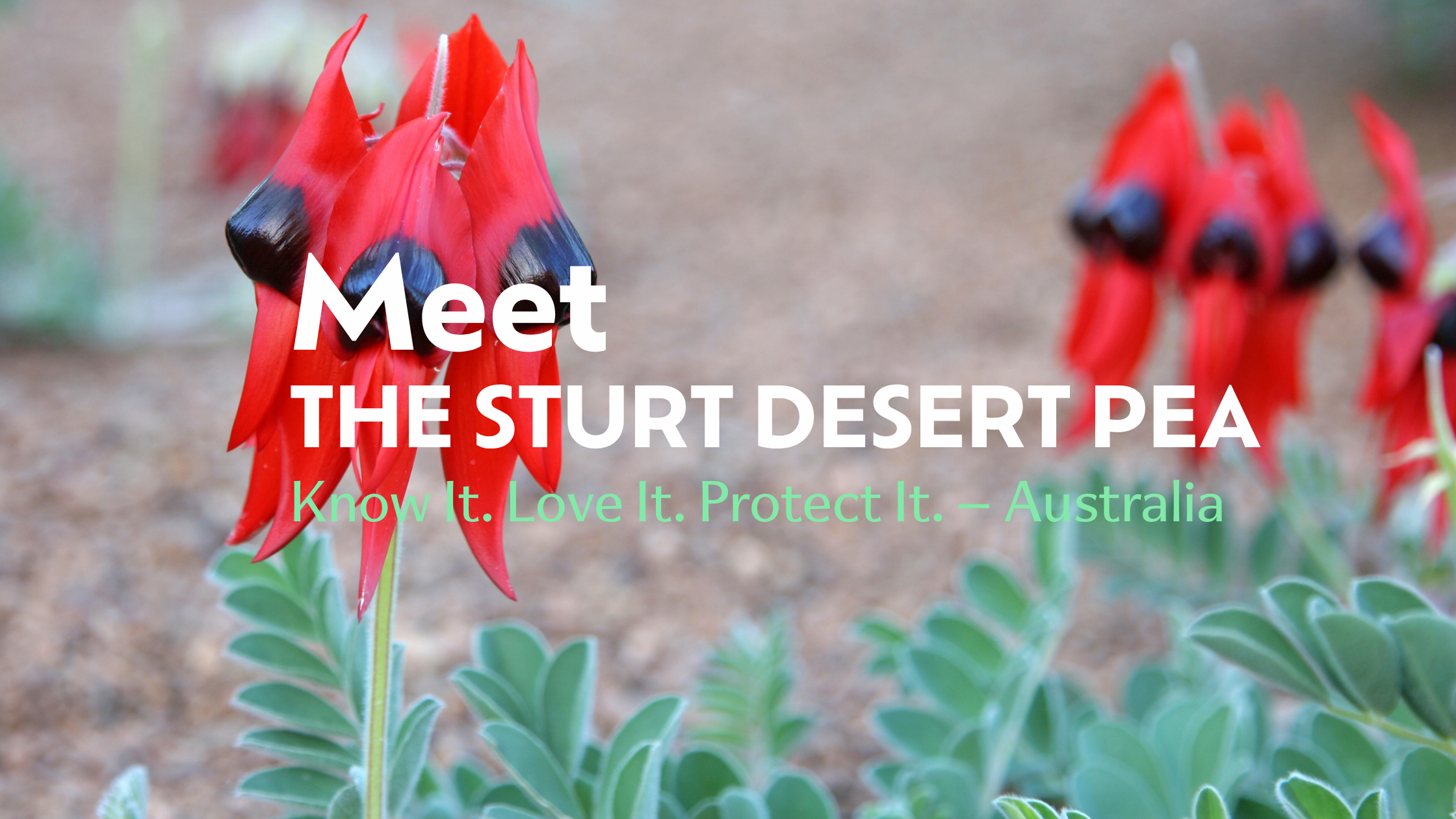
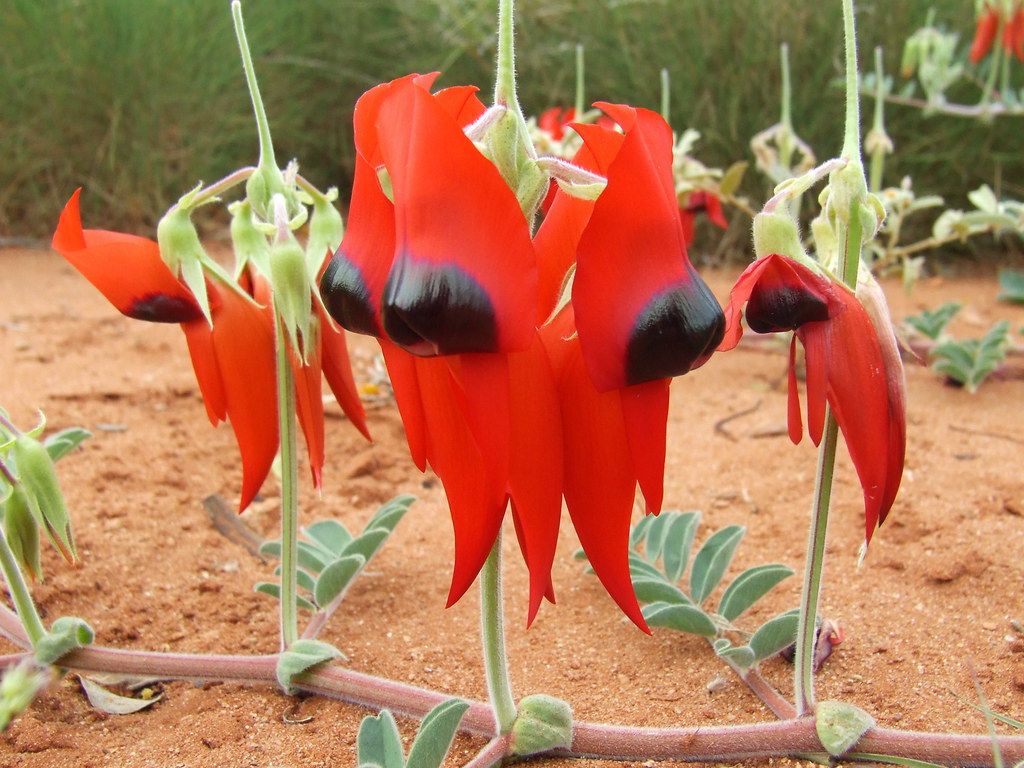
One of Australia’s most striking native flowers, the Sturt’s Desert Pea is instantly recognisable for its vibrant red petals and distinctive black centres that stand out against the arid landscapes it calls home.
Found in some of the country’s harshest environments, this iconic wildflower has evolved remarkable adaptations that allow it to survive and flourish where many other plants cannot.
It is a powerful symbol of resilience and the extraordinary diversity of life that has adapted to Australia’s unique conditions.
Why it matters
The Sturt’s Desert Pea is an important part of Australia’s arid ecosystems.
🦗 It provides food and resources for native insects and other wildlife
🌱 Its deep roots help it survive prolonged dry periods and contribute to the resilience of desert plant communities
🕸️ It forms part of the complex web of species that support healthy arid landscapes
🦎 It highlights the remarkable adaptations that have evolved in response to Australia’s challenging environments
Although deserts can appear harsh and lifeless, species such as the Sturt’s Desert Pea reveal them to be dynamic ecosystems rich in biodiversity.
Fun facts
🤓 Sturt’s Desert Pea is the floral emblem of South Australia and symbolises resilience and survival in tough conditions
🤓 Its long roots allow it to access deep water reserves and bloom even during drought
🤓 The flower was named after nineteenth-century explorer Charles Sturt, who noted its beauty during his travels
🤓 Its vivid red and black flowers have made it one of Australia’s most iconic and celebrated native plants
A deeper reflection
The Sturt’s Desert Pea challenges the perception that Australia’s deserts are barren landscapes with little ecological value.
Arid regions support an extraordinary range of specialised plants and animals that have evolved to survive under some of the most demanding conditions on Earth.
Yet these ecosystems face growing pressures from habitat degradation, invasive species and a changing climate.
In a country with more than 600,000 native species, many found nowhere else on Earth, the Sturt’s Desert Pea reminds us that biodiversity extends far beyond rainforests and coastlines and thrives even in the driest corners of the continent.
How we care for Australia’s arid landscapes today will determine the future of many remarkable species that depend on them.
From Wonder to Action
Learn & understand
Explore how biodiversity, climate, and land systems are deeply connected through our workshops with People For Nature.
Create your Nature Oasis
Plant native species to restore habitat and support the insects, birds, and wildlife that depend on them.
Join citizen science
Record native species around you on iNaturalist and contribute to real conservation data.
(Special thanks to Simon Andrews, Ambassador for People For Nature, for helping shape this story)
References:
Leave a Reply