We gratefully acknowledge all individuals and organisations who supported People For Nature in 2025, including our anonymous donors.
As we reflect on the past year, we want to take a moment to express our deep gratitude to the individuals and partners who have stood beside us. Your support has not only helped us grow—it has helped us reach more communities, deepen our impact, and bring climate and biodiversity learning to life in ways that are accessible, hopeful, and action-oriented.
Our Blue Partners
*Blue Partners provide national-scale support for programs across Australia.
Our Green Partners
Green Seedling Partners support local events and community actions.
Every contribution, big or small, makes a difference — get in touch to find out how your company can support our work.
A Thriving Ecosystem of Collaboration
Without the support and collaboration of our partners, none of what we do for nature would be possible.
To all of our supporters, collaborators, facilitators, and community members: thank you. You are part of a growing movement of people choosing action over apathy, connection over disconnection, and nature-positive change over business as usual.
We are so grateful to be on this journey with you.
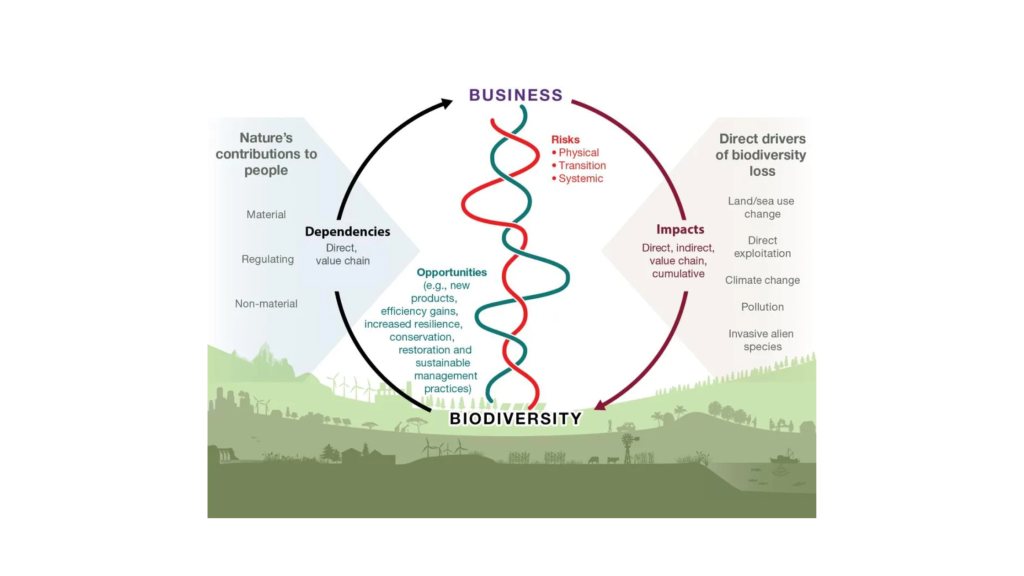
Biodiversity isn’t just a “nice-to-have” — it’s the foundation of our economy. From agriculture and tourism to supply chains and product innovation, healthy ecosystems underpin every business activity. Yet understanding the state of the world’s ecosystems can feel overwhelming. That’s where the IPBES reports come in — and why they are essential for Australian businesses.
What is IPBES?
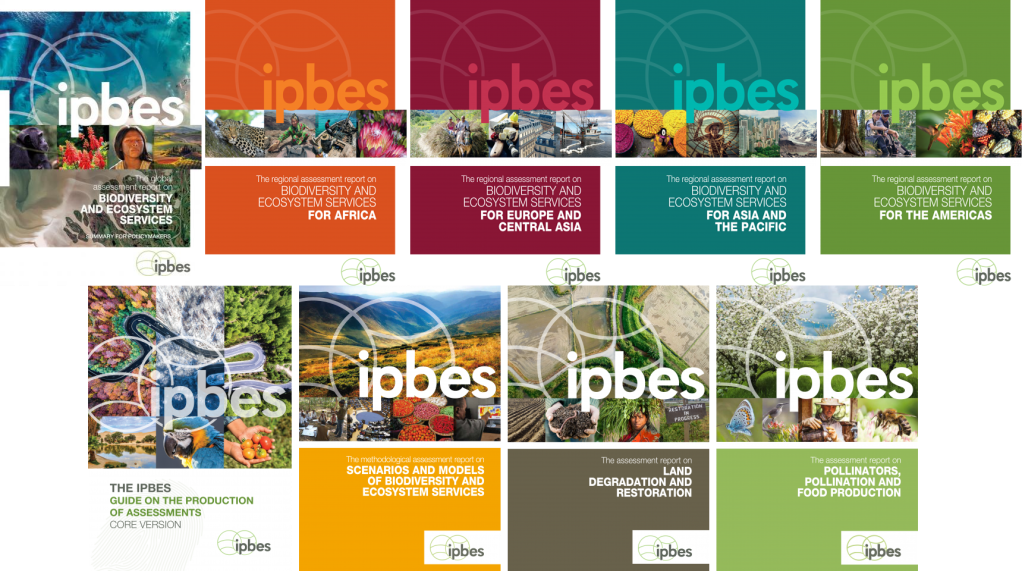
The Intergovernmental Science-Policy Platform on Biodiversity and Ecosystem Services (IPBES) is often called the “IPCC for nature.” Its mission is to provide scientifically rigorous assessments of the state of global biodiversity and the ecosystem services it provides — the benefits humans rely on, from clean water and fertile soil to pollination and climate regulation.
IPBES reports identify the drivers of biodiversity loss, the consequences for society and the economy, and the urgent actions needed to safeguard nature. They translate complex science into actionable insights for governments, NGOs, and businesses.
Why IPBES Matters in Australia
Australia is home to some of the world’s most unique and fragile ecosystems. Its biodiversity is deeply tied to the economy:
Agriculture depends on healthy soils, pollinators, and water systems
Tourism relies on vibrant natural landscapes
Urban and resource development must account for ecosystem resilience
The IPBES reports highlight that biodiversity loss is not just an environmental problem — it’s an economic risk.
Ecosystem degradation threatens productivity, disrupts supply chains, and increases business exposure to regulatory and reputational risk. For Australian companies, this makes understanding and acting on biodiversity critical.
Why Businesses Must Pay Attention
Biodiversity underpins every product and service. A business that ignores the state of ecosystems is exposing itself to hidden risks:
Supply chain disruption from resource scarcity or species loss
Increased operational costs due to degraded ecosystems
Reduced resilience to climate impacts
Reputational damage as stakeholders demand responsible practices
The IPBES reports give businesses the evidence and guidance to identify these risks, make informed decisions, and invest in solutions that safeguard both nature and the bottom line.
Making Complex Science Digestible
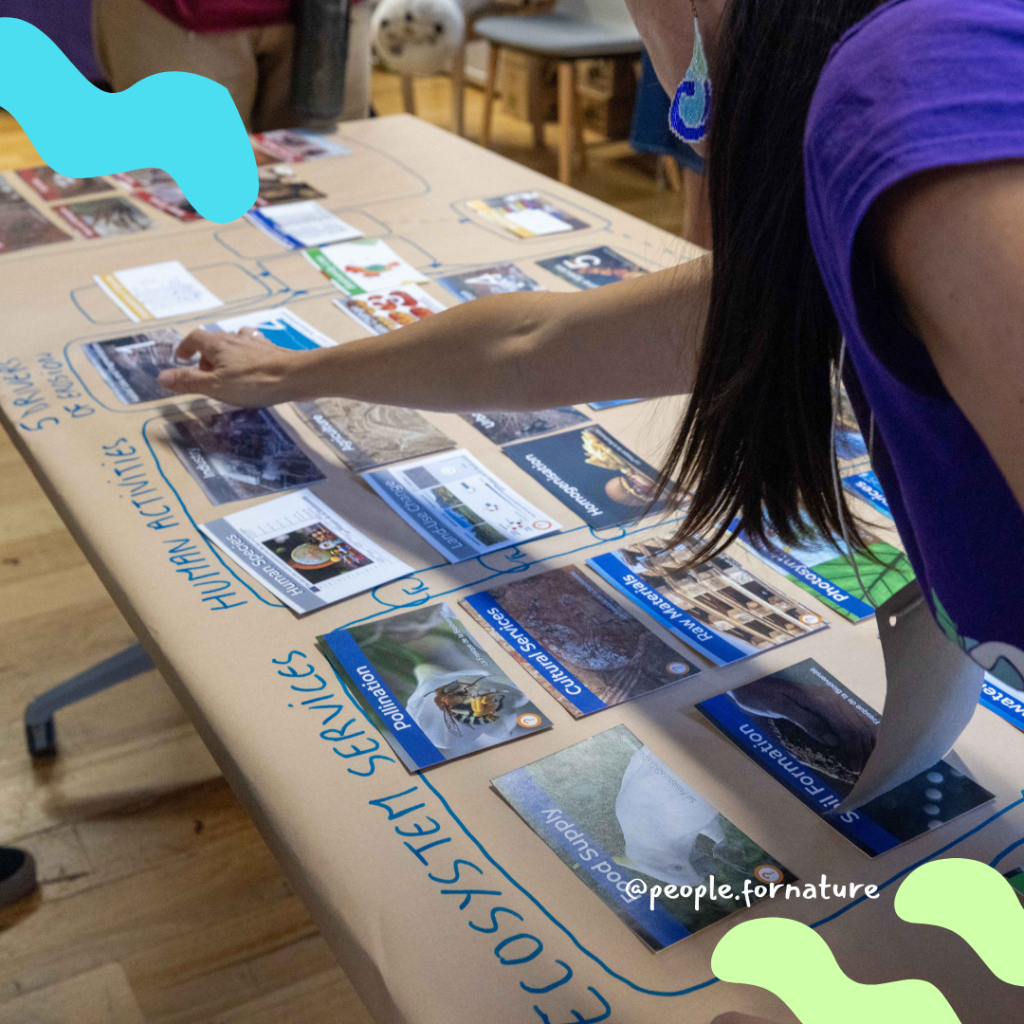
The challenge is that IPBES reports are dense and technical. That’s why tools like Biodiversity Collage (Fresque de la Biodiversité) are so valuable. Through interactive workshops, businesses can:
Understand the key findings of IPBES in a fun, visual way
Explore how their operations impact biodiversity
Identify practical solutions that reduce risk and improve resilience
Build team awareness and culture around sustainability
In short, Biodiversity Collage transforms complex science into actionable insights, helping teams make nature-informed decisions while fostering collaboration and engagement.
For Australian businesses, biodiversity is not optional — it’s a strategic asset. The IPBES reports provide the knowledge needed to understand the risks and opportunities. Tools like Biodiversity Collage make this science accessible, engaging, and actionable, empowering businesses to protect ecosystems, strengthen resilience, and future-proof their operations.
Investing in biodiversity knowledge isn’t just good for nature — it’s essential for the sustainability and success of business in Australia and beyond.
If you’re a business leader who wants to understand how biodiversity impacts your operations — and discover practical ways to build resilience while engaging your team — we’d love to have a conversation. Get in touch with us at People For Nature to explore how Biodiversity Collage can make these insights actionable for your organisation, turning complex science into real-world impact.
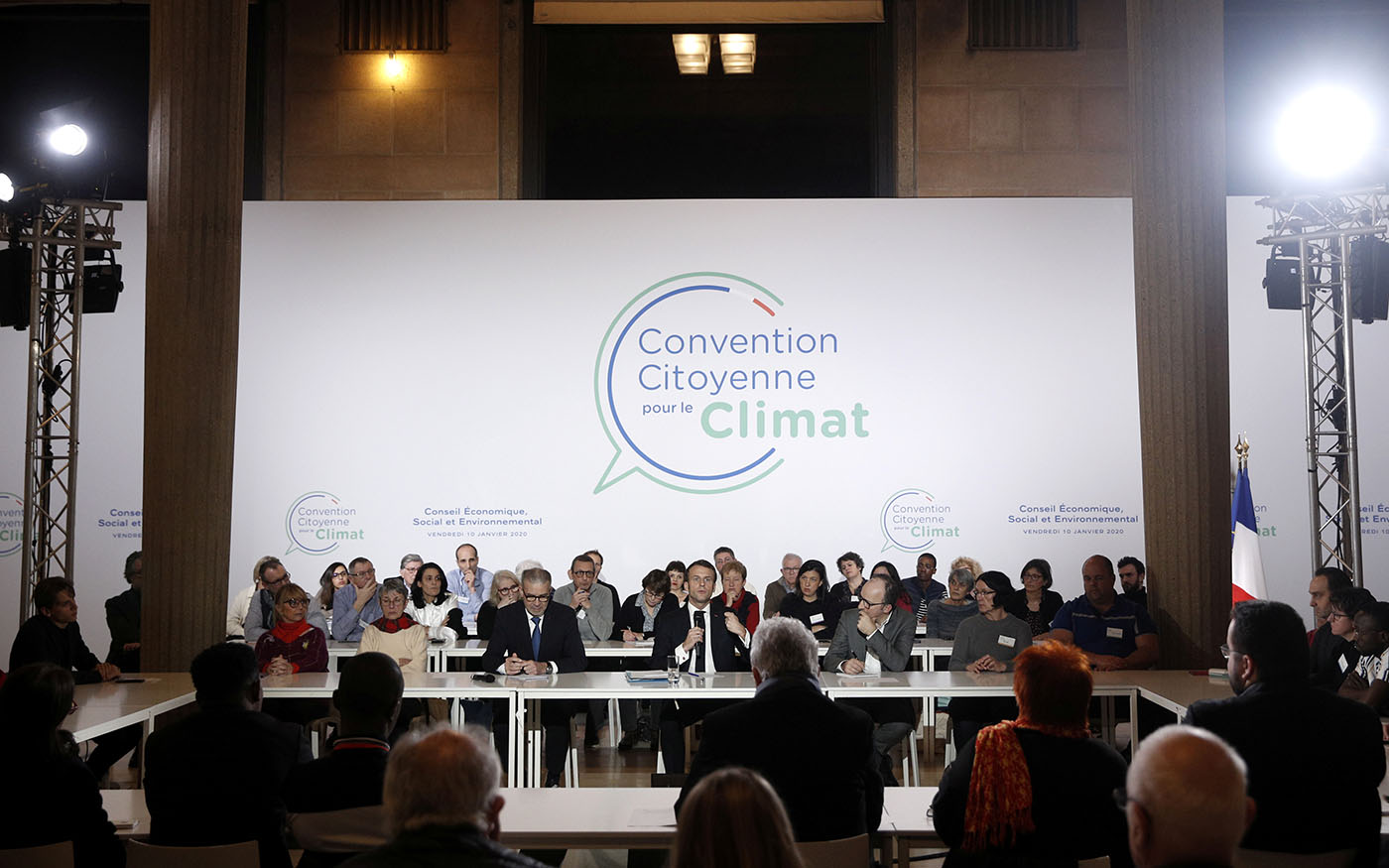
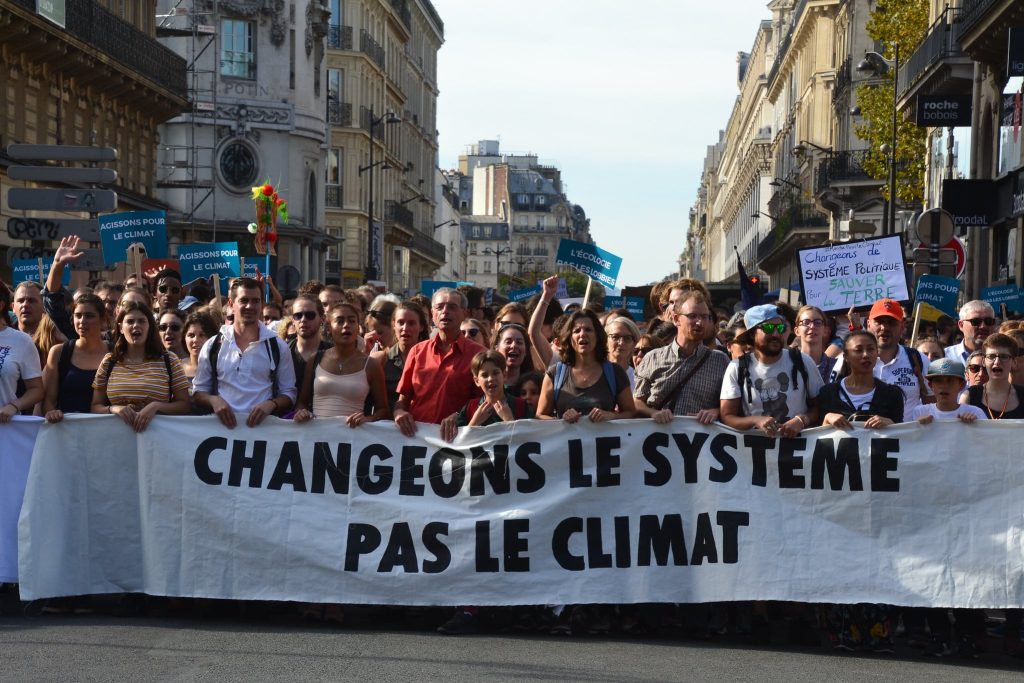
In 2019, France took a bold step to involve everyday people directly in shaping climate policy by establishing the Citizens’ Convention on Climate — La Convention Citoyenne pour le Climat. Rather than leaving climate decisions solely to politicians, this initiative brought together 150 randomly selected citizens from across the country to deliberate, learn, and propose real policy solutions.
Unlike a public petition or online survey, this was a deliberative democratic process: participants spent months in structured sessions, hearing from experts with different viewpoints, interrogating evidence, and working in small thematic groups on topics like housing, transport, food and consumption.
The aim was clear: identify a package of measures that would reduce France’s greenhouse gas emissions by at least 40% by 2030 (compared with 1990 levels), ensuring the transition was fair and socially just.
The French president committed to take the proposals “without a filter” — meaning the government had to submit them either to a referendum, a parliamentary vote, or implement them directly. This was designed to give citizens’ recommendations real political weight.
What happened in practice?
Across a series of multi‑day sessions, these 150 citizens wrestled with complex policy issues. They didn’t need to be climate experts — their diversity of age, background, region and life experience was intentional. That diversity helped ensure recommendations reflected the realities and values of ordinary people.
In the end, they produced a set of 149 proposals, covering everything from modernising housing energy use to sustainability in transport, production and consumption. While not all were adopted, many found their way into law — notably in France’s Climate and Resilience Act of 2021 — and others shaped the public debate.
Five years on, reflections from participants reveal mixed feelings: there’s pride in meaningful engagement and understanding, but also frustration where political follow‑through fell short of expectations. Some advocates have continued their involvement in climate and civic life, while others felt disillusioned by the gap between public participation and political decision‑making.
Why this matters for Australia
Australia faces its own climate challenges — intense heat, drought, bushfires and rising emissions targets — yet public trust in traditional politics to deliver bold climate action isn’t always high. A citizens’ climate convention could offer a new way for Australians to co‑create solutions, grounded in lived experience rather than party platforms.
Here’s what Australia could gain from adopting a similar model:
✅ Deep engagement across society Like France, Australia could randomly select representative citizens (ensuring voices from rural, urban, Indigenous and diverse socio‑economic backgrounds) to collaboratively tackle climate policy issues.
✅ Education + trust building Participants would gain a grounded understanding of climate science and policy trade‑offs directly from experts — helping bridge the gulf between technical complexity and everyday life.
✅ Politically credible recommendations By committing to take citizens’ proposals “without a filter” — whether through parliamentary debate, referendum or government action — Australian leaders could strengthen democratic legitimacy and public buy‑in for climate policy.
✅ A long‑term, participatory democratic culture Rather than a one‑off consultation, this process could become a regular feature of Australian democracy — helping citizens shape not only climate policy but also other long‑term challenges requiring broad public consensus.
How it could work in Australia
A practical Australian version might look like this:
Selection: Recruit 150–200 citizens via a genuinely random and stratified process to ensure diversity across age, geography, gender, socioeconomic status and lived experience.
Deliberation: Over several months, participants would meet (both in person and virtually) with independent facilitators, climate scientists, economists, First Nations thinkers, industry voices, and community leaders.
Proposal development: Through structured small‑group work and plenary sessions, citizens would design practical policy options — and collaboratively assess their social and economic implications.
Political response: Federal or state governments would commit in advance to respond publicly, either by introducing legislation, holding a referendum on key measures, or including them in formal policy.
Public transparency: All sessions would be streamed, with documentation freely accessible so all Australians can follow the process and outcomes.
The benefits extend beyond climate policy: such a convention could strengthen civic engagement, improve public understanding of complex issues, and build shared ownership of Australia’s climate future.
Conclusion
France’s Citizens’ Climate Convention wasn’t perfect — and its outcomes faced political hurdles — but it marked a powerful moment of direct citizen participation in climate policymaking. For Australia, experimenting with such a model could deepen democratic participation, build trust, and unlock community‑driven solutions to one of our greatest collective challenges.
Climate education is no longer optional — it’s essential. But how do we move beyond abstract concepts and help students truly understand the climate crisis in a meaningful, engaging way?
This is where Climate Fresk comes in.
Why Climate Fresk?
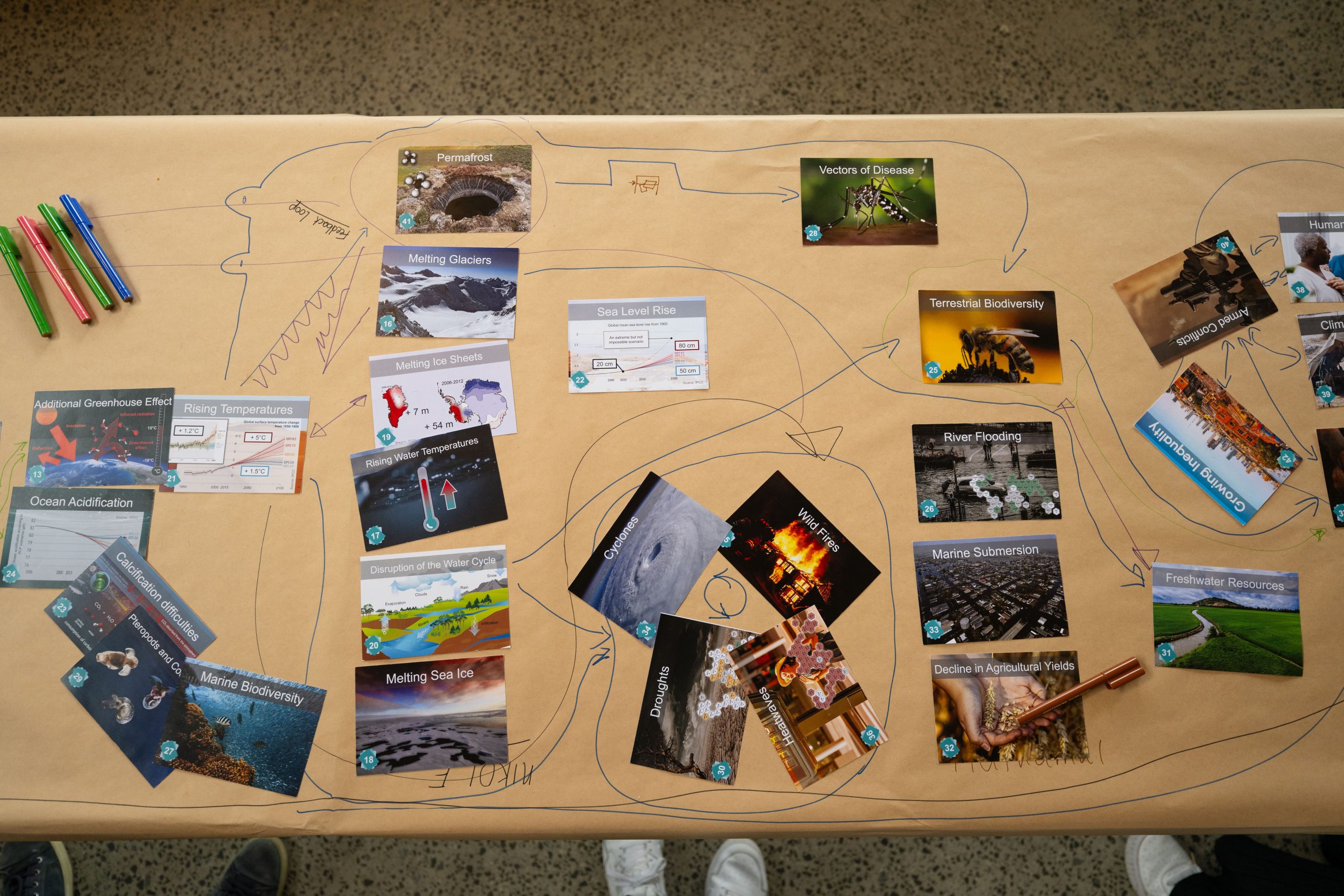
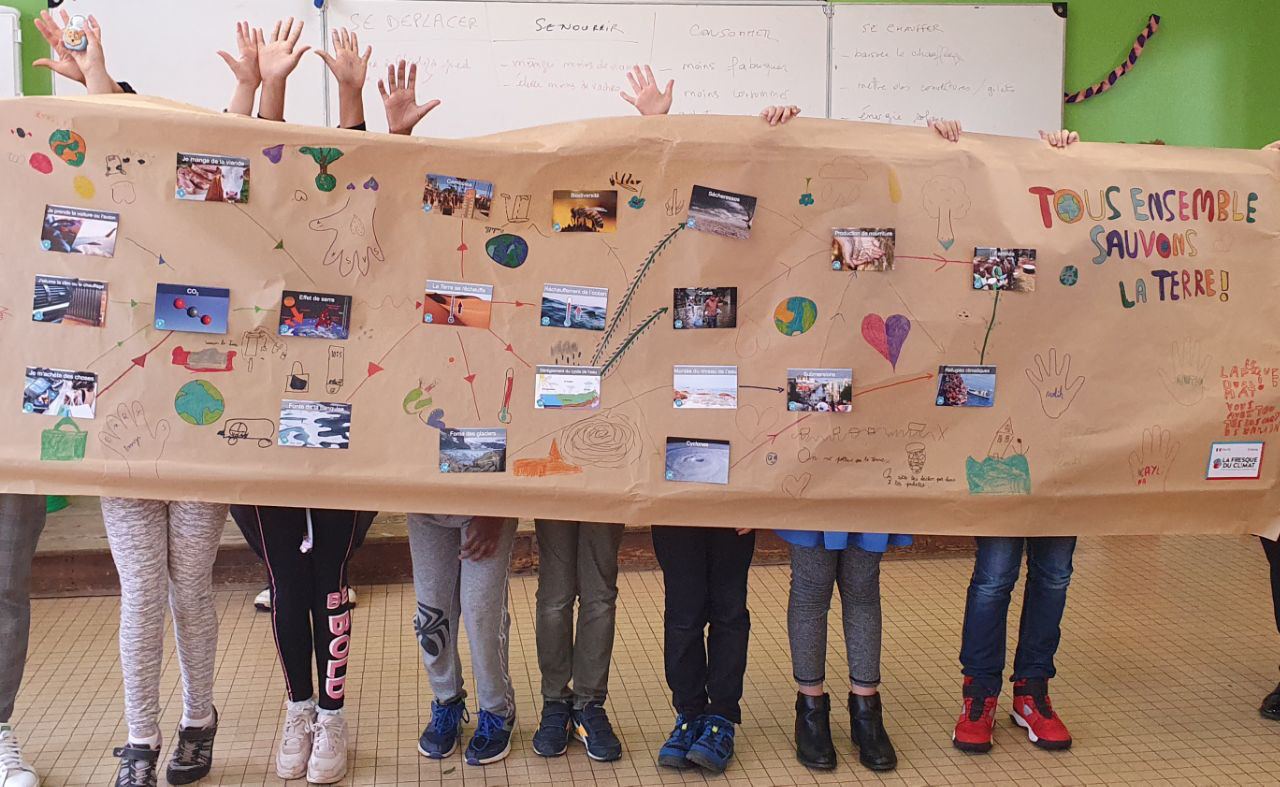
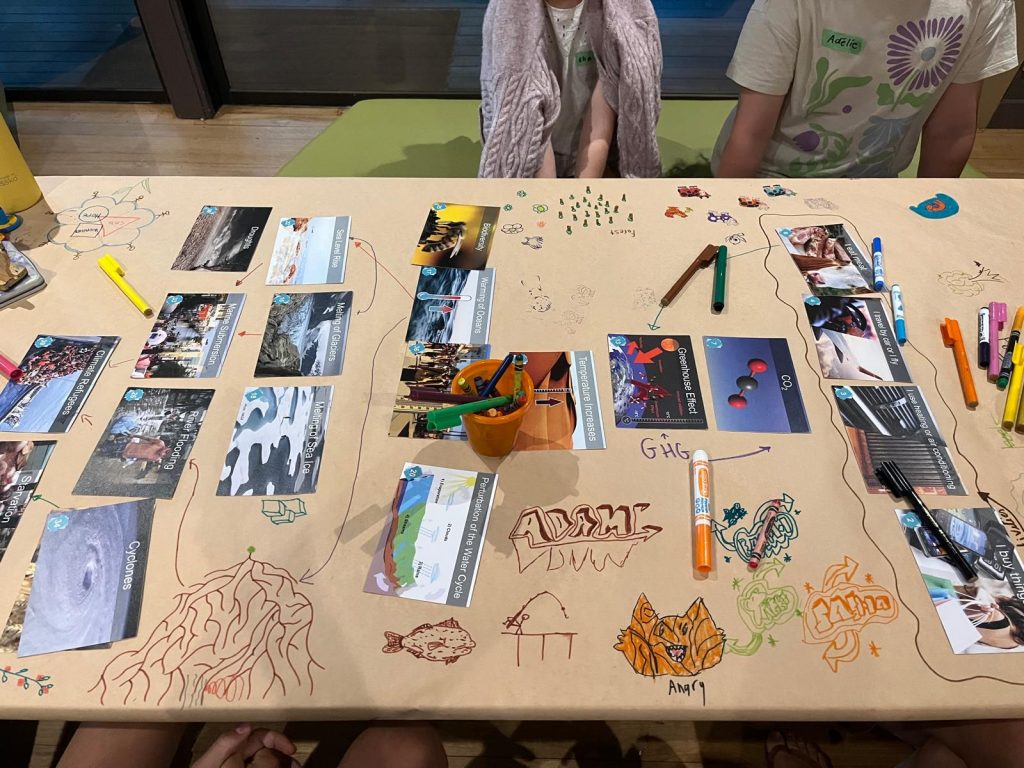
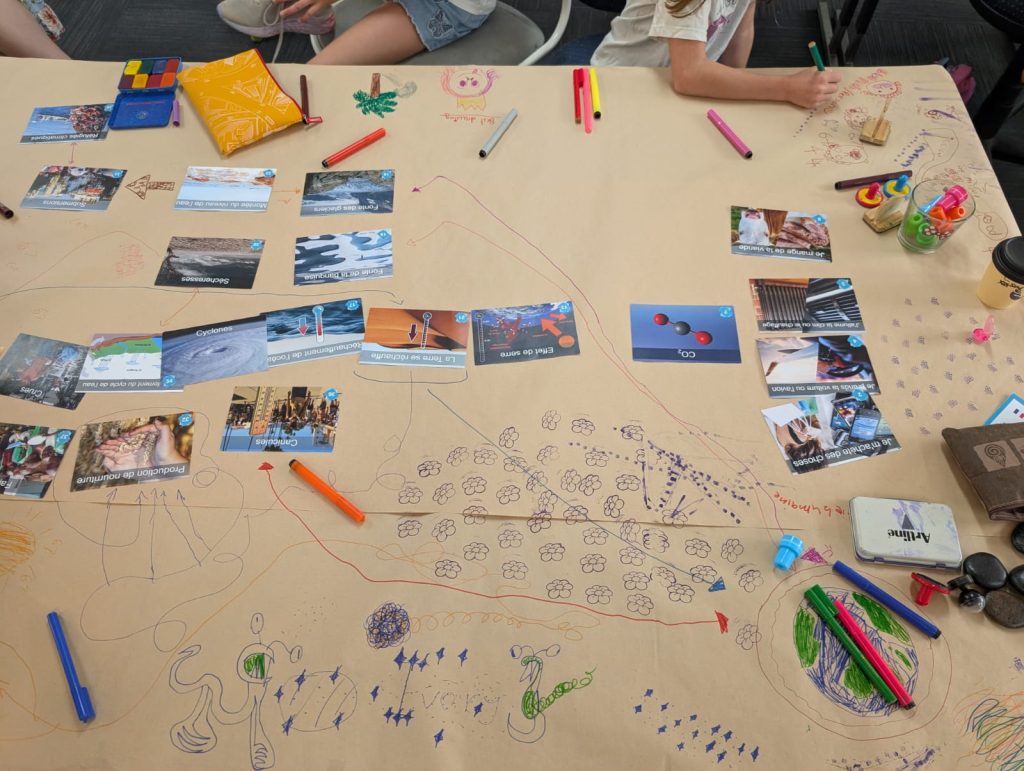
Based on the science of the IPCC, Climate Fresk is an interactive, card-based workshop that helps participants map out the causes and consequences of climate change.
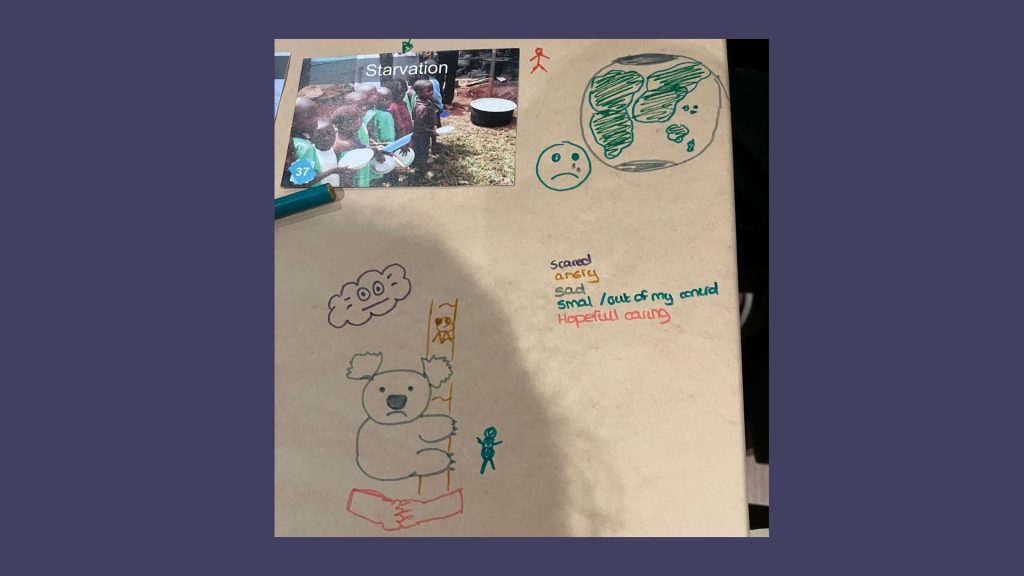
Rather than passively receiving information, students work collaboratively to build a visual system of interconnected factors — from greenhouse gas emissions to global impacts.
The result? A powerful shift from fragmented knowledge to systems thinking.
A Natural Fit for the Classroom
Climate Fresk aligns strongly with the Australian Year 9 Geography curriculum, offering an engaging, inquiry-based learning experience that complements existing teaching frameworks.
It supports key curriculum areas such as:
🌱 Biomes and Food Security
Students explore how climate change affects ecosystems, agriculture, and food systems — deepening their understanding of environmental and human interdependence.
🌍 Geographies of Interconnection
Through the workshop, students uncover global links such as:
Emissions and supply chains
Unequal climate impacts across regions
The complexity of managing global challenges
This directly supports curriculum outcomes related to global systems and their impacts.
Inquiry-Based Learning in Action
Climate Fresk is built around inquiry — a core pillar of modern Geography education.
Students are encouraged to ask questions, test connections, and build their own understanding of climate systems. This approach fosters:
Critical thinking
Collaboration
Curiosity
Systems-level understanding
Rather than being told what to think, students discover it for themselves.
Building Real-World Skills
Beyond content knowledge, Climate Fresk supports the development of essential geographical skills, including:
Interpreting complex systems
Identifying cause-and-effect relationships
Analysing global patterns and impacts
Communicating insights collaboratively
These are skills that extend far beyond the classroom.
From Awareness to Action
One of the most powerful aspects of Climate Fresk is that it doesn’t stop at understanding.
The workshop concludes with a focus on solutions — empowering students to think about what can be done at individual, community, and global levels.
This aligns with achievement standards and general capabilities by helping students:
Reflect on their role in the world
Engage with real-world challenges
Develop a sense of agency
A Transformational Teaching Tool
Climate Fresk stands out because it:
Turns abstract climate science into a clear, visual system
Encourages student-led discovery rather than passive learning
Connects local actions to global consequences
Inspires action, not just awareness
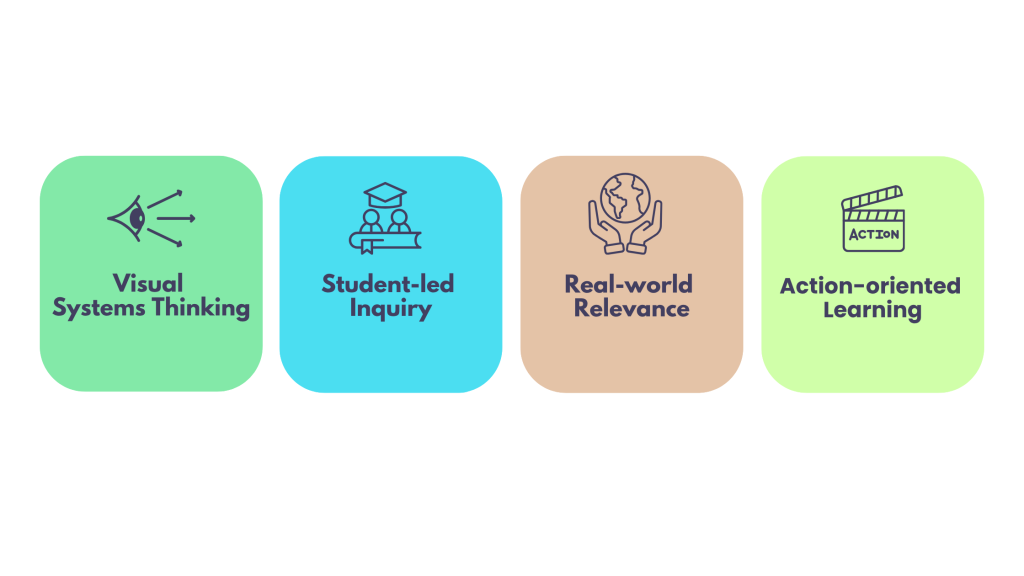
In doing so, it reflects best-practice Geography pedagogy: inquiry-driven, relevant, and action-oriented learning.
Looking Ahead
As educators look for ways to make climate education more impactful, tools like Climate Fresk offer a powerful solution.
By combining scientific rigour with interactive learning, it helps students not only understand the world — but feel empowered to shape it.
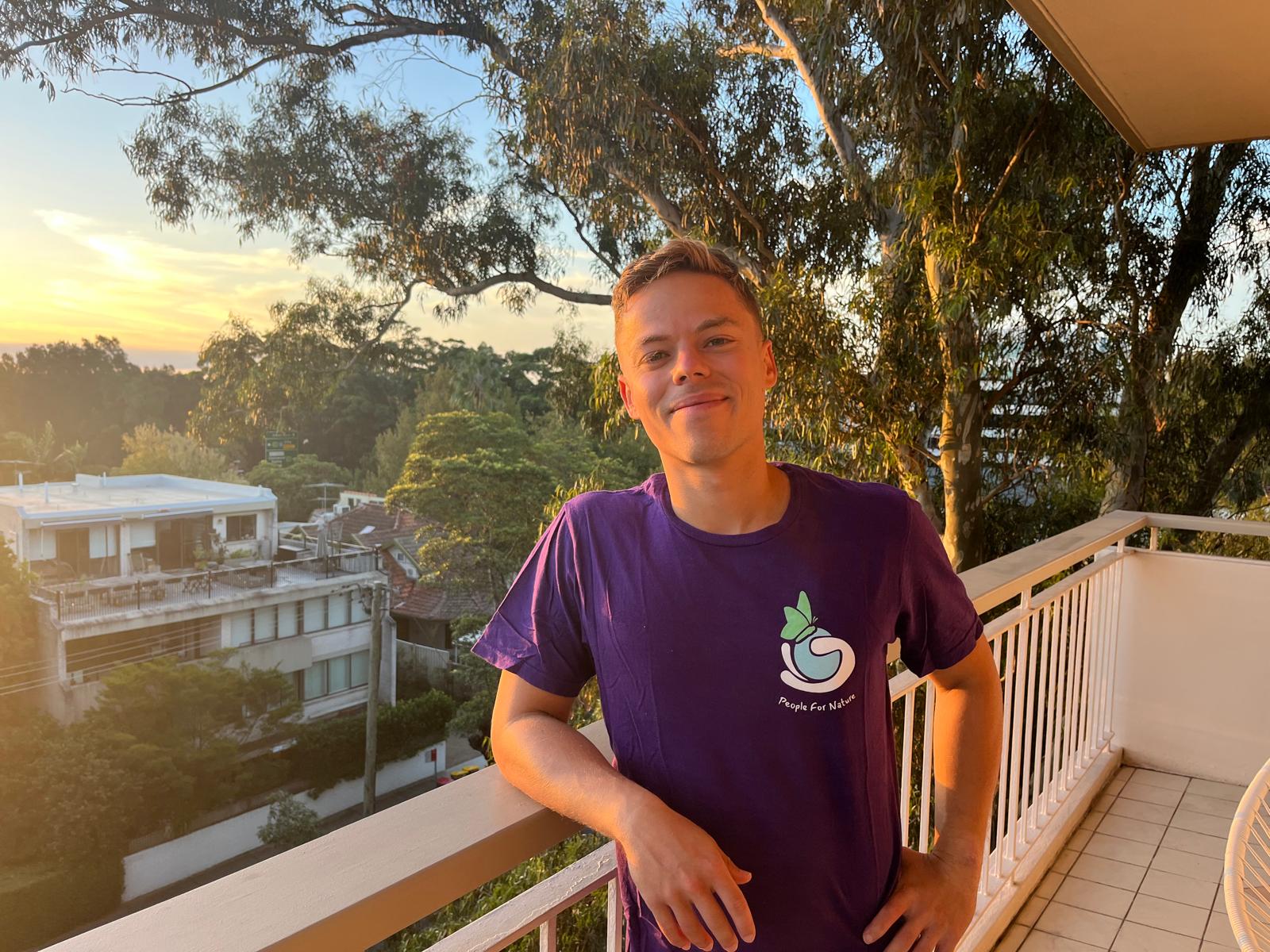
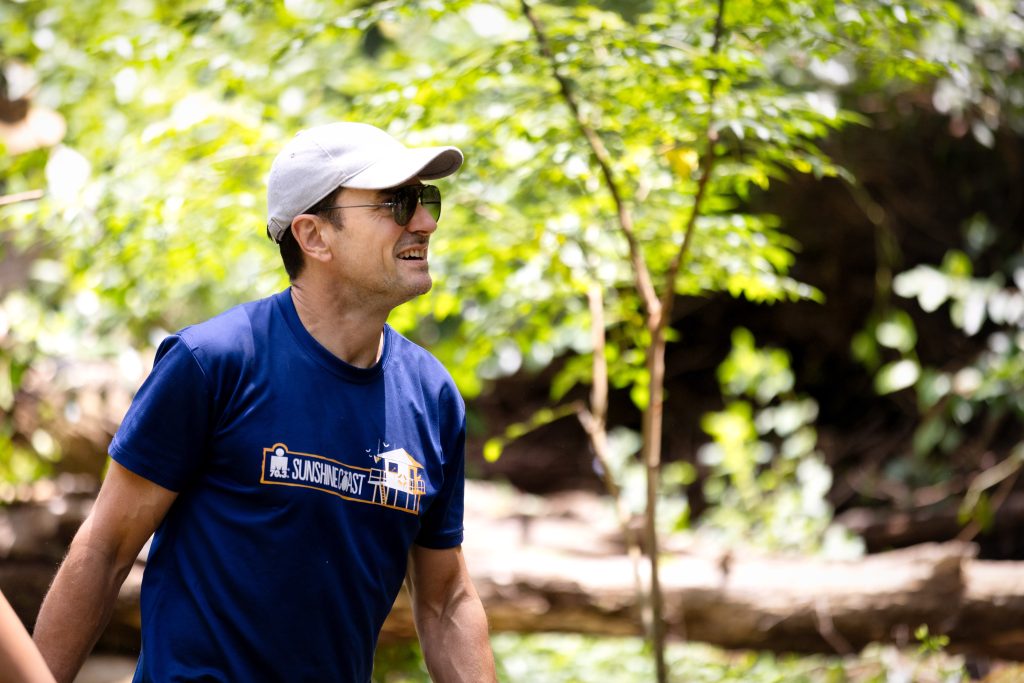
Florian Gautron is an Environment & Sustainability Engineer with a special focus on biodiversity and nature‑positive solutions. Based in Sydney, Florian brings both technical expertise and a passion for environmental education to his role as an Ambassador for People For Nature.
Florian facilitates science‑based workshops such as Climate Fresk and Biodiversity Collage, helping diverse audiences connect climate systems in action‑oriented ways. His approach blends environmental engineering insight with a belief in the power of collective action to drive positive ecological change.
He actively participates in events and runs awareness initiatives, including supporting community engagement like City2Surf fundraising event and the AlterCOP 30 movement in 2025.
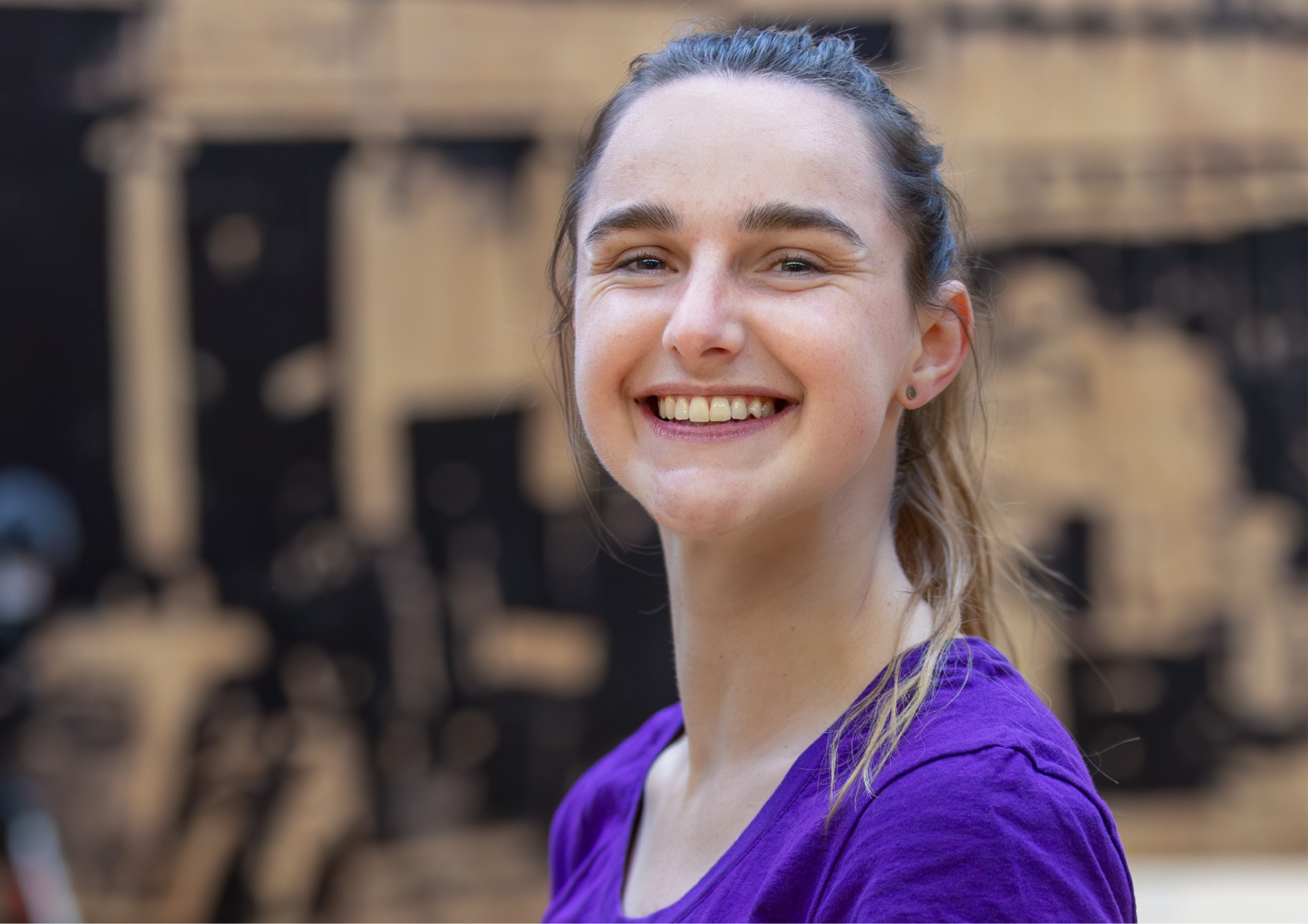
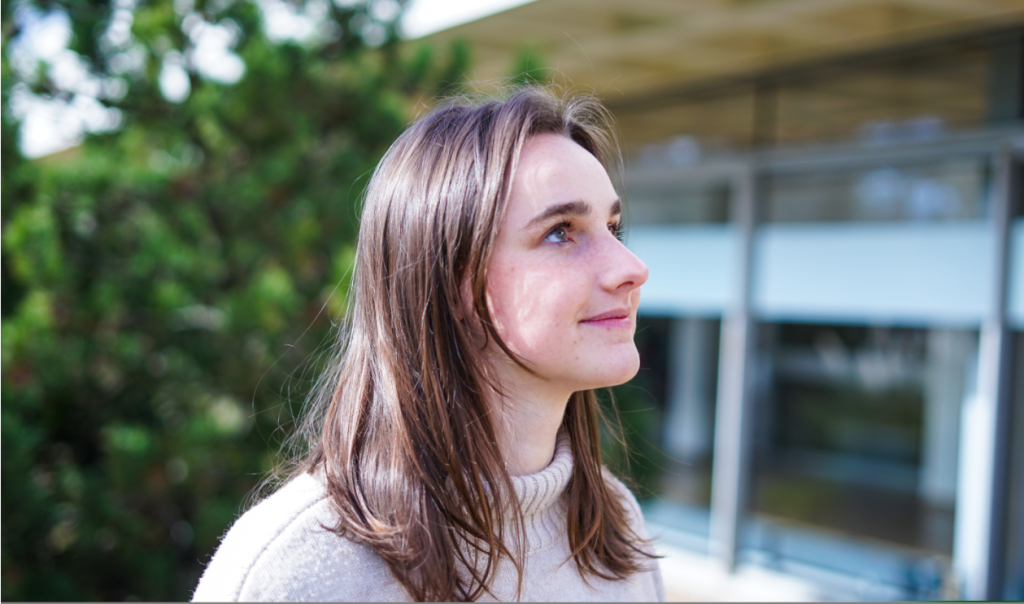
Luna Renaud is a passionate volunteer coordinator and sustainability advocate driving people‑centred climate action across Australia.
As an ambassador and our Volunteer Coordinator for As ambassador and a key member of the CitizenCOP — a grassroots climate movement running alongside the UN’s COP agenda — Luna brings relationships management, volunteer coordination and events delivery skills. At People For Nature, Luna helps to rally diverse contributors, from first-time volunteers to new partners, around collaborative climate initiatives that inspire action, community resilience and change.
Before her work in the climate sphere, Luna built a strong foundation in coordinating complex projects and stakeholder relationships through roles in entertainment and large international events, including major contributions to the Paris 2024 Olympic & Paralympic Games and Vivid Sydney.
Her background in entertainment and retail equips her with exceptional organisational skills and a people‑first approach to project delivery in fast‑paced environments.
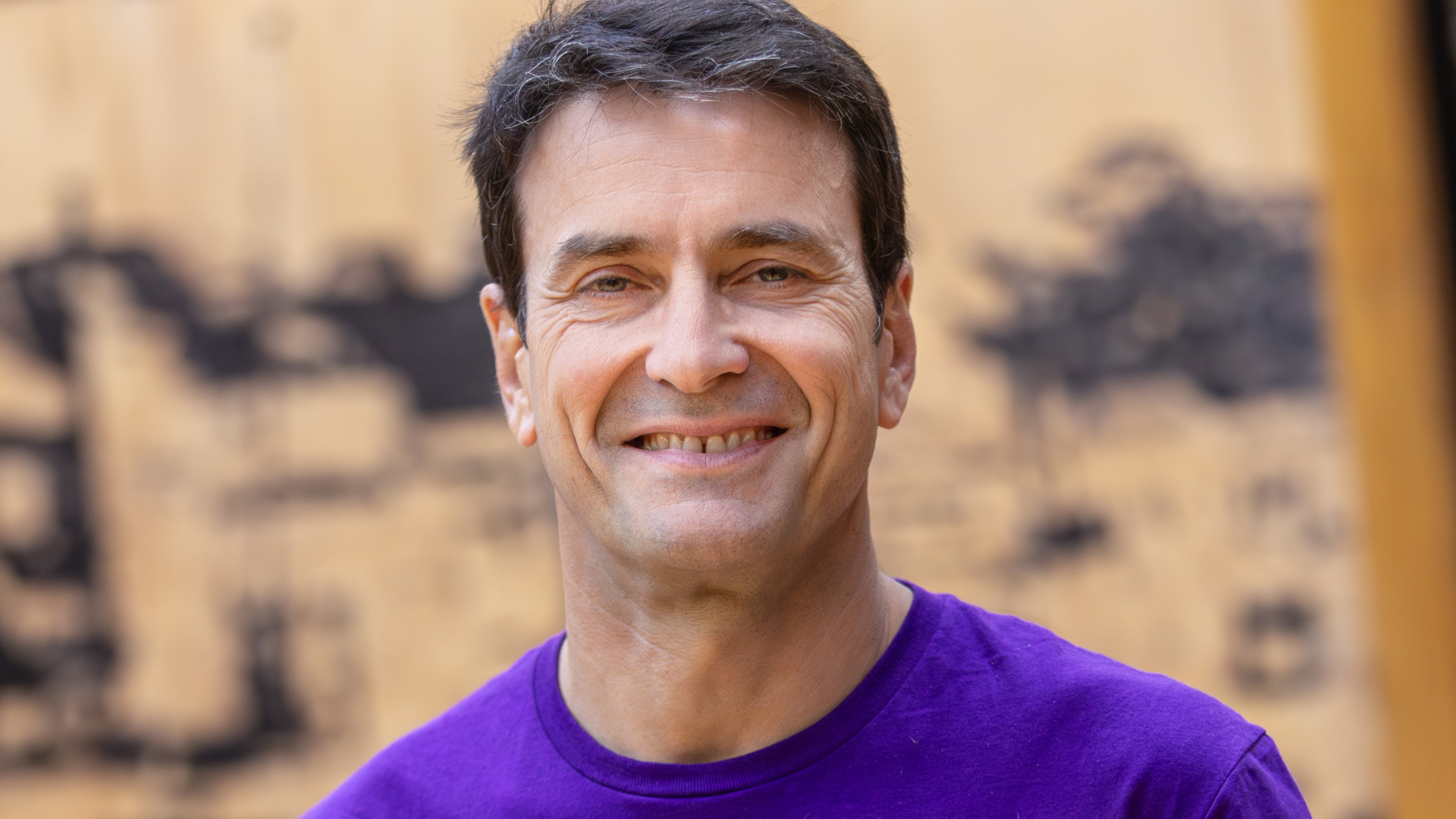
Sébastien Colette is a seasoned technology and business leader with over 25 years’ experience helping organisations harness data, drive digital transformation and enable ESG‑aligned outcomes.
He is the Founder and Director of S2C Professional Services, a Brisbane‑based consulting firm specialising in data‑driven decision‑making, digital innovation and sustainability advisory.
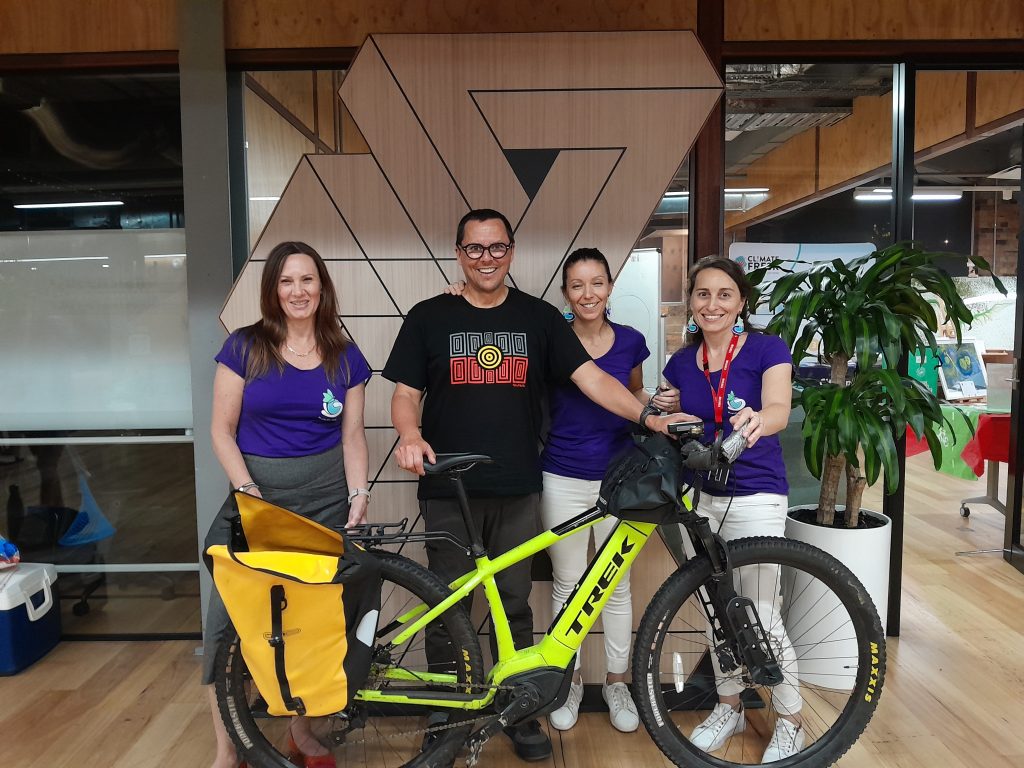
As Ambassador for People For Nature and as a key member of the AlterCOP Australia core team, Sébastien brings strategic thinking, partnership development and community engagement.
He supports the organisation’s mission to empower citizens to take action on climate and biodiversity challenges by advancing fundraising efforts, building partnerships, and fostering collaboration between business, civic, and grassroots communities on climate education and people‑powered sustainability initiatives.
Young people are already experiencing the effects of a changing climate.
That’s why at People For Nature, we believe it is crucial to integrate climate education into schools and universities. Early education fosters a sense of responsibility and urgency, ensuring that the next generation is ready to tackle the challenges ahead.
Building climate literacy through teacher-led Climate Fresks
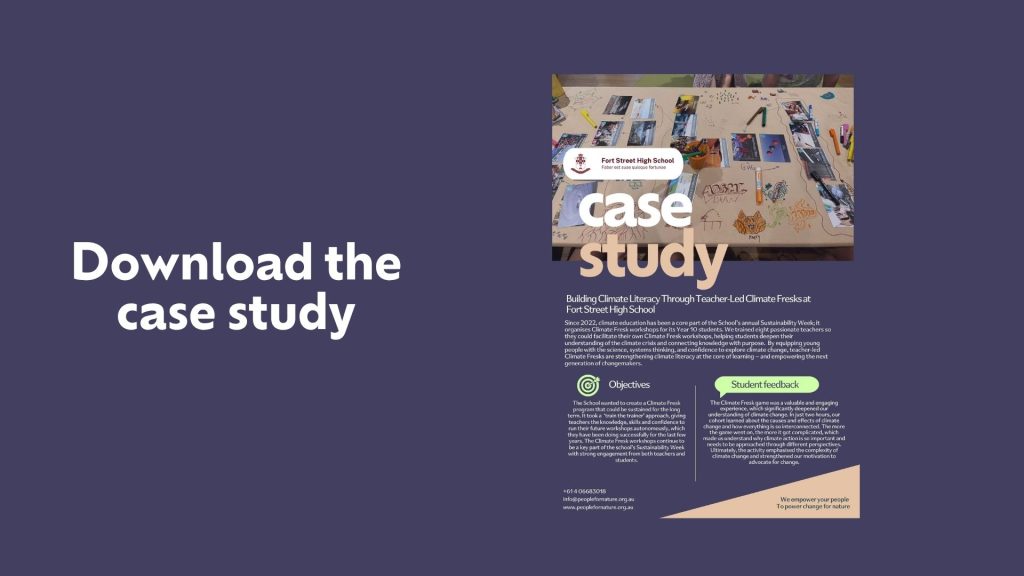
One example of our work is with Fort Street High School. Since 2022, the school has made climate education a core part of its annual Sustainability Week and it organises Climate Fresk workshops for Year 10 students (ages 15–16).
Fort Street High School recognises that climate change must be meaningfully embedded in the classroom, not only to raise awareness, but to empower students with solutions they can apply in shaping a better future.
The approach
Fort Street High School wanted to create a program that could be sustained for the long term. So, rather than relying solely on external facilitators, we trained eight teachers to co-lead the workshops. By taking this ‘train the trainer’ approach, we gave these teachers the knowledge, skills and confidence to run their future workshops autonomously, which they have been doing successfully for the last few years.
Since 2025, teachers have taken on full facilitation and organisation of the workshops themselves.
Results & key impact
The Climate Fresk workshops continue to be a key part of the school’s Sustainability Week with strong engagement from both teachers and students.
We witness a high level of student engagement, showcasing a clear benefit in engaging and empowering teachers to lead the Climate Fresks as they already have a trusted relationship with the students.
Carole Defago, Climate Fresk Program Lead at People For Nature
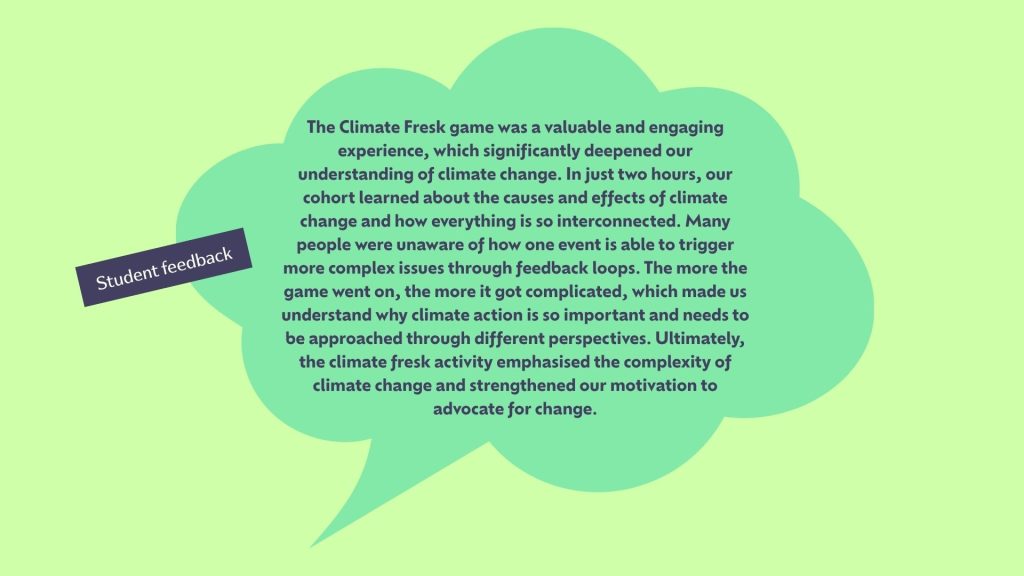
Additional student feedback supported the success of this climate initiative:
The final presentation of the projects, which the groups presented together in the school hall as a sort of trade fair, [involved] pitching each project to their peers, their teachers and to students from Years 7-9, who now eagerly anticipate their own opportunity to address the climate crisis in this program. The final “bazaar” was full of energy and enthusiasm, with student experts explaining patiently and passionately the urgent need to face the issues their product or system addressed.
Impact beyond the school
We trained eight new Climate Fresk facilitators, building on our existing group of facilitators across Australia.
Furthermore, this success story has inspired other schools to adopt a similar model:
💚 Redlands school has implemented a full-day Year 9 program combining a Climate Fresk workshop and film screening.
💚 The Jesuit schools network trained 8 teachers, with facilitation training scheduled for June 2025.
Our long-term vision for climate literacy in schools
Schools can play a pivotal role in fostering a generation of informed and engaged young leaders dedicated to combating climate change and promoting sustainable practices within their communities.
By equipping teachers as facilitators, this model demonstrates how Climate Fresk can be scaled sustainably within education systems. It is our long-term ambition to see climate literacy and systems thinking embedded in the national curriculum. The Fort Street High School approach highlights the potential for educators to drive change within their schools, fostering a culture of climate action and student-led sustainability projects.
📩 Let’s start the conversation.
Contact us today if you are interested in developing a climate education initiative in your school! We’d love to chat.
Together, we can drive positive change, one action at a time.
Over the past 150 years, the concentration of carbon dioxide (CO₂) in Earth’s atmosphere has increased from a relatively stable 280 parts per million (ppm) to a concerning 420 ppm today. 420 ppm is not just a number – it is a key driver behind climate change, leading to devastating environmental consequences that impact everything from ecosystems to weather patterns to economies. The urgency to act has never been clearer. However, in the face of such a monumental challenge, the path forward is not one of isolated efforts but of collective action – of recognising the power in numbers.
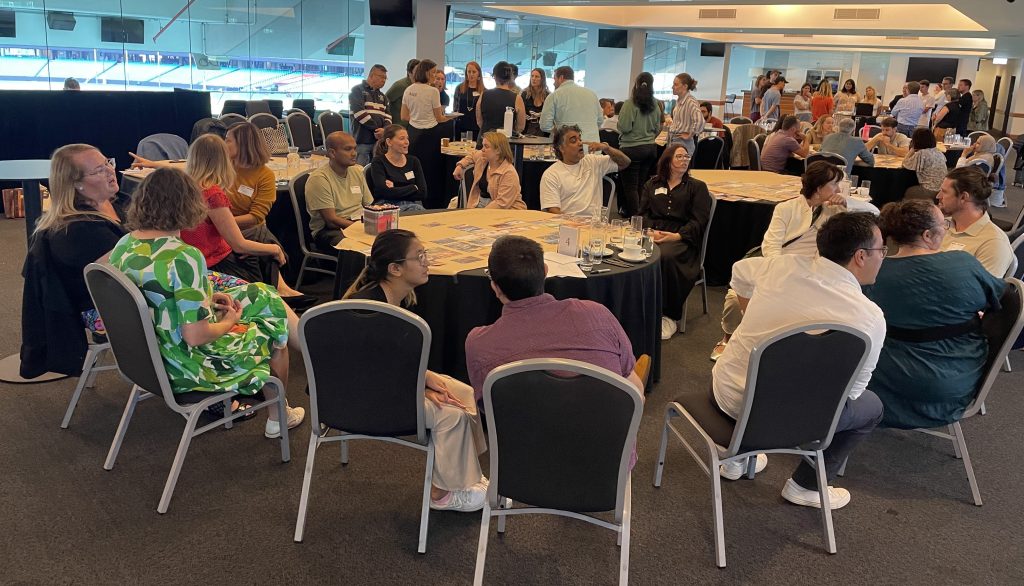
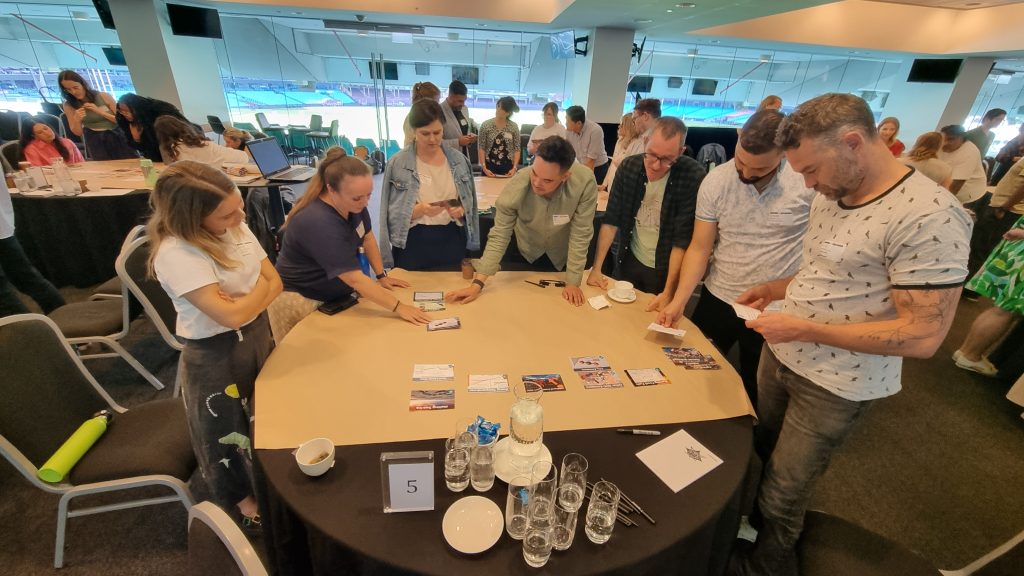
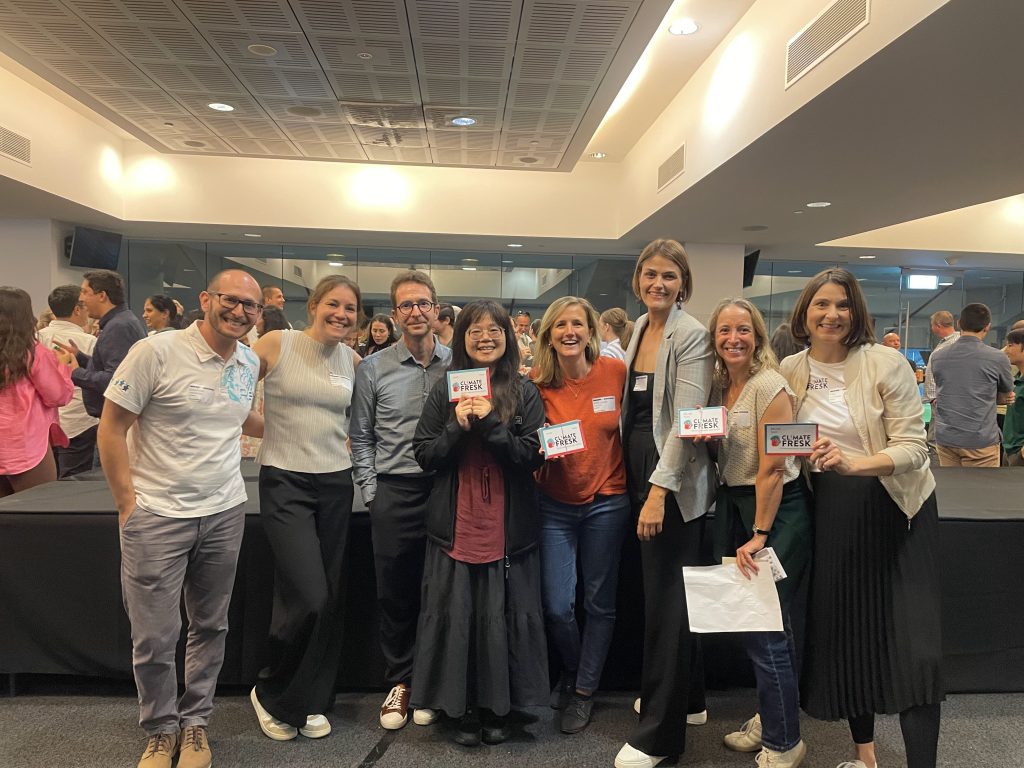
This was the core message behind the Climate Fresk workshop organised by Future Group during its annual EOFY summit in Australia.
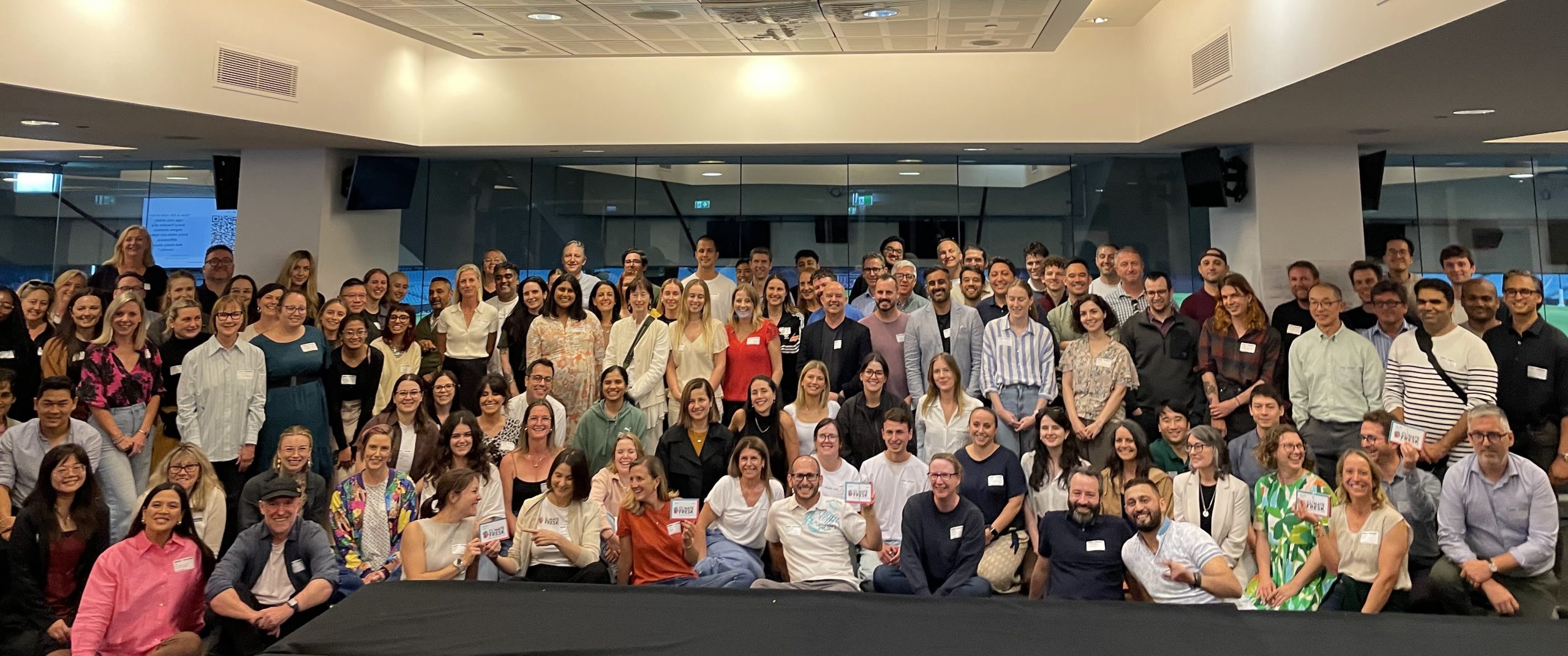
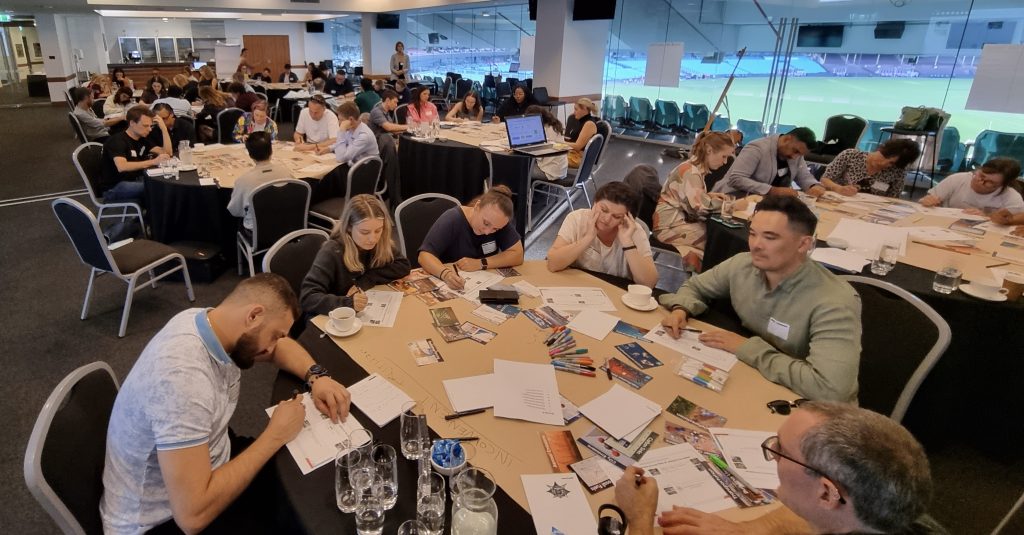
The workshop brought together over 120 employees from across the company – it was the biggest professional Climate Fresk in Australia.
Futureproofing a Movement
Future Group (Future Super, SmartMonday, Guild Super, Child Care Super and Verve Super) is on a mission to lead the movement to use the power of money to invest, advocate and campaign for a future worth retiring into. The company has proven that purpose-led super can shake up an industry, shift narratives, and build power.
The summit was designed to challenge employees to think about Futureproofing Our Movement – it was about defining scaling impact, not just in terms of size, but in terms of influence, strategy, and collective movement-building.
In the opening remarks, Future Group emphasised the need to create systemic change. But achieving that requires more than just corporate commitment; it requires a rallying of voices, talents, and capital to drive real progress. Power in Numbers is an acknowledgment that collective efforts, combined with clear and consistent action, have the potential to make the next decade of climate action even bolder.
The Power of Education
The Climate Freskworkshop is a fun, educational experience that aims to help participants understand the complexities of climate change and its wide-ranging impacts. It is based on climate science and focuses on how various human activities and natural systems are interconnected in driving global warming.
By educating employees about the science behind climate change and the systemic changes needed, the Future Group took a critical step in ensuring that each person within the organisation understands and actively supports the company’s values and mission.
This is crucial in a time where the complexities of climate change can feel daunting. Understanding the issue at a deeper level empowers individuals to take actionable steps—whether it’s reducing personal carbon footprints, advocating for more sustainable business practices, or contributing to larger community efforts. To take action and build solutions, we first need to understand the problem. Companies embedding climate education into the workplace are doing more than raising awareness—they’re cultivating a culture of action, where every employee is empowered to be a change-maker.
Collective Action Drives Change
Each employee brings something unique to the table—whether it’s expertise in finance, marketing, technology, human resources or other. Power in Numbers means harnessing these diverse skills and perspectives to advance a shared mission. It also means harnessing collective financial strength to shift markets, accelerate climate solutions, and drive systemic change. The result is a company that doesn’t just talk about sustainability but actively integrates it into every aspect of its operations and culture.
A Call to Action for Companies
Companies must actively educate their employees, align their mission with sustainable practices, and create an environment where collective action is the driving force behind change.
Integrating climate education into corporate culture is not just an ethical imperative – it’s a strategic one. The world is watching as businesses face increasing pressure from consumers, regulators, and stakeholders to address climate change. The companies that will thrive in the future are those that foster a culture of innovation and leadership, and scale their impact by leveraging the power of workforce and the power of consumers. It’s about creating a ripple effect that extends far beyond the walls of any single organisation. By aligning our voices, our capital, and our mission, we become more than just a group of individuals- we become a force for change, one that can help transform the world in ways we’ve yet to imagine.
The next decade is crucial. It’s a time when decisive action must be taken to reduce global emissions from greenhouse gasses. And as Future Group’s summit and Climate Fresk workshop showed, the power to drive that change lies in our collective hands.
People For Nature empowers your people to create positive change for nature
As businesses face the growing urgency of climate and biodiversity challenges, we believe your organisation has the potential to lead the way in creating meaningful change.
Sustainability isn’t just a responsibility — it’s an opportunity. Forward-thinking businesses are already taking the lead, strengthening their brands, reducing costs, and future-proofing their operations.
If you want to equip your team with the knowledge and confidence to make a difference, we’re here to help!
📩 Let’s start the conversation.
Contact us today to organise a Climate Fresk, Biodiversity Collage or Circular Economy Collage workshop for your team.
Together, we can drive positive change, one action at a time.
This article was originally published on LinkedIn by Climate Fresk Australia.
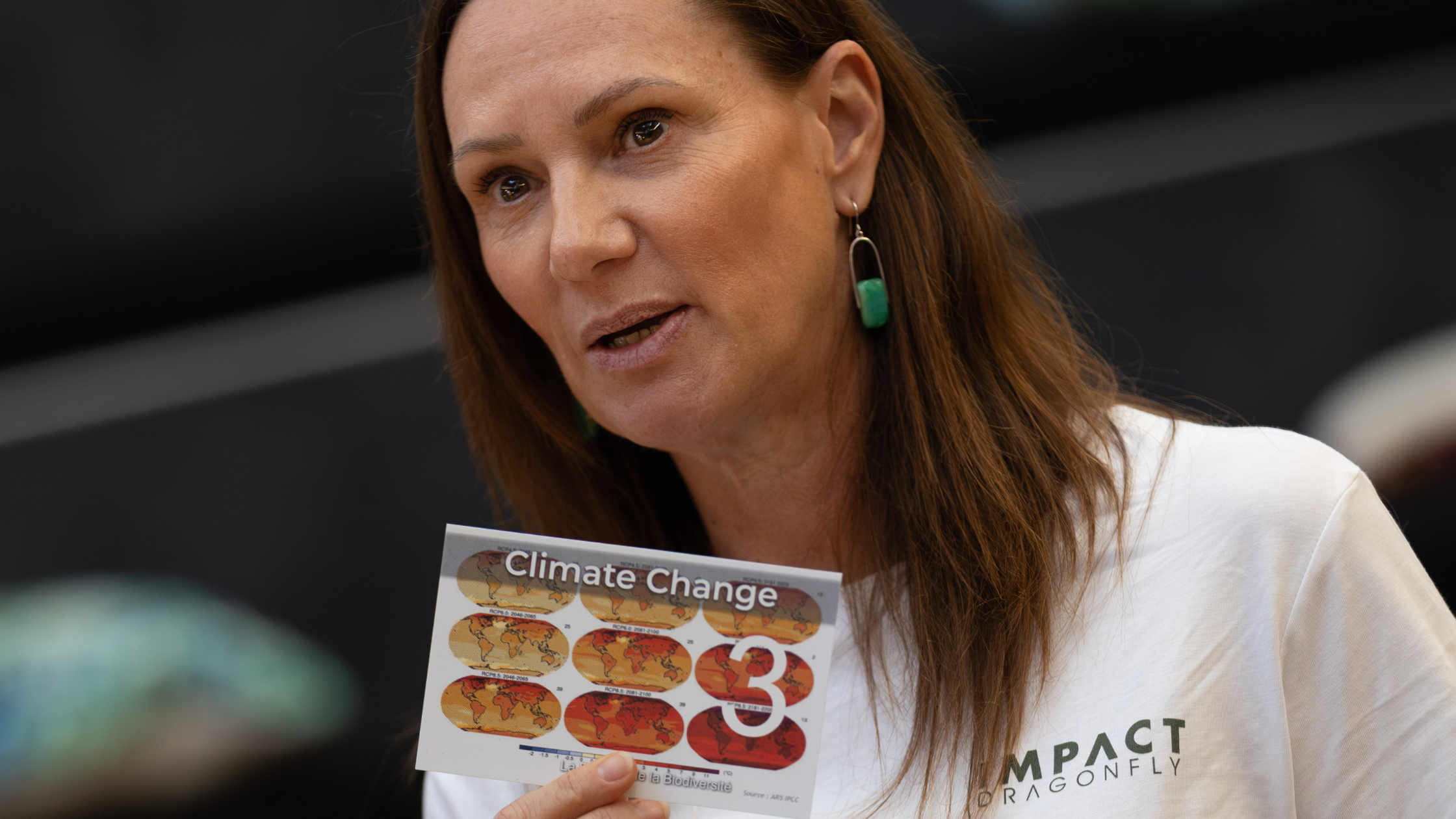
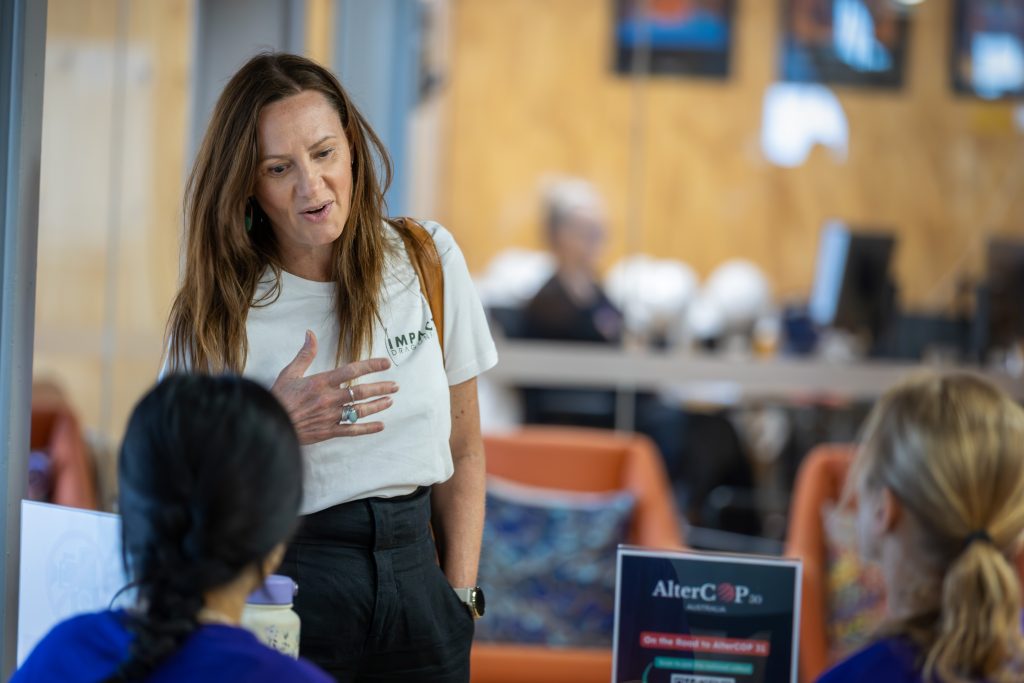
Sarah Woolmington is a seasoned sustainability engagement leader and founder of Impact Dragonfly, a consultancy dedicated to helping organisations embed sustainability into culture, strategy and everyday practice. With more than 25 years of experience in coaching, facilitation and training, Sarah specialises in inspiring behaviour change that empowers teams across business, government, not‑for‑profit and education sectors to embrace sustainability with clarity and purpose.
As a facilitator for Climate Fresk, Biodiversity Collage and Circular Economy Collage , Sarah brings systems thinking and creativity to complex topics, enabling diverse audiences to connect insights with action. She also appears as a speaker and judge at events focused on sustainable innovation and community transformation, contributing her expertise to conversations that bridge strategy, behaviour and real‑world outcomes.
At People For Nature, Sarah champions community‑centred engagement and practical learning, reinforcing our organisation’s mission to empower individuals and teams to act with confidence in the face of climate and biodiversity challenges.